
Giải mã “Odonata” – Bài đọc IELTS Reading về loài chuồn chuồn



Tóm Tắt Nội Dung Bài Viết
Giải mã “Odonata” – Bài đọc IELTS Reading về loài chuồn chuồn


Tóm Tắt Nội Dung Bài Viết
Những chú chuồn chuồn với đôi cánh mỏng manh và màu sắc rực rỡ luôn là hình ảnh quen thuộc và đẹp đẽ. Tuy nhiên, đằng sau vẻ ngoài đó là cả một thế giới của những kẻ săn mồi đáng gờm. Bài đọc IELTS “Odonata” sẽ đưa chúng ta khám phá những sự thật khoa học thú vị về bộ Cánh Lưới, bao gồm chuồn chuồn và chuồn chuồn kim. Bài viết này của trung tâm ngoại ngữ ECE sẽ phân tích sâu toàn bộ bài đọc, cung cấp đáp án kèm giải thích chi tiết và tổng hợp từ vựng quan trọng, giúp bạn chinh phục các dạng bài đa dạng trong bài đọc này.
Bài đọc và câu hỏi chi tiết: Odonata
Nội dung bài đọc
Odonata – Bài đọc IELTS về chuồn chuồn
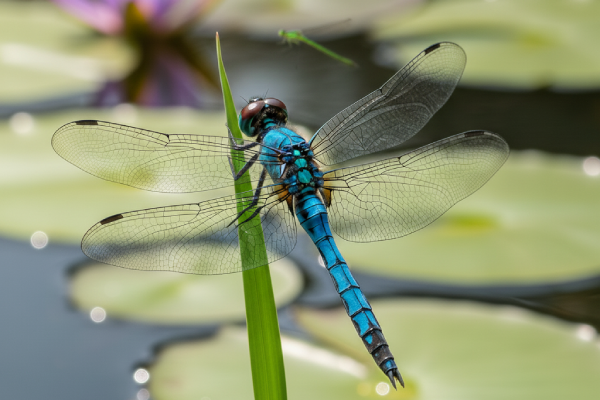
(1) Odonata is the insect order that contains dragonflies and damselflies. Their brilliant colors and delicate-looking wings make them aesthetically pleasing to the human eye. In the wild, though, they are terrifying predators. Dragonflies and damselflies are named for their formidable, serrated jaws, which they employ to rip apart their prey. The word Odonata means “toothed jaw.”
(2) Dragonflies and damselflies are frequently mistaken for one another due to their similarity. Close observation reveals the differences between them. The most noticeable distinction is how they hold their wings at rest. Damselflies fold their wings back, whereas dragonflies hold their wings out to the side. Due to their proximity, dragonfly eyes appear to encompass the entire face. There is a gap between the tiny eyes of damselflies. Dragonflies are bigger, stronger, and more capable fliers than damselflies. Consequently, they inhabit forests and areas away from water. Since they do not often fly far from the water, damselflies are typically observed along the margins of ponds and streams.
(3) The biggest living odonata are the Hawaiian endemic dragonfly and the Central American damselfly, each of which has a 19-centimeter wing span. The smallest is the libellulidae dragonfly, which is endemic to East Asia and has a 20-millimeter wing span. It has been shown via the discovery of fossils that dragonflies have existed for over 300 million years. The biggest dragonfly fossil ever discovered belonged to the extinct meganeura monyi, which had a wingspan of 75 cm and lived 300 million years ago. This enormous predator fed on little amphibians in addition to other insects.
(4) In a pond or stream, dragonflies and damselflies both deposit their eggs on or just beneath the surface of the water. Some species deposit their eggs on the stems of aquatic plants. The hatchlings emerge from the eggs as nymphs. They breathe through their gills and feed on aquatic insects, tadpoles, tiny fish, and even other nymphs. They hunt by lurking at the bottom of a pond or stream and waiting for their victim to swim along. When their prey comes close, they may extend a specialized lip to seize it. Depending on the species, they may exist in this state for months or even years. Several times, as the nymph matures, it sheds its skin. It exits the sea and loses its skin for the final time. The adult emerges, prepared to survive on land and in the air for the next several weeks or months. The adults do not survive more than four months, and many species barely live a few weeks as adults.
(5) Dragonflies and damselflies are highly proficient hunters due to their remarkable vision and flying ability. Their specialized eyes provide them with a nearly 360-degree range of vision… They possess two sets of wings that are capable of moving independently of one another. This provides them with excellent aerial maneuverability… They are able to hover, execute fast turns, and fly in reverse.
(6) As bloodthirsty predators, dragonflies and damselflies are, in turn, prey for other creatures. Fish, frogs, toads, and other water species consume the nymphs. Adults are preyed upon by birds, frogs, as well as bigger dragonflies and damselflies. They might potentially become entangled in a spider’s web. What you give you will receive the same.
Câu hỏi
Questions 1-6 (Matching Features) Which of the facts below are true of dragonflies, and which are true of damselflies according to the information in the passage? Write:
- A if it is a fact about dragonflies only
- B if it is a fact about damselflies only
- C if it is a fact about both dragonflies and damselflies
- They have saw-like jaws.
- They hold their wings on their backs while resting.
- Their eyes have a gap between them.
- They can be seen in fields at a distance from ponds and streams.
- The largest species has a wingspan of 19 centimeters.
- The largest fossil has a wingspan of 75 centimeters.
Questions 7-12 (Note Completion) Complete the notes about the life cycle of odonata below. Choose your answers from the box below and write the correct letters, A-K.
The eggs are laid 7 ______. The young dragonflies and damselflies, called 8 _____, live underwater for a few 9 _______. They eat small water animals, catching their food 10 ______. When they are almost fully grown, they leave the water. The adults live for only a few 11 ______ . They are skillful 12 ________ and catch their prey in the air.
Question 13 (Short Answer Question) Write NO MORE THAN TWO WORDS from the passage for your answer.
What does the word “Odonata” mean?
Tóm tắt nội dung bài đọc
Bài đọc cung cấp thông tin khoa học về bộ Odonata, bao gồm chuồn chuồn (dragonflies) và chuồn chuồn kim (damselflies).
- Định nghĩa & Khác biệt: Cả hai đều là loài săn mồi với bộ hàm răng cưa đáng sợ. Chúng có thể được phân biệt qua cách xếp cánh khi nghỉ, vị trí của mắt, kích thước và môi trường sống.
- Lịch sử & Kích thước: Bài đọc đề cập đến loài Odonata còn sống lớn nhất, loài nhỏ nhất, và hóa thạch chuồn chuồn khổng lồ từ 300 triệu năm trước.
- Vòng đời: Trứng được đẻ gần nước, nở thành ấu trùng (nymphs) sống dưới nước trong nhiều tháng hoặc năm, sau đó lột xác lần cuối để trở thành con trưởng thành sống trên cạn trong vài tuần hoặc tháng.
- Kỹ năng săn mồi: Chúng là những tay săn mồi trên không cừ khôi nhờ thị lực gần 360 độ và khả năng bay lượn siêu đẳng.
- Kẻ thù tự nhiên: Chúng cũng là con mồi cho các loài khác như cá, chim, ếch và nhện.
Tổng hợp từ vựng và cấu trúc hay trong bài
- Aesthetically pleasing (cụm tính từ): Có tính thẩm mỹ, đẹp mắt.
- Formidable / serrated jaws (cụm danh từ): Bộ hàm đáng gờm / có răng cưa.
- Distinction (danh từ): Sự khác biệt, điểm khác biệt.
- Endemic (tính từ): Đặc hữu (chỉ có ở một vùng địa lý cụ thể).
- Nymphs (danh từ): Ấu trùng (của côn trùng).
- Aerial maneuverability (cụm danh từ): Khả năng bay lượn, xoay sở trên không.
- Bloodthirsty predators (cụm danh từ): Những kẻ săn mồi khát máu.
Gợi ý đáp án bài đọc và giải thích chi tiết
Questions 1-6
1. C (both)
- Dẫn chứng (Đoạn 1): “Dragonflies and damselflies are named for their formidable, serrated jaws…”
- Giải thích: Câu này khẳng định cả chuồn chuồn và chuồn chuồn kim đều có đặc điểm này.
2. B (damselflies only)
- Dẫn chứng (Đoạn 2): “Damselflies fold their wings back, whereas dragonflies hold their wings out to the side.”
- Giải thích: Bài đọc chỉ rõ đây là đặc điểm của chuồn chuồn kim, và đối lập với chuồn chuồn.
3. B (damselflies only)
- Dẫn chứng (Đoạn 2): “There is a gap between the tiny eyes of damselflies.”
- Giải thích: Đây là đặc điểm riêng của chuồn chuồn kim.
4. A (dragonflies only)
- Dẫn chứng (Đoạn 2): “[Dragonflies] inhabit forests and areas away from water.”
- Giải thích: Chỉ có chuồn chuồn mới sống ở những khu vực xa nguồn nước.
5. C (both)
- Dẫn chứng (Đoạn 3): “The biggest living odonata are the Hawaiian endemic dragonfly and the Central American damselfly, each of which has a 19-centimeter wing span.”
- Giải thích: Đặc điểm sải cánh 19cm thuộc về loài lớn nhất của cả hai nhóm.
6. A (dragonflies only)
- Dẫn chứng (Đoạn 3): “The biggest dragonfly fossil ever discovered…”
- Giải thích: Bài đọc chỉ rõ đây là hóa thạch của chuồn chuồn.
Questions 7-12
7. E. near the water’s surface
- Dẫn chứng (Đoạn 4): “…deposit their eggs on or just beneath the surface of the water.”
- Giải thích: Cụm từ này có nghĩa là “gần bề mặt nước”.
8. F. nymphs
- Dẫn chứng (Đoạn 4): “The hatchlings emerge from the eggs as nymphs.”
- Giải thích: Con non được gọi là “ấu trùng” (“nymphs”).
9. H. months or years
- Dẫn chứng (Đoạn 4): “…they may exist in this state for months or even years.”
- Giải thích: Giai đoạn ấu trùng sống dưới nước kéo dài vài “tháng hoặc năm”.
10. B. with their lips
- Dẫn chứng (Đoạn 4): “…they may extend a specialized lip to seize it.”
- Giải thích: Chúng bắt mồi bằng một cái “môi” (“lip”) đặc biệt.
11. I. weeks or months
- Dẫn chứng (Đoạn 4): “…survive on land and in the air for the next several weeks or months.”
- Giải thích: Giai đoạn trưởng thành chỉ kéo dài vài “tuần hoặc tháng”.
12. D. fliers
- Dẫn chứng (Đoạn 2 & 5): “Dragonflies are bigger, stronger, and more capable fliers…” và “…remarkable vision and flying ability.”
- Giải thích: Cả bài đọc đều nhấn mạnh khả năng bay, do đó “skillful fliers” (những tay bay điêu luyện) là cụm từ phù hợp nhất.
Question 13
13. toothed jaw
- Dẫn chứng (Đoạn 1): “The word Odonata means “toothed jaw.”“
- Giải thích: Câu cuối của đoạn 1 định nghĩa trực tiếp ý nghĩa của từ Odonata.
Kết bài
Bài đọc “Odonata” là một ví dụ điển hình về chủ đề sinh học trong IELTS, kiểm tra khả năng phân loại thông tin (Matching Features) và theo dõi một quy trình (Note Completion). Đối với dạng bài phân loại, chìa khóa là tìm kiếm những từ so sánh và đối lập trong bài đọc như ‘whereas’, ‘in contrast’, hoặc các câu mô tả riêng biệt cho từng đối tượng. Hy vọng rằng với phần phân tích chi tiết này của ECE, bạn đã có thêm kinh nghiệm quý báu để xử lý hiệu quả các dạng bài đọc khoa học.

Đoàn Nương
Tôi là Đoàn Nương - Giám đốc trung tâm ngoại ngữ ECE. Tôi hiện đang là giảng viên của khoa ngôn ngữ các nước nói tiếng Anh - Trường Đại Học Quốc Gia Hà Nội. Tôi đã có 19 năm kinh nghiệm giảng dạy IELTS và 15 năm là giảng viên Đại Học. Tôi mong muốn đưa ECE trở thành trung tâm ngoại ngữ cho tất cả mọi người, mang tới cho học viên môi trường học tập tiếng Anh chuyên nghiệp và hiệu quả.
Tìm hiểu các khóa học tại ECE
Tin Tức Cùng Danh Mục

The Concept of Childhood in Western Countries IELTS Reading: Dịch & giải chi tiết

The Magic of Kefir IELTS Reading: Dịch bài đọc & đáp án chuẩn

The Columbian Exchange IELTS Reading: Dịch & giải chi tiết A-Z

Giải mã bài đọc: Complementary & alternative medicine IELTS Reading

Stadium Australia IELTS Reading: Giải chi tiết & Dịch nghĩa
Các tin liên quan
The Concept of Childhood in Western Countries IELTS Reading: Dịch & giải chi tiết
The Magic of Kefir IELTS Reading: Dịch bài đọc & đáp án chuẩn
The Columbian Exchange IELTS Reading: Dịch & giải chi tiết A-Z
Giải mã bài đọc: Complementary & alternative medicine IELTS Reading
Stadium Australia IELTS Reading: Giải chi tiết & Dịch nghĩa

Television and Sport IELTS Reading: Dịch chuẩn & Giải đề chi tiết

The Invention of Television IELTS Reading: Từ vựng & đáp án chuẩn
Frogwatch IELTS Reading: Bài dịch & đáp án chuẩn nhất

Consecutive and Simultaneous Translation IELTS Reading: Dịch chuẩn & Giải chi tiết

Fears IELTS Reading: Bản dịch chuẩn & giải chi tiết từ A-Z

Memory and Age IELTS Reading: Dịch chuẩn & Giải chi tiết

Đáp án & từ vựng bài đọc Photovoltaics on the rooftop IELTS Reading




Lượt Đăng Ký

NHẬN TƯ VẤN NGAY
Vui lòng để lại thông tin để được tư vấn chi tiết lộ trình học và thi IELTS ở trên
