
IELTS Speaking topic Parenting: Bộ câu hỏi và bài mẫu Full 3 Part



Tóm Tắt Nội Dung Bài Viết
IELTS Speaking topic Parenting: Bộ câu hỏi và bài mẫu Full 3 Part


Tóm Tắt Nội Dung Bài Viết
Chào các bạn, cô là Hoàng My, giáo viên tại trung tâm ECE. Hôm nay, chúng ta sẽ cùng nhau chinh phục một chủ đề rất đời thường nhưng lại đầy thử thách trong bài thi IELTS Speaking: Parenting (Làm cha mẹ / Việc nuôi dạy con cái).
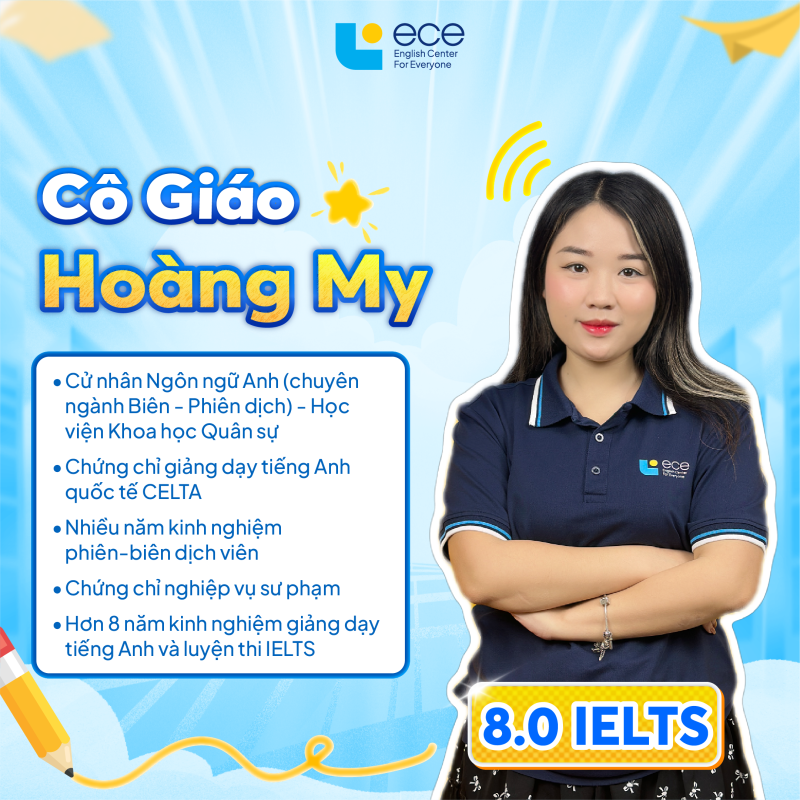
Cô Nguyễn Hoàng My – Giáo viên 8.0 IELTS tại ECE
Chủ đề này có thể xuất hiện ở cả 3 phần thi, yêu cầu bạn không chỉ chia sẻ trải nghiệm cá nhân (Part 1 & 2) mà còn phải phân tích, đánh giá các vấn đề xã hội liên quan đến việc nuôi dạy con cái (Part 3). Để đạt điểm cao, bạn cần thể hiện được vốn từ vựng phong phú về tính cách, cảm xúc, các mối quan hệ gia đình, cũng như khả năng lập luận chặt chẽ.
Bài viết này sẽ cung cấp cho các bạn một bộ câu hỏi và câu trả lời mẫu hoàn chỉnh cho cả Part 1, Part 2 và Part 3, kèm theo phần giải thích từ vựng “đắt giá” và các mẹo luyện tập hữu ích. Cùng bắt đầu nhé!
IELTS Speaking part 1 topic Parenting
Ở phần này, giám khảo sẽ hỏi những câu hỏi ngắn gọn về trải nghiệm cá nhân của bạn với bố mẹ. Hãy trả lời tự nhiên, trung thực và cố gắng mở rộng câu trả lời thêm 1 – 2 câu.
1. Do you think that your parents did the best parenting possible?
(Bạn có nghĩ rằng bố mẹ bạn đã nuôi dạy bạn tốt nhất có thể không?)
Sample Answer: Yes, I genuinely believe they did their best with the resources and knowledge they had at the time. They created a nurturing environment where I felt both loved and disciplined. Of course, no parenting is perfect, but their intentions were always in the right place.
✨ Highlighted vocabulary:
-
resources (n): nguồn lực (tài chính, thời gian, kiến thức…)
-
nurturing (a): mang tính nuôi dưỡng, chăm sóc ân cần
-
disciplined (a): có kỷ luật, nghiêm khắc đúng mực
2. How much time did your parents spend with you when you were a child?
(Bố mẹ bạn đã dành bao nhiêu thời gian cho bạn khi bạn còn nhỏ?)
Sample Answer: They were quite involved in my upbringing despite their busy work schedules. We always had dinner together and they made time for weekend outings or family activities. Looking back, their consistent presence meant a lot to me.
✨ Highlighted vocabulary:
-
involved (a): có tham gia tích cực, gắn bó
-
upbringing (n): sự nuôi dạy, quá trình trưởng thành
-
consistent (a): ổn định, đều đặn, nhất quán
3. What was the best advice that your parents gave you when you were a child?
(Lời khuyên tốt nhất mà bố mẹ đã dành cho bạn khi còn nhỏ là gì?)
Sample Answer: The most valuable advice they gave me was to always take responsibility for my actions. That mindset helped shape my character and taught me accountability from a young age. It’s something I still live by today.
✨ Highlighted vocabulary:
-
take responsibility (v): chịu trách nhiệm
-
accountability (n): tinh thần trách nhiệm cá nhân
-
live by (phr v): sống theo (một nguyên tắc, niềm tin nào đó)
4. Do you think parenting is an easy task?
(Bạn có nghĩ làm cha mẹ là một công việc dễ dàng không?)
Sample Answer: Not at all. Parenting is one of the most demanding roles a person can have. It requires emotional resilience, patience, and constant learning. Every child is different, so there’s no one-size-fits-all approach.
✨ Highlighted vocabulary:
-
demanding (a): đòi hỏi khắt khe, yêu cầu cao (về công sức, thời gian)
-
emotional resilience (n): sự vững vàng về mặt cảm xúc
-
one-size-fits-all (a): (giải pháp/phương pháp) áp dụng chung cho mọi trường hợp
5. Are your parents your role model in life?
(Bố mẹ có phải là hình mẫu lý tưởng trong cuộc sống của bạn không?)
Sample Answer: Yes, they are. Their integrity, work ethic, and compassion have always inspired me. They’ve shown me what it means to lead a meaningful and principled life.
✨ Highlighted vocabulary:
-
role model (n): hình mẫu lý tưởng, tấm gương để noi theo
-
integrity (n): sự chính trực, liêm chính
-
principled (a): có nguyên tắc đạo đức vững vàng
IELTS Speaking part 2 topic Parenting
Bạn sẽ có 1 phút chuẩn bị và 2 phút để nói về chủ đề sau.
Topic: Describe someone who is a good parent. You should say:
-
Who the parent is
-
How you know the parent
-
What the parent looks like
-
And explain why you think the parent is good.
Sample Answer:
One person that comes to mind when I think of a good parent is my former high school literature teacher, Cô Hạnh. I got to know her not just as a teacher but also as a neighbour, since she lives just two houses away from mine.
I often saw her picking up her daughter after school or taking her for walks in the evening. From the outside, Cô Hạnh appears calm and graceful. She’s in her early forties, wears simple áo dài on most days, and always carries herself with quiet confidence.
What makes her stand out as a parent is the way she raises her child with a perfect balance of discipline and warmth. She never shouts or loses her temper in public, but her daughter is still incredibly well-behaved, polite, and independent. I’ve also seen how much attention she gives to her child’s emotional well-being. For example, whenever her daughter has a school performance, no matter how small, she’s always there in the front row, smiling proudly and cheering her on.
She also encourages her daughter to read a lot, rather than spending too much time on screens, which, honestly, is something quite rare nowadays. I once had a chat with her and she told me that to be a good parent, you need to listen more than you speak, and always try to understand what your child is feeling, even if they can’t express it well.
I truly admire her parenting style because it’s not based on strict rules, but on connection, trust, and presence. Seeing how kind, curious, and confident her daughter is makes me believe that Cô Hạnh is doing an amazing job as a mother.
✨ Highlighted Vocabulary (Band 6.5+):
- comes to mind (phrase): nghĩ đến đầu tiên
- graceful (a): thanh lịch, duyên dáng
- carry herself with confidence (v phrase): thể hiện sự tự tin qua dáng vẻ, cách đi đứng
- discipline and warmth (n): kỷ luật và sự ấm áp
- well-behaved (a): cư xử ngoan, lễ phép
- emotional well-being (n): sức khỏe tinh thần
- school performance (n): buổi biểu diễn ở trường
- in the front row (phrase): hàng ghế đầu
- cheering her on (v): cổ vũ tinh thần
- encourages her to read (v): khuyến khích đọc sách
- spending time on screens (v phrase): dành thời gian trước màn hình
- listen more than you speak (phrase): lắng nghe nhiều hơn nói
- can’t express it well (phrase): không thể diễn đạt rõ
- parenting style (n): phong cách nuôi dạy con
- based on connection and trust (phrase): dựa trên sự kết nối và niềm tin
- kind, curious, and confident (a): tử tế, tò mò và tự tin
- doing an amazing job (phrase): làm rất tốt
💡 Ghi chú luyện tập
1. Chọn người thật bạn biết rõ, không cần phải là bố mẹ của bạn — có thể là cô giáo, hàng xóm, anh/chị bạn,…
2. Nói đủ 4 ý: ai ➜ quen như thế nào ➜ ngoại hình ➜ vì sao là cha/mẹ tốt
3. Dùng từ mô tả tính cách, hành động liên quan đến nuôi dạy con: well-behaved, patient, supportive, calm
4. Thêm ví dụ nhỏ để chứng minh quan điểm: always attends school events, teaches life values, never raises her voice
Gợi ý công thức mở rộng nâng cao:
1. Mở bài ➜ Mô tả cách biết người đó ➜ Ngoại hình ➜ Cách nuôi dạy con đặc biệt ➜ Cảm nhận & bài học rút ra
2. Collocations hữu ích: raise a child with love and discipline, encourage curiosity, support emotional development, build trust with children
3. Ngữ pháp: câu điều kiện (If more parents followed her approach, children would grow up more emotionally balanced.), mệnh đề quan hệ (who always puts her child’s well-being first), cấu trúc nâng cao (Rather than controlling, she chooses to connect.)
IELTS Speaking part 3 topic Parenting
Ở phần này, giám khảo sẽ hỏi các câu hỏi mang tính xã hội, trừu tượng hơn liên quan đến chủ đề Parenting.
1. How much time do parents spend with their children in your country? Do you think that is enough?
(Ở nước bạn, cha mẹ dành bao nhiêu thời gian cho con cái? Bạn nghĩ như vậy có đủ không?)
Sample Answer: In my country, the amount of time parents spend with their children varies greatly depending on their work schedule and lifestyle. On average, working parents may only manage a few hours in the evening, which often isn’t enough for meaningful interaction. Many families compensate by prioritising weekends or family holidays, but the daily connection can still feel limited. I believe quality matters more than quantity, but consistent presence is essential for emotional bonding. Sadly, in some urban areas, parents are too preoccupied with work, and that affects the child’s development and sense of security.
✨ Highlighted vocabulary:
-
vary (v): thay đổi, dao động
-
meaningful (a): có ý nghĩa
-
compensate (v): bù đắp
-
emotional bonding (n): sự gắn kết tình cảm
-
preoccupied (a): bận tâm, mải mê
-
sense of security (n): cảm giác an toàn
2. How important do you think spending time together is for the relationships between parents and children? Why?
(Bạn nghĩ việc dành thời gian bên nhau quan trọng như thế nào đối với mối quan hệ giữa cha mẹ và con cái? Tại sao?)
Sample Answer: Spending time together is absolutely crucial for building trust and emotional closeness between parents and children. It gives parents the opportunity to understand their child’s thoughts, feelings, and challenges, which helps prevent emotional distance. Shared activities, whether simple like cooking or playing games, can foster communication and create lasting memories. Without regular time together, relationships may become superficial or strained, especially during adolescence. So, investing time in each other is the foundation of a healthy parent-child relationship.
✨ Highlighted vocabulary:
-
emotional closeness (n): sự gần gũi về mặt cảm xúc
-
prevent (v): ngăn ngừa
-
emotional distance (n): khoảng cách cảm xúc
-
foster (v): nuôi dưỡng, phát triển
-
superficial (a): hời hợt
-
strained (a): căng thẳng, cơm không lành canh không ngọt
-
adolescence (n): tuổi thiếu niên, tuổi dậy thì
3. Have relationships between parents and children changed in recent years? Why do you think that is?
(Mối quan hệ giữa cha mẹ và con cái có thay đổi trong những năm gần đây không? Bạn nghĩ tại sao lại như vậy?)
Sample Answer: Yes, I think parent-child relationships have evolved significantly in recent years due to social and technological shifts. In the past, parenting was more authoritarian, with clear boundaries and less open dialogue. Today, modern parents tend to adopt a more democratic approach, encouraging children to express their opinions and emotions. Additionally, technology has reshaped how families interact. I mean, while it can help maintain communication, it also sometimes causes distraction and emotional detachment. So, while there is more openness, maintaining genuine connection remains a challenge.
✨ Highlighted vocabulary:
-
evolve (v): phát triển, tiến hóa, thay đổi dần dần
-
authoritarian (a): độc đoán, chuyên quyền
-
boundary (n): ranh giới, giới hạn
-
democratic (a): dân chủ, bình đẳng
-
emotional detachment (n): sự xa cách về mặt cảm xúc
-
genuine connection (n): sự kết nối chân thành
4. How can parents supervise their children’s free-time activities?
(Cha mẹ có thể giám sát các hoạt động trong thời gian rảnh của con cái như thế nào?)
Sample Answer: Parents can supervise their children’s free time by being involved without being overly controlling. One effective way is to co-participate in certain activities like playing sports, going on outings, or watching movies together, which allows them to observe naturally. They can also set clear routines and boundaries regarding screen time or curfews. Open communication is key. This means that children are more likely to be honest when they don’t feel judged. Rather than strict surveillance, gentle guidance tends to be more effective and helps build mutual respect.
✨ Highlighted vocabulary:
-
supervise (v): giám sát, trông nom
-
co-participate (v): cùng tham gia
-
outing (n): chuyến đi chơi, dã ngoại
-
curfew (n): giờ giới nghiêm (giờ phải về nhà)
-
surveillance (n): sự giám sát (thường mang nghĩa theo dõi chặt chẽ)
-
mutual respect (n): sự tôn trọng lẫn nhau
5. Should parents monitor what their young children do online? Why?
(Cha mẹ có nên theo dõi những gì con nhỏ làm trên mạng không? Tại sao?)
Sample Answer: Yes, I think it’s essential for parents to keep an eye on their children’s online activities, especially during the early years of internet use. The digital world can expose children to harmful content, cyberbullying, or inappropriate interactions that they may not yet know how to handle. That said, monitoring doesn’t mean invading their privacy. It should involve setting parental controls, discussing online safety, and being approachable when problems arise. The goal is to protect them while teaching responsible digital habits. As children mature, this supervision can gradually be reduced to encourage independence.
✨ Highlighted vocabulary:
-
monitor (v): theo dõi, giám sát
-
harmful content (n): nội dung độc hại
-
cyberbullying (n): bắt nạt qua mạng
-
parental controls (n): các công cụ kiểm soát của phụ huynh
-
approachable (a): dễ gần, dễ tiếp cận để chia sẻ
-
responsible (a): có trách nhiệm
-
independence (n): sự độc lập
Lời kết
Vậy là chúng ta đã đi qua trọn bộ câu hỏi và câu trả lời mẫu cho chủ đề Parenting trong IELTS Speaking.
Điểm mấu chốt để ghi điểm ở chủ đề này là:
-
Sự chân thành (Part 1 & 2): Hãy chia sẻ những câu chuyện thật, cảm xúc thật của bạn. Điều này giúp bài nói tự nhiên và trôi chảy hơn.
-
Tư duy phản biện (Part 3): Hãy nhìn nhận các vấn đề nuôi dạy con cái dưới góc độ xã hội, so sánh quá khứ – hiện tại, và đưa ra các giải pháp hoặc đánh giá đa chiều.
-
Vốn từ vựng phong phú: Hãy tích cực sử dụng các collocations về tình cảm, tính cách và các phương pháp giáo dục mà bài viết đã cung cấp (ví dụ: emotional bonding, authoritarian vs. democratic approach, set boundaries…).
Hãy luyện tập thường xuyên bằng cách tự ghi âm và nghe lại để cải thiện phát âm và ngữ điệu nhé. Chúc các bạn học tốt và tự tin chinh phục chủ đề này trong phòng thi!
Mời bạn tham khảo thêm các bài viết học thuật khác của cô Hoàng My:

Đoàn Nương
Tôi là Đoàn Nương - Giám đốc trung tâm ngoại ngữ ECE. Tôi hiện đang là giảng viên của khoa ngôn ngữ các nước nói tiếng Anh - Trường Đại Học Quốc Gia Hà Nội. Tôi đã có 19 năm kinh nghiệm giảng dạy IELTS và 15 năm là giảng viên Đại Học. Tôi mong muốn đưa ECE trở thành trung tâm ngoại ngữ cho tất cả mọi người, mang tới cho học viên môi trường học tập tiếng Anh chuyên nghiệp và hiệu quả.
Tìm hiểu các khóa học tại ECE
Tin Tức Cùng Danh Mục

The Concept of Childhood in Western Countries IELTS Reading: Dịch & giải chi tiết

The Magic of Kefir IELTS Reading: Dịch bài đọc & đáp án chuẩn

The Columbian Exchange IELTS Reading: Dịch & giải chi tiết A-Z

Giải mã bài đọc: Complementary & alternative medicine IELTS Reading

Stadium Australia IELTS Reading: Giải chi tiết & Dịch nghĩa
Các tin liên quan
The Concept of Childhood in Western Countries IELTS Reading: Dịch & giải chi tiết
The Magic of Kefir IELTS Reading: Dịch bài đọc & đáp án chuẩn
The Columbian Exchange IELTS Reading: Dịch & giải chi tiết A-Z
Giải mã bài đọc: Complementary & alternative medicine IELTS Reading
Stadium Australia IELTS Reading: Giải chi tiết & Dịch nghĩa

Television and Sport IELTS Reading: Dịch chuẩn & Giải đề chi tiết

The Invention of Television IELTS Reading: Từ vựng & đáp án chuẩn

Frogwatch IELTS Reading: Bài dịch & đáp án chuẩn nhất
Consecutive and Simultaneous Translation IELTS Reading: Dịch chuẩn & Giải chi tiết

Fears IELTS Reading: Bản dịch chuẩn & giải chi tiết từ A-Z

Memory and Age IELTS Reading: Dịch chuẩn & Giải chi tiết

Đáp án & từ vựng bài đọc Photovoltaics on the rooftop IELTS Reading




Lượt Đăng Ký

NHẬN TƯ VẤN NGAY
Vui lòng để lại thông tin để được tư vấn chi tiết lộ trình học và thi IELTS ở trên
