
Đáp án & Giải thích chi tiết bài đọc IELTS: Jean Piaget



Tóm Tắt Nội Dung Bài Viết
Đáp án & Giải thích chi tiết bài đọc IELTS: Jean Piaget


Tóm Tắt Nội Dung Bài Viết
Jean Piaget, một tượng đài trong lĩnh vực tâm lý học phát triển, là một chủ đề học thuật thường xuyên xuất hiện trong kỳ thi IELTS. Bài đọc về ông không chỉ kiểm tra khả năng đọc hiểu mà còn đòi hỏi sự suy luận sâu sắc về quan điểm của tác giả. Để giúp bạn chinh phục bài đọc phức tạp này, bài viết dưới đây của ECE sẽ phân tích chi tiết từng đoạn, “mổ xẻ” các câu hỏi, và cung cấp đáp án kèm giải thích cặn kẽ cùng các từ vựng quan trọng.
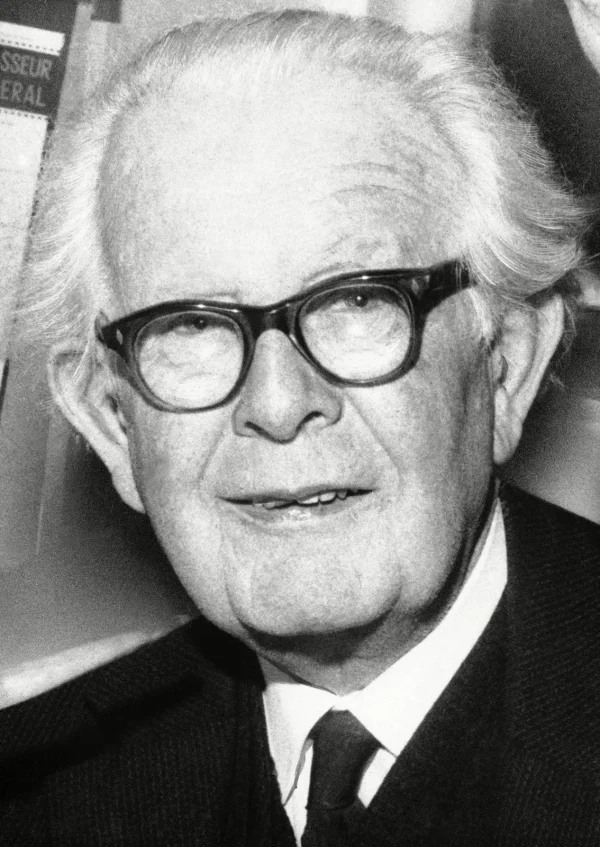
Jean Piaget là một nhà tâm lý học và triết gia người Thụy Sĩ (1896–1980)
Bài đọc và câu hỏi chi tiết: Jean Piaget
Nội dung bài đọc
(Paragraph 1) Jean Piaget spent much of his professional life listening to children, watching children and poring over reports of researchers around the world who were doing the same. He found, to put it most succinctly, that children don’t think like grown-ups. After thousands of interactions with young people often barely old enough to talk, Piaget began to suspect that behind their cute and seemingly irrational utterances were thought processes that had their own kind of order and their own special logic. Einstein called it a discovery ‘so simple that only a genius could have thought of it.’
(Paragraph 2) Although not an educational reformer, Piaget championed a way of thinking about children that provided the foundation for today’s education-reform movements. It was a shift comparable to the way modern anthropology displaced stories of primitive tribes being ‘noble savages’ and ‘cannibals’. One might say that Piaget was the first to take children’s thinking seriously.
(Paragraph 3) He has been revered by generations of teachers inspired by the belief that children are not empty vessels to be filled with knowledge (as traditional pedagogical theory had it) but active builders of knowledge — little scientists who are constantly creating and testing their own hypotheses about the world. And though he may not be as famous as Sigmund Freud or even B F Skinner, his influence on psychology may be longer lasting.
(Paragraph 4) In 1920, while doing research in a child-psychology laboratory in Paris, Piaget noticed that children of the same age made similar errors on intelligence tests. Fascinated by their reasoning processes, he began to suspect that the key to human knowledge might be discovered by observing how the child’s mind develops. On his return to Switzerland he began watching children play, scrupulously recording their words and actions as their minds raced to find reasons for why things are the way they are.
(Paragraph 5) In one of his most famous experiments, Piaget asked children, ‘What makes the wind?’. A typical dialogue would be: Piaget: What makes the wind? Julia: The trees. Piaget: How do you know? Julia: I saw them waving their arms. Piaget: How does that make the wind? Julia: (waving her hand in front of his face): Like this. Only they are bigger. And there are lots of trees.
(Paragraph 6) Piaget recognized that five-year-old Julia’s beliefs, while not correct by any adult criterion, are not ‘incorrect’ either. They are entirely sensible and coherent within the framework of the child’s way of knowing. Classifying them as ‘true’ or ‘false’ misses the point and shows a lack of respect for the child. What Piaget was after was a theory that the wind dialogue demonstrates coherence, ingenuity and the practice of a kind of explanatory principle…
(Paragraph 7) Piaget was not an educator and never laid down rules about how to intervene in such situations. But his work strongly suggests that the automatic reaction of putting the child right may well be counter-productive. If their theories are always greeted by ‘Nice try, but this is how it really is…’, they might give up after a while on making theories. As Piaget put it, ‘children have real understanding only of that which they invent themselves, and each time that we try to teach them something too quickly, we keep them from inventing it themselves.’
(Paragraph 8) Disciples of Piaget have a tolerance for — indeed a fascination with — children’s primitive laws of physics… Einstein was intrigued by Piaget’s findings, especially by the idea that seven-year-olds insist that going faster can take more time — perhaps because this, like Einstein’s own theories of relativity, runs so contrary to common sense.
(Paragraph 9) Although every teacher in training still memorises Piaget’s successive stages of childhood development, the greater part of Piaget’s work is less well known… Piaget never thought of himself as a child psychologist. His real interest was epistemology — the theory of knowledge…
(Paragraph 10) Through epistemology, Piaget explored multiple ways of knowing… The core of Piaget is his belief that looking carefully at how knowledge develops in children will elucidate the nature of knowledge in general… In the past decade, Piaget has been vigorously challenged by the current fashion of viewing knowledge as an intrinsic property of the brain… But for those, like me, who still see Piaget as the giant in the field of cognitive theory, the difference between what the baby brings and what the adult has is so immense that the new discoveries do not significantly reduce the gap, but only increase the mystery.
Câu hỏi
Questions 27-31 (Multiple Choice) Choose the correct letter, A, B, C or D.
27. In the second paragraph the writer mentions the example of modern anthropology to illustrate
A. the universality of Piaget’s insights into the workings of the mind.
B. the similarity between children’s thought processing in different cultures.
C. how Piaget’s work represents a crucial turning-point in our approach to education.
D. how Piaget’s work has aided our understanding of man’s evolution from primitive origins.
28. According to the writer, what point is illustrated by the dialogue about the wind?
A. The factual accuracy of what children say is of minor significance.
B. Children want to learn about scientific principles.
C. Children’s reasoning processes can be amusing to adults.
D. Children often pretend that they know the answers to questions.
29. Piaget believed in the importance of
A. preventing children from making false assumptions.
B. giving children honest feedback on their hypotheses.
C. showing children how to formulate their own ideas about the world.
D. maintaining children’s confidence in their ability to interpret the world.
30. What does the writer suggest in the seventh paragraph?
A. Children’s sense of their surroundings changes as they get older.
B. Children are able to grasp certain complex ideas as well as adults are.
C. Even apparently irrational ideas can be worthy of interest.
D. Sometimes the simplest explanations are the best.
31. The writer’s main purpose is to
A. outline Piaget’s contribution to a range of scientific fields.
B. summarise how education has benefited from Piaget’s findings.
C. discuss Piaget’s role in the development of 20th-century psychology.
D. express doubts about a number of Piaget’s theories.
Tóm tắt nội dung bài đọc
Bài đọc giới thiệu về cuộc đời và sự nghiệp của Jean Piaget, một nhà tâm lý học và triết học người Thụy Sĩ có ảnh hưởng sâu rộng. Tác giả nhấn mạnh phát hiện vĩ đại nhất của Piaget: trẻ em không suy nghĩ giống người lớn, mà có một logic và trật tự riêng. Công trình của ông đã tạo ra một cuộc cách mạng trong giáo dục, coi trẻ em là những “nhà khoa học nhỏ” chủ động xây dựng kiến thức, thay vì là những chiếc bình rỗng.
Bài viết mô tả các thí nghiệm nổi tiếng của Piaget, như cuộc đối thoại về “gió”, để minh họa rằng câu trả lời của trẻ em, dù sai theo tiêu chuẩn người lớn, lại hoàn toàn hợp lý trong khuôn khổ tư duy của chúng. Tác giả cũng thảo luận về tầm ảnh hưởng của Piaget vượt ra ngoài tâm lý học trẻ em, sang lĩnh vực nhận thức luận (epistemology), và khẳng định di sản của ông vẫn còn nguyên giá trị bất chấp những thách thức từ các lý thuyết hiện đại.
Tổng hợp từ vựng và cấu trúc hay trong bài
- Succinctly (trạng từ): Một cách ngắn gọn, súc tích.
- Irrational utterances (cụm danh từ): Những phát ngôn có vẻ phi lý.
- Championed (động từ): Đấu tranh cho, ủng hộ mạnh mẽ.
- Revered (tính từ/động từ): Được tôn kính, kính trọng.
- Pedagogical (tính từ): Thuộc về sư phạm.
- Scrupulously (trạng từ): Một cách tỉ mỉ, cẩn thận.
- Coherent (tính từ): Mạch lạc, hợp lý.
- Counter-productive (tính từ): Phản tác dụng.
- Epistemology (danh từ): Nhận thức luận (lý thuyết về tri thức).
- Elucidate (động từ): Làm sáng tỏ, giải thích.
Gợi ý đáp án bài đọc và giải thích chi tiết
27. C. how Piaget’s work represents a crucial turning-point in our approach to education.
- Keywords: modern anthropology, illustrate.
- Dẫn chứng (Đoạn 2): “It was a shift comparable to the way modern anthropology displaced stories of primitive tribes being ‘noble savages’ and ‘cannibals’.”
- Giải thích: Tác giả so sánh sự thay đổi (“a shift”) mà Piaget mang lại với cuộc cách mạng trong ngành nhân chủng học hiện đại. Điều này nhằm minh họa rằng công trình của Piaget đã tạo ra một bước ngoặt quan trọng (“a crucial turning-point”) trong cách chúng ta tiếp cận tư duy trẻ em và giáo dục.
28. A. The factual accuracy of what children say is of minor significance.
- Keywords: dialogue about the wind, illustrated.
- Dẫn chứng (Đoạn 6): “Piaget recognized that five-year-old Julia’s beliefs, while not correct by any adult criterion, are not ‘incorrect’ either… Classifying them as ‘true’ or ‘false’ misses the point…”
- Giải thích: Piaget cho rằng việc phân loại câu trả lời của trẻ là “đúng” hay “sai” đã bỏ lỡ điểm mấu chốt. Điều này có nghĩa là tính chính xác về mặt thực tế (“factual accuracy”) không phải là điều quan trọng nhất, mà chính quá trình tư duy đằng sau nó mới đáng quan tâm.
29. D. maintaining children’s confidence in their ability to interpret the world.
- Keywords: Piaget believed, importance of.
- Dẫn chứng (Đoạn 7): “If their theories are always greeted by ‘Nice try, but this is how it really is…’, they might give up after a while on making theories.”
- Giải thích: Piaget cảnh báo rằng việc sửa sai trẻ em ngay lập tức có thể khiến chúng nản lòng và từ bỏ việc tự mình xây dựng giả thuyết. Điều này ngụ ý tầm quan trọng của việc duy trì sự tự tin (“maintaining confidence”) cho trẻ trong việc tự mình khám phá và diễn giải thế giới.
30. C. Even apparently irrational ideas can be worthy of interest.
- Keywords: suggest, seventh paragraph (thực chất là đoạn 8).
- Dẫn chứng (Đoạn 8): “Einstein was intrigued by Piaget’s findings, especially by the idea that seven-year-olds insist that going faster can take more time — perhaps because this… runs so contrary to common sense.”
- Giải thích: Việc Einstein, một nhà khoa học vĩ đại, cảm thấy bị hấp dẫn (“intrigued”) bởi một ý tưởng có vẻ phi lý và trái ngược với lẽ thường (“contrary to common sense”) cho thấy rằng ngay cả những ý tưởng có vẻ phi lý (“apparently irrational”) cũng đáng để quan tâm (“worthy of interest”).
31. C. discuss Piaget’s role in the development of 20th-century psychology.
- Keywords: writer’s main purpose.
- Giải thích: Xuyên suốt bài viết, tác giả liên tục đề cập đến Piaget trong bối cảnh tâm lý học thế kỷ 20. Tác giả so sánh ông với Freud và Skinner (đoạn 3), thảo luận về ảnh hưởng lâu dài của ông đối với tâm lý học, và kết luận rằng ông vẫn là “một người khổng lồ trong lĩnh vực lý thuyết nhận thức” (đoạn 10). Mặc dù có nhắc đến giáo dục và nhận thức luận, trọng tâm chính vẫn là vai trò và di sản của Piaget trong ngành tâm lý học.
Kết bài
Bài đọc về Jean Piaget là một ví dụ điển hình cho việc IELTS không chỉ kiểm tra khả năng tìm kiếm thông tin mà còn cả kỹ năng đọc-hiểu quan điểm và mục đích của tác giả. Để trả lời đúng các câu hỏi trắc nghiệm, chúng ta cần phải nắm bắt được những ý tưởng trừu tượng và các mối liên hệ ngầm trong văn bản. Hy vọng rằng, với phần phân tích chi tiết từ ECE, bạn đã có một cái nhìn sâu sắc hơn về nhà tư tưởng vĩ đại này và trang bị thêm cho mình những chiến lược làm bài hiệu quả.

Đoàn Nương
Tôi là Đoàn Nương - Giám đốc trung tâm ngoại ngữ ECE. Tôi hiện đang là giảng viên của khoa ngôn ngữ các nước nói tiếng Anh - Trường Đại Học Quốc Gia Hà Nội. Tôi đã có 19 năm kinh nghiệm giảng dạy IELTS và 15 năm là giảng viên Đại Học. Tôi mong muốn đưa ECE trở thành trung tâm ngoại ngữ cho tất cả mọi người, mang tới cho học viên môi trường học tập tiếng Anh chuyên nghiệp và hiệu quả.
Tìm hiểu các khóa học tại ECE
Tin Tức Cùng Danh Mục

The Concept of Childhood in Western Countries IELTS Reading: Dịch & giải chi tiết

The Magic of Kefir IELTS Reading: Dịch bài đọc & đáp án chuẩn
The Columbian Exchange IELTS Reading: Dịch & giải chi tiết A-Z

Giải mã bài đọc: Complementary & alternative medicine IELTS Reading

Stadium Australia IELTS Reading: Giải chi tiết & Dịch nghĩa
Các tin liên quan
The Concept of Childhood in Western Countries IELTS Reading: Dịch & giải chi tiết
The Magic of Kefir IELTS Reading: Dịch bài đọc & đáp án chuẩn
The Columbian Exchange IELTS Reading: Dịch & giải chi tiết A-Z
Giải mã bài đọc: Complementary & alternative medicine IELTS Reading
Stadium Australia IELTS Reading: Giải chi tiết & Dịch nghĩa

Television and Sport IELTS Reading: Dịch chuẩn & Giải đề chi tiết

The Invention of Television IELTS Reading: Từ vựng & đáp án chuẩn

Frogwatch IELTS Reading: Bài dịch & đáp án chuẩn nhất
Consecutive and Simultaneous Translation IELTS Reading: Dịch chuẩn & Giải chi tiết

Fears IELTS Reading: Bản dịch chuẩn & giải chi tiết từ A-Z
Memory and Age IELTS Reading: Dịch chuẩn & Giải chi tiết

Đáp án & từ vựng bài đọc Photovoltaics on the rooftop IELTS Reading




Lượt Đăng Ký

NHẬN TƯ VẤN NGAY
Vui lòng để lại thông tin để được tư vấn chi tiết lộ trình học và thi IELTS ở trên
