
IELTS Writing Task 2: Chiến lược xử lý chủ đề Crime and Punishment hiệu quả



Tóm Tắt Nội Dung Bài Viết
IELTS Writing Task 2: Chiến lược xử lý chủ đề Crime and Punishment hiệu quả


Tóm Tắt Nội Dung Bài Viết
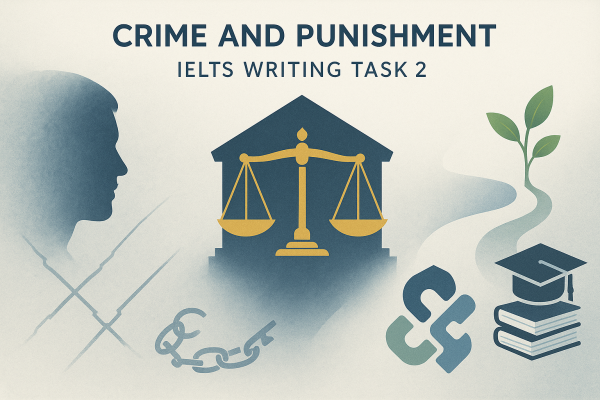
Crime and Punishment (Tội phạm và hình phạt) là một chủ đề quan trọng thuộc nhóm Social Issues (các vấn đề xã hội) trong IELTS Writing Task 2. Để đạt điểm cao ở phần này, thí sinh cần có cái nhìn sâu sắc và kiến thức nhất định về các vấn đề xã hội, an ninh trật tự, cũng như khả năng trình bày quan điểm, giải pháp một cách logic và thuyết phục.
Thầy Trịnh Nam Việt (giáo viên 8.0 IELTS tại ECE) giải đáp chủ đề Crime and Punishment IELTS Writing Task 2
Các câu hỏi thường gặp trong chủ đề này xoay quanh:
- Nguyên nhân và hậu quả của tội phạm: Tại sao tội phạm gia tăng? Hậu quả của nó đối với xã hội là gì?
- Cách phòng ngừa hoặc giảm thiểu tội phạm: Chính phủ, giáo dục, gia đình và cộng đồng có vai trò gì trong việc ngăn chặn tội phạm?
- Hình phạt nào là hiệu quả / công bằng: Nên ưu tiên cải tạo hay trừng phạt? Mức độ hình phạt có nên tương xứng với mức độ nghiêm trọng của tội phạm không?
- Vai trò của các bên liên quan: Chính phủ, giáo dục, cha mẹ và cộng đồng có trách nhiệm như thế nào trong việc ngăn ngừa tội phạm và hỗ trợ người tái hòa nhập?
Đây được đánh giá là một dạng câu hỏi khó, đòi hỏi người viết không chỉ có vốn từ vựng phong phú mà còn cần có tư duy phản biện và khả năng đưa ra các ví dụ, dẫn chứng phù hợp.
Các dạng câu hỏi phổ biến và ví dụ
Trong IELTS Writing Task 2, chủ đề Crime and Punishment có thể xuất hiện dưới nhiều dạng câu hỏi khác nhau. Dưới đây là một số dạng phổ biến cùng ví dụ minh họa:
- Opinion Essay (Bài luận nêu ý kiến):
Ví dụ: Some people believe that prison is the best punishment for criminals. Others think more effective forms of punishment exist. Do you agree or disagree?
- Discussion Essay (Bài luận thảo luận):
Ví dụ: Some people believe that criminals should be given longer prison sentences. Others argue that rehabilitation and education are more effective. Discuss both views and give your own opinion.
- Advantages/Disadvantages (Ưu điểm/Nhược điểm):
Ví dụ: Many governments are replacing prison sentences with community service for minor crimes. What are the advantages and disadvantages of this approach?
- Problem/Reason/Solution (Vấn đề/Nguyên nhân/Giải pháp):
Ví dụ: In many countries, the crime rate among teenagers is rising. What are the causes of this trend, and what can be done to address it?
Tổng hợp ý tưởng phổ biến cho chủ đề Crime and Punishment
Để viết tốt một bài luận về Crime and Punishment, bạn cần trang bị cho mình những ý tưởng và luận điểm vững chắc. Dưới đây là tổng hợp các ý tưởng chính và gợi ý triển khai cho từng chủ đề phụ:
Bài mẫu IELTS Writing Task 2: Discuss both views
Đề bài mẫu: Some people believe that the best way to reduce crime is to give longer prison sentences. Others, however, believe there are better alternative ways to reduce crime. Discuss both views.
Mở bài:
Crime reduction is a critical concern for societies worldwide, prompting intense debate over the most effective measures. While some argue that imposing longer prison sentences serves as the best deterrent, others believe that alternative approaches such as rehabilitation, education, and community programs offer more sustainable solutions. This essay will examine both perspectives before concluding with a reasoned opinion on the most effective strategies to combat criminal behaviour.
Thân bài 1: Quan điểm ủng hộ án tù dài hạn
On the one hand, proponents of longer prison terms contend that strict punishment serves as a powerful deterrent against criminal behavior. First of all, when individuals are aware that serious crimes will lead to prolonged incarceration, they may think twice before offending. This view is supported by the theory of deterrence, which suggests that the certainty and severity of punishment can influence behavior. Moreover, extended prison sentences can incapacitate dangerous offenders, thereby protecting society by removing potential threats. In countries where harsh sentencing policies are enforced, such as the United States, proponents argue that the crime rate is kept in check due to the fear of lengthy imprisonment.
Thân bài 2: Quan điểm ủng hộ các phương pháp thay thế
On the other hand, critics of this punitive approach argue that long-term incarceration often fails to address the underlying causes of crime, such as poverty, lack of education, and mental health issues. Instead of merely punishing offenders, society should focus on rehabilitation and reintegration. Programs aimed at vocational training, counseling, and drug treatment within prisons have shown positive outcomes in reducing recidivism rates. Furthermore, preventive strategies like investing in early childhood education, improving social services, and creating employment opportunities can tackle crime at its source. Scandinavian countries, for instance, emphasize rehabilitation over punishment and report some of the lowest crime rates globally.
Kết bài:
In conclusion, while longer prison sentences may deter crime to some extent and protect society in the short term, they are not a panacea. A more holistic approach that addresses the root causes of criminal behavior through comprehensive rehabilitation programs, combined with robust social reforms and proactive preventive strategies, is likely to yield more effective and lasting results. Therefore, it is imperative for governments and communities to prioritize these alternative methods alongside appropriate punitive measures to foster a safer and more just society.
Gợi ý từ vựng hay
Để viết hiệu quả về chủ đề Crime and Punishment, việc nắm vững các từ vựng chuyên ngành là vô cùng quan trọng. Dưới đây là danh sách các từ vựng thiết yếu:
- prison sentence (n): án phạt tù
- deterrent (n): sự răn đe
- incarceration (n): việc bỏ tù
- rehabilitation (n): sự cải tạo (phục hồi nhân phẩm)
- recidivism (n): sự tái phạm
- reintegration (n): tái hòa nhập
- vocational training (n): đào tạo nghề
- punitive approach (n): cách tiếp cận mang tính trừng phạt
- preventive strategy (n): chiến lược phòng ngừa
- underlying causes (n): nguyên nhân sâu xa
- social reform (n): cải cách xã hội
- root causes (n): nguyên nhân gốc rễ
- criminal behavior (n): hành vi phạm tội
- offender (n): người phạm tội
- law enforcement (n): thực thi pháp luật
- imprisonment (n): sự tống giam
Tóm lại, chủ đề Tội phạm và Hình phạt trong IELTS Writing Task 2 đòi hỏi thí sinh phải có cái nhìn toàn diện và sâu sắc, không chỉ nắm vững từ vựng mà còn cần khả năng lập luận chặt chẽ. Việc hiểu rõ các nguyên nhân, hậu quả của tội phạm, cùng với các phương pháp phòng ngừa, hình phạt hiệu quả và vai trò của tái hòa nhập xã hội sẽ giúp bạn xây dựng một bài luận thuyết phục. Hy vọng những phân tích và gợi ý trên đây của ECE sẽ là hành trang vững chắc để bạn chinh phục chủ đề này và đạt được band điểm mong muốn trong kỳ thi IELTS.

Đoàn Nương
Tôi là Đoàn Nương - Giám đốc trung tâm ngoại ngữ ECE. Tôi hiện đang là giảng viên của khoa ngôn ngữ các nước nói tiếng Anh - Trường Đại Học Quốc Gia Hà Nội. Tôi đã có 19 năm kinh nghiệm giảng dạy IELTS và 15 năm là giảng viên Đại Học. Tôi mong muốn đưa ECE trở thành trung tâm ngoại ngữ cho tất cả mọi người, mang tới cho học viên môi trường học tập tiếng Anh chuyên nghiệp và hiệu quả.
Tìm hiểu các khóa học tại ECE
Tin Tức Cùng Danh Mục

The Concept of Childhood in Western Countries IELTS Reading: Dịch & giải chi tiết

The Magic of Kefir IELTS Reading: Dịch bài đọc & đáp án chuẩn

The Columbian Exchange IELTS Reading: Dịch & giải chi tiết A-Z

Giải mã bài đọc: Complementary & alternative medicine IELTS Reading

Stadium Australia IELTS Reading: Giải chi tiết & Dịch nghĩa
Các tin liên quan
The Concept of Childhood in Western Countries IELTS Reading: Dịch & giải chi tiết
The Magic of Kefir IELTS Reading: Dịch bài đọc & đáp án chuẩn
The Columbian Exchange IELTS Reading: Dịch & giải chi tiết A-Z
Giải mã bài đọc: Complementary & alternative medicine IELTS Reading
Stadium Australia IELTS Reading: Giải chi tiết & Dịch nghĩa

Television and Sport IELTS Reading: Dịch chuẩn & Giải đề chi tiết

The Invention of Television IELTS Reading: Từ vựng & đáp án chuẩn

Frogwatch IELTS Reading: Bài dịch & đáp án chuẩn nhất

Consecutive and Simultaneous Translation IELTS Reading: Dịch chuẩn & Giải chi tiết

Fears IELTS Reading: Bản dịch chuẩn & giải chi tiết từ A-Z

Memory and Age IELTS Reading: Dịch chuẩn & Giải chi tiết

Đáp án & từ vựng bài đọc Photovoltaics on the rooftop IELTS Reading




Lượt Đăng Ký

NHẬN TƯ VẤN NGAY
Vui lòng để lại thông tin để được tư vấn chi tiết lộ trình học và thi IELTS ở trên
