
IELTS Speaking topic describe a child that you know – Từ vựng hay & bài mẫu 8.0+



Tóm Tắt Nội Dung Bài Viết
IELTS Speaking topic describe a child that you know – Từ vựng hay & bài mẫu 8.0+


Tóm Tắt Nội Dung Bài Viết
Trong IELTS Speaking, chủ đề describe a child that you know thường xuyên xuất hiện trong Part 2 và liên quan đến các câu hỏi bổ trợ ở Part 1 và Part 3. Đây là dạng topic quen thuộc nhưng lại đòi hỏi sự mô tả sinh động, chính xác cả về ngoại hình, tính cách, hành vi lẫn cảm xúc.
Trong bài viết này, ECE sẽ giúp bạn:
Nâng cao vốn từ với cụm từ, collocation và idioms ăn điểm
Luyện tập bài mẫu Speaking Band 8+ theo từng Part.
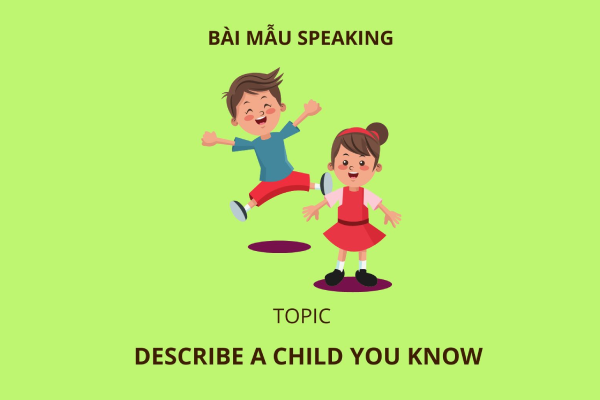
Cô Nguyễn Thu Hà gợi ý trả lời IELTS Speaking topic: describe a child that you know
Bài viết được tham vấn bởi cô Nguyễn Thu Hà – Giáo viên 8.0 IELTS tại trung tâm ngoại ngữ ECE. Mời các bạn cùng theo dõi!
Từ vựng IELTS Speaking chủ đề “Describe a child that you know”
Gợi ý từ vựng về ngoại hình (Appearance)
| Từ vựng / Cụm từ | Nghĩa tiếng Việt | Ví dụ câu tiếng Anh |
| Tiny and delicate | Nhỏ nhắn và mong manh | She’s tiny and delicate like a porcelain doll. |
| Chubby cheeks | Má phúng phính | He has chubby cheeks that everyone loves to pinch. |
| Big round eyes | Mắt to tròn | Her big round eyes are always full of wonder. |
| Messy ponytail | Tóc buộc đuôi ngựa rối bù | She often wears a messy ponytail when playing outside. |
| Baby teeth | Răng sữa | His baby teeth make his smile so adorable. |
| Dress like a cartoon character | Ăn mặc như nhân vật hoạt hình | She loves to dress like a cartoon character every day. |
| Covered in mud | Dính đầy bùn đất | He came home covered in mud after playing football. |
| Barefoot and carefree | Chân trần và vô tư | The child ran barefoot and carefree through the garden. |
Gợi ý từ vựng về tính cách (Personality)
| Cụm từ | Nghĩa tiếng Việt | Ví dụ |
| Curious by nature | Bản chất tò mò | She’s curious by nature and always asks questions. |
| Incredibly imaginative | Có trí tưởng tượng phong phú | He’s incredibly imaginative and creates his own worlds. |
| Obedient but playful | Vâng lời nhưng tinh nghịch | She’s obedient but playful with her siblings. |
| Mischievous grin | Nụ cười tinh nghịch | He gave me a mischievous grin after hiding my phone. |
| Bright and cheerful | Tươi sáng và vui vẻ | Her bright and cheerful attitude lights up the room. |
| Eager to learn | Háo hức học hỏi | The child is eager to learn new things every day. |
| Sensitive soul | Tâm hồn nhạy cảm | She’s a sensitive soul who cries when others are upset. |
| Always speaks her mind | Luôn nói thẳng suy nghĩ | She’s not shy—she always speaks her mind. |
Gợi ý từ vựng về sở thích (Hobbies & Interests)
| Cụm từ | Nghĩa tiếng Việt | Ví dụ |
| Be into coloring | Thích tô màu | My nephew is really into coloring superhero figures. |
| Obsessed with dinosaurs | Say mê khủng long | He’s obsessed with dinosaurs and knows all their names. |
| Love bedtime stories | Thích truyện trước giờ ngủ | She can’t sleep without hearing her bedtime stories. |
| Addicted to cartoons | Nghiện phim hoạt hình | He’s totally addicted to cartoons like Peppa Pig. |
| Enjoy building with LEGO | Thích lắp ráp LEGO | He enjoys building cities with his LEGO set. |
| Dance to any tune | Nhảy theo bất cứ nhạc nào | She will dance to any tune, even a ringtone. |
| Fascinated by insects | Bị cuốn hút bởi côn trùng | He’s fascinated by insects and collects bugs. |
| Pretend to be a superhero | Giả làm siêu anh hùng | She always pretends to be a superhero and saves the world. |
Gợi ý từ vựng về hành động (Behavior & Actions)
| Cụm từ | Nghĩa tiếng Việt | Ví dụ |
| Throw a tantrum | Ăn vạ | He throws a tantrum every time he can’t get candy. |
| Burst into tears | Bật khóc | She burst into tears when her toy broke. |
| Run around nonstop | Chạy nhảy không ngừng | They run around nonstop like they have endless energy. |
| Hug everyone in sight | Ôm tất cả mọi người | He hugs everyone in sight when he’s happy. |
| Scribble on the wall | Vẽ bậy lên tường | She scribbled on the wall with crayons. |
| Jump for joy | Nhảy cẫng lên vì vui sướng | He jumped for joy when he saw his birthday cake. |
| Ask endless questions | Hỏi không ngừng nghỉ | She asks endless questions about how things work. |
| Cling to mom | Bám mẹ | He clings to his mom whenever strangers come. |
Gợi ý từ vựng về cảm xúc (Emotions)
| Cụm từ | Nghĩa tiếng Việt | Ví dụ |
| Cry over nothing | Khóc vì những điều nhỏ nhặt | Sometimes she cries over nothing, just for attention. |
| Get excited easily | Dễ hào hứng | He gets excited easily, especially before outings. |
| Be over the moon | Vui sướng tột độ | She was over the moon when she got a new puppy. |
| Feel left out | Cảm thấy bị bỏ rơi | He felt left out when no one picked him for a game. |
| Be scared of the dark | Sợ bóng tối | She’s scared of the dark and won’t sleep alone. |
| Giggle uncontrollably | Cười khúc khích không dứt | They giggled uncontrollably watching funny videos. |
| Hide behind someone | Trốn sau lưng ai | He hides behind his sister when he’s nervous. |
| Stare in awe | Nhìn trân trối vì kinh ngạc | She stared in awe at the magician’s trick. |
Sample Answers
Part 1 – Sample Band 8.0+
- Do you enjoy spending time with children?
Absolutely! Children have such a refreshing way of seeing the world. I often babysit my little niece, and being around her always lifts my mood. - What kinds of activities do children enjoy most in your country?
In Vietnam, kids love outdoor games like skipping rope or playing hide and seek. Recently, more children have been glued to their screens, watching cartoons or playing mobile games. - Do you think children are more intelligent than before?
In some ways, yes. Thanks to early exposure to technology and interactive learning, many kids today can absorb information like a sponge. - Do you think it’s good for children to be curious?
Definitely. Curiosity is the fuel for learning. When a child is naturally inquisitive, they’re more likely to explore and discover the world around them.
Part 2 – Describe a child that you know
Đề 1: *Describe a child you know well. You should say:
Who the child is
How you know this child
What this child is like
And explain how you feel about this child.*
Bài mẫu Band 8.0+:
The child I’d like to talk about is my cousin Mai. She’s 6 years old and lives just a few blocks away from my house, so I see her almost every weekend.
Mai is a petite girl with chubby cheeks and sparkling eyes that always seem to be full of mischief. She often wears bright cartoon-themed dresses and ties her hair in a messy ponytail. Despite being small, she’s full of energy and always running around.
What really stands out about her is her personality. She’s incredibly curious, and it feels like she has a thousand questions per minute. Whether it’s about animals, colors, or why the sky is blue, she’s always seeking answers. She’s also very affectionate, often giving hugs and saying “I love you” to family members.
One thing I really appreciate is that although she’s a bit mischievous, she’s also extremely polite for her age. She says “please” and “thank you” without needing reminders.
Every time I spend time with Mai, I feel lighter and happier. She reminds me to enjoy the little things and look at life through a playful lens.
Đề 2: *Describe a naughty child you know. You should say:
Who the child is
What they do that is naughty
How adults respond to this behavior
And explain whether you find this behavior amusing or annoying.*
Bài mẫu Band 8.5:
I’d like to describe Nam, the son of one of my colleagues. He’s around 5 years old and honestly, he’s the definition of “naughty but lovable.”
Nam is always on the move—running around like a tornado. Once, during a work event, he scribbled all over the office whiteboard with markers and proudly announced he had made “art.”
He tends to throw tantrums when he doesn’t get what he wants and sometimes hides other kids’ toys just to see their reaction. Most adults try to be patient with him because he’s still young, but I can tell they’re sometimes exhausted.
Even so, I personally find his behavior quite funny—as long as I’m not the one cleaning up the mess! His expressions, mischievous grin, and clever excuses are oddly entertaining.
That said, I do hope he learns better self-control as he grows older, because right now, he’s quite a handful!
Part 3 – Sample Band 8.0+
Sub-topic 1: Child Development
- What factors influence a child’s personality the most?
I think the biggest factors are parenting style and environment. A child raised in a nurturing household with emotional support is more likely to develop confidence and empathy. - Do children learn more from their peers or from adults?
Both play important roles. Adults shape values and discipline, while peers help children learn about sharing, competition, and social dynamics. - Is it important to discipline children?
Yes, but it should be done with care. Rather than punishment, positive reinforcement works better to teach them what’s right and wrong. - At what age should children start formal education?
In my opinion, around age 5 or 6 is suitable. Before that, kids should focus on play-based learning to develop creativity and emotional intelligence.
Sub-topic 2: Children and Technology
- Should young children be allowed to use smartphones?
I believe in moderated usage. Smartphones can be educational, but excessive screen time may harm their development and attention span. - How has technology changed the way children spend their free time?
Kids used to play outside more. Now, many prefer watching YouTube or playing video games. This shift has reduced face-to-face interaction. - Can children learn from digital devices?
Absolutely. There are countless interactive learning apps that teach math, languages, and even coding. The key is adult supervision. - Do you think technology will replace teachers in the future?
Not at all. Technology is a support tool, but the role of human teachers in emotional connection and guidance can’t be replaced.
Tóm lại, việc miêu tả một đứa trẻ trong IELTS Speaking Part 2 không chỉ yêu cầu vốn từ vựng phong phú về ngoại hình, tính cách, sở thích và hành vi, mà còn cần sự tinh tế trong cách diễn đạt cảm xúc. Hy vọng với những gợi ý từ vựng, cấu trúc câu “ăn điểm” và bài mẫu Band 8+ được ECE tổng hợp và tham vấn bởi cô Nguyễn Thu Hà, bạn đã có thêm hành trang vững chắc để tự tin chinh phục chủ đề “Describe a child that you know”. Hãy luyện tập thường xuyên để biến những từ vựng này thành của riêng mình và đạt kết quả cao nhất trong kỳ thi IELTS sắp tới nhé!

Đoàn Nương
Tôi là Đoàn Nương - Giám đốc trung tâm ngoại ngữ ECE. Tôi hiện đang là giảng viên của khoa ngôn ngữ các nước nói tiếng Anh - Trường Đại Học Quốc Gia Hà Nội. Tôi đã có 19 năm kinh nghiệm giảng dạy IELTS và 15 năm là giảng viên Đại Học. Tôi mong muốn đưa ECE trở thành trung tâm ngoại ngữ cho tất cả mọi người, mang tới cho học viên môi trường học tập tiếng Anh chuyên nghiệp và hiệu quả.
Tìm hiểu các khóa học tại ECE
Tin Tức Cùng Danh Mục

The Concept of Childhood in Western Countries IELTS Reading: Dịch & giải chi tiết

The Magic of Kefir IELTS Reading: Dịch bài đọc & đáp án chuẩn
The Columbian Exchange IELTS Reading: Dịch & giải chi tiết A-Z

Giải mã bài đọc: Complementary & alternative medicine IELTS Reading

Stadium Australia IELTS Reading: Giải chi tiết & Dịch nghĩa
Các tin liên quan
The Concept of Childhood in Western Countries IELTS Reading: Dịch & giải chi tiết
The Magic of Kefir IELTS Reading: Dịch bài đọc & đáp án chuẩn
The Columbian Exchange IELTS Reading: Dịch & giải chi tiết A-Z
Giải mã bài đọc: Complementary & alternative medicine IELTS Reading
Stadium Australia IELTS Reading: Giải chi tiết & Dịch nghĩa

Television and Sport IELTS Reading: Dịch chuẩn & Giải đề chi tiết

The Invention of Television IELTS Reading: Từ vựng & đáp án chuẩn
Frogwatch IELTS Reading: Bài dịch & đáp án chuẩn nhất
Consecutive and Simultaneous Translation IELTS Reading: Dịch chuẩn & Giải chi tiết

Fears IELTS Reading: Bản dịch chuẩn & giải chi tiết từ A-Z
Memory and Age IELTS Reading: Dịch chuẩn & Giải chi tiết

Đáp án & từ vựng bài đọc Photovoltaics on the rooftop IELTS Reading




Lượt Đăng Ký

NHẬN TƯ VẤN NGAY
Vui lòng để lại thông tin để được tư vấn chi tiết lộ trình học và thi IELTS ở trên
