
IELTS Speaking Topic: Conversation & Public Speaking



Tóm Tắt Nội Dung Bài Viết
IELTS Speaking Topic: Conversation & Public Speaking


Tóm Tắt Nội Dung Bài Viết
Trong IELTS Speaking, những câu hỏi về giao tiếp hàng ngày hay kỹ năng nói trước đám đông đòi hỏi thí sinh không chỉ có vốn từ vựng tốt mà còn phải biết cách triển khai ý mạch lạc. Bài viết này của thầy Quốc Thịnh – Giáo viên trung tâm ngoại ngữ ECE sẽ cung cấp cho bạn bộ từ vựng và các bài mẫu chuẩn xác để tự tin chinh phục Band 7.0+.
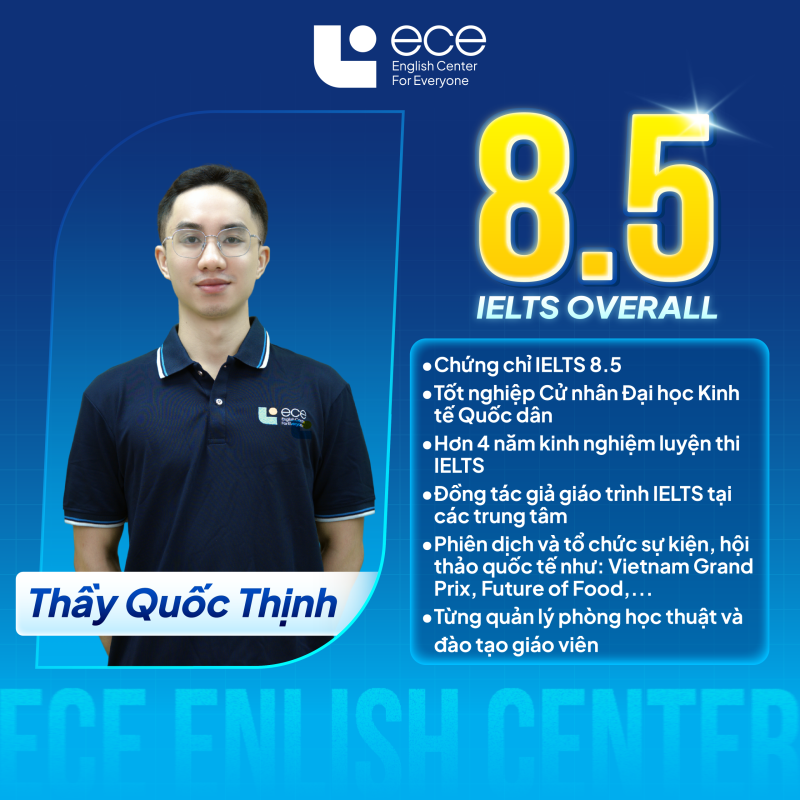
Thầy Đặng Quốc Thịnh – Giáo viên 8.5 IELTS tại trung tâm ngoại ngữ ECE
Gợi ý bộ từ vựng & cấu trúc nâng band
Dưới đây là những cụm từ vựng đắt giá giúp bạn thay thế những từ cơ bản, được chia theo từng ngữ cảnh cụ thể:
Bảng từ vựng ưu tiên
| Cụm từ tiếng Anh | Ý nghĩa tiếng Việt | Ngữ cảnh sử dụng |
| Chat / Chitchat | Trò chuyện, tán gẫu | Dùng cho bạn bè, bối cảnh thoải mái |
| Catch up | Hàn huyên, cập nhật tình hình | Khi gặp lại bạn cũ |
| Face-to-face conversation | Cuộc trò chuyện trực tiếp | So sánh với nhắn tin trực tuyến |
| Genuine connection | Sự kết nối chân thật | Nói về lợi ích của việc gặp mặt trực tiếp |
| Potential misunderstandings | Những hiểu lầm tiềm ẩn | Nói về hạn chế của việc nhắn tin |
| Light-hearted topics | Những chủ đề nhẹ nhàng | Trò chuyện giải trí, không căng thẳng |
| Financial investments | Đầu tư tài chính | Chủ đề trò chuyện của người trưởng thành |
| Private matters | Vấn đề riêng tư | Những câu hỏi tế nhị, không muốn chia sẻ |
| Subtle irritation | Sự khó chịu tinh tế/ngầm | Cảm xúc khi bị hỏi chuyện tế nhị |
| Express care and concern | Thể hiện sự quan tâm, lo lắng | Giải thích văn hóa hỏi thăm của người lớn |
| Feel under pressure | Cảm thấy áp lực | Cảm giác khi đứng trước đám đông |
| Fear of being judged | Sợ bị phán xét | Rào cản tâm lý khi thuyết trình |
| Repeated exposure | Tiếp xúc/Thực hành lặp đi lặp lại | Cách để cải thiện kỹ năng nói |
| Meditation / Controlled breathing | Thiền / Kiểm soát nhịp thở | Phương pháp giảm căng thẳng |
| Guest speakers | Diễn giả khách mời | Nói về các buổi ngoại khóa ở trường |
| Career paths | Con đường sự nghiệp | Định hướng tương lai cho học sinh |
Một số cấu trúc ghi điểm (Band 7+)
Để bài nói mạch lạc và mang đậm dấu ấn cá nhân, hãy sử dụng các cấu trúc dẫn dắt sau:
-
From my perspective,… (Từ góc nhìn của tôi,…)
-
Looking back,… (Nhìn lại quá khứ,…)
-
One noticeable change is… (Một sự thay đổi đáng chú ý là…)
-
That said,… (Mặc dù vậy,… – dùng để lật lại vấn đề)
-
I came to realise that… (Tôi dần nhận ra rằng…)
-
This is especially valuable for… (Điều này đặc biệt có giá trị đối với…)
Bài mẫu IELTS Speaking Part 1: Conversations
Chiến thuật ghi điểm: Một câu trả lời tốt cho Part 1 không chỉ trả lời trực tiếp câu hỏi mà nên có sự so sánh (Quá khứ – Hiện tại), thể hiện sự thay đổi theo thời gian và đưa cảm xúc cá nhân vào.
Q1: Do you often chat with friends?
“Not as much as I used to. When I was a teenager, I could spend hours chatting with my classmates. Our conversations ranged from small talk about what had happened during the day to random teenage concerns. Nowadays, we only meet up once in a while to catch up, as everyone is busy with their own responsibilities.”
Q2: Do you prefer to chat online or face-to-face?
“Now that I’ve grown up, I definitely prefer face-to-face conversations to online chats. There’s something special about talking to a friend in a coffee shop — the connection feels more genuine, and I feel more understood. Besides, potential misunderstandings that often arise from texting can be easily avoided when communicating in person.”
Q3: What do you usually chat about with friends?
“I’ve noticed that the topics I discuss with my friends have changed significantly compared to when we were students. Back then, we talked about light-hearted topics like recommended restaurants, upcoming concerts, or even a bit of gossip.
These days, however, our conversations revolve around more serious matters, as we’re all adults now. Work, further education, and financial investments are frequently discussed. Although these topics may sound stressful, it actually feels relieving to share such responsibilities and concerns with close friends.”
Q4: Do you argue with friends?
“Not really. I consider myself quite easy-going and open-minded, so I’m generally receptive to different viewpoints, even if they contradict my own. On top of that, I tend to avoid unnecessary conflicts, especially those unrelated to my professional interests. If I sense that a discussion might escalate into an argument, I usually try to steer the conversation in a different direction or excuse myself politely.”
Bài mẫu IELTS Speaking Part 2
Đề bài: Describe a conversation topic that you were not interested in.
You should say:
-
Who you talked with
-
When you had the conversation
-
What the topic was
-
And explain why you were not interested
Bài mẫu tham khảo:
Talking about a conversation that I didn’t fully enjoy in the past, I have to mention the typical exchanges that happen at almost every family gathering. It was usually the conversations with my relatives, where a series of personal questions would come my way.
They often asked about my income or my relationship status. Like many young people, I felt uncomfortable being asked such questions at the time, as I considered them private matters that shouldn’t be discussed in front of a large group. I mean, sharing your salary in front of twenty people felt unimaginable — and it became even more awkward when comparisons were made with others, which could make you feel as if you weren’t doing well enough. Looking back, my reaction was either to avoid answering or to show subtle irritation, which I now realise wasn’t the most appropriate response.
As I grew older, however, my perspective gradually shifted. I came to realise that in our culture, asking such questions is often a way of expressing care and concern, rather than an attempt to judge or criticise. I had mistakenly assumed there was negative intent behind them.
Since then, I’ve become more open to these conversations and have learned how to respond politely without revealing too many personal details.
Bài mẫu IELTS Speaking Part 3: Public Speaking & Communication
Q1: Why do people feel nervous when they are giving a speech to others?
“From my perspective, it’s completely natural to feel anxious when speaking in front of a crowd. When all eyes are on you, it’s easy to feel under pressure. For inexperienced speakers, this anxiety can intensify due to the fear of being judged by others. That said, public speaking is a skill like any other — with consistent practice and the right techniques, people can gradually overcome this fear.”
Q2: How can people improve their public speaking skills?
“I strongly believe the saying ‘practice makes perfect’ really applies here. While certain techniques — such as deep breathing before speaking — can help reduce tension, the most important factor is repeated exposure. The more you do it, the more confident you become. Preparation also plays a crucial role. When speakers thoroughly prepare their content, they’re far more likely to deliver their message clearly and stay in control throughout the speech.”
Q3: Can you suggest any methods that would help reduce nervousness?
“One commonly suggested method is chewing gum before giving a speech. Some studies indicate that chewing gum may help lower stress levels by reducing certain stress-related hormones. Another effective approach is meditation or controlled breathing. By slowing down your breathing and heart rate, you can calm your body’s stress response and feel more composed before stepping onto the stage.”
Q4: Is it good for people to visit schools and give a talk to children about different things?
“I believe this is a highly beneficial activity and should be organised more frequently. Guest speakers can share real-world experiences that go beyond textbooks, helping students gain a broader understanding of life outside the classroom. This is especially valuable for high school students, who are at a stage where they need guidance to make informed decisions about their future.”
Q5: What type of person is best suited to give a talk to a group of students?
“Professionals from various fields would make excellent guest speakers. They can provide practical insights and in-depth knowledge that students may not easily access through regular school lessons. More importantly, their advice on career paths can be incredibly valuable, helping students make more informed choices in the future.”
Giao tiếp không chỉ là trao đổi thông tin, mà là nghệ thuật kết nối. Tương tự, một bài thi IELTS Speaking xuất sắc không chỉ nằm ở việc nhồi nhét từ khó, mà ở cách bạn truyền tải thông điệp một cách chân thực và logic nhất. Hy vọng hệ thống từ vựng và bài mẫu trên sẽ là hành trang vững chắc, giúp bạn tự tin làm chủ mọi cuộc đối thoại trong phòng thi cũng như ngoài đời thực.

Đoàn Nương
Tôi là Đoàn Nương - Giám đốc trung tâm ngoại ngữ ECE. Tôi hiện đang là giảng viên của khoa ngôn ngữ các nước nói tiếng Anh - Trường Đại Học Quốc Gia Hà Nội. Tôi đã có 19 năm kinh nghiệm giảng dạy IELTS và 15 năm là giảng viên Đại Học. Tôi mong muốn đưa ECE trở thành trung tâm ngoại ngữ cho tất cả mọi người, mang tới cho học viên môi trường học tập tiếng Anh chuyên nghiệp và hiệu quả.
Tìm hiểu các khóa học tại ECE
Tin Tức Cùng Danh Mục

Angkor Wat IELTS Reading Answers – Bài đọc về ngôi đền Angkor Wat

Gợi ý từ vựng, ý tưởng cho IELTS speaking topic films

ELTS Speaking topic Birthday: Bài mẫu & Từ vựng chuẩn

Grey Workers IELTS Reading – Đáp án bài đọc & dịch chi tiết
Radio Automation IELTS Reading – Bài dịch & đáp án chuẩn
Các tin liên quan
Angkor Wat IELTS Reading Answers – Bài đọc về ngôi đền Angkor Wat
Gợi ý từ vựng, ý tưởng cho IELTS speaking topic films
ELTS Speaking topic Birthday: Bài mẫu & Từ vựng chuẩn
Grey Workers IELTS Reading – Đáp án bài đọc & dịch chi tiết
Radio Automation IELTS Reading – Bài dịch & đáp án chuẩn

Martin Luther King IELTS Reading: Từ vựng & đáp án chi tiết

Từ vựng & Bài mẫu IELTS Speaking Topic Money

Giải mã topic Internet IELTS Speaking: Từ vựng & Bài mẫu chi tiết

IELTS speaking topic helping others: Từ vựng & Bài mẫu

Từ vựng & Bài mẫu IELTS Speaking Topic Advertisement

Maori Fish Hooks IELTS Reading: Từ vựng & đáp án chuẩn
Giải mã bài đọc Reading the Screen IELTS Reading: Từ vựng & đáp án chuẩn




Lượt Đăng Ký

NHẬN TƯ VẤN NGAY
Vui lòng để lại thông tin để được tư vấn chi tiết lộ trình học và thi IELTS ở trên
