
IELTS Reading “Henry Moore” – Bài đọc IELTS về một thiên tài điêu khắc



Tóm Tắt Nội Dung Bài Viết
IELTS Reading “Henry Moore” – Bài đọc IELTS về một thiên tài điêu khắc


Tóm Tắt Nội Dung Bài Viết
Henry Moore không chỉ là một nhà điêu khắc, ông là một kiến trúc sư của hình khối, một người đã định hình lại cách chúng ta nhìn nhận nghệ thuật điêu khắc hiện đại. Từ những khao khát ban đầu ở thị trấn nhỏ Castleford đến việc trở thành một biểu tượng được quốc tế công nhận, cuộc đời và sự nghiệp của Moore là một chuỗi những khám phá và đột phá nghệ thuật không ngừng.
Bài đọc IELTS “Henry Moore” không chỉ cung cấp cái nhìn sâu sắc về quá trình hình thành phong cách của ông mà còn đưa người học IELTS vào một hành trình đầy thử thách với các dạng câu hỏi khác nhau. Hãy cùng ECE “khai quật” từng lớp nghĩa của bài đọc, khám phá những ảnh hưởng định hình nên thiên tài này và trang bị những chiến lược cần thiết để chinh phục bài thi một cách hiệu quả.
Nội dung bài đọc & Câu hỏi
Henry Moore
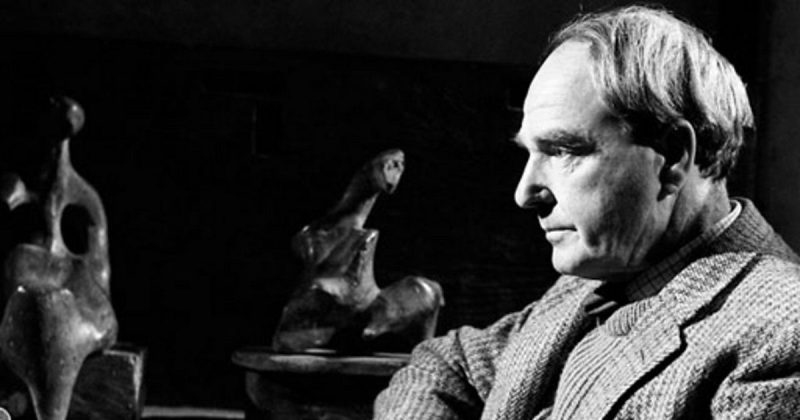
Bài đọc IELTS Reading về Henry Moore – Một nhà điêu khắc & kiến trúc sư nổi tiếng
(A) Henry Moore was born in Castleford, a small town near Leeds in the north of England. He was the seventh child of Raymond Moore and his wife Mary Baker. He studied at Castleford Grammar School from 1909 to 1915, where his early interest in art was encouraged by his teacher Alice Gostick. After leaving school, Moore hoped to become a sculptor, but instead he complied with his father’s wish that he train as a schoolteacher (Q1). He had to abandon his training in 1917 when he was sent to France to fight in the First World War.
(B) After the war, Moore enrolled at the Leeds School of Art, where he studied for two years. In his first year, he spent most of his time drawing. Although he wanted to study sculpture, no teacher was appointed until his second year (Q2). At the end of that year, he passed the sculpture examination and was awarded a scholarship to the Royal College of Art in London. In September 1921, he moved to London and began three years of advanced study in sculpture.
(C) Alongside the instruction he received at the Royal College, Moore visited many of the London museums, particularly the British Museum, which had a wide-ranging collection of ancient sculpture. During these visits, he discovered the power and beauty of ancient Egyptian and African sculpture (Q4). As he became increasingly interested in these “primitive” forms of art, he turned away from European sculptural traditions.
(D) After graduating, Moore spent the first six months of 1925 travelling in France. When he visited the Trocadero Museum in Paris, he was impressed by a cast of a Mayan sculpture of the rain spirit (Q5). It was a male reclining figure with its knees drawn up together, and its head at a right angle to its body. Moore became fascinated with this stone sculpture, which he thought had a power and originality that no other stone sculpture possessed (Q6). He himself started carving a variety of subjects in stone, including depictions of reclining women, mother-and-child groups, and masks.
(E) Moore’s exceptional talent soon gained recognition, and in 1926 he started work as a sculpture instructor at the Royal College. In 1933, he became a member of a group of young artists called Unit One. The aim of the group was to convince the English public of the merits of the emerging international movement in modern art and architecture (Q7).
(F) Around this time, Moore moved away from the human figure to experiment with abstract shapes. In 1931, he held an exhibition at the Leicester Galleries in London. His work was enthusiastically welcomed by fellow sculptors, but the reviews in the press were extremely negative and turned Moore into a notorious figure. There were calls for his resignation from the Royal College (Q8), and the following year, when his contract expired, he left to start a sculpture department at the Chelsea School of Art in London.
(G) Throughout the 1930s, Moore did not show any inclination to please the British public. He became interested in the paintings of the Spanish artist Pablo Picasso, whose work inspired him to distort the human body in a radical way. At times, he seemed to abandon the human figure altogether. The pages of his sketchbooks from this period show his ideas for abstract sculptures that bore little resemblance to the human form.
(H) In 1940, during the Second World War, Moore stopped teaching at the Chelsea School and moved to a farmhouse about 20 miles north of London. A shortage of materials forced him to focus on drawing (Q9). He did numerous small sketches of Londoners, later turning these ideas into large coloured drawings in his studio. In 1942, he returned to Castleford to make a series of sketches of the miners who worked there (Q10). In 1944, Harlow, a town near London, offered Moore a commission for a sculpture depicting a family (Q11). The resulting work signifies a dramatic change in Moore’s style, away from the experimentation of the 1930s towards a more natural and humanistic subject matter. He did dozens of studies in clay for the sculpture, and these were cast in bronze and issued in editions of seven to nine copies each. In this way, Moore’s work became available to collectors all over the world (Q12). The boost to his income enabled him to take on ambitious projects and start working on the scale he felt his sculpture demanded (Q13).
(I) Critics who had begun to think that Moore had become less revolutionary were proven wrong by the appearance, in 1950, of the first of Moore’s series of standing figures in bronze, with their harsh and angular pierced forms and distinct impression of menace. Moore also varied his subject matter in the 1950s with such works as Warrior with Shield and Falling Warrior. These were rare examples of Moore’s use of the male figure and owe something to his visit to Greece in 1951, when he had the opportunity to study ancient works of art.
(J) In his final years, Moore created the Henry Moore Foundation to promote art appreciation and to display his work. Moore was the first modern English sculptor to achieve international critical acclaim and he is still regarded as one of the most important sculptors of the 20th century.
Question 1 – 7
Do the following statements agree with the information given in Reading Passage 1?
TRUE if the statement agrees with the information
FALSE if the statement contradicts the information
NOT GIVEN if there is no information on this
- On leaving school, Moore did what his father wanted him to do.
- Moore began studying sculpture in his first term at the Leeds School of Art.
- When Moore started at the Royal College of Art, its reputation for teaching sculpture was excellent.
- Moore became aware of ancient sculpture as a result of visiting London museums.
- The Trocadero Museum’s Mayan sculpture attracted a lot of public interest.
- Moore thought the Mayan sculpture was similar in certain respects to other stone sculptures.
- The artists who belonged to Unit One wanted to make modern art and architecture more popular.
Question 8 – 13
Complete the notes below. Choose ONE WORD ONLY from the passage for each answer.
8. 1930s: Moore is urged to offer his…………… and leave the Royal College.
9. 1940s: Moore turns to drawing because…………….for sculpting are not readily available.
10. 1940s: While visiting his hometown, Moore does some drawings of……………
11. 1940s: Moore is employed to produce a sculpture of a……………..
12. 1940s:…………..start to buy Moore’s work.
13. 1940s: Moore’s increased ….. makes it possible for him to do more ambitious sculptures.
Tóm tắt nội dung bài đọc IELTS Reading về Henry Moore
Bài đọc “Henry Moore” là một bức chân dung chi tiết về cuộc đời và sự nghiệp của một trong những nhà điêu khắc quan trọng nhất thế kỷ 20.
- Thuở ban đầu và định hướng nghề nghiệp (Đoạn A): Henry Moore sinh ra ở Castleford, thể hiện niềm yêu thích nghệ thuật từ sớm. Dù muốn làm nhà điêu khắc, ông đã nghe theo lời cha để trở thành giáo viên, nhưng sau đó phải bỏ dở để tham gia Thế chiến thứ nhất.
- Giáo dục nghệ thuật và khám phá (Đoạn B, C): Sau chiến tranh, ông học tại Leeds School of Art (năm đầu học vẽ vì không có giáo viên điêu khắc). Sau đó, ông nhận học bổng đến Royal College of Art ở London. Tại đây, ông khám phá vẻ đẹp của điêu khắc Ai Cập và Châu Phi cổ đại tại các bảo tàng, dần rời xa truyền thống điêu khắc châu Âu.
- Ảnh hưởng từ điêu khắc Maya (Đoạn D): Chuyến đi Pháp năm 1925, ông bị mê hoặc bởi một tác phẩm điêu khắc Maya về thần mưa tại Bảo tàng Trocadero, ngưỡng mộ sức mạnh và sự độc đáo của nó. Điều này ảnh hưởng đến việc ông bắt đầu chạm khắc các chủ đề như phụ nữ nằm, mẹ và con, mặt nạ.
- Sự nghiệp giảng dạy và nhóm Unit One (Đoạn E): Tài năng của Moore sớm được công nhận, ông trở thành giảng viên điêu khắc tại Royal College. Năm 1933, ông tham gia nhóm Unit One với mục tiêu phổ biến nghệ thuật và kiến trúc hiện đại.
- Chỉ trích và thay đổi (Đoạn F, G): Năm 1931, triển lãm của ông với các hình dạng trừu tượng bị báo chí chỉ trích gay gắt, dẫn đến việc ông phải rời Royal College để thành lập khoa điêu khắc tại Chelsea School of Art. Suốt những năm 1930, ông không ngừng thử nghiệm, chịu ảnh hưởng từ Picasso, bóp méo hình thể con người hoặc hoàn toàn từ bỏ nó.
- Thời kỳ Chiến tranh và sự trở lại với nhân bản (Đoạn H): Trong Thế chiến thứ hai, do thiếu vật liệu, ông tập trung vào vẽ phác thảo. Năm 1944, ông nhận được yêu cầu tạc tượng gia đình cho thị trấn Harlow, đánh dấu sự thay đổi sang phong cách tự nhiên và nhân văn hơn. Việc này cũng giúp tăng thu nhập, cho phép ông thực hiện các dự án quy mô lớn hơn.
- Tiếp tục đổi mới và tầm vóc quốc tế (Đoạn I, J): Những năm 1950, ông tiếp tục gây bất ngờ với các tác phẩm tượng đứng bằng đồng mang tính đe dọa, và khám phá tượng nam giới sau chuyến thăm Hy Lạp. Cuối đời, ông thành lập Quỹ Henry Moore và được công nhận rộng rãi là nhà điêu khắc hiện đại Anh đầu tiên đạt được danh tiếng quốc tế và là một trong những nghệ sĩ quan trọng nhất của thế kỷ 20.
Tổng hợp từ vựng quan trọng trong bài đọc
- Comply with (verb): Tuân theo, nghe theo.
- Enrolled (verb): Đăng ký, tham gia vào.
- Wide-ranging (adj): Đa dạng, phong phú.
- Primitive forms of art (cụm danh từ): Các hình thức nghệ thuật nguyên thủy.
- Fascinated with (cụm tính từ): Bị mê hoặc bởi.
- Originality (danh từ): Sự độc đáo, sáng tạo.
- Gained recognition (cụm động từ): Được công nhận.
- Merits (danh từ): Giá trị, công lao.
- Emerging international movement (cụm danh từ): Phong trào quốc tế mới nổi.
- Notorious figure (cụm danh từ): Nhân vật mang tiếng xấu.
- Resignation (danh từ): Đơn từ chức, sự từ chức.
- Expired (verb): Hết hạn.
- Distort (verb): Bóp méo, làm biến dạng.
- Bore little resemblance to (cụm động từ): Ít giống với.
- Shortage of materials (cụm danh từ): Thiếu vật liệu.
- Commission (danh từ): Nhiệm vụ, hợp đồng (điêu khắc).
- Humanistic subject matter (cụm danh từ): Chủ đề mang tính nhân văn.
- Boost to his income (cụm danh từ): Sự tăng vọt trong thu nhập.
- Ambitious projects (cụm danh từ): Các dự án đầy tham vọng.
- Critical acclaim (cụm danh từ): Lời ca ngợi từ giới phê bình.
- Regarded as (cụm động từ): Được coi là.
Gợi ý đáp án & phân tích chuyên sâu
1. TRUE
Dẫn chứng (Đoạn A): “…Moore hoped to become a sculptor, but instead he complied with his father’s wish that he train as a schoolteacher.”
Giải thích: Câu này hoàn toàn khớp với thông tin trong bài đọc.
2. FALSE
Dẫn chứng (Đoạn B): “In his first year, he spent most of his time drawing. Although he wanted to study sculpture, no teacher was appointed until his second year.”
Giải thích: Moore không bắt đầu học điêu khắc trong năm đầu tiên mà phải đến năm thứ hai mới có giáo viên.
3. NOT GIVEN
Dẫn chứng (Đoạn B): “At the end of that year, he passed the sculpture examination and was awarded a scholarship to the Royal College of Art in London.”
Giải thích: Bài đọc chỉ nói Moore được nhận học bổng và bắt đầu học tại Royal College of Art, nhưng không đề cập đến danh tiếng giảng dạy điêu khắc của trường vào thời điểm đó.
4. TRUE
Dẫn chứng (Đoạn C): “During these visits [to London museums], he discovered the power and beauty of ancient Egyptian and African sculpture.”
Giải thích: Chính việc thăm các bảo tàng ở London đã giúp Moore nhận ra nghệ thuật điêu khắc cổ đại.
5. NOT GIVEN
Dẫn chứng (Đoạn D): “When he visited the Trocadero Museum in Paris, he was impressed by a cast of a Mayan sculpture of the rain spirit.”
Giải thích: Bài đọc chỉ nói Moore bị ấn tượng, nhưng không có thông tin về việc tác phẩm này thu hút “a lot of public interest” (nhiều sự quan tâm của công chúng).
6. FALSE
Dẫn chứng (Đoạn D): “Moore became fascinated with this stone sculpture, which he thought had a power and originality that no other stone sculpture possessed.”
Giải thích: Moore nghĩ tác phẩm điêu khắc Mayan là độc đáo và không tác phẩm nào khác có được sức mạnh và sự độc đáo đó, tức là nó không “similar” (tương tự) với các tác phẩm khác.
7. TRUE
Dẫn chứng (Đoạn E): “The aim of the group [Unit One] was to convince the English public of the merits of the emerging international movement in modern art and architecture.”
Giải thích: “Convince the public of the merits” (thuyết phục công chúng về giá trị) đồng nghĩa với việc muốn làm cho nó “more popular” (phổ biến hơn).
8. resignation
Dẫn chứng (Đoạn F): “There were calls for his resignation from the Royal College.”
Giải thích: Từ khóa “urged to offer his…” (bị thúc giục đề nghị…) khớp với “calls for his resignation” (những lời kêu gọi ông từ chức).
9. materials
Dẫn chứng (Đoạn H): “A shortage of materials forced him to focus on drawing.”
Giải thích: “materials” (vật liệu) là từ thích hợp để điền vào chỗ trống, giải thích lý do ông chuyển sang vẽ.
10. miners
Dẫn chứng (Đoạn H): “In 1942, he returned to Castleford to make a series of sketches of the miners who worked there.”
Giải thích: Ông phác thảo về những “miners” (thợ mỏ) ở quê nhà.
11. family
Dẫn chứng (Đoạn H): “In 1944, Harlow, a town near London, offered Moore a commission for a sculpture depicting a family.”
Giải thích: Ông được thuê để điêu khắc một hình ảnh “family” (gia đình).
12. collectors
Dẫn chứng (Đoạn H): “In this way, Moore’s work became available to collectors all over the world.”
Giải thích: “Collectors” (các nhà sưu tầm) là những người bắt đầu mua tác phẩm của ông.
13. income
Dẫn chứng (Đoạn H): “The boost to his income enabled him to take on ambitious projects…”
Giải thích: “Increased income” (thu nhập tăng) giúp ông thực hiện các dự án điêu khắc tham vọng hơn.
Bài đọc “Henry Moore” là một ví dụ tuyệt vời về các bài đọc tiểu sử trong IELTS Reading, nơi thông tin được trình bày theo trình tự thời gian và thường chứa nhiều tên riêng, địa điểm và con số. Việc thành thạo dạng câu hỏi TRUE/FALSE/NOT GIVEN và Sentence Completion (Complete the notes) là cực kỳ quan trọng.
Thông qua bài phân tích này, ECE hy vọng bạn không chỉ có thêm kiến thức về một danh nhân nghệ thuật mà còn rèn luyện được kỹ năng đọc lướt, đọc chi tiết và xác định thông tin chính xác, giúp bạn tự tin hơn khi đối mặt với các bài đọc tương tự trong kỳ thi IELTS.
Mời bạn tham khảo thêm một số bài mẫu IELTS Reading được ECE biên soạn và tổng hợp:
What Lucy taught us IELTS Reading
Electroreception IELTS Reading

Đoàn Nương
Tôi là Đoàn Nương - Giám đốc trung tâm ngoại ngữ ECE. Tôi hiện đang là giảng viên của khoa ngôn ngữ các nước nói tiếng Anh - Trường Đại Học Quốc Gia Hà Nội. Tôi đã có 19 năm kinh nghiệm giảng dạy IELTS và 15 năm là giảng viên Đại Học. Tôi mong muốn đưa ECE trở thành trung tâm ngoại ngữ cho tất cả mọi người, mang tới cho học viên môi trường học tập tiếng Anh chuyên nghiệp và hiệu quả.
Tìm hiểu các khóa học tại ECE
Tin Tức Cùng Danh Mục

The Concept of Childhood in Western Countries IELTS Reading: Dịch & giải chi tiết

The Magic of Kefir IELTS Reading: Dịch bài đọc & đáp án chuẩn
The Columbian Exchange IELTS Reading: Dịch & giải chi tiết A-Z

Giải mã bài đọc: Complementary & alternative medicine IELTS Reading

Stadium Australia IELTS Reading: Giải chi tiết & Dịch nghĩa
Các tin liên quan
The Concept of Childhood in Western Countries IELTS Reading: Dịch & giải chi tiết
The Magic of Kefir IELTS Reading: Dịch bài đọc & đáp án chuẩn
The Columbian Exchange IELTS Reading: Dịch & giải chi tiết A-Z
Giải mã bài đọc: Complementary & alternative medicine IELTS Reading
Stadium Australia IELTS Reading: Giải chi tiết & Dịch nghĩa

Television and Sport IELTS Reading: Dịch chuẩn & Giải đề chi tiết

The Invention of Television IELTS Reading: Từ vựng & đáp án chuẩn
Frogwatch IELTS Reading: Bài dịch & đáp án chuẩn nhất

Consecutive and Simultaneous Translation IELTS Reading: Dịch chuẩn & Giải chi tiết

Fears IELTS Reading: Bản dịch chuẩn & giải chi tiết từ A-Z
Memory and Age IELTS Reading: Dịch chuẩn & Giải chi tiết
Đáp án & từ vựng bài đọc Photovoltaics on the rooftop IELTS Reading




Lượt Đăng Ký

NHẬN TƯ VẤN NGAY
Vui lòng để lại thông tin để được tư vấn chi tiết lộ trình học và thi IELTS ở trên
