
Giải mã bài đọc IELTS “The Secret of Staying Young”: Đáp án & Phân tích chi tiết


Tóm Tắt Nội Dung Bài Viết
Giải mã bài đọc IELTS “The Secret of Staying Young”: Đáp án & Phân tích chi tiết


Tóm Tắt Nội Dung Bài Viết
“Bí quyết để trẻ mãi không già” luôn là một chủ đề hấp dẫn đối với con người. Trong kỳ thi IELTS, chủ đề này được khai thác qua lăng kính khoa học với bài đọc “The Secret of Staying Young”, tập trung vào một loài kiến dường như không hề lão hóa. Đây là một bài đọc thú vị nhưng cũng đầy thách thức với các dạng bài điền từ và T/F/NG. Bài viết này của ECE English sẽ phân tích sâu toàn bộ bài đọc, cung cấp đáp án kèm giải thích cặn kẽ và tổng hợp từ vựng quan trọng để giúp bạn chinh phục bài đọc này một cách hiệu quả nhất.
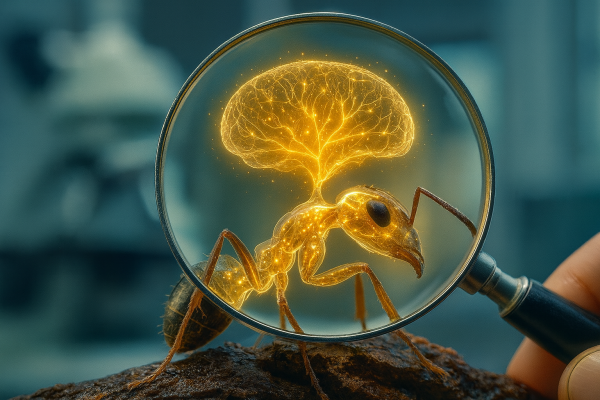
Pheidole dentata – Loài kiến được nhắc tới trong bài đọc The Secret of Staying Young
Bài đọc và câu hỏi chi tiết: The Secret of Staying Young
Nội dung bài đọc
(Paragraph 1) Pheidole dentata, a native ant of the south-eastern U.S., isn’t immortal. But scientists have found that it doesn’t seem to show any signs of aging. Old workers ants can do everything just as well as the youngsters, and their brains appear just as sharp. ‘We get a picture that these ants really don’t decline,’ says Ysabel Giraldo, who studies the ants for her doctoral thesis at Boston University.
(Paragraph 2) Such age-defying feats are rare in the animal kingdom. Naked mole rats can live for almost 30 years and stay fit for nearly their entire lives. They can still reproduce even when old, and they never get cancer. But the vast majority of animals deteriorate with age just like people do. Like the naked mole rat, ants are social creatures that usually live in highly organised colonies. ‘It’s this social complexity that makes P. dentata useful for studying aging in people,’ says Giraldo, now at the California Institute of Technology. Humans are also highly social, a trait that has been connected to healthier aging. By contrast, most animal studies of aging use mice, worms or fruit flies, which all lead much more isolated lives.
(Paragraph 3) In the lab, P. dentata worker ants typically live for around 140 days. Giraldo focused on ants at four age ranges: 20 to 22 days, 45 to 47 days, 95 to 97 days and 120 to 122 days. Unlike all previous studies, which only estimated how old the ants were, her work tracked the ants from the time the pupae became adults, so she knew their exact ages. Then she put them through a range of tests.
(Paragraph 4) Giraldo watched how well the ants took care of the young of the colony… She compared how well 20-day-old and 95-day-old ants followed the telltale scent that the insects usually leave to mark a trail to food. She tested how ants responded to light… And she experimented with how ants react to live prey: a tethered fruit fly. Giraldo expected the older ants to perform poorly in all these tasks. But the elderly insects were all good caretakers and trail-followers… And when it came to reacting to prey, the older ants attacked the poor fruit fly just as aggressively as the young ones did…
(Paragraph 5) Then Giraldo compared the brains of 20-day-old and 95-day-old ants… She saw no major differences with age, nor was there any difference in the location of the dying cells… Ants and other insects have structures in their brains called mushroom bodies, which are important for processing information, learning and memory. She also wanted to see if aging affects the density of synaptic complexes within these structures – regions where neurons come together. Again, the answer was no. What was more, the old ants didn’t experience any drop in the levels of either serotonin or dopamine – brain chemicals whose decline often coincides with aging. In humans, for example, a decrease in serotonin has been linked to Alzheimer’s disease.
(Paragraph 6) ‘This is the first time anyone has looked at both behavioral and neural changes in these ants so thoroughly,’ says Giraldo… Scientists have looked at some similar aspects in bees, but the results of recent bee studies were mixed – some studies showed age-related declines, which biologists call senescence, and others didn’t. ‘For now, the study raises more questions than it answers,’ Giraldo says, ‘including how P. dentata stays in such good shape.’
(Paragraph 7) Also, if the ants don’t deteriorate with age, why do they die at all? Out in the wild, the ants probably don’t live for a full 140 days thanks to predators, disease and just being in an environment that’s much harsher than the comforts of the lab. ‘The lucky ants that do live into old age may suffer a steep decline just before dying,’ Giraldo says, but she can’t say for sure because her study wasn’t designed to follow an ant’s final moments.
(Paragraph 8) ‘It will be important to extend these findings to other species of social insects,’ says Gene E. Robinson, an entomologist at the University of Illinois at Urbana-Champaign. This ant might be unique, or it might represent a broader pattern among other social bugs with possible clues to the science of aging in larger animals. Either way, it seems that for these ants, age really doesn’t matter.
Câu hỏi
Questions 1-8 (Note Completion) Complete the notes below. Choose ONE WORD ONLY from the passage for each answer.
Ysabel Giraldo’s research Focused on a total of 1………………………….. different age groups of ants, analyzing:
Behaviour:
- how well ants looked after their 2…………………………..
- their ability to locate 3………………………… using a scent trail
- the effect that 4………………………….. had on them
- how 5…………………………. they attacked prey
Brains:
- comparison between age and the 6…………………………… of dying cells in the brains of ants
- condition of synaptic complexes (areas in which 7…………………………… meet) in the brain’s ‘mushroom bodies’
- level of two 8………………………….. in the brain associated with ageing
Questions 9-13 (True/False/Not Given) Do the following statements agree with the information given in Reading Passage?
9. Pheidole dentata ants are the only known animals which remain active for almost their whole lives.
10. Ysabel Giraldo was the first person to study Pheidole dentata ants using precise data about the insects’ ages.
11. The ants in Giraldo’s experiments behaved as she had predicted that they would.
12. The recent studies of bees used different methods of measuring age-related decline.
13. Pheidole dentata ants kept in laboratory conditions tend to live longer lives.
Tóm tắt nội dung bài đọc
Bài đọc giới thiệu về nghiên cứu của nhà khoa học Ysabel Giraldo trên loài kiến Pheidole dentata, một loài vật hiếm hoi không cho thấy dấu hiệu lão hóa. Không giống các loài vật khác, kiến thợ già vẫn hoạt động và có bộ não sắc bén như kiến non. Giraldo đã thực hiện các bài kiểm tra hành vi (chăm sóc con non, tìm thức ăn, phản ứng với ánh sáng và con mồi) và phân tích não bộ (tế bào chết, mật độ synap, nồng độ hóa chất) ở các nhóm kiến có độ tuổi chính xác khác nhau. Kết quả đáng kinh ngạc là không có sự suy giảm nào ở những con kiến già. Nghiên cứu này mở ra nhiều câu hỏi mới về quá trình lão hóa và cho thấy loài kiến này có thể là một mô hình nghiên cứu hữu ích cho sự lão hóa ở người, do tính xã hội phức tạp của chúng.
Từ vựng và cấu trúc hay trong bài
- Age-defying feats (cụm danh từ): Những kỳ tích thách thức/bất chấp tuổi tác.
- Deteriorate with age (động từ): Suy yếu/xuống cấp theo tuổi tác.
- Social complexity (cụm danh từ): Sự phức tạp trong cấu trúc xã hội.
- Telltale scent (cụm danh từ): Mùi hương đặc trưng (giúp nhận biết).
- Counterparts (danh từ): Đối tác, bên tương ứng (trong bài này là những con kiến non hơn).
- Synaptic complexes (cụm danh từ): Các phức hợp synap (nơi các nơ-ron thần kinh kết nối).
- Coincides with (động từ): Trùng hợp với, xảy ra đồng thời với.
- Senescence (danh từ): Quá trình lão hóa (thuật ngữ sinh học).
Gợi ý đáp án và giải thích chi tiết
Questions 1-8
1. four
- Keywords: different age groups.
- Dẫn chứng (Đoạn 3): “Giraldo focused on ants at four age ranges…”
- Giải thích: Bài đọc liệt kê rõ 4 nhóm tuổi mà Giraldo đã nghiên cứu.
2. young
- Keywords: looked after their.
- Dẫn chứng (Đoạn 4): “Giraldo watched how well the ants took care of the young of the colony…”
- Giải thích: Câu hỏi diễn giải lại ý “took care of”, đáp án cần điền là đối tượng được chăm sóc, tức là “young” (con non).
3. food
- Keywords: locate, using a scent trail.
- Dẫn chứng (Đoạn 4): “…followed the telltale scent that the insects usually leave to mark a trail to food.”
- Giải thích: Kiến lần theo dấu vết mùi hương để tìm đến “thức ăn”.
4. light
- Keywords: effect that … had on them.
- Dẫn chứng (Đoạn 4): “She tested how ants responded to light…”
- Giải thích: Giraldo đã kiểm tra phản ứng của kiến với “ánh sáng”.
5. aggressively
- Keywords: how … they attacked prey.
- Dẫn chứng (Đoạn 4): “…the older ants attacked the poor fruit fly just as aggressively as the young ones did…”
- Giải thích: Câu hỏi yêu cầu một trạng từ để mô tả cách kiến tấn công con mồi, và “aggressively” (một cách hung hăng) là từ được dùng trong bài.
6. location
- Keywords: comparison, age, dying cells.
- Dẫn chứng (Đoạn 5): “…nor was there any difference in the location of the dying cells…”
- Giải thích: Nghiên cứu so sánh và không tìm thấy sự khác biệt về “vị trí” của các tế bào sắp chết.
7. neurons
- Keywords: areas in which … meet.
- Dẫn chứng (Đoạn 5): “…regions where neurons come together.”
- Giải thích: Các phức hợp synap là khu vực nơi các “nơ-ron” thần kinh gặp nhau.
8. chemicals
- Keywords: level of two … in the brain.
- Dẫn chứng (Đoạn 5): “…drop in the levels of either serotonin or dopamine – brain chemicals whose decline often coincides with aging.”
- Giải thích: Serotonin và dopamine được định nghĩa là các “hóa chất” trong não.
Questions 9-13
9. FALSE
- Keywords: only known animals.
- Dẫn chứng (Đoạn 2): “Naked mole rats can live for almost 30 years and stay fit for nearly their entire lives.”
- Giải thích: Bài đọc đề cập đến cả chuột chũi không lông cũng là loài có khả năng duy trì sự khỏe mạnh gần như cả đời. Do đó, việc nói kiến P. dentata là loài duy nhất (“only”) là sai.
10. TRUE
- Keywords: first person, precise data, exact ages.
- Dẫn chứng (Đoạn 3): “Unlike all previous studies, which only estimated how old the ants were… so she knew their exact ages.”
- Giải thích: Bài đọc khẳng định rằng không giống các nghiên cứu trước đây (chỉ ước tính), nghiên cứu của Giraldo biết được tuổi chính xác của kiến. Điều này có nghĩa cô là người đầu tiên làm vậy.
11. FALSE
- Keywords: behaved as she had predicted.
- Dẫn chứng (Đoạn 4): “Giraldo expected the older ants to perform poorly in all these tasks. But the elderly insects were all good caretakers…”
- Giải thích: Giraldo đã dự đoán (“expected”) rằng kiến già sẽ thể hiện kém, nhưng thực tế (“But”) chúng lại thể hiện rất tốt. Điều này trái ngược hoàn toàn với dự đoán của cô.
12. NOT GIVEN
- Keywords: bees, different methods.
- Dẫn chứng (Đoạn 6): “…the results of recent bee studies were mixed – some studies showed age-related declines… and others didn’t.”
- Giải thích: Bài đọc chỉ nói rằng kết quả các nghiên cứu về ong là “trái chiều” (“mixed”), nhưng không hề có thông tin nào đề cập đến việc các nghiên cứu đó có sử dụng phương pháp (“methods”) khác nhau hay không.
13. TRUE
- Keywords: laboratory conditions, live longer.
- Dẫn chứng (Đoạn 7): “Out in the wild, the ants probably don’t live for a full 140 days… much harsher than the comforts of the lab.”
- Giải thích: Tuổi thọ trong phòng thí nghiệm là khoảng 140 ngày (đoạn 3). Đoạn 7 nói rằng trong tự nhiên, chúng có lẽ không sống được đến 140 ngày. Điều này có nghĩa là chúng có xu hướng sống lâu hơn trong điều kiện phòng thí nghiệm.
Kết bài
Qua việc phân tích bài đọc “The Secret of Staying Young”, chúng ta đã thực hành hai dạng bài rất phổ biến là Note Completion và True/False/Not Given trong IELTS Reading. Bài học quan trọng nhất rút ra là phải cực kỳ chú ý đến những từ mang tính giới hạn và tuyệt đối như “only” (duy nhất) hoặc “all” (tất cả), vì chúng thường là chìa khóa để xác định đáp án True hoặc False. Hy vọng với những phân tích chi tiết này, bạn đã có thêm kinh nghiệm quý báu để áp dụng vào kỳ thi thực tế.

Đoàn Nương
Tôi là Đoàn Nương - Giám đốc trung tâm ngoại ngữ ECE. Tôi hiện đang là giảng viên của khoa ngôn ngữ các nước nói tiếng Anh - Trường Đại Học Quốc Gia Hà Nội. Tôi đã có 19 năm kinh nghiệm giảng dạy IELTS và 15 năm là giảng viên Đại Học. Tôi mong muốn đưa ECE trở thành trung tâm ngoại ngữ cho tất cả mọi người, mang tới cho học viên môi trường học tập tiếng Anh chuyên nghiệp và hiệu quả.
Tìm hiểu các khóa học tại ECE
Tin Tức Cùng Danh Mục

The Concept of Childhood in Western Countries IELTS Reading: Dịch & giải chi tiết

The Magic of Kefir IELTS Reading: Dịch bài đọc & đáp án chuẩn

The Columbian Exchange IELTS Reading: Dịch & giải chi tiết A-Z

Giải mã bài đọc: Complementary & alternative medicine IELTS Reading

Stadium Australia IELTS Reading: Giải chi tiết & Dịch nghĩa
Các tin liên quan
The Concept of Childhood in Western Countries IELTS Reading: Dịch & giải chi tiết
The Magic of Kefir IELTS Reading: Dịch bài đọc & đáp án chuẩn
The Columbian Exchange IELTS Reading: Dịch & giải chi tiết A-Z
Giải mã bài đọc: Complementary & alternative medicine IELTS Reading
Stadium Australia IELTS Reading: Giải chi tiết & Dịch nghĩa

Television and Sport IELTS Reading: Dịch chuẩn & Giải đề chi tiết

The Invention of Television IELTS Reading: Từ vựng & đáp án chuẩn
Frogwatch IELTS Reading: Bài dịch & đáp án chuẩn nhất
Consecutive and Simultaneous Translation IELTS Reading: Dịch chuẩn & Giải chi tiết
Fears IELTS Reading: Bản dịch chuẩn & giải chi tiết từ A-Z
Memory and Age IELTS Reading: Dịch chuẩn & Giải chi tiết

Đáp án & từ vựng bài đọc Photovoltaics on the rooftop IELTS Reading




Lượt Đăng Ký

NHẬN TƯ VẤN NGAY
Vui lòng để lại thông tin để được tư vấn chi tiết lộ trình học và thi IELTS ở trên
