
Giải đề Autumn Leaves IELTS Reading: Đáp án & Chiến thuật làm bài

Tóm Tắt Nội Dung Bài Viết
Giải đề Autumn Leaves IELTS Reading: Đáp án & Chiến thuật làm bài


Tóm Tắt Nội Dung Bài Viết
Chào các bạn, “Autumn Leaves” là một trong những bài đọc kinh điển của bộ đề Cambridge IELTS, thường xuất hiện trong các bài thi thật. Chủ đề khoa học có thể gây khó khăn, nhưng đừng lo, bài viết này của trung tâm ngoại ngữ ECE sẽ không chỉ cung cấp đáp án mà còn “bóc tách” từng lớp lang của bài đọc, từ từ vựng, cấu trúc đến các “bẫy” tinh vi nhất.
Mục tiêu của chúng ta là biến bài đọc này thành một bài học giá trị, giúp bạn tự tin xử lý mọi dạng bài tương tự.
Bài đọc Autumn leaves
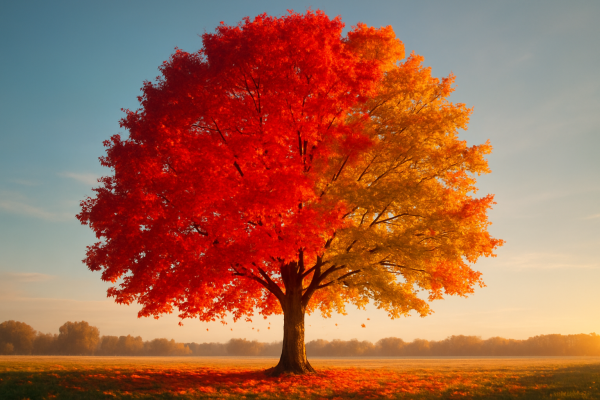
Autumn Leaves IELTS Reading
Canadian writer Jay Ingram investigates the mystery of why leaves turn red in the fall
A One of the most captivating natural events of the year in many areas throughout North America is the turning of the leaves in the fall. The colours are magnificent, but the question of exactly why some trees turn yellow or orange, and others red or purple, is something which has long puzzled scientists.
B Summer leaves are green because they are full of chlorophyll, the molecule that captures sunlight converts that energy into new building materials for the tree. As fall approaches in the northern hemisphere, the amount of solar energy available declines considerably. For many trees – evergreen conifers being an exception – the best strategy is to abandon photosynthesis* until the spring. So rather than maintaining the now redundant leaves throughout the winter, the tree saves its precious resources and discards them. But before letting its leaves go, the tree dismantles their chlorophyll molecules and ships their valuable nitrogen back into the twigs. As chlorophyll is depleted, other colours that have been dominated by it throughout the summer begin to be revealed. This unmasking explains the autumn colours of yellow and orange, but not the brilliant reds and purples of trees such as the maple or sumac.
C The source of the red is widely known: it is created by anthocyanins, water-soluble plant pigments reflecting the red to blue range of the visible spectrum. They belong to a class of sugar-based chemical compounds also known as flavonoids. What’s puzzling is that anthocyanins are actually newly minted, made in the leaves at the same time as the tree is preparing to drop them. But it is hard to make sense of the manufacture of anthocyanins – why should a tree bother making new chemicals in its leaves when it’s already scrambling to withdraw and preserve the ones already there?
D Some theories about anthocyanins have argued that they might act as a chemical defence against attacks by insects or fungi, or that they might attract fruit-eating birds or increase a leafs tolerance to freezing. However there are problems with each of these theories, including the fact that leaves are red for such a relatively short period that the expense of energy needed to manufacture the anthocyanins would outweigh any anti-fungal or anti-herbivore activity achieved.* photosynthesis: the production of new material from sunlight, water and carbon dioxide.
E It has also been proposed that trees may produce vivid red colours to convince herbivorous insects that they are healthy and robust and would be easily able to mount chemical defences against infestation. If insects paid attention to such advertisements, they might be prompted to lay their eggs on a duller, and presumably less resistant host. The flaw in this theory lies in the lack of proof to support it. No one has as yet ascertained whether more robust trees sport the brightest leaves, or whether insects make choices according to colour intensity.
F Perhaps the most plausible suggestion as to why leaves would go to the trouble of making anthocyanins when they’re busy packing up for the winter is the theory known as the ‘light screen’ hypothesis. It sounds paradoxical, because the idea behind this hypothesis is that the red pigment is made in autumn leaves to protect chlorophyll, the light-absorbing chemical, from too much light. Why does chlorophyll need protection when it is the natural world’s supreme light absorber? Why protect chlorophyll at a time when the tree is breaking it down to salvage as much of it as possible?
G Chlorophyll, although exquisitely evolved to capture the energy of sunlight, can sometimes be overwhelmed by it, especially in situations of drought, low temperatures, or nutrient deficiency. Moreover, the problem of oversensitivity to light is even more acute in the fall, when the leaf is busy preparing for winter by dismantling its internal machinery. The energy absorbed by the chlorophyll molecules of the unstable autumn leaf is not immediately channelled into useful products and processes, as it would be in an intact summer leaf. The weakened fall leaf then becomes vulnerable to the highly destructive effects of the oxygen created by the excited chlorophyll molecules.
H Even if you had never suspected that this is what was going on when leaves turn red, there are clues out there. One is straightforward: on many trees, the leaves that are the reddest are those on the side of the tree which gets most sun. Not only that, but the red is brighter on the upper side of the leaf. It has also been recognised for decades that the best conditions for intense red colours are dry, sunny days and coo nights, conditions that nicely match those that make leaves susceptible to excess light. And finally, trees such as maples usually get much redder the more north you travel in the northern hemisphere. It’s colder there, they’re more stressed, their chlorophyll is more sensitive and it needs more sunblock.
I What is still not fully understood, however, is why some trees resort to producing red pigments while others don’t bother, and simply reveal their orange or yellow hues. Do these trees have other means at their disposal to prevent overexposure to light in autumn? Their story, though not as spectacular to the eye, will surely turn out to be as subtle and as complex.
Câu hỏi Bài đọc Autumn leaves
Questions 14 – 18: Reading Passage 204 has nine paragraphs, A-l. Which paragraph contains the following information?
Write the correct letter, A-l, in boxes 14-18 on your answer sheet.
NB You may use any letter more than once.
Check answers
14. a description of the substance responsible for the red colouration of leaves
15. the reason why trees drop their leaves in autumn
16. some evidence to confirm a theory about the purpose of the red leaves
17. an explanation of the function of chlorophyll
18. a suggestion that the red colouration in leaves could serve as a warning signal.
Questions 19 – 22: Complete the notes below. Choose ONE WORD ONLY from the passage for each answer. Write your answers in boxes 19 – 22 on your answer sheet.
Check answers
Why believe the ‘light screen’ hypothesis?
- The most vividly coloured red leaves are found on the side of the tree facing the 19. .
- The 20. surfaces of leaves contain the most red pigment.
- Red leaves are most abundant when daytime weather conditions are 21. and sunny.
- The intensity of the red colour of leaves increases as you go further 22. .
Questions 23 – 25: Do the following statements agree with the information given in Reading Passage 204?
In boxes 23-25 on your answer sheet, write
TRUE if the statement agrees with the information
FALSE if the statement contradicts the information
NOT GIVEN if there is no information on this
Check answers
23. It is likely that the red pigments help to protect the leaf from freezing temperatures.
24. The ‘light screen’ hypothesis would initially seem to contradict what is known about chlorophyll.
25. Leaves which turn colours other than red are more likely to be damaged by sunlight.
Question 26: Choose the correct letter A, B, C or D. Write the correct letter in box 26 on your answer sheet.
For which of the following questions does the writer offer an explanation?
Check answers
A. why conifers remain green in winter
B. how leaves turn orange and yellow in autumn
C. how herbivorous insects choose which trees to lay their eggs in
D. why anthocyanins are restricted to certain trees
Hiểu sâu nội dung – Câu chuyện khoa học đằng sau chiếc lá mùa thu 🍂
Trước khi lao vào trả lời câu hỏi, hãy dành 2 phút để nắm bắt câu chuyện chính. Việc này giúp bạn có một “bản đồ tư duy” và định vị thông tin nhanh hơn rất nhiều.
- Bối cảnh: Tại sao lá cây đổi màu vào mùa thu? Cụ thể, tại sao một số lá lại có màu đỏ rực rỡ?
- Quá trình cơ bản (Đoạn B):
- Mùa hè, lá có màu xanh do chất diệp lục (chlorophyll), một “nhà máy” sản xuất năng lượng từ ánh sáng mặt trời.
- Mùa thu, ánh sáng yếu đi, cây quyết định “đóng cửa nhà máy” và ngừng quang hợp.
- Cây rút chất diệp lục về thân để dự trữ. Khi lớp màu xanh biến mất, các sắc tố màu vàng và cam (carotenoids) vốn có sẵn trong lá từ trước sẽ hiện ra. Đây là lời giải thích cho lá màu vàng/cam.
- Bí ẩn thực sự (Đoạn C): Màu đỏ (anthocyanins) thì khác. Chúng không có sẵn mà được cây cố tình tạo mới ngay trước khi lá rụng. Tại sao cây lại lãng phí năng lượng để làm điều này?
- Các giả thuyết và lời giải đáp (Đoạn D, E, F, G):
- Giả thuyết bị bác bỏ: để chống côn trùng, nấm, hay chống rét? (Không hợp lý vì thời gian lá đỏ quá ngắn). Để “dọa” côn trùng? (Không có bằng chứng).
- Giả thuyết hợp lý nhất – “Light Screen Hypothesis” (Tấm chắn sáng): Sắc tố đỏ được tạo ra để bảo vệ chính chất diệp lục khỏi bị quá tải ánh sáng. Nghe có vẻ vô lý (nghịch lý – paradoxical), nhưng khi cây đang trong quá trình “tháo dỡ” diệp lục, nó rất yếu và dễ bị tổn thương bởi ánh sáng dư thừa. Màu đỏ hoạt động như một lớp kem chống nắng, giúp cây rút các chất dinh dưỡng về an toàn.
- Bằng chứng (Đoạn H): Lá ở phía có nhiều nắng (sun) thì đỏ hơn, mặt trên (upper) của lá cũng đỏ hơn. Thời tiết khô (dry), nắng và đêm se lạnh là điều kiện lý tưởng. Càng đi về phía bắc (north), lá càng đỏ hơn vì trời lạnh hơn, cây “căng thẳng” hơn và cần được bảo vệ nhiều hơn.
Từ vựng học thuật “đắt giá” trong bài đọc Autumn Leaves
Phân tích chi tiết câu hỏi – “Tư duy” của người ra đề
Đây là phần quan trọng nhất. Chúng ta sẽ không chỉ tìm đáp án mà còn hiểu tại sao nó lại đúng và tại sao các phương án khác sai.
Questions 14 – 18: Matching Information
Chiến lược: Đọc câu hỏi trước, gạch chân từ khóa chính, sau đó đi “săn” thông tin trong các đoạn văn.
14. a description of the substance responsible for the red colouration of leaves (Mô tả về chất gây ra màu đỏ)
- Tư duy: “Chất” (substance), “màu đỏ” (red colouration). Tôi cần tìm một cái tên khoa học. Lướt nhanh các đoạn, đoạn C hiện ra ngay lập tức: “The source of the red is widely known: it is created by anthocyanins…”
- Đáp án: C
15. the reason why trees drop their leaves in autumn (Lý do cây rụng lá)
- Tư duy: “Lý do” (reason), “rụng lá” (drop leaves). Tôi cần tìm nguyên nhân. Đoạn B giải thích: cây phải ngừng quang hợp, và để “saves its precious resources and discards them (rụng lá)”.
- Đáp án: B
16. some evidence to confirm a theory about the purpose of the red leaves (Bằng chứng xác nhận một giả thuyết)
- Tư duy: “Bằng chứng” (evidence), “xác nhận” (confirm). Tôi tìm những từ như clues, evidence, proof, reasons. Đoạn H bắt đầu bằng một câu không thể rõ hơn: “…there are clues out there.” và liệt kê hàng loạt bằng chứng sau đó.
- Đáp án: H
17. an explanation of the function of chlorophyll (Giải thích chức năng của diệp lục)
- Tư duy: “Chức năng” (function), “diệp lục” (chlorophyll). Đoạn B có câu: “…chlorophyll, the molecule that captures sunlight converts that energy…”. Đây chính là chức năng.
- Đáp án: B
18. a suggestion that the red colouration in leaves could serve as a warning signal. (Gợi ý màu đỏ là một tín hiệu cảnh báo)
- Tư duy: “Tín hiệu cảnh báo” (warning signal). Tôi tìm những ý tưởng liên quan đến việc “dọa” hoặc “cảnh báo” ai đó. Đoạn E nói về việc cây dùng màu đỏ để “…convince herbivorous insects that they are healthy and robust…” và gọi đây là “such advertisements“. Đây chính là một dạng tín hiệu.
- Đáp án: E (Lưu ý: Bài tham khảo của bạn có thể ghi nhầm đáp án là C)
Questions 19 – 22: Note Completion
Chiến lược: Các câu trả lời sẽ theo thứ tự trong bài. Tìm đoạn văn chứa tiêu đề “Why believe the ‘light screen’ hypothesis?”. Đó chính là Đoạn H. Giờ chỉ việc điền từ.
- 19. …facing the 19. ____________ . -> Đoạn H: “…on the side of the tree which gets most sun.” -> Đáp án: sun
- 20. The 20. ____________ surfaces of leaves… -> Đoạn H: “…brighter on the upper side of the leaf.” -> Đáp án: upper
- 21. …weather conditions are 21. ____________ and sunny. -> Đoạn H: “…best conditions… are dry, sunny days and cool nights…” -> Đáp án: dry
- 22. …as you go further 22. ____________. -> Đoạn H: “…get much redder the more north you travel…” -> Đáp án: north
Questions 23 – 25: True / False / Not Given
Chiến lược: Đây là dạng bài kiểm tra sự cẩn thận. False là khi bài đọc nói điều trái ngược. Not Given là khi thông tin không hề được đề cập.
23. It is likely that the red pigments help to protect the leaf from freezing temperatures. (Có khả năng sắc tố đỏ giúp bảo vệ lá khỏi nhiệt độ đóng băng)
- Tư duy: Tìm “freezing”. Đoạn D có nhắc đến giả thuyết này: “increase a leaf’s tolerance to freezing.”. NHƯNG! Ngay sau đó, tác giả nói “However there are problems with each of these theories…”. Tức là bài viết đề cập đến giả thuyết này nhưng bác bỏ nó. Vì vậy, câu khẳng định “It is likely” (có khả năng) là TRÁI NGƯỢC với quan điểm của tác giả.
- Bẫy: Thí sinh thấy từ “freezing” và chọn True. Đây là bẫy kinh điển.
- Đáp án: FALSE
24. The ‘light screen’ hypothesis would initially seem to contradict what is known about chlorophyll. (Giả thuyết ‘tấm chắn sáng’ ban đầu có vẻ mâu thuẫn với những gì đã biết về diệp lục)
- Tư duy: Tìm “light screen hypothesis” và “contradict” (mâu thuẫn). Đoạn F nói: “It sounds paradoxical…”. “Paradoxical” (nghịch lý) chính là một cách diễn đạt khác của “seem to contradict” (có vẻ mâu thuẫn).
- Đáp án: TRUE
25. Leaves which turn colours other than red are more likely to be damaged by sunlight. (Lá chuyển màu khác ngoài đỏ thì dễ bị tổn thương bởi ánh nắng hơn)
- Tư duy: Bài đọc có so sánh lá đỏ và lá màu khác (vàng, cam) về mức độ bị tổn thương bởi ánh nắng không? Đoạn B giải thích lá vàng/cam xuất hiện do diệp lục biến mất. Đoạn I nói rằng chúng ta vẫn chưa hiểu tại sao một số cây không tạo màu đỏ. Hoàn toàn không có một câu nào so sánh mức độ thiệt hại do ánh nắng mặt trời giữa các loại lá này.
- Đáp án: NOT GIVEN
Question 26: Multiple Choice
26. For which of the following questions does the writer offer an explanation? (Tác giả đưa ra lời giải thích cho câu hỏi nào sau đây?)
- Tư duy: Câu hỏi này kiểm tra sự hiểu biết tổng thể. Tác giả đã thực sự giải thích được điều gì?
- A. why conifers remain green… (Tại sao cây lá kim xanh quanh năm): Đoạn B chỉ nói chúng là “an exception” (một ngoại lệ), chứ không giải thích. -> Loại A.
- B. how leaves turn orange and yellow… (Lá chuyển màu cam/vàng thế nào): Đoạn B giải thích rất rõ: diệp lục bị rút đi, để lộ ra các sắc tố vàng/cam có sẵn. Đây là một lời giải thích hoàn chỉnh. -> Chọn B.
- C. how herbivorous insects choose… (Côn trùng chọn cây thế nào): Đoạn E đưa ra giả thuyết, nhưng ngay sau đó nói “The flaw in this theory lies in the lack of proof…” (Điểm yếu của giả thuyết này là thiếu bằng chứng). Tức là không giải thích được. -> Loại C.
- D. why anthocyanins are restricted to certain trees (Tại sao sắc tố đỏ chỉ có ở một số cây): Đoạn cuối cùng (I) thừa nhận: “What is still not fully understood…”. Rõ ràng là không có lời giải thích. -> Loại D.
- Đáp án: B
Qua việc phân tích sâu bài đọc “Autumn Leaves”, hy vọng bạn không chỉ có được đáp án đúng mà còn nắm vững phương pháp làm bài, cách nhận diện bẫy và đặc biệt là kỹ năng tư duy logic mà IELTS yêu cầu. Hãy áp dụng cách tiếp cận này cho các bài đọc khác, bạn sẽ thấy sự tiến bộ rõ rệt. ECE chúc bạn học tốt và đạt điểm cao trong kỳ thi IELTS!

Đoàn Nương
Tôi là Đoàn Nương - Giám đốc trung tâm ngoại ngữ ECE. Tôi hiện đang là giảng viên của khoa ngôn ngữ các nước nói tiếng Anh - Trường Đại Học Quốc Gia Hà Nội. Tôi đã có 19 năm kinh nghiệm giảng dạy IELTS và 15 năm là giảng viên Đại Học. Tôi mong muốn đưa ECE trở thành trung tâm ngoại ngữ cho tất cả mọi người, mang tới cho học viên môi trường học tập tiếng Anh chuyên nghiệp và hiệu quả.
Tìm hiểu các khóa học tại ECE
Tin Tức Cùng Danh Mục

The Concept of Childhood in Western Countries IELTS Reading: Dịch & giải chi tiết
The Magic of Kefir IELTS Reading: Dịch bài đọc & đáp án chuẩn
The Columbian Exchange IELTS Reading: Dịch & giải chi tiết A-Z

Giải mã bài đọc: Complementary & alternative medicine IELTS Reading

Stadium Australia IELTS Reading: Giải chi tiết & Dịch nghĩa
Các tin liên quan
The Concept of Childhood in Western Countries IELTS Reading: Dịch & giải chi tiết
The Magic of Kefir IELTS Reading: Dịch bài đọc & đáp án chuẩn
The Columbian Exchange IELTS Reading: Dịch & giải chi tiết A-Z
Giải mã bài đọc: Complementary & alternative medicine IELTS Reading
Stadium Australia IELTS Reading: Giải chi tiết & Dịch nghĩa

Television and Sport IELTS Reading: Dịch chuẩn & Giải đề chi tiết
The Invention of Television IELTS Reading: Từ vựng & đáp án chuẩn
Frogwatch IELTS Reading: Bài dịch & đáp án chuẩn nhất

Consecutive and Simultaneous Translation IELTS Reading: Dịch chuẩn & Giải chi tiết
Fears IELTS Reading: Bản dịch chuẩn & giải chi tiết từ A-Z
Memory and Age IELTS Reading: Dịch chuẩn & Giải chi tiết

Đáp án & từ vựng bài đọc Photovoltaics on the rooftop IELTS Reading



Lượt Đăng Ký

NHẬN TƯ VẤN NGAY
Vui lòng để lại thông tin để được tư vấn chi tiết lộ trình học và thi IELTS ở trên
