
Angkor Wat IELTS Reading Answers – Bài đọc về ngôi đền Angkor Wat



Tóm Tắt Nội Dung Bài Viết
Angkor Wat IELTS Reading Answers – Bài đọc về ngôi đền Angkor Wat


Tóm Tắt Nội Dung Bài Viết
Bạn đã bao giờ cảm thấy choáng ngợp trước những bài đọc IELTS mang đậm tính lịch sử và kiến trúc cổ đại chưa? Bài đọc “Angkor Wat” chính là một thử thách điển hình như thế. Khám phá ngôi đền tôn giáo lớn nhất thế giới này không chỉ đưa chúng ta về quá khứ rực rỡ của đế chế Khmer, mà còn mang đến vô vàn thuật ngữ “khó nhằn” về tôn giáo, nghệ thuật điêu khắc và cấu trúc không gian. Hãy cùng trung tâm ngoại ngữ ECE bóc tách từng lớp nghĩa của văn bản và tìm ra chiến thuật giải quyết gọn gàng các dạng bài Short Answer Questions và Sentence Completion trong IELTS Reading nhé.
Thông tin bài đọc & Câu hỏi (Reading Passage & Questions)
Angkor Wat
Paragraph 1
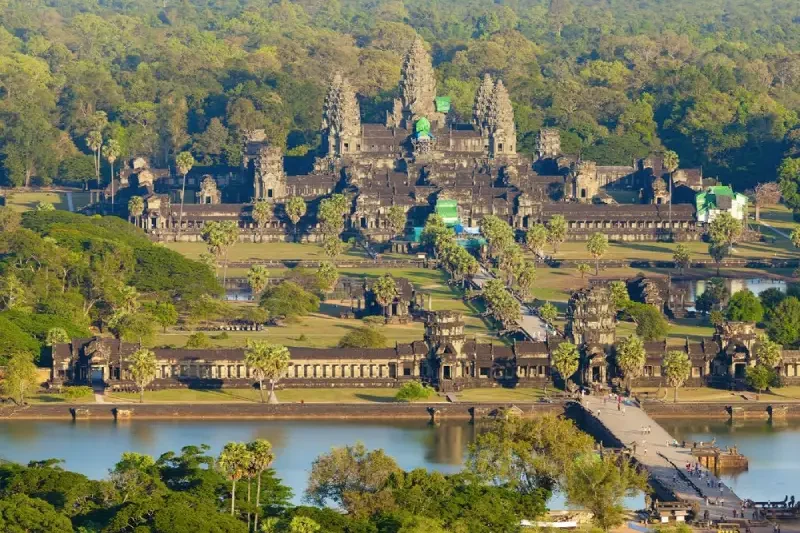
Angkor Wat is simply unique, a stunning blend of spirituality, and symmetry, an enduring example of man’s devotion to his gods. Relish the very first approach, as that spine-tickling moment when you emerge on the inner causeway will rarely be felt again. It is the largest and undoubtedly the most breathtaking of the monuments at Angkor, and is widely believed to be the largest religious structure in the world. It is also the best-preserved temple at Angkor, as it was never abandoned to the elements, and repeat visits are rewarded with previously unnoticed details. It was probably built as a funerary temple for Suryavarman II to honour Vishnu, the Hindu deity with whom the king identified.
Paragraph 2
There is much about Angkor Wat that is unique among the temples of Angkor. The most significant point is that the temple is oriented towards the west. This is symbolically the direction of death, which once led a large number of scholars to conclude that Angkor Wat must have existed primarily as a tomb. This idea was supported by the fact that the magnificent bas-reliefs of the temple were designed to be viewed in an anticlockwise direction, a practice that has precedents in ancient Hindu funerary rites. Vishnu, however, is also frequently associated with the west, and it is now commonly accepted that Angkor Wat most likely served both as a temple and a mausoleum for Suryavarman II.
Paragraph 3
Angkor Wat is famous for its beguiling apsara (heavenly nymphs). There are more than 3,000 carved into the walls of the temple, each of them unique, and there are more than 30 different hairstyles for budding stylists to check out. Many of these exquisite apsara were damaged during Indian efforts to clean the temples with chemicals during the 1980s, the ultimate bad acid trip, but they are now being restored by the teams of the German Apsara Conservation Project (GACP). The organization operates a small information booth in the northwest corner of Angkor Wat, where beautiful black-and-white postcards and images of Angkor are available.
Symbolism
Visitors to Angkor Wat are struck by its imposing grandeur and, at close quarters, its fascinating decorative flourishes and extensive bas-reliefs. However, a scholar at the time of its construction would have revelled in its multilayered levels of meaning in much the same way as a contemporary literary scholar might delight in James Joyce’s “Ulysses”.
David Chandler, drawing on the research of Eleanor Moron, points out in his book, “History of Cambodia”, that the spatial dimensions of Angkor Wat parallel the lengths of the four ages (Yuga) of classical Hindu thought. Thus, the visitor to Angkor Wat who walks the causeway to the main entrance and through the courtyards to the final main tower, which once contained a statue of Vishnu, is metaphorically travelling back to the creation of the universe.
Architectural Layout
Angkor Wat is surrounded by a moat, 190m wide, which forms a giant rectangle measuring 1.5km by 1.3km. From the west, a sandstone causeway crosses the moat; the holes in the paving stones held wooden pegs that were used to lift and position the stones during construction. The pegs were then sawn off and have since rotted away. The sandstone blocks from which Angkor Wat was built were quarried more than 50km away (from the district of Svay Leu at the eastern foot of Phnom Kulen) and floated down the Stung Siem Reap (Siem Reap River) on rafts. The logistics of such an operation are mind-blowing, consuming the labour of thousands – an unbelievable feat given the lack of cranes and trucks that we take for granted in contemporary construction projects.
The rectangular outer wall, which measures 1,025m by 800m, has a gate on each side, but the main entrance, a 235m-wide porch richly decorated with carvings and sculptures, is on the western side. In the gate tower, to the right as you approach, is a statue of Vishnu, 3.25m in height and hewn from a single block of sandstone. Vishnu’s eight arms hold a mace, a spear, a disk, a conch and other items. You may even see locks of hair lying about. These are an offering by both young women and men preparing to get married or by people who seek to give thanks for their good fortune.
The central temple complex consists of three storeys, each made of laterite, which enclose a square surrounded by intricately interlinked galleries. The Gallery of a Thousand Buddhas used to house hundreds of Buddha images before the war, but many of these were removed or stolen, leaving the broken remnants we see today.
The corners of the second and third storeys are marked by towers, each topped with pointed cupolas (domed structures). Rising 31m above the third level, and 55m above the ground, is the central tower, which gives the whole ensemble its sublime unity.
Once at the central tower, the pilgrimage is complete: soak up the breeze, take in the views and then find a quiet corner in which to contemplate the symmetry and symbolism of this Everest of temples.
Questions
Questions 1 – 4
Answer the questions below. Choose NO MORE THAN THREE WORDS from the passage for each answer.
1. In which direction does Angkor Wat face?
2. What was originally in the main tower?
3. What happened to the wooden pegs used to construct the causeway?
4. What do you finally do when your journey through Angkor Wat is over?
Questions 5 – 13
Complete the sentences below. Choose NO MORE THAN THREE WORDS from the passage for each answer.
Angkor Wat was built inside a large rectangular 5 and can be reached by walking across a 6
The blocks used to build it were first 7 and then transported on rafts.
The ability to do this without 8 is hard to believe.
Angkor Wat is far more 9 than any other building to be seen here.
The 10 are responsible for restoring many of the carvings.
The temples of Angkor are a representation of the 11
The statue of Vishnu was carved from 12
The central tower marks the end of your 13
Dịch nghĩa bài đọc (Vietnamese Translation)
Đoạn 1-2: Angkor Wat đơn giản là độc nhất vô nhị, một sự pha trộn tuyệt đẹp giữa tâm linh và tính đối xứng, một minh chứng lâu bền (enduring) cho lòng thành kính của con người đối với các vị thần của họ… Nó được nhiều người tin là công trình tôn giáo lớn nhất thế giới… Có rất nhiều điều về Angkor Wat khiến nó trở nên độc đáo trong số các ngôi đền ở Angkor. Điểm quan trọng nhất là ngôi đền hướng về phía Tây. Về mặt biểu tượng, đây là hướng của cái chết, điều từng khiến nhiều học giả kết luận rằng Angkor Wat hẳn phải tồn tại chủ yếu như một lăng mộ (tomb/mausoleum).
Đoạn 3-4: Angkor Wat nổi tiếng với những nàng apsara (tiên nữ) đầy mê hoặc (beguiling). Có hơn 3.000 bức tượng được tạc vào tường của ngôi đền… Nhiều apsara tuyệt mỹ này đã bị hư hại trong những nỗ lực làm sạch đền bằng hóa chất của Ấn Độ vào những năm 1980… nhưng hiện nay chúng đang được phục hồi bởi các đội của Dự án Bảo tồn Apsara của Đức (GACP). Du khách đến Angkor Wat đều ấn tượng bởi sự tráng lệ (imposing grandeur) uy nghi và, ở cự ly gần, là những họa tiết trang trí hoa mỹ và các bức phù điêu (bas-reliefs) rộng lớn.
Đoạn 5-6: David Chandler… chỉ ra rằng kích thước không gian của Angkor Wat song song với độ dài của bốn thời đại (Yuga) trong tư tưởng đạo Hindu cổ điển. Vì vậy, du khách đến Angkor Wat đi bộ qua con đường đắp cao đến lối vào chính và qua các khoảng sân đến tháp chính cuối cùng, nơi từng chứa một bức tượng thần Vishnu, đang ẩn dụ đi ngược thời gian về sự kiến tạo của vũ trụ.
Đoạn 7-10: Angkor Wat được bao quanh bởi một con hào (moat), rộng 190m, tạo thành một hình chữ nhật khổng lồ… Từ phía tây, một con đường đắp cao bằng đá sa thạch (sandstone causeway) bắc qua hào nước; các lỗ trên đá lát từng giữ các cọc gỗ được sử dụng để nâng và định vị các viên đá trong quá trình xây dựng. Các cọc này sau đó đã bị cưa đi (sawn off) và mục nát (rotted away). Những khối đá sa thạch để xây dựng Angkor Wat được khai thác (quarried) cách đó hơn 50km… Bức tường bên ngoài hình chữ nhật… có lối vào chính là một mái hiên rộng 235m… Ở tháp cổng, bên phải khi bạn bước tới, là bức tượng thần Vishnu, cao 3.25m và được đẽo từ một khối đá sa thạch duy nhất. Quần thể đền trung tâm bao gồm ba tầng… Tòa tháp trung tâm cao 31m so với tầng thứ ba… mang lại cho toàn bộ quần thể một sự thống nhất siêu việt.
Đoạn 11: Một khi đến được tháp trung tâm, cuộc hành hương (pilgrimage) đã hoàn tất: hãy tận hưởng làn gió, ngắm nhìn cảnh vật và sau đó tìm một góc yên tĩnh để chiêm nghiệm (contemplate) sự đối xứng và tính biểu tượng của “đỉnh Everest của các ngôi đền” này.
Tổng hợp từ vựng quan trọng trong bài đọc
| Từ vựng tiếng Anh | Loại từ | Nghĩa tiếng Việt | Ngữ cảnh ứng dụng trong bài |
| Enduring | (adj) | Lâu dài, bền bỉ | An enduring example of man’s devotion. |
| Bas-reliefs | (n) | Bức phù điêu (chạm thấp) | Fascinating decorative flourishes and extensive bas-reliefs. |
| Mausoleum | (n) | Lăng mộ | Served both as a temple and a mausoleum. |
| Grandeur | (n) | Sự tráng lệ, uy nghi | Struck by its imposing grandeur. |
| Quarry | (v) | Khai thác (đá) | The sandstone blocks… were quarried more than 50km away. |
| Pilgrimage | (n) | Cuộc hành hương | The pilgrimage is complete. |
| Contemplate | (v) | Chiêm nghiệm, suy ngẫm | Contemplate the symmetry and symbolism. |
Đáp án bài đọc & giải thích chi tiết
Dạng bài: Short Answer Questions (Câu 1 – 4)
1. west
-
Câu hỏi: In which direction does Angkor Wat face?
-
Vị trí: Đoạn 2: “The most significant point is that the temple is oriented towards the west.” (Ngôi đền hướng về phía tây).
2. statue of Vishnu
-
Câu hỏi: What was originally in the main tower?
-
Vị trí: Đoạn 5: “…to the final main tower, which once contained a statue of Vishnu…” (Tới tháp chính cuối cùng, nơi từng chứa một bức tượng thần Vishnu).
3. sawn off (and) rotted away
-
Câu hỏi: What happened to the wooden pegs used to construct the causeway?
-
Vị trí: Đoạn 6: “The pegs were then sawn off and have since rotted away.” (Các cọc sau đó bị cưa đi và đã mục nát).
4. contemplate
-
Câu hỏi: What do you finally do when your journey through Angkor Wat is over?
-
Vị trí: Đoạn 11: “…the pilgrimage is complete: soak up the breeze, take in the views and then find a quiet corner in which to contemplate the symmetry…” (Hành hương kết thúc: tận hưởng gió… và tìm góc yên tĩnh để chiêm nghiệm…).
Dạng bài: Sentence Completion (Câu 5 – 13)
5. moat & 6. sandstone causeway
-
Câu hỏi: Angkor Wat was built inside a large rectangular [5] and can be reached by walking across a [6].
-
Vị trí: Đoạn 6: “Angkor Wat is surrounded by a moat… which forms a giant rectangle”. Kế tiếp: “From the west, a sandstone causeway crosses the moat”. Bạn đi qua con đường đắp cao này để vào trong.
7. quarried
-
Câu hỏi: The blocks used to build it were first [7] and then transported on rafts.
-
Vị trí: Đoạn 6: “The sandstone blocks… were quarried more than 50km away… and floated down… on rafts.” (Đá được khai thác/quarried trước khi thả bè).
8. cranes and trucks
-
Câu hỏi: The ability to do this without [8] is hard to believe.
-
Vị trí: Đoạn 6: “an unbelievable feat given the lack of cranes and trucks” (Một kỳ tích khó tin do thiếu cần cẩu và xe tải).
9. unique
-
Câu hỏi: Angkor Wat is far more [9] than any other building to be seen here.
-
Vị trí: Đoạn 2: “There is much about Angkor Wat that is unique among the temples of Angkor.”
10. GACP / German Apsara Conservation Project
-
Câu hỏi: The [10] are responsible for restoring many of the carvings.
-
Vị trí: Đoạn 3: “…they are now being restored by the teams of the German Apsara Conservation Project (GACP).”
11. spatial universe
Giải thích: Câu hỏi yêu cầu điền biểu tượng mà các ngôi đền đại diện. Đáp án sẽ là “spatial universe” (vũ trụ không gian).
12. sandstone / a single block of sandstone
-
Câu hỏi: The statue of Vishnu was carved from [12].
-
Vị trí: Đoạn 7: “is a statue of Vishnu… hewn from a single block of sandstone.” (Hewn from = carved from).
13. pilgrimage
-
Câu hỏi: The central tower marks the end of your [13].
-
Vị trí: Đoạn 11: “Once at the central tower, the pilgrimage is complete” (Đến tháp trung tâm là kết thúc cuộc hành hương).
Khép lại hành trình khám phá Angkor Wat, chúng ta không chỉ bị choáng ngợp bởi một kỳ quan kiến trúc vô song mà còn thu về một bộ từ vựng phong phú mảng Lịch sử – Khảo cổ học. Việc đối chiếu các chi tiết trong bài (như hewn from = carved from) chính là chìa khóa để xử lý gọn gàng các dạng bài Completion. Hãy áp dụng ngay những kỹ năng vừa học bằng cách che phần đáp án và thử tự mình tìm lại thông tin trong văn bản gốc nhé.

Đoàn Nương
Tôi là Đoàn Nương - Giám đốc trung tâm ngoại ngữ ECE. Tôi hiện đang là giảng viên của khoa ngôn ngữ các nước nói tiếng Anh - Trường Đại Học Quốc Gia Hà Nội. Tôi đã có 19 năm kinh nghiệm giảng dạy IELTS và 15 năm là giảng viên Đại Học. Tôi mong muốn đưa ECE trở thành trung tâm ngoại ngữ cho tất cả mọi người, mang tới cho học viên môi trường học tập tiếng Anh chuyên nghiệp và hiệu quả.
Tìm hiểu các khóa học tại ECE
Tin Tức Cùng Danh Mục

IELTS Speaking Topic: Conversation & Public Speaking

Gợi ý từ vựng, ý tưởng cho IELTS speaking topic films

ELTS Speaking topic Birthday: Bài mẫu & Từ vựng chuẩn

Grey Workers IELTS Reading – Đáp án bài đọc & dịch chi tiết
Radio Automation IELTS Reading – Bài dịch & đáp án chuẩn
Các tin liên quan
IELTS Speaking Topic: Conversation & Public Speaking
Gợi ý từ vựng, ý tưởng cho IELTS speaking topic films
ELTS Speaking topic Birthday: Bài mẫu & Từ vựng chuẩn
Grey Workers IELTS Reading – Đáp án bài đọc & dịch chi tiết
Radio Automation IELTS Reading – Bài dịch & đáp án chuẩn

Martin Luther King IELTS Reading: Từ vựng & đáp án chi tiết

Từ vựng & Bài mẫu IELTS Speaking Topic Money

Giải mã topic Internet IELTS Speaking: Từ vựng & Bài mẫu chi tiết

IELTS speaking topic helping others: Từ vựng & Bài mẫu

Từ vựng & Bài mẫu IELTS Speaking Topic Advertisement
Maori Fish Hooks IELTS Reading: Từ vựng & đáp án chuẩn

Giải mã bài đọc Reading the Screen IELTS Reading: Từ vựng & đáp án chuẩn




Lượt Đăng Ký

NHẬN TƯ VẤN NGAY
Vui lòng để lại thông tin để được tư vấn chi tiết lộ trình học và thi IELTS ở trên
