
Giải đề Urban Farming IELTS Reading – Cam 18, Test 1 (Full đáp án chi tiết)



Tóm Tắt Nội Dung Bài Viết
Giải đề Urban Farming IELTS Reading – Cam 18, Test 1 (Full đáp án chi tiết)


Tóm Tắt Nội Dung Bài Viết
“Urban farming” (nông nghiệp đô thị) là một chủ đề ngày càng phổ biến trong xã hội và cũng là một chủ đề thường gặp trong IELTS Reading. Bài đọc “Urban Farming” trong Cambridge 18, Test 1, Passage 1 là một ví dụ điển hình, mang đến một cái nhìn thú vị về một trang trại trên sân thượng tại Paris.
Bài viết này từ trung tâm ngoại ngữ ECE sẽ cung cấp thông tin bài đọc, phân tích từ vựng, và quan trọng nhất là giải thích chi tiết đáp án cho từng câu hỏi, giúp bạn hiểu sâu và chinh phục bài đọc này một cách trọn vẹn.
Urban Farming IELTS Reading
Nội dung bài đọc (Reading Passage)
Urban farming
In Paris, urban farmers are trying a soil-free approach to agriculture that uses less space and fewer resources. Could it help cities face the threats to our food supplies?
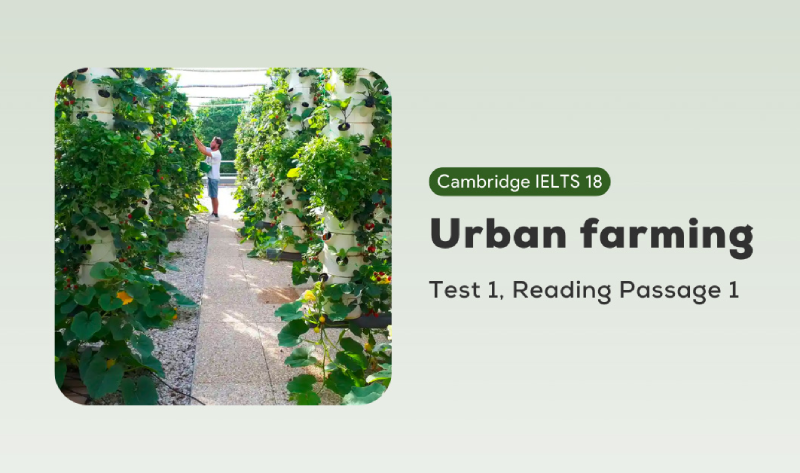
On top of a striking new exhibition hall in southern Paris, the world’s largest urban rooftop farm has started to bear fruit. Strawberries that are small, intensely flavoured and resplendently red sprout abundantly from large plastic tubes. Peer inside and you see the tubes are completely hollow, the roots of dozens of strawberry plants dangling down inside them. From identical vertical tubes nearby burst row upon row of lettuces; near those are aromatic herbs, such as basil, sage and peppermint. Opposite, in narrow, horizontal trays packed not with soil but with coconut fibre, grow cherry tomatoes, shiny aubergines and brightly coloured chards.
Pascal Hardy, an engineer and sustainable development consultant, began experimenting with vertical farming and aeroponic growing towers – as the soil-free plastic tubes are known – on his Paris apartment block roof five years ago. The urban rooftop space above the exhibition hall is somewhat bigger: 14,000 square metres and almost exactly the size of a couple of football pitches. Already, the team of young urban farmers who tend it have picked, in one day, 3,000 lettuces and 150 punnets of strawberries. When the remaining two thirds of the vast open area are in production, 20 staff will harvest up to 1,000 kg of perhaps 35 different varieties of fruit and vegetables, every day. ‘We’re not ever, obviously, going to feed the whole city this way,’ cautions Hardy. ‘In the urban environment you’re working with very significant practical constraints, clearly, on what you can do and where. But if enough unused space can be developed like this, there’s no reason why you shouldn’t eventually target maybe between 5% and 10% of consumption.’
Perhaps most significantly, however, this is a real-life showcase for the work of Hardy’s flourishing urban agriculture consultancy, Agripolis, which is currently fielding enquiries from around the world to design, build and equip a new breed of soil-free inner-city farm. ‘The method’s advantages are many,’ he says. ‘First, I don’t much like the fact that most of the fruit and vegetables we eat have been treated with something like 17 different pesticides, or that the intensive farming techniques that produced them are such huge generators of greenhouse gases. I don’t much like the fact, either, that they’ve travelled an average of 2,000 refrigerated kilometres to my plate, that their quality is so poor, because the varieties are selected for their capacity to withstand such substantial journeys, or that 80% of the price I pay goes to wholesalers and transport companies, not the producers.’
Produce grown using this soil-free method, on the other hand – which relies solely on a small quantity of water, enriched with organic nutrients, pumped around a closed circuit of pipes, towers and trays – is ‘produced up here, and sold locally, just down there. It barely travels at all,’ Hardy says. ‘You can select crop varieties for their flavour, not their resistance to the transport and storage chain, and you can pick them when they’re really at their best, and not before.’ No soil is exhausted, and the water that gently showers the plants’ roots every 12 minutes is recycled, so the method uses 90% less water than a classic intensive farm for the same yield.
Urban farming is not, of course, a new phenomenon. Inner-city agriculture is booming from Shanghai to Detroit and Tokyo to Bangkok. Strawberries are being grown in disused shipping containers, mushrooms in underground carparks. Aeroponic farming, he says, is ‘virtuous’. The equipment weighs little, can be installed on almost any flat surface and is cheap to buy: roughly €100 to €150 per square metre. It is cheap to run, too, consuming a tiny fraction of the electricity used by some techniques.
Produce grown this way typically sells at prices that, while generally higher than those of classic intensive agriculture, are lower than soil-based organic growers. There are limits to what farmers can grow this way, of course, and much of the produce is suited to the summer months. ‘Root vegetables we cannot do, at least not yet,’ he says. ‘Radishes are OK, but carrots, potatoes, that kind of thing – the roots are simply too long. Fruit trees are obviously not an option. And beans tend to take up a lot of space for not much return.’ Nevertheless, urban farming of the kind being practised in Paris is one part of a bigger and fast-changing picture that is bringing food production closer to our lives.
Questions 1-3:
Complete the sentences below.
Choose NO MORE THAN TWO WORDS ANDIOR A NUMBER from the passage for each answer.
Write your answers in boxes 1-3 on your answer sheet.
Urban farming in Paris
- Vertical tubes are used to grow strawberries, ………………… and herbs.
- There will eventually be a daily harvest of as much as …………………… in weight of fruit and vegetables.
- It may be possible that the farm’s produce will account for as much as 10% of the city’s …………………… overall.
Questions 4 – 7:
Complete the table below.
Choose ONE WORD ONLY from the passage for each answer.
Write your answers in boxes 4-7 on your answer sheet.
Intensive farming versus aeroponic urban farming
| Intensive farming | Aeroponic urban farming | |
| Growth | – wide range of 4…………… used
– techniques pollute air |
– no soil used
– nutrients added to water, which is recycled |
| Selection | – quality not good
– varieties of fruit and vegetables chosen that can survive long 5…………… |
produce chosen because of its 7…………… |
| Sale | 6…………… receive very little of overall income |
Questions 8 – 13:
Do the following statements agree with the information given in Reading Passage 1? Write:
- TRUE if the statement agrees with the information
- FALSE if the statement contradicts the information
- NOT GIVEN if there is no information on this
8. Urban farming can take place above or below ground.
9. Some of the equipment used in aeroponic farming can be made by hand.
10. Urban farming relies more on electricity than some other types of farming.
11. Fruit and vegetables grown on an aeroponic urban farm are cheaper than traditionally grown organic produce.
12. Most produce can be grown on an aeroponic urban farm at any time of the year.
13. Beans take longer to grow on an urban farm than other vegetables.
Tóm tắt nội dung bài đọc Urban farming
Bài đọc mô tả về một dự án nông nghiệp đô thị (urban farming) lớn nhất thế giới trên sân thượng tại Paris, sử dụng phương pháp canh tác không cần đất (aeroponics).
- Giới thiệu dự án: Trang trại trồng dâu tây, rau diếp (lettuces) và thảo mộc trong các ống nhựa thẳng đứng, và các loại rau quả khác trong khay chứa xơ dừa.
- Người sáng lập & Quy mô: Pascal Hardy, người sáng lập, ước tính khi hoàn thành, trang trại có thể thu hoạch tới 1.000 kg rau quả mỗi ngày và có khả năng cung cấp 5-10% lượng tiêu thụ của thành phố.
- Nhược điểm của nông nghiệp truyền thống: Hardy chỉ trích nông nghiệp thâm canh (intensive farming) vì sử dụng quá nhiều thuốc trừ sâu (pesticides), tạo ra khí nhà kính, và tốn chi phí vận chuyển hàng nghìn km, khiến chất lượng sản phẩm giảm sút và lợi nhuận không đến tay người nông dân.
- Ưu điểm của Aeroponics: Phương pháp này tiết kiệm 90% nước, sản phẩm được bán tại địa phương, cho phép chọn giống vì hương vị (flavour) thay vì độ bền.
- Bối cảnh chung: Nông nghiệp đô thị đang bùng nổ ở nhiều thành phố, với các hình thức đa dạng (trồng trong container, hầm gửi xe). Thiết bị aeroponics rẻ, nhẹ, và tiêu thụ rất ít điện.
- Giá cả & Hạn chế: Sản phẩm có giá cao hơn nông nghiệp thâm canh nhưng rẻ hơn sản phẩm hữu cơ trồng trên đất. Hạn chế là không thể trồng các loại rau củ (như cà rốt, khoai tây) và cây ăn quả.
Tổng hợp từ vựng quan trọng trong bài đọc
- resplendently (adv): một cách rực rỡ, lộng lẫy.
- Ví dụ: “Strawberries that are… resplendently red…”
- sustainable development (n.p): phát triển bền vững.
- aeroponic (adj): (thuộc về) khí canh (trồng cây không cần đất, rễ cây lơ lửng trong không khí và được phun sương dinh dưỡng).
- practical constraints (n.p): những rào cản, hạn chế thực tế.
- Ví dụ: “…you’re working with very significant practical constraints…”
- flourishing (adj): phát triển hưng thịnh, nở rộ.
- Ví dụ: “…Hardy’s flourishing urban agriculture consultancy…”
- intensive farming (n.p): nông nghiệp thâm canh (canh tác ở quy mô lớn, sử dụng nhiều hóa chất, máy móc để tối đa hóa sản lượng).
- greenhouse gases (n.p): khí nhà kính.
- withstand (v): chịu đựng, chống chọi.
- Ví dụ: “…capacity to withstand such substantial journeys…”
- yield (n): sản lượng, năng suất.
- Ví dụ: “…for the same yield.”
- disused (adj): không còn được sử dụng, bị bỏ không.
- Ví dụ: “…grown in disused shipping containers…”
- a tiny fraction of (phrase): một phần/tỷ lệ rất nhỏ.
- Ví dụ: “…consuming a tiny fraction of the electricity…”
Tổng hợp đáp án và giải thích chi tiết
1. Đáp án: lettuces
- Vị trí: Đoạn 1
- Dẫn chứng: “From identical vertical tubes nearby burst row upon row of lettuces; near those are aromatic herbs…”
- Giải thích: Câu hỏi liệt kê các loại cây được trồng trong ống thẳng đứng: “strawberries, … and herbs”. Đoạn văn liệt kê 3 loại: strawberries (ở câu trước), “lettuces” (rau diếp) và “herbs” (thảo mộc). Từ còn thiếu là “lettuces”.
2. Đáp án: 1,000 kg
- Vị trí: Đoạn 2
- Dẫn chứng: “…20 staff will harvest up to 1,000 kg of perhaps 35 different varieties of fruit and vegetables, every day.”
- Giải thích: Câu hỏi yêu cầu điền trọng lượng (weight) thu hoạch hàng ngày. “as much as” (nhiều bằng) là một cách diễn đạt khác của “up to” (lên đến).
3. Đáp án: (food) consumption
- Vị trí: Đoạn 2
- Dẫn chứng: “…there’s no reason why you shouldn’t eventually target maybe between 5% and 10% of consumption.’”
- Giải thích: Trang trại có thể chiếm “as much as 10%” (nhiều bằng 10%) trong tổng số “consumption” (sự tiêu thụ) của thành phố. Mặc dù bài không ghi rõ là “food consumption”, nhưng trong ngữ cảnh này, “consumption” chính là “sự tiêu thụ (thực phẩm)”.
4. Đáp án: pesticides
- Vị trí: Đoạn 3
- Dẫn chứng: “…most of the fruit and vegetables we eat have been treated with something like 17 different pesticides, or that the intensive farming techniques…”
- Giải thích: Bảng so sánh về “Intensive farming” (nông nghiệp thâm canh). Câu hỏi nói “wide range of … used” (sử dụng … đa dạng). Đoạn văn đề cập “17 different pesticides” (17 loại thuốc trừ sâu khác nhau) được sử dụng.
5. Đáp án: journeys
- Vị trí: Đoạn 3
- Dẫn chứng: “…the varieties are selected for their capacity to withstand such substantial journeys…”
- Giải thích: Bảng nói về việc lựa chọn giống cây (selection). Câu hỏi là “survive long…” (sống sót qua… dài). Đoạn văn nói rõ các giống được chọn để “chịu đựng” (withstand) được những “chuyến đi dài” (substantial journeys).
6. Đáp án: producers
- Vị trí: Đoạn 3
- Dẫn chứng: “…or that 80% of the price I pay goes to wholesalers and transport companies, not the producers.”
- Giải thích: Bảng nói về việc bán hàng (Sale). Câu hỏi là “… receive very little … income” (nhận được rất ít thu nhập). Đoạn văn nói 80% giá tiền không về tay “người sản xuất” (producers).
7. Đáp án: flavour / flavor
- Vị trí: Đoạn 4
- Dẫn chứng: “You can select crop varieties for their flavour, not their resistance to the transport…”
- Giải thích: Bảng hỏi về việc lựa chọn giống cây của “Aeroponic urban farming”. Đoạn văn nói rõ các giống cây được chọn vì “hương vị” (flavour) của chúng.
8. TRUE
- Câu hỏi: Nông nghiệp đô thị có thể diễn ra bên trên hoặc bên dưới mặt đất.
- Dẫn chứng (Đoạn 5): “Strawberries are being grown in disused shipping containers, mushrooms in underground carparks.”
- Giải thích: Bài đọc mô tả trang trại ở Paris trên “rooftop” (sân thượng – bên trên mặt đất) và cũng đề cập đến việc trồng nấm ở “hầm gửi xe ngầm” (underground carparks – bên dưới mặt đất). Do đó, câu này là TRUE.
9. NOT GIVEN
- Câu hỏi: Một số thiết bị dùng trong khí canh (aeroponic) có thể được làm bằng tay (handmade).
- Dẫn chứng (Đoạn 5): “The equipment weighs little… and is cheap to buy…”
- Giải thích: Bài đọc chỉ nói thiết bị này “rẻ để mua” (cheap to buy), chứ không hề có thông tin nào về việc nó có thể được “làm bằng tay” (made by hand) hay không.
10. FALSE
- Câu hỏi: Nông nghiệp đô thị (aeroponic) tốn nhiều điện hơn một số loại hình canh tác khác.
- Dẫn chứng (Đoạn 5): “It is cheap to run, too, consuming a tiny fraction of the electricity used by some techniques.”
- Giải thích: “A tiny fraction” (một phần rất nhỏ) có nghĩa là nó tiêu thụ ít hơn rất nhiều điện. Điều này trái ngược với “relies more on electricity” (tốn nhiều điện hơn).
11. TRUE
- Câu hỏi: Rau quả trồng bằng khí canh đô thị rẻ hơn sản phẩm hữu cơ trồng trên đất truyền thống.
- Dẫn chứng (Đoạn 6): “Produce grown this way typically sells at prices that… are lower than soil-based organic growers.”
- Giải thích: Câu này nói rõ giá bán “thấp hơn” (lower than) so với “sản phẩm hữu cơ trồng trên đất” (soil-based organic growers). Khớp hoàn toàn.
12. FALSE
- Câu hỏi: Hầu hết sản phẩm có thể được trồng bằng khí canh đô thị vào bất kỳ thời điểm nào trong năm.
- Dẫn chứng (Đoạn 6): “…and much of the produce is suited to the summer months.”
- Giải thích: Việc sản phẩm “phù hợp với những tháng mùa hè” (suited to the summer months) trái ngược với ý “bất kỳ thời điểm nào trong năm” (at any time of the year).
13. NOT GIVEN
- Câu hỏi: Đậu (beans) mất nhiều thời gian để trồng ở trang trại đô thị hơn các loại rau khác.
- Dẫn chứng (Đoạn 6): “And beans tend to take up a lot of space for not much return.”
- Giải thích: Bài đọc chỉ so sánh đậu về “không gian” (space) và “năng suất” (return), chứ không hề có thông tin nào so Về “thời gian” (longer to grow).
Kết bài
Bài đọc “Urban Farming” là một ví dụ tuyệt vời cho Passage 1, kết hợp các dạng câu hỏi Completion và TRUE/FALSE/NOT GIVEN. Bài đọc cung cấp cái nhìn sâu sắc về một giải pháp công nghệ hiện đại cho vấn đề an ninh lương thực, đồng thời kiểm tra kỹ năng đọc hiểu chi tiết và so sánh thông tin của thí sinh. Hy vọng bài phân tích chi tiết này từ ECE gửi tới đông đảo bạn đọc đã giúp các bạn nắm vững các kỹ thuật làm bài và có thêm nhiều kiến thức bổ ích. Chúc bạn ôn luyện hiệu quả!

Đoàn Nương
Tôi là Đoàn Nương - Giám đốc trung tâm ngoại ngữ ECE. Tôi hiện đang là giảng viên của khoa ngôn ngữ các nước nói tiếng Anh - Trường Đại Học Quốc Gia Hà Nội. Tôi đã có 19 năm kinh nghiệm giảng dạy IELTS và 15 năm là giảng viên Đại Học. Tôi mong muốn đưa ECE trở thành trung tâm ngoại ngữ cho tất cả mọi người, mang tới cho học viên môi trường học tập tiếng Anh chuyên nghiệp và hiệu quả.
Tìm hiểu các khóa học tại ECE
Tin Tức Cùng Danh Mục

The Concept of Childhood in Western Countries IELTS Reading: Dịch & giải chi tiết

The Magic of Kefir IELTS Reading: Dịch bài đọc & đáp án chuẩn
The Columbian Exchange IELTS Reading: Dịch & giải chi tiết A-Z

Giải mã bài đọc: Complementary & alternative medicine IELTS Reading

Stadium Australia IELTS Reading: Giải chi tiết & Dịch nghĩa
Các tin liên quan
The Concept of Childhood in Western Countries IELTS Reading: Dịch & giải chi tiết
The Magic of Kefir IELTS Reading: Dịch bài đọc & đáp án chuẩn
The Columbian Exchange IELTS Reading: Dịch & giải chi tiết A-Z
Giải mã bài đọc: Complementary & alternative medicine IELTS Reading
Stadium Australia IELTS Reading: Giải chi tiết & Dịch nghĩa

Television and Sport IELTS Reading: Dịch chuẩn & Giải đề chi tiết

The Invention of Television IELTS Reading: Từ vựng & đáp án chuẩn
Frogwatch IELTS Reading: Bài dịch & đáp án chuẩn nhất

Consecutive and Simultaneous Translation IELTS Reading: Dịch chuẩn & Giải chi tiết

Fears IELTS Reading: Bản dịch chuẩn & giải chi tiết từ A-Z
Memory and Age IELTS Reading: Dịch chuẩn & Giải chi tiết
Đáp án & từ vựng bài đọc Photovoltaics on the rooftop IELTS Reading




Lượt Đăng Ký

NHẬN TƯ VẤN NGAY
Vui lòng để lại thông tin để được tư vấn chi tiết lộ trình học và thi IELTS ở trên
