
Renewable energy ielts reading answers – IELTS reading practice



Tóm Tắt Nội Dung Bài Viết
Renewable energy ielts reading answers – IELTS reading practice


Tóm Tắt Nội Dung Bài Viết
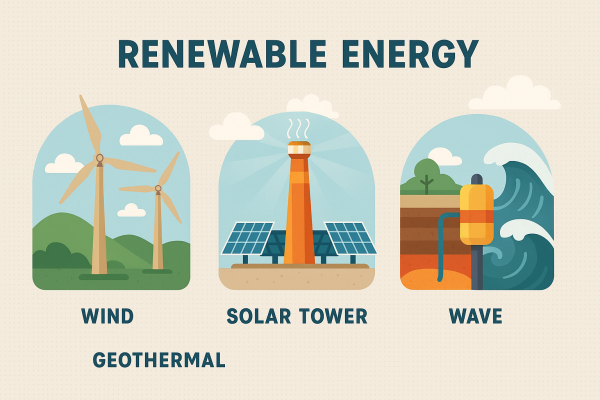
Đề thi IELTS Reading ngày 03/08/2024 mang đến một bài đọc đặc biệt thú vị với chủ đề năng lượng tái tạo (Renewable Energy) – một đề tài “vừa học thuật, vừa thời sự”. Trong Passage mang tên “An insight into the progress in renewable energy research”, thí sinh được tiếp cận với những công nghệ mới nổi như điện gió, điện mặt trời, sóng biển, và thậm chí là hơi nước từ đá nóng sâu dưới lòng đất.
Bài viết này của ECE English sẽ cung cấp cho bạn:
-
Toàn bộ phân tích chi tiết từng câu hỏi trong đề.
-
Hệ thống từ vựng học thuật & cấu trúc hay có thể áp dụng cho IELTS Writing/Speaking.
-
Đáp án chính xác kèm giải thích hợp lý giúp bạn hiểu sâu hơn, không chỉ chọn đúng mà còn biết “vì sao đúng”.
Nếu bạn đang luyện thi IELTS Reading band 6.5 – 8.0+, thì đây chính là tài liệu bạn nên lưu lại để ôn tập hiệu quả.
Renewable energy ielts reading
Reading Passage: An insight into the progress in renewable energy research
A
The race is on for the ultimate goal of renewable energy: electricity production at prices that are competitive with coal-fired power stations, but without coal’s pollution. Some new technologies are aiming to be the first to push coal from its position as Australia’s chief source of electricity.
B
At the moment the front-runner in renewable energy is wind technology. According to Peter Bergin of Australian Hydro, one of Australia’s leading wind energy companies, there have been no dramatic changes in windmill design for many years, but the cumulative effects of numerous small improvements have had a major impact on cost. ‘We’re reaping the benefits of 30 years of research in Europe, without having to make the same mistakes that they did,’ Mr Bergin says.
C
Electricity can be produced from coal at around 4 cents per kilowatt-hour, but only if the environmental costs are ignored. ‘Australia has the second cheapest electricity in the world, and this makes it difficult for renewables to compete,’ says Richard Hunter of the Australian Ecogeneration Association (AEA). Nevertheless, the AEA reports: ‘The production cost of a kilowatt-hour of wind power is one-fifth of what it was 20 years ago,’ or around 7 cents per kilowatt-hour.
D
Australian Hydro has dozens of wind monitoring stations across Australia as part of its aim to become Australia’s pre-eminent renewable energy company. Despite all these developments, wind power remains one of the few forms of alternative energy where Australia is nowhere near the global cutting edge, mostly just replicating European designs.
E
While wind may currently lead the way, some consider a number of technologies under development have more potential. In several cases, Australia is at the forefront of global research in the area. Some of them are very site-specific, ensuring that they may never become dominant market players. On the other hand, these newer developments are capable of providing more reliable power, avoiding the major criticism of windmills – the need for back-up on a calm day.
F
One such development uses hot, dry rocks. Deep beneath South Australia, radiation from elements contained in granite heats the rocks. Layers of insulating sedimentation raise the temperatures in some locations to 250°C. An Australian firm, Geoenergy, is proposing to pump water 3.5 kilometres into the earth, where it will travel through tiny fissures in the granite, heating up as it goes until it escapes as steam through another drilled hole.
G
No greenhouse gases are produced, but the system needs some additional features if it is to be environmentally friendly. Dr Prue Chopra, a geophysicist at the Australian National University and one of the founders of Geoenergy, notes that the steam will bring with it radon gas, along through a heat exchanger and then sent back underground for another cycle. Technically speaking, hot dry rocks are not a renewable source of energy. However, the Australian source is so large it could supply the entire country’s needs for thousands of years at current rates of consumption.
H
Two other proposals for very different ways to harness sun and wind energy have surfaced recently. Progress continues with Australian company EnviroPower’s plans for Australia’s first solar chimney near Mildura, in Victoria. Under this scheme, a tall tower will draw hot air from a greenhouse built to cover the surrounding 5 km². As the air rises, it will drive a turbine to produce electricity. The solar tower combines three very old technologies – the chimney, the turbine and the greenhouse – to produce something quite new. It is this reliance on proven engineering principles that led Enviropower’s CEO, Richard Davies, to state: ‘There is no doubt this technology will work, none at all.’
I
This year, Enviropower recognized that the quality of sunlight in the Mildura district will require a substantially larger collecting area than was previously thought. However, spokesperson Kay Firth says that a new location closer to Mildura will enable Enviropower to balance the increased costs with extra revenue. Besides saving in transmission costs, the new site ‘will mean increased revenue from tourism and use of power for telecommunications. We’ll also be able to use the outer 500 metres for agribusiness.’ Wind speeds closer to the tower will be too high for farming.
J
Another Australian company, Wavetech, is achieving success with ways of harvesting the energy in waves. Wavetech’s invention uses a curved surface to push waves into a chamber, where the flowing water column pushes air back and forth through a turbine. Wavetech was created when Dr Tim Devine offered the idea to the world leader in wave generator manufacturers, who rather surprisingly rejected it. Dr Devine responded by establishing Wavetech and making a number of other improvements to generator design. Wavetech claims that, at appropriate sites, ‘the cost of electricity produced with our technology should be below 4 cents per kilowatt-hour.’
K
The diversity of forms of greenhouse-friendly energy under development in Australia is remarkable. However, support on a national level is disappointing. According to Richard Hunter of the AEA, ‘Australia has huge potential for wind, sun and wave technology. We should really be at the forefront, but the reality is we are a long way behind.’
Questions 1–7: TRUE / FALSE / NOT GIVEN
Do the following statements agree with the information given in Reading Passage?
In boxes 1–7 on your answer sheet, write:
-
TRUE – if the statement agrees with the information
-
FALSE – if the statement contradicts the information
-
NOT GIVEN – if there is no information on this
-
In Australia, alternative energies are less expensive than conventional electricity.
-
Geoenergy needs to adapt its system to make it less harmful to the environment.
-
Dr Prue Chopra has studied the effects of radon gas on the environment.
-
Hot, dry rocks could provide enough power for the whole of Australia.
-
The new Enviropower facility will keep tourists away.
-
Wavetech was established when its founders were turned down by another company.
-
According to AEA, Australia is a world leader in developing renewable energy.
Questions 8–13: Matching Statements to Companies
Look at the following statements (Questions 8–13) and the list of companies below.
Match each statement with the correct company, A–D.
Write the correct letter, A–D, in boxes 8–13 on your answer sheet.
NB: You may use any letter more than once.
List of Companies:
A. Australian Hydro
B. Geoenergy
C. Enviropower
D. Wavetech
8. During the process, harmful substances are prevented from escaping.
9. Water is used to force air through a special device.
10. Techniques used by other countries are being copied.
11. The system can provide services other than energy production.
12. It is planned to force water deep under the ground.
13. Original estimates for part of the project have been revised.
Từ vựng học thuật & cấu trúc hay trong bài đọc
| Từ vựng | Loại từ | Nghĩa |
|---|---|---|
| cumulative | adj | tích lũy |
| cutting edge | n/adj | tiên tiến, hiện đại |
| site-specific | adj | đặc thù theo địa điểm |
| fissure | n | khe nứt |
| exchanger | n | bộ trao đổi nhiệt |
| harness | v | khai thác (năng lượng, tài nguyên) |
| proven engineering principles | collocation | nguyên lý kỹ thuật đã được chứng minh |
| revise estimates | v + n | điều chỉnh dự đoán |
| fore-runner | n | người/vật dẫn đầu |
| at the forefront | idiom | ở tuyến đầu |
1. “The race is on for the ultimate goal of…”: Cấu trúc nhấn mạnh mục tiêu / xu hướng đang diễn ra
📌 Ví dụ trong bài: “The race is on for the ultimate goal of renewable energy: electricity production at prices that are competitive with coal…”
2. “reaping the benefits of…”: Collocation nâng cao thay cho “benefiting from…”
📌 Ví dụ: “We’re reaping the benefits of 30 years of research in Europe…”
3. “without having to…”: Dạng rút gọn mang nghĩa “mà không cần phải…” – rất tự nhiên và học thuật.
📌 Ví dụ: “…without having to make the same mistakes…”
4. “ensuring that…”: Cấu trúc gây hiệu ứng mạnh, nhấn vào kết quả đạt được sau hành động.
📌 Ví dụ: “…ensuring that they may never become dominant market players…”
5. “It is this reliance on…that led to…”: Cấu trúc nhấn mạnh nguyên nhân → hệ quả
📌 Ví dụ: “It is this reliance on proven engineering principles that led Enviropower’s CEO to state…”
6. “Technically speaking,…”: Mở đầu câu để trình bày khía cạnh chuyên môn hoặc kỹ thuật – rất hay dùng trong Academic Writing.
📌 Ví dụ: “Technically speaking, hot dry rocks are not a renewable source…”
7. “remarkable diversity of…”: Diễn đạt nâng cao thay cho “many kinds of…”
📌 Ví dụ: “The diversity of forms of greenhouse–friendly energy… is remarkable.”
8. “According to [expert],…”: Cách trích dẫn chuyên gia một cách học thuật – rất chuẩn IELTS Writing Task 2.
📌 Ví dụ: “According to Richard Hunter of the AEA…”
Đáp án tham khảo
✅ QUESTIONS 1–7: TRUE / FALSE / NOT GIVEN
1. In Australia, alternative energies are less expensive than conventional electricity. → FALSE
🔍 Từ khóa: “alternative energies”, “less expensive”, “conventional electricity”
📌 Dẫn chứng (Paragraph C):
“Electricity can be produced from coal at around 4 cents per kilowatt-hour… wind power… around 7 cents…”
📌 Giải thích:
-
4 cents (than đá) < 7 cents (gió)
→ Câu nói ngược với thông tin đề bài, vì năng lượng thay thế đắt hơn điện than.
✅ Đáp án: FALSE
2. Geoenergy needs to adapt its system to make it less harmful to the environment. → TRUE
🔍 Từ khóa: “Geoenergy”, “adapt”, “less harmful”
📌 Dẫn chứng (Paragraph G):
“…needs some additional features if it is to be environmentally friendly.”
📌 Giải thích:
-
Câu trong bài cho thấy hệ thống cần điều chỉnh thêm để đạt chuẩn môi trường.
→ Trùng ý với “adapt… less harmful”.
✅ Đáp án: TRUE
3. Dr Prue Chopra has studied the effects of radon gas on the environment. → NOT GIVEN
🔍 Từ khóa: “studied”, “effects”, “radon gas”, “environment”
📌 Dẫn chứng (Paragraph G):
“…the steam will bring with it radon gas… Dr Prue Chopra…”
📌 Giải thích:
-
Đề có nhắc radon và Dr. Chopra, nhưng không hề nói cô ấy nghiên cứu ảnh hưởng của nó đến môi trường.
✅ Đáp án: NOT GIVEN
4. Hot, dry rocks could provide enough power for the whole of Australia. → TRUE
🔍 Từ khóa: “Hot, dry rocks”, “enough power”, “whole of Australia”
📌 Dẫn chứng (Paragraph G):
“…so large it could supply the entire country’s needs for thousands of years…”
📌 Giải thích:
-
Khẳng định hoàn toàn khớp với thông tin trong bài.
✅ Đáp án: TRUE
5. The new Enviropower facility will keep tourists away. → FALSE
🔍 Từ khóa: “Enviropower”, “tourists”, “keep away”
📌 Dẫn chứng (Paragraph I):
“…increased revenue from tourism…”
📌 Giải thích:
-
Không chỉ không xua đuổi khách, mà họ mong có thêm lợi nhuận từ khách du lịch.
✅ Đáp án: FALSE
6. Wavetech was established when its founders were turned down by another company. → TRUE
🔍 Từ khóa: “established”, “rejected”, “another company”
📌 Dẫn chứng (Paragraph J):
“…offered the idea… who rather surprisingly rejected it. Dr Devine responded by establishing Wavetech…”
📌 Giải thích:
-
Ý tưởng bị từ chối → công ty mới ra đời. Chính xác.
✅ Đáp án: TRUE
7. According to AEA, Australia is a world leader in developing renewable energy. → FALSE
🔍 Từ khóa: “AEA”, “world leader”, “renewable energy”
📌 Dẫn chứng (Paragraph K):
“…we should really be at the forefront, but the reality is we are a long way behind.”
📌 Giải thích:
-
Họ đang tụt hậu, không dẫn đầu → phủ định hoàn toàn ý trong câu hỏi.
✅ Đáp án: FALSE
✅ QUESTIONS 8–13: MATCHING INFORMATION TO COMPANY
**8. During the process, harmful substances are prevented from escaping. → B (Geoenergy)
🔍 Từ khóa: “harmful substances”, “prevented from escaping”
📌 Dẫn chứng (Paragraph G): “…radon gas… passed through a heat exchanger and then sent back underground…”
📌 Giải thích: Radon là chất nguy hiểm, được giữ lại, không thải ra ngoài.
✅ Đáp án: B
**9. Water is used to force air through a special device. → D (Wavetech)
🔍 Từ khóa: “water”, “force air”, “device/turbine”
📌 Dẫn chứng (Paragraph J): “…the flowing water column pushes air back and forth through a turbine.”
📌 Giải thích: nước làm dịch chuyển không khí qua turbine.
✅ Đáp án: D
**10. Techniques used by other countries are being copied. → A (Australian Hydro)
🔍 Từ khóa: “techniques”, “copied”, “other countries”
📌 Dẫn chứng (Paragraph D): “…mostly just replicating European designs.”
📌 Giải thích: “Replicating” = copy → Xác định rõ công nghệ đến từ châu Âu.
✅ Đáp án: A
**11. The system can provide services other than energy production. → C (Enviropower)
🔍 Từ khóa: “services”, “other than energy”
📌 Dẫn chứng (Paragraph I): “…increased revenue from tourism… telecommunications… agribusiness…”
📌 Giải thích: Hệ thống ngoài điện còn hỗ trợ du lịch, viễn thông, nông nghiệp.
✅ Đáp án: C
**12. It is planned to force water deep under the ground. → B (Geoenergy)
🔍 Từ khóa: “force water”, “deep underground”
📌 Dẫn chứng (Paragraph F): “…pump water 3.5 kilometres into the earth…”
📌 Giải thích: Kế hoạch cụ thể được đề cập rõ ràng.
✅ Đáp án: B
**13. Original estimates for part of the project have been revised. → C (Enviropower)
🔍 Từ khóa: “estimates”, “revised”, “part of the project”
📌 Dẫn chứng (Paragraph I): “…will require a substantially larger collecting area than was previously thought.”
📌 Giải thích: Ước tính ban đầu đã bị điều chỉnh, đúng với yêu cầu câu hỏi.
✅ Đáp án: C
Bài đọc về năng lượng tái tạo không chỉ là một đề thi IELTS Reading điển hình với các dạng câu hỏi TRUE/FALSE/NOT GIVEN và Matching Information, mà còn là kho tàng từ vựng học thuật và cấu trúc ngữ pháp chuẩn Academic English.
Thông qua việc giải thích chi tiết từng câu hỏi, phân tích từ khóa, và trích dẫn dẫn chứng từ bài đọc, bạn sẽ không chỉ nâng cao kỹ năng làm bài mà còn học được cách tư duy ngôn ngữ chuẩn IELTS.
Đừng quên lưu lại bài viết để luyện tập lại trước kỳ thi. Và nếu bạn muốn mở rộng kỹ năng, hãy thử tự tóm tắt bài đọc hoặc viết lại các câu đúng bằng cách paraphrase – đó là cách hiệu quả để tăng band điểm IELTS Reading và Writing cùng lúc.

Đoàn Nương
Tôi là Đoàn Nương - Giám đốc trung tâm ngoại ngữ ECE. Tôi hiện đang là giảng viên của khoa ngôn ngữ các nước nói tiếng Anh - Trường Đại Học Quốc Gia Hà Nội. Tôi đã có 19 năm kinh nghiệm giảng dạy IELTS và 15 năm là giảng viên Đại Học. Tôi mong muốn đưa ECE trở thành trung tâm ngoại ngữ cho tất cả mọi người, mang tới cho học viên môi trường học tập tiếng Anh chuyên nghiệp và hiệu quả.
Tìm hiểu các khóa học tại ECE
Tin Tức Cùng Danh Mục

The Concept of Childhood in Western Countries IELTS Reading: Dịch & giải chi tiết

The Magic of Kefir IELTS Reading: Dịch bài đọc & đáp án chuẩn
The Columbian Exchange IELTS Reading: Dịch & giải chi tiết A-Z

Giải mã bài đọc: Complementary & alternative medicine IELTS Reading
Stadium Australia IELTS Reading: Giải chi tiết & Dịch nghĩa
Các tin liên quan
The Concept of Childhood in Western Countries IELTS Reading: Dịch & giải chi tiết
The Magic of Kefir IELTS Reading: Dịch bài đọc & đáp án chuẩn
The Columbian Exchange IELTS Reading: Dịch & giải chi tiết A-Z
Giải mã bài đọc: Complementary & alternative medicine IELTS Reading
Stadium Australia IELTS Reading: Giải chi tiết & Dịch nghĩa

Television and Sport IELTS Reading: Dịch chuẩn & Giải đề chi tiết
The Invention of Television IELTS Reading: Từ vựng & đáp án chuẩn
Frogwatch IELTS Reading: Bài dịch & đáp án chuẩn nhất
Consecutive and Simultaneous Translation IELTS Reading: Dịch chuẩn & Giải chi tiết

Fears IELTS Reading: Bản dịch chuẩn & giải chi tiết từ A-Z
Memory and Age IELTS Reading: Dịch chuẩn & Giải chi tiết
Đáp án & từ vựng bài đọc Photovoltaics on the rooftop IELTS Reading




Lượt Đăng Ký

NHẬN TƯ VẤN NGAY
Vui lòng để lại thông tin để được tư vấn chi tiết lộ trình học và thi IELTS ở trên
