
Topic Personality IELTS Writing Task 2: Từ vựng & Bài mẫu tham khảo



Tóm Tắt Nội Dung Bài Viết
Topic Personality IELTS Writing Task 2: Từ vựng & Bài mẫu tham khảo


Tóm Tắt Nội Dung Bài Viết
Bạn có bao giờ cảm thấy “khựng” lại khi gặp những đề bài hỏi về bản chất con người trong IELTS Writing Task 2? Personality (Tính cách) là một chủ đề không quá xa lạ, đặc biệt thường xuất hiện ở Writing Task 2 và Speaking Part 3. Tuy nhiên, chính vì tính chất trừu tượng và học thuật cao, nhiều bạn gặp khó khăn trong việc triển khai ý tưởng: Liệu tính cách là do bẩm sinh hay do nuôi dạy? Trường học có nên dạy kỹ năng sống thay vì kiến thức?
Nếu bạn đang tìm cách “bẻ khóa” chủ đề này một cách bài bản mà vẫn tự nhiên, hãy cùng tham khảo bài hướng dẫn chi tiết dưới đây từ cô Lương Thảo Nhi nhé!
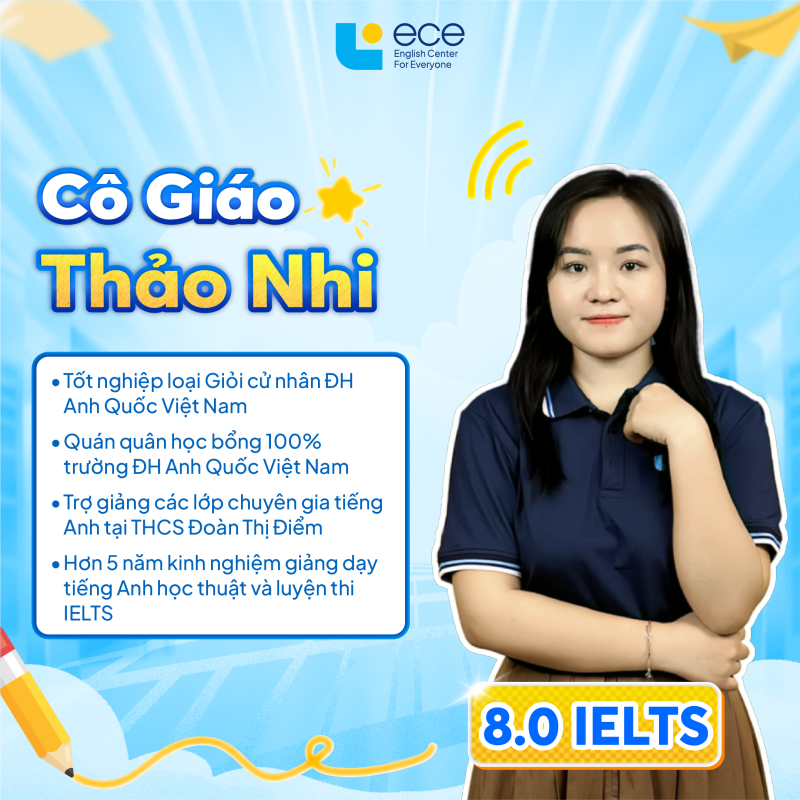
Cô Lương Thảo Nhi – Giáo viên 8.0 IELTS tại trung tâm ngoại ngữ ECE
Tổng quan: Personality trong IELTS Writing là gì?
Personality thuộc nhóm chủ đề lớn Psychology, Education & Society (Tâm lý, Giáo dục & Xã hội). Các câu hỏi thường không yêu cầu bạn mô tả tính cách, mà yêu cầu tranh luận về sự hình thành và vai trò của nó.
Các góc độ tranh luận phổ biến:
-
Nature vs. Nurture: Tính cách là bẩm sinh (do gen) hay được hình thành qua môi trường và giáo dục?
-
Education: Vai trò của trường học và gia đình trong việc phát triển nhân cách.
-
Success: Mối quan hệ giữa tính cách (như sự kiên trì) và thành công trong cuộc sống.
-
Stability: Liệu tính cách có thể thay đổi theo thời gian hay là yếu tố cố định?
Các dạng câu hỏi thường gặp:
| Dạng bài | Ví dụ câu hỏi |
| Opinion Essay | Some people believe personality is determined by genetics, others think it is shaped by life experiences. What is your opinion? |
| Discussion Essay | Schools should focus on academic subjects vs. personality development. Discuss both views. |
| Problem / Solution | Modern society discourages the development of good personal character. What problems & solutions? |
| Cause / Effect | What factors influence personality development, and how do they affect success in life? |
Ý tưởng và từ vựng chuyên sâu cho chủ đề Personality
Để bài viết có chiều sâu, bạn cần hệ thống từ vựng theo các luồng tư duy sau:
Tranh luận: Bẩm sinh vs môi trường (Nature vs. Nurture)
-
Main Ideas:
-
Một số đặc điểm tính cách mang tính di truyền (genetics).
-
Môi trường sống và giáo dục định hình hành vi (upbringing & environment).
-
-
Vocabulary:
– Innate traits: Đặc điểm bẩm sinh.
– Genetic predisposition: Khuynh hướng di truyền.
– To shape / mold one’s personality: Định hình/nhào nặn tính cách.
– Upbringing: Sự nuôi dạy.
Example: Some individuals possess an innate tendency towards introversion, but their upbringing can significantly shape how this trait manifests.
Tranh luận: Giáo dục & sự phát triển tính cách
-
Main Ideas:
-
Trường học không chỉ truyền đạt kiến thức học thuật.
-
Kỹ năng mềm quyết định thành công lâu dài.
-
-
Vocabulary:
– Character education: Giáo dục nhân cách.
– Soft skills: Kỹ năng mềm.
– Emotional intelligence (EQ): Trí tuệ cảm xúc.
– To instill values: Gieo những giá trị (đạo đức/lối sống).
Example: Schools play a crucial role in instilling values such as perseverance, which are essential for success.
Tranh luận: Tính cách & thành công
-
Main Ideas:
-
Thành công không chỉ dựa vào IQ.
-
Tính cách ảnh hưởng đến cách đối mặt với thất bại.
-
-
Vocabulary:
– Resilience: Khả năng phục hồi (sau thất bại/nghịch cảnh).
– Self-discipline: Tự kỷ luật.
– A growth mindset: Tư duy phát triển (cầu tiến).
– To cope with setbacks: Đối phó với những trở ngại.
Example: Individuals with high resilience are better equipped to cope with setbacks.
Đề & bài mẫu tham khảo chủ đề “Personality”
Dưới đây là 2 bài mẫu giải quyết 2 dạng đề khó nhất của chủ đề này.
Đề 1 (Discussion): Nature or Nurture?
Question: Some people believe that personality is mainly shaped by genetics, while others argue that life experiences are more influential. Discuss both views and give your opinion.
Sample Answer:
It is widely debated whether an individual’s personality is predominantly determined by genetic factors or shaped by life experiences. While biological inheritance undeniably lays the foundation for certain traits, I believe that environmental influences play a more decisive role in shaping who we ultimately become.
On the one hand, proponents of the genetic perspective argue that many personality traits are innate. Scientific research suggests that characteristics such as temperament, introversion, or emotional sensitivity can be traced back to genetic predispositions. For instance, identical twins raised in different environments often display remarkably similar behavioral patterns, lending credibility to the argument that personality is, to a significant extent, hardwired at birth.
However, I contend that life experiences exert a far greater influence over the long term. An individual’s upbringing, education, and social interactions continuously mold their attitudes and behaviors. A naturally shy child, for example, may develop confidence and strong communication skills if encouraged by supportive parents and teachers. Conversely, adverse experiences such as neglect or chronic stress can profoundly alter one’s personality, regardless of genetic advantages.
In conclusion, while genetics may provide the initial blueprint, it is life experience that refines, reshapes, and sometimes even overrides these innate tendencies. Therefore, personality should be viewed as a dynamic construct rather than a fixed trait determined solely at birth.
Vocabulary Highlights:
-
Genetic predisposition: Khuynh hướng do di truyền.
-
Hardwired at birth: Được “lập trình sẵn” từ khi sinh ra.
-
Exert a greater influence: Tác động mạnh hơn.
-
A dynamic construct: Một khái niệm mang tính thay đổi/động.
Đề 2 (Agree/Disagree): Education & Personality
Question: Schools should focus more on teaching personality and life skills rather than academic subjects. To what extent do you agree or disagree?
Sample Answer:
In an increasingly competitive and unpredictable world, the debate over whether schools should prioritize personality development over academic instruction has gained momentum. While academic knowledge remains indispensable, I strongly agree that greater emphasis should be placed on cultivating essential life skills and character traits.
Academic excellence alone does not guarantee success beyond the classroom. Traits such as self-discipline, resilience, and teamwork are crucial for navigating real-world challenges. Many high-achieving students struggle in professional environments due to poor communication skills or an inability to cope with failure, highlighting the limitations of an education system focused solely on examinations.
That said, this does not imply that academic subjects should be neglected. Rather, schools should strive for a balanced curriculum that integrates character education alongside traditional learning. Group projects, leadership activities, and community service can simultaneously reinforce academic knowledge and foster positive personality traits.
In conclusion, while academic education forms the intellectual backbone of society, personality development equips individuals with the tools to apply that knowledge effectively. A holistic educational approach is therefore essential.
Hy vọng rằng với những phân tích từ ECE, chủ đề khó như Personality đã trở nên gần gũi và dễ thở hơn với các bạn. Hãy nhớ rằng, mọi tính cách hay phẩm chất tốt đẹp đều cần quá trình rèn luyện – và việc học Writing cũng vậy. Hãy kiên trì luyện tập, và đừng ngần ngại chia sẻ những bài viết của bạn với thầy cô tại ECE để nhận được những nhận xét chi tiết nhất. Hẹn gặp lại các bạn trong những chủ đề thú vị tiếp theo!

Đoàn Nương
Tôi là Đoàn Nương - Giám đốc trung tâm ngoại ngữ ECE. Tôi hiện đang là giảng viên của khoa ngôn ngữ các nước nói tiếng Anh - Trường Đại Học Quốc Gia Hà Nội. Tôi đã có 19 năm kinh nghiệm giảng dạy IELTS và 15 năm là giảng viên Đại Học. Tôi mong muốn đưa ECE trở thành trung tâm ngoại ngữ cho tất cả mọi người, mang tới cho học viên môi trường học tập tiếng Anh chuyên nghiệp và hiệu quả.
Tìm hiểu các khóa học tại ECE
Tin Tức Cùng Danh Mục

Gravity IELTS Reading – Giải mã bài đọc về trọng lực

Bài mẫu IELTS Speaking part 1, 2, 3 topic beauty

Bài mẫu IELTS Speaking part 1, 2 & 3 topic Relationships

IELTS Speaking topic Fashion: Từ vựng & bài mẫu full 3 parts

IELTS Speaking topic chocolate: Từ vựng & bài mẫu part 1, 2, 3
Các tin liên quan
Gravity IELTS Reading – Giải mã bài đọc về trọng lực
Bài mẫu IELTS Speaking part 1, 2, 3 topic beauty
Bài mẫu IELTS Speaking part 1, 2 & 3 topic Relationships
IELTS Speaking topic Fashion: Từ vựng & bài mẫu full 3 parts
IELTS Speaking topic chocolate: Từ vựng & bài mẫu part 1, 2, 3

IELTS Speaking topic building: Từ vựng, bài mẫu part 1, 2, 3

Từ vựng và bài mẫu IELTS Speaking topic Memory chi tiết

IELTS Speaking topic Flowers: Từ vựng & bài mẫu chuẩn 3 part

Company Innovation IELTS Reading: Từ vựng & đáp án chuẩn

Willpower IELTS Reading – Từ vựng & đáp án chuẩn

Giải mã bài đọc Making time for science IELTS Reading chi tiết A – Z

The Great Fire of London IELTS Reading: Từ vựng & đáp án chi tiết




Lượt Đăng Ký

NHẬN TƯ VẤN NGAY
Vui lòng để lại thông tin để được tư vấn chi tiết lộ trình học và thi IELTS ở trên
