
IELTS Speaking topic Flowers: Từ vựng & bài mẫu chuẩn 3 part



Tóm Tắt Nội Dung Bài Viết
IELTS Speaking topic Flowers: Từ vựng & bài mẫu chuẩn 3 part


Tóm Tắt Nội Dung Bài Viết
Đã bao giờ bạn bước vào phòng thi IELTS Speaking và bất ngờ “đứng hình” trước một câu hỏi tưởng chừng vô cùng đơn giản như: “Bạn có thích hoa không?” Sự thật là, những chủ đề càng gần gũi trong đời sống lại càng dễ khiến chúng ta cạn ý tưởng và mắc kẹt với những từ vựng cơ bản như beautiful, colorful hay smell good. Tuy nhiên, dưới lăng kính của bài thi IELTS, Flowers (Các loài hoa) lại là một chủ đề tuyệt vời để bạn phô diễn khả năng miêu tả cái đẹp, truyền tải cảm xúc và chia sẻ chiều sâu văn hóa.
Dưới đây là bài đọc chi tiết của trung tâm ngoại ngữ ECE giúp bạn xử lý mượt mà chủ đề tinh tế này qua cả ba phần thi, cùng với kho từ vựng giúp nâng tầm câu trả lời của bạn.
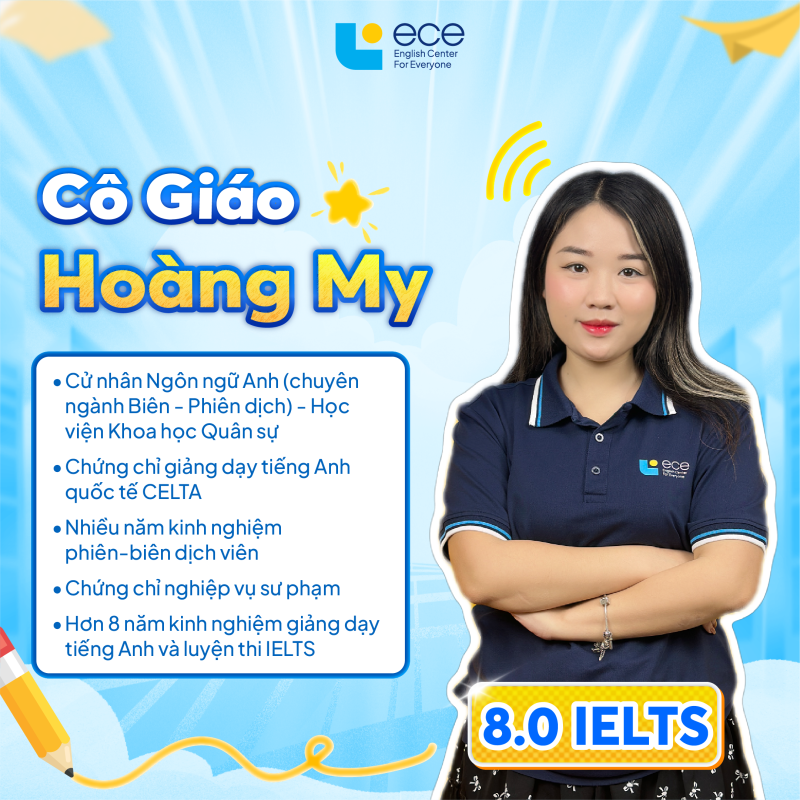
Bài viết được tham khảo chuyên môn bởi cô Nguyễn Hoàng My – Giáo viên 8.0 IELTS tại ECE
IELTS Speaking Part 1 topic flowers
Ở phần thi này, hãy giữ nhịp điệu tự nhiên, chân thật nhưng đừng quên lồng ghép các tính từ miêu tả cảm xúc và hành động tinh tế.
1. Về sở thích cá nhân & Cảm nhận
Q: Do you like flowers?
“Yes, I do. I find flowers visually pleasing and they can instantly brighten up any space. They also have a calming effect on people, which is why many homes decorate their living spaces with fresh flowers.”
-
Visually pleasing (a): Đẹp mắt
-
Brighten up (v): Làm sáng bừng, làm vui lên
-
Calming (a): Mang lại cảm giác thư giãn
Q: Have you planted any flowers?
“Yes, I’ve planted a few small flowers in pots on my balcony. I find gardening quite therapeutic because it allows me to unwind after a busy day. Watching the flowers gradually bloom is also very rewarding.”
-
Therapeutic (a): Mang tính chữa lành, thư giãn
-
Unwind (v): Thư giãn
-
Bloom (v): Nở hoa
Q: Do you know anyone who loves flowers?
“Yes, my mother absolutely loves flowers. She often decorates the house with fresh bouquets and enjoys taking care of small plants in the garden. For her, flowers bring a sense of peace and beauty.”
-
Bouquet (n): Bó hoa
-
A sense of (n): Cảm giác về (sự bình yên, vẻ đẹp…)
Q: Are there a lot of flowers where you live?
“Yes, there are quite a lot, especially in parks and public gardens. During certain seasons, the streets are lined with blooming flowers, which makes the area look much more vibrant. It creates a very pleasant atmosphere.”
-
Lined with (v): Được bao quanh/trải dọc bởi
-
Vibrant (a): Đầy sức sống, rực rỡ
Q: Do you take photos of flowers in your daily life?
“Yes, occasionally I do, especially when I come across a particularly beautiful flower. Flowers make great photography subjects because of their colors and delicate shapes. I sometimes share these photos on social media.”
-
Come across (v): Tình cờ gặp
-
Delicate (a): Tinh tế, mỏng manh
-
Subjects (n): Đối tượng (chụp ảnh)
2. Ý nghĩa & Văn hóa tặng hoa
Q: Do you like to receive flowers as a gift?
“Absolutely. Receiving flowers feels thoughtful and heartwarming because it shows that someone took the effort to choose something beautiful for you. It’s also a simple gesture that can lift your spirits.”
-
Thoughtful (a): Chu đáo, tinh tế
-
Gesture (n): Cử chỉ, hành động thể hiện tình cảm
-
Lift someone’s spirits (v): Làm ai đó vui lên
Q: What kinds of flowers do you know?
“I know quite a few types of flowers such as roses, lilies, orchids, and sunflowers. Each of them has its own distinctive appearance and symbolism. For example, roses are often associated with love and romance.”
-
Distinctive (a): Đặc trưng, khác biệt
-
Symbolism (n): Ý nghĩa biểu tượng
-
Associated with (v): Gắn liền với
Q: Are there any flowers that have special meanings in Vietnam?
“Yes, definitely. For instance, the lotus is widely regarded as a national symbol because it represents purity and resilience. Peach blossoms are also meaningful as they symbolize prosperity and good fortune during the Lunar New Year.”
-
Regarded as (v): Được xem như là
-
Resilience (n): Sự kiên cường
-
Prosperity (n): Sự thịnh vượng
Q: Have you ever given anybody flowers?
“Yes, I’ve given flowers to my family members and friends on special occasions like birthdays. I think flowers are a classic way to express appreciation and affection. They’re simple but meaningful gifts.”
-
Classic (a): Mang tính truyền thống, kinh điển
-
Express appreciation (v): Bày tỏ sự trân trọng
-
Affection (n): Tình cảm
Q: Is it popular to give flowers to people in your country?
“Yes, it’s quite common in my country. People often give flowers as a sign of respect or celebration. It’s considered a thoughtful and appropriate gift for many occasions.”
-
A sign of (n): Dấu hiệu của, biểu hiện của
-
Appropriate (a): Phù hợp
Q: On what special occasions do people give flowers in your country?
“People usually give flowers on occasions like birthdays, weddings, graduations, and especially on Women’s Day. Flowers are often used to convey admiration and gratitude. They’re also popular during ceremonies and celebrations.”
-
Graduation (n): Lễ tốt nghiệp
-
Admiration (n): Sự ngưỡng mộ
-
Gratitude (n): Lòng biết ơn
Q: What kinds of flowers would you like to receive as a present?
“I would probably like to receive roses or tulips because they look elegant and vibrant. I especially appreciate flowers that have a pleasant fragrance. It makes the gift feel even more special.”
-
Elegant (a): Thanh lịch
-
Fragrance (n): Hương thơm
Q: Do people in your country often send flowers to others?
“Yes, sending flowers is quite a common practice in my country. Many people order bouquets online and have them delivered to friends or relatives on special occasions. It’s seen as a polite and thoughtful gesture.”
-
Practice (n): Thông lệ, thói quen
-
Delivered (v): Được giao tới
IELTS Speaking Part 2 topic flowers
Đề bài: Describe a plant, flower or tree that is famous or important in your country.
You should say:
-
What type of plant, flower or tree it is
-
Where it grows or is usually seen
-
How it is used in your country
-
And explain why it is famous or important
Bài mẫu tham khảo (Hoa Sen – The Lotus):
One flower that is extremely famous and meaningful in Vietnam is the lotus flower. It’s actually considered the national flower of Vietnam, and it carries a lot of cultural and symbolic significance.
The lotus usually grows in ponds, lakes, and wetlands, especially in rural areas. In the summertime, you can easily spot large lotus ponds in places like Ninh Binh, Hue, or the outskirts of Hanoi, where the pink blossoms rise elegantly above the water. The sight of a blooming lotus pond is truly breathtaking and often attracts many visitors and photographers.
In Vietnam, the lotus is used in many different ways. For example, the flowers are often placed on family altars or used in temples as offerings because they symbolize purity and respect. Lotus seeds are also used in traditional desserts like sweet lotus seed soup, and lotus tea is another popular delicacy. Even the leaves and stems can be used in cooking or traditional medicine, which shows how versatile this plant is.
The reason why the lotus is so important in Vietnamese culture is mainly because of its symbolism. Although it grows in muddy water, the flower itself remains clean, elegant, and untouched, which represents purity, resilience, and inner strength. For many Vietnamese people, the lotus reflects the national spirit which is the idea of staying strong and graceful despite difficult circumstances. Because of that, it has become a powerful cultural icon and appears in poetry, art, architecture, and even fashion throughout the country.
Highlighted Vocab
lotus flower (n): hoa sen
national flower (n): quốc hoa
cultural significance (n): ý nghĩa văn hóa
symbolic significance (n): ý nghĩa biểu tượng
wetlands (n): vùng đất ngập nước
blossoms (n): hoa nở
blooming (a): đang nở rộ
breathtaking (a): đẹp đến nghẹt thở
family altar (n): bàn thờ gia đình
offerings (n): lễ vật cúng
lotus seeds (n): hạt sen
delicacy (n): món ăn đặc sản / tinh tế
versatile (a): đa dụng
purity (n): sự tinh khiết
resilience (n): sự kiên cường
inner strength (n): sức mạnh nội tâm
cultural icon (n): biểu tượng văn hóa
despite difficult circumstances (phrase): mặc dù hoàn cảnh khó khăn
Ghi chú cho các bạn khi luyện tập:
✅ Chọn loài hoa quen thuộc ở Việt Nam như hoa sen, hoa mai, hoa đào hoặc hoa hướng dương.
✅ Trả lời đủ 4 ý: loại hoa ➜ mọc ở đâu ➜ dùng để làm gì ➜ vì sao quan trọng.
✅ Thêm chi tiết thực tế để bài nói sinh động hơn, ví dụ: món ăn, lễ hội, phong tục.
✅ Nêu cảm nhận cá nhân: I find it beautiful, It represents Vietnamese culture.
✅ Sử dụng linkers tự nhiên như: For example, In addition, The reason why… is that…
Gợi ý công thức mở rộng nâng cao
✨ Giới thiệu loài hoa ➜ Mô tả nơi mọc ➜ Các cách sử dụng ➜ Ý nghĩa biểu tượng ➜ Liên hệ văn hóa hoặc bản sắc dân tộc.
✨ Collocations hữu ích: carry cultural symbolism, bloom gracefully, play an important role in traditions, represent resilience and purity.
✨ Ngữ pháp nâng cao:
- mệnh đề quan hệ (which is considered the national flower of Vietnam)
- phân từ (Growing in muddy water, the lotus still appears pure and elegant)
- câu điều kiện (If you visit Vietnam in summer, you will likely see lotus ponds everywhere.)
IELTS Speaking Part 3 topic flowers
1. Do you think people want to express their emotions when they give flowers?
Sample Answer:
Yes, I believe giving flowers is often a symbolic way for people to express emotions that may be difficult to put into words. Flowers can convey feelings such as love, gratitude, sympathy, or admiration in a very subtle and elegant manner. For instance, red roses are commonly associated with romantic affection, while white lilies often represent respect or remembrance. Another reason people give flowers is that the gesture itself demonstrates thoughtfulness and care. Even a simple bouquet can make the recipient feel appreciated and emotionally valued.
Highlighted Vocabulary:
symbolic (a): mang tính biểu tượng
convey (v): truyền tải, thể hiện
subtle (a): tinh tế
admiration (n): sự ngưỡng mộ
affection (n): tình cảm
gesture (n): cử chỉ
bouquet (n): bó hoa
2. Do you think giving flowers is becoming less popular nowadays?
Sample Answer:
To some extent, I think the tradition of giving flowers has declined slightly due to changing lifestyles and modern gift preferences. Many people today prefer practical gifts such as gadgets or experiences rather than something decorative that may only last a few days. However, flowers still remain popular for special occasions like weddings, anniversaries, or graduations because they carry emotional and cultural significance. In fact, social media has sometimes revived interest in flower gifting, as beautifully arranged bouquets are often shared online. So although the context may have changed, the tradition itself has not disappeared.
Highlighted Vocabulary:
tradition (n): truyền thống
decline (v): suy giảm
practical (a): thiết thực
decorative (a): mang tính trang trí
significance (n): ý nghĩa, tầm quan trọng
revive (v): khôi phục
arrangement (n): sự sắp xếp, bó hoa được cắm
3. Do older and younger people feel the same way about flowers?
Sample Answer:
Generally speaking, older and younger generations tend to have slightly different attitudes toward flowers. Older people often appreciate flowers as meaningful gifts because they grew up with traditions where flowers symbolised respect, romance, or celebration. Younger people, on the other hand, sometimes view flowers as temporary and less practical compared to other presents. However, this perception is gradually changing as younger generations become interested in aesthetics and lifestyle trends. For example, many young people now enjoy decorating their homes with fresh flowers for relaxation and visual appeal.
Highlighted Vocabulary:
generation (n): thế hệ
attitude (n): thái độ, quan điểm
symbolise (v): tượng trưng cho
temporary (a): tạm thời
perception (n): nhận thức
aesthetics (n): thẩm mỹ
visual appeal (n): sự hấp dẫn về mặt thị giác
4. Do you think flowers will still hold their value and respect in the future?
Sample Answer:
Yes, I believe flowers will continue to hold cultural and emotional value in the future. Throughout history, flowers have been closely linked to important life events such as celebrations, funerals, and ceremonies, and these traditions are unlikely to disappear. Moreover, as modern life becomes increasingly stressful, people may appreciate natural beauty even more as a source of comfort and relaxation. Flowers bring a sense of freshness and connection with nature that artificial gifts cannot replicate. Therefore, their symbolic and emotional importance will probably remain strong in the years to come.
Highlighted Vocabulary:
cultural value (n): giá trị văn hóa
ceremony (n): nghi lễ
increasingly (adv): ngày càng
source of comfort (n): nguồn an ủi
freshness (n): sự tươi mới
replicate (v): tái tạo, mô phỏng
symbolic (a): mang tính biểu tượng
Phần lớn thí sinh thường lo lắng khi gặp chủ đề Flowers vì sợ thiếu từ vựng chuyên ngành về cây cỏ. Tuy nhiên, qua các bài mẫu trên, bạn có thể thấy giám khảo chủ yếu đánh giá cách bạn diễn đạt cảm xúc cá nhân (như sự thư giãn) và hiểu biết văn hóa (ý nghĩa loài hoa). Thay vì cố học thuộc tên tiếng Anh của hàng chục loại hoa, hãy tập trung nắm chắc các cụm từ miêu tả cảm giác và ý nghĩa trong bài viết này. Chúc các bạn ôn thi hiệu quả!

Đoàn Nương
Tôi là Đoàn Nương - Giám đốc trung tâm ngoại ngữ ECE. Tôi hiện đang là giảng viên của khoa ngôn ngữ các nước nói tiếng Anh - Trường Đại Học Quốc Gia Hà Nội. Tôi đã có 19 năm kinh nghiệm giảng dạy IELTS và 15 năm là giảng viên Đại Học. Tôi mong muốn đưa ECE trở thành trung tâm ngoại ngữ cho tất cả mọi người, mang tới cho học viên môi trường học tập tiếng Anh chuyên nghiệp và hiệu quả.
Tìm hiểu các khóa học tại ECE
Tin Tức Cùng Danh Mục
IELTS Speaking topic chocolate: Từ vựng & bài mẫu part 1, 2, 3
IELTS Speaking topic building: Từ vựng, bài mẫu part 1, 2, 3

Từ vựng và bài mẫu IELTS Speaking topic Memory chi tiết

Company Innovation IELTS Reading: Từ vựng & đáp án chuẩn

Willpower IELTS Reading – Từ vựng & đáp án chuẩn
Các tin liên quan
IELTS Speaking topic chocolate: Từ vựng & bài mẫu part 1, 2, 3
IELTS Speaking topic building: Từ vựng, bài mẫu part 1, 2, 3
Từ vựng và bài mẫu IELTS Speaking topic Memory chi tiết
Company Innovation IELTS Reading: Từ vựng & đáp án chuẩn
Willpower IELTS Reading – Từ vựng & đáp án chuẩn

Giải mã bài đọc Making time for science IELTS Reading chi tiết A – Z

The Great Fire of London IELTS Reading: Từ vựng & đáp án chi tiết
Antibiotic Resistance IELTS Reading – Bài đọc IELTS về kháng kháng sinh

Giải mã bài đọc Just Relax IELTS Reading về bí ẩn thuật thôi miên

Spider silk IELTS Reading: Dịch bài đọc & đáp án chi tiết

Knowledge in Medicine IELTS Reading – Từ vựng & đáp án chuẩn
Angkor Wat IELTS Reading Answers – Bài đọc về ngôi đền Angkor Wat




Lượt Đăng Ký

NHẬN TƯ VẤN NGAY
Vui lòng để lại thông tin để được tư vấn chi tiết lộ trình học và thi IELTS ở trên
