
Từ vựng & Bài mẫu IELTS Speaking topic Culture (full 3 part)



Tóm Tắt Nội Dung Bài Viết
Từ vựng & Bài mẫu IELTS Speaking topic Culture (full 3 part)


Tóm Tắt Nội Dung Bài Viết
Bạn có thấy rằng Culture (Văn hóa) là một chủ đề “dễ hiểu nhưng khó nói” không? Dễ hiểu vì ai cũng có văn hóa, nhưng khó nói vì khi được hỏi: “Describe the culture in your country” (Mô tả văn hóa nước bạn), đa số thí sinh chỉ biết liệt kê: “Vietnam has Tet holiday, Pho, and Ao Dai”. Cách trả lời này quá đơn giản và thiếu chiều sâu (depth) để đạt Band 7.0+.
Giám khảo muốn nghe bạn nói về những khái niệm trừu tượng hơn như bản sắc (identity), giá trị (values) và sự hòa nhập (integration). Hôm nay, thầy Đình Nguyên – Giáo viên trung tâm ngoại ngữ ECE sẽ giúp bạn tìm hiểu bộ từ vựng và bài mẫu chi tiết cho chủ đề này, mời các bạn cùng theo dõi!
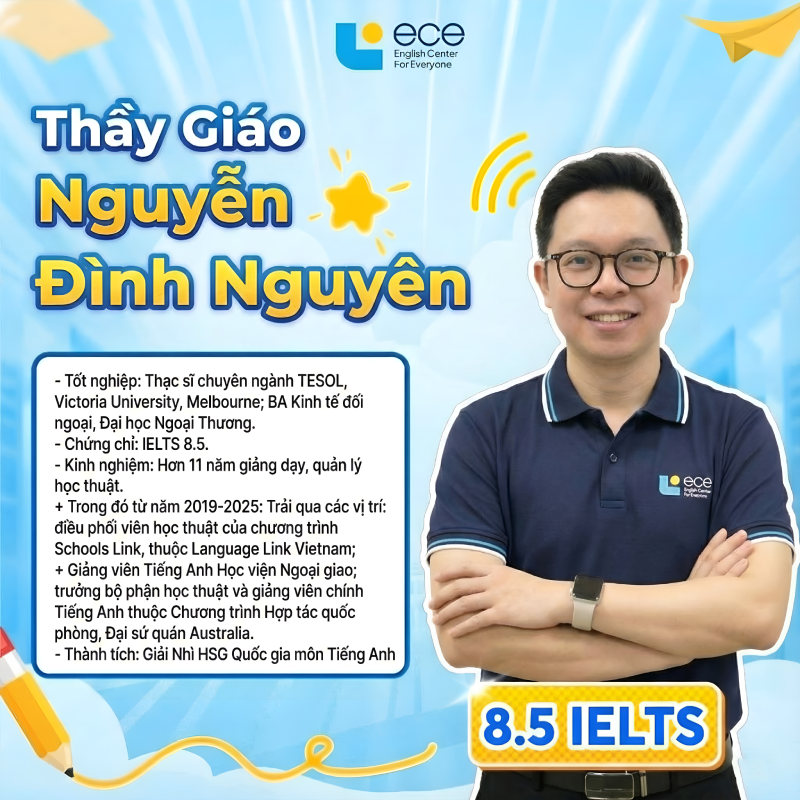
Thầy Nguyễn Đình Nguyên – Giáo viên 8.5 IELTS tại ECE
Từ vựng & Cấu trúc hay chủ đề Culture (IELTS Speaking)
Để đạt Band điểm cao, bạn cần sử dụng các collocations (cụm từ cố định) chính xác thay vì lắp ghép từ đơn lẻ. Dưới đây là bảng từ vựng chọn lọc:
Nhóm từ chỉ bản sắc & giá trị (Identity & Values)
| Từ / Cụm từ (Term) | Nghĩa (Meaning) | Ví dụ minh họa (Example) |
| Cultural heritage | Di sản văn hoá | Vietnam possesses a rich cultural heritage, profoundly shaped by its historical trajectory. |
| Traditional values | Giá trị truyền thống | Traditional values continue to command respect within numerous family structures. |
| Cultural identity | Bản sắc văn hoá | Linguistic elements assume a pivotal role in the formation of cultural identity. |
| Sense of belonging | Cảm giác gắn bó/thuộc về | Participation in cultural activities fosters an enhanced sense of belonging among individuals. |
Nhóm từ chỉ xã hội & lối sống (Society & Lifestyle)
| Từ / Cụm từ (Term) | Nghĩa (Meaning) | Ví dụ minh họa (Example) |
| Customs and traditions | Phong tục tập quán | Customs and traditions are systematically transmitted across successive generations. |
| Social norms | Chuẩn mực xã hội | Social norms exert considerable influence upon public decorum and behavioural expectations. |
| A melting pot | Nơi giao thoa văn hóa | Big cities like New York or London are often described as a melting pot of cultures. |
| Cultural diversity | Đa dạng văn hoá | Major metropolitan areas are notably distinguished by their significant cultural diversity. |
Các Idioms & Expressions giúp bài nói tự nhiên
Đừng quên lồng ghép 1-2 thành ngữ để bài nói mềm mại hơn:
-
Passed down through generations: Được truyền qua nhiều thế hệ (cha truyền con nối).
-
Lose touch with traditions: Dần xa rời/mất kết nối với truyền thống.
-
Cultural shock: Sốc văn hoá (cảm giác bỡ ngỡ khi đến môi trường mới).
-
A strong sense of identity: Ý thức bản sắc mạnh mẽ (biết mình là ai, văn hóa mình là gì).
Bài mẫu IELTS Speaking Part 1 – Chủ đề Culture
Trong Part 1, chiến thuật của thầy Nguyên là: Trả lời trực tiếp + Mở rộng bằng sự tương phản (Contrast) hoặc Lý do.
Q1: How would you describe the culture in your country?
Answer: “I would describe my country’s culture as a blend of traditional values and modern influences. On the one hand, people still respect customs such as family gatherings. On the other hand, lifestyles have become more modern, especially in big cities.”
* Cấu trúc On the one hand… On the other hand giúp câu trả lời có chiều sâu hơn là chỉ liệt kê.
Q2: Is culture important to you?
Answer: “Yes, very much so. Culture helps shape who I am and gives me a strong sense of belonging. It also affects how I think, behave, and communicate with others.”
Q3: Do you think culture changes over time?
Answer: “Definitely. Culture is not something fixed. It gradually changes as society develops, although core values often remain the same.”
Bài mẫu IELTS Speaking Part 2 – Describe a cultural tradition in your country
Đề bài: Describe a cultural tradition in your country.
You should say:
-
What it is
-
When it takes place
-
What people do
-
And why it is important
Sample Answer (Band 7.5+):
One cultural tradition that I find particularly meaningful is Tet, the Lunar New Year celebration in Vietnam. It usually takes place between late January and early February, depending on the lunar calendar, and it is considered the most important festival of the year.
In the weeks leading up to Tet, people clean and decorate their houses, buy new clothes, and prepare traditional food such as sticky rice cakes. During Tet itself, family members gather to share meals, visit relatives, and exchange good wishes for the new year. Younger people also receive lucky money from elders, which symbolises good fortune.
This tradition plays a vital role in Vietnamese culture because it strengthens family bonds and reminds people of traditional values such as respect, gratitude, and unity. Even people who live far away often try their best to return home during this time, which shows how deeply rooted this tradition is in our cultural identity.
* Thầy Nguyên không sa đà vào kể lể chi tiết (ăn gì, chơi gì) mà tập trung vào ý nghĩa tinh thần (strengthens family bonds, deeply rooted) – đây là yếu tố giúp nâng band điểm Lexical Resource.
Bài mẫu IELTS Speaking Part 3 – Chủ đề Culture
Q1: Why is it important to preserve traditional culture?
Answer: “Traditional culture connects people to their roots and helps maintain a sense of identity. Without it, societies may lose valuable knowledge, customs, and values that have been passed down through generations.”
Q2: How has modern life affected traditional culture?
Answer: “Modern life has had both positive and negative effects. While technology makes it easier to promote culture globally, it also causes some people, especially the younger generation, to lose touch with traditions due to fast-paced lifestyles.”
Q3: Should young people be encouraged to learn about traditional culture?
Answer: “Yes, I believe so. Learning about traditional culture helps young people understand where they come from and develop respect for their community. It also allows them to balance modern influences with traditional values.”
Như vậy, chúng ta đã đi qua một hành trình trọn vẹn: từ việc nạp những từ vựng chuyên sâu, cho đến việc quan sát cách thầy Đình Nguyên biến chúng thành những câu trả lời mẫu hoàn chỉnh. Hy vọng sự kết hợp giữa lý thuyết và thực hành trong bài viết này sẽ giúp bạn không còn e ngại khi gặp chủ đề Culture. Hãy đọc kỹ lại các bài mẫu Part 2 và Part 3 để học cách thầy phát triển ý tưởng logic và mạch lạc nhé!

Đoàn Nương
Tôi là Đoàn Nương - Giám đốc trung tâm ngoại ngữ ECE. Tôi hiện đang là giảng viên của khoa ngôn ngữ các nước nói tiếng Anh - Trường Đại Học Quốc Gia Hà Nội. Tôi đã có 19 năm kinh nghiệm giảng dạy IELTS và 15 năm là giảng viên Đại Học. Tôi mong muốn đưa ECE trở thành trung tâm ngoại ngữ cho tất cả mọi người, mang tới cho học viên môi trường học tập tiếng Anh chuyên nghiệp và hiệu quả.
Tìm hiểu các khóa học tại ECE
Tin Tức Cùng Danh Mục

Gravity IELTS Reading – Giải mã bài đọc về trọng lực

Bài mẫu IELTS Speaking part 1, 2, 3 topic beauty

Bài mẫu IELTS Speaking part 1, 2 & 3 topic Relationships

IELTS Speaking topic Fashion: Từ vựng & bài mẫu full 3 parts

IELTS Speaking topic chocolate: Từ vựng & bài mẫu part 1, 2, 3
Các tin liên quan
Gravity IELTS Reading – Giải mã bài đọc về trọng lực
Bài mẫu IELTS Speaking part 1, 2, 3 topic beauty
Bài mẫu IELTS Speaking part 1, 2 & 3 topic Relationships
IELTS Speaking topic Fashion: Từ vựng & bài mẫu full 3 parts
IELTS Speaking topic chocolate: Từ vựng & bài mẫu part 1, 2, 3

IELTS Speaking topic building: Từ vựng, bài mẫu part 1, 2, 3

Từ vựng và bài mẫu IELTS Speaking topic Memory chi tiết

IELTS Speaking topic Flowers: Từ vựng & bài mẫu chuẩn 3 part

Company Innovation IELTS Reading: Từ vựng & đáp án chuẩn

Willpower IELTS Reading – Từ vựng & đáp án chuẩn

Giải mã bài đọc Making time for science IELTS Reading chi tiết A – Z

The Great Fire of London IELTS Reading: Từ vựng & đáp án chi tiết




Lượt Đăng Ký

NHẬN TƯ VẤN NGAY
Vui lòng để lại thông tin để được tư vấn chi tiết lộ trình học và thi IELTS ở trên
