


Tóm Tắt Nội Dung Bài Viết
Trong bài thi IELTS Speaking, chủ đề Expensive Gift (Món quà đắt tiền) và các khái niệm liên quan đến Material vs. Sentimental Value (Giá trị vật chất và tinh thần) luôn được xem là bài kiểm tra độ nhạy bén ngôn ngữ và chiều sâu tư duy của thí sinh. Nếu chỉ dừng lại ở việc miêu tả món quà đó đắt ra sao, bạn sẽ rất dễ rơi vào lối tư duy hời hợt, thiếu điểm nhấn học thuật.
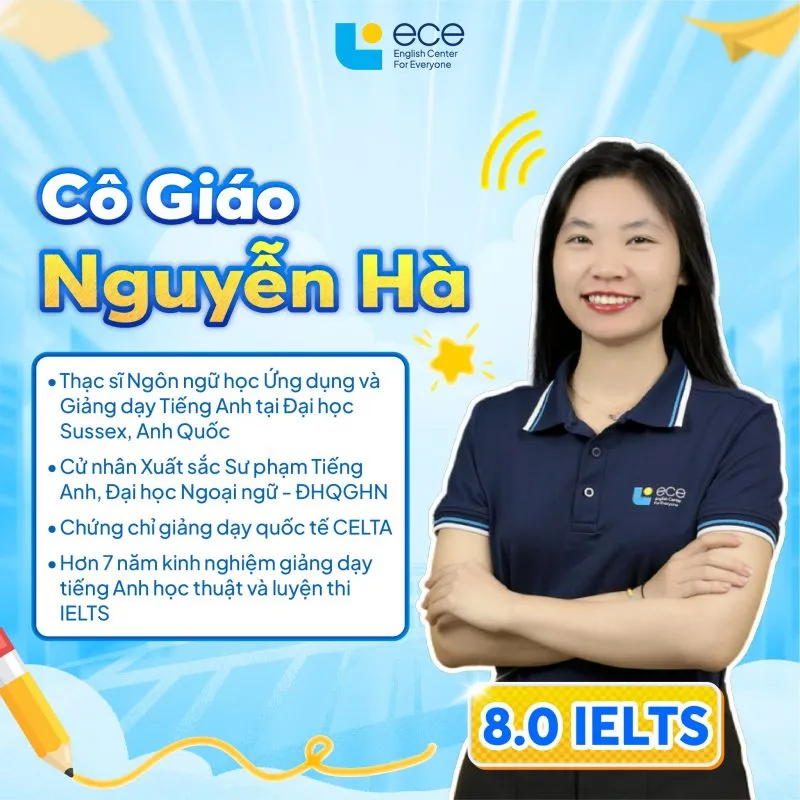
Để biến một câu hỏi mua sắm đơn thuần thành cơ hội phô diễn Critical Thinking (Tư duy phản biện) và Lexical Resource (Nguồn từ vựng) ở chuẩn Band 8.5 – 9.0, cô Nguyễn Thu Hà (Giáo viên IELTS 8.5 tại Trung tâm Ngoại ngữ ECE) đã biên soạn bộ tài liệu chuyên sâu dưới đây. Xin mời các bạn cùng theo dõi bài viết!
Gợi ý từ vựng & cấu trúc hay cho topic Expensive Gift
Để bàn luận về tiền bạc, sự sang trọng và giá trị tinh thần một cách tinh tế, hãy trang bị ngay hệ thống từ vựng phân tầng sau:
| Từ vựng / Thành ngữ | Loại từ | Ý nghĩa |
| Exorbitant price tag / Astronomical cost | Collocation | Mức giá đắt đỏ, giá “trên trời” |
| Extravagant gesture | Collocation | Một hành động/cử chỉ phung phí, đắt đỏ |
| Sentimental value / Emotional resonance | Collocation | Giá trị tinh thần / Sự âm vang về mặt cảm xúc |
| Conspicuous consumption | Collocation | Tiêu dùng phô trương (mua đồ để khoe khoang) |
| Prohibitive cost | Collocation | Chi phí cao đến mức ngăn cản người mua |
| To cost an arm and a leg | Idiom | Rất đắt đỏ, tốn một đống tiền |
| To splash out on (something) | Phrasal Verb | Vung tiền mua một món đồ xa xỉ |
| To save up for a rainy day | Idiom | Tiết kiệm tiền cho những lúc khó khăn |
| It’s the thought that counts | Idiom | Quan trọng là ở tấm lòng (không phải ở giá tiền) |
Bài mẫu IELTS Speaking part 1 – Gifts & Money
Dưới đây là các câu hỏi Part 1 thực tế xoay quanh chủ đề quà tặng kèm câu trả lời gợi ý chuẩn Band 8.5+.
Q1: Do you enjoy giving gifts to other people?
Sample: I absolutely adore it! For me, giving a gift is an extravagant gesture of love, regardless of the price tag. Seeing someone’s face light up when they unwrap something they’ve secretly wished for brings me immense joy. It’s a wonderful way to express deep-seated gratitude.
Q2: Have you ever received an expensive gift?
Sample: Yes, I have. On my 18th birthday, my parents splashed out on a high-end laptop for my university studies. It must have cost an arm and a leg at the time, but it wasn’t just a luxury item—it was a practical tool that truly supported my education.
Q3: Do you think expensive gifts are better than cheap ones?
Sample: Not necessarily. While a pricey gift often implies high quality or durability, I firmly believe that it’s the thought that counts. A hand-written letter or a custom-made photo album often carries far more sentimental value than an off-the-shelf luxury item with an exorbitant price tag.
Q4: Do you prefer receiving money or physical gifts?
Sample: I’m somewhat torn, but I lean towards physical gifts. Money is undoubtedly practical, but it can feel a bit transactional. A physical gift shows that the giver spent time thinking about your preferences, turning the object into a cherished token of appreciation.
Q5: What kind of gifts do you usually buy for your friends?
Sample: I tend to tailor my gifts to the individual’s passions rather than going for generic luxury goods. For instance, if a friend is into coffee, I might fork out money for a specialty hand-grinder rather than buying an overly expensive designer accessory they might never use.
Q6: Is it difficult to choose gifts for people?
Sample: It can be quite nerve-wracking, to be honest. Trying to strike the right balance between usefulness, personal taste, and budget is tricky. You always run the risk of buying something that ends up gathering dust in a closet.
Q7: Do people in your country spend a lot of money on gifts for traditional holidays?
Sample: Yes, remarkably so. During major festivals like Tet in Vietnam, people often shell out substantial amounts on lavish gift hampers, fine wine, or lucky money. It’s deeply ingrained in our culture to show generosity and respect to elders and business partners through gift-giving.
Q8: Do you save money to buy gifts for special occasions?
Sample: Indeed I do. Whenever a major milestone approaches—like my parents’ wedding anniversary—I start setting aside a portion of my income months in advance so I can buy them something meaningful without breaking the bank.
Bài mẫu IELTS Speaking Part 2
Để câu trả lời Part 2 vừa đúng trọng tâm vừa thể hiện tư duy nâng cao, các bạn hãy áp dụng chiến thuật 3 bước của ECE:
Tả thực & Con số: Nêu rõ món quà là gì, dùng từ vựng chỉ chi phí lớn (astronomical cost, splash out).
Bắt cầu nâng tầm (The Critical Pivot): Dùng câu nối: “However, the true value of this gift lies not in its price tag, but…”
Kết nối giá trị tinh thần: Giải thích món quà sẽ giải quyết vấn đề gì (chăm sóc sức khỏe, thực hiện ước mơ).
Cue Card 1: Family & High-Tech Care
Describe an expensive gift that you want to give someone if you save a lot of money.
Sample Answer:
If I were fortunate enough to accumulate a substantial amount of savings, the one luxury item I would immediately purchase is a state-of-the-art, medical-grade ergonomic massage chair for my mother.
My mother has spent over three decades working tirelessly as a teacher, standing on her feet for hours on end. Now that she’s entering her sixties, she frequently suffers from chronic back pain and joint stiffness. The specific model I have my eye on comes with an astronomical cost—roughly around five thousand dollars. Given my current income, I would likely need to budget rigorously and set aside money for at least a year or two to afford it without breaking the bank.
The reason I want to splash out on this particular gift, despite its prohibitive cost, goes far beyond a mere display of wealth. To me, this massage chair isn’t just a piece of furniture; it’s a lifelong investment in her health and well-being. It features zero-gravity recliners, heat therapy, and advanced AI-driven rollers that mimic human hands to relieve muscle tension.
Every time I visit home, I see her rubbing her aching shoulders, yet she always refuses to spend money on spa treatments because she is so frugal. Buying her this high-end device is my way of providing her with daily physical relief right in her own living room. It serves as a tangible token of appreciation for all the sacrifices she has made for our family, proving that material wealth, when channeled correctly, can deliver profound emotional resonance and improve the quality of life for those we love.
Cue Card 2: Experience & Lifestyle
Describe an expensive gift you would like to give to a close friend.
Sample Answer:
An expensive gift that I dream of giving to my childhood best friend, who is an absolute photography fanatic, is an all-inclusive, ten-day photography expedition to Iceland, accompanied by a professional Leica camera.
My friend has supported me through thick and thin for over a decade, but due to financial constraints, he has never had the opportunity to travel outside our country. The total expense for this trip, including international flights, luxury eco-lodge accommodations, local guides, and the camera equipment, would carry an exorbitant price tag—easily exceeding ten thousand dollars. I would definitely need to save up diligently for a couple of years to make this dream a reality.
The reason this gift carries an astronomical cost is twofold: Leica equipment is world-renowned for its precision optics, and Iceland is notoriously expensive for tourism. However, I chose this particular gift because I wanted to offer him an unforgettable life experience rather than just a static material object.
He has always talked about capturing the Northern Lights with his own lens. By forking out the money for this expedition, I am not just giving him a luxury camera; I am gifting him the fulfillment of a lifelong ambition. In an age dominated by conspicuous consumption, where people often gift expensive designer bags or watches just to flex their status, I want to offer a gift that enriches his soul. It would be an extravagant gesture, yes, but one that yields memories that will never fade.
Bài mẫu IELTS Speaking Part 3 & Chiến thuật lập luận
Part 3 yêu cầu thí sinh phân tích các hiện tượng xã hội và tâm lý đám đông. Dưới đây là các câu hỏi “hóc búa” được cô Thu Hà mổ xẻ bằng các chiến thuật lập luận chuyên sâu.
Q1: In your country, on what occasions do people usually give gifts?
Sample: In Vietnam, gift-giving is deeply embedded in the social fabric and typically coincides with major life milestones and traditional holidays. The most prominent occasion is Tet, where people exchange gifts to wish each other prosperity. Additionally, life transitions such as weddings, housewarming parties, and baby showers are key events where guests present gifts as a token of appreciation and practical support.
-
Chiến thuật (Phân loại bối cảnh): Phân rõ 2 nhóm: Ngày lễ truyền thống (Tet) và Cột mốc đời người (Weddings, Housewarmings).
Q2: Why do some people feel stressed when choosing a gift for others?
Sample: The anxiety associated with gift selection often stems from the psychological fear of social embarrassment and the pressure to meet expectations. People worry that a poorly chosen gift might signal a lack of empathy or intimacy. Furthermore, in many cultures, there is an unspoken rule of reciprocity; people feel compelled to match the financial value of a gift they previously received, creating a financial burden.
-
Chiến thuật (Mổ xẻ tâm lý): Phân tích nỗi sợ bị đánh giá tình cảm và áp lực phải “đáp lễ” (rule of reciprocity).
Q3: How has the culture of gift-giving changed compared to the past?
Sample: Historically, gift-giving was primarily utilitarian and community-centric; people exchanged homemade food or handcrafted items. In contrast, modern gift-giving has been heavily commercialized and influenced by conspicuous consumption. Today, brand names and exorbitant price tags often overshadow the personal thought behind the gift.
-
Chiến thuật (So sánh đối lập): Nhấn mạnh sự thay đổi từ tính thiết thực (quá khứ) sang tính thương mại và phô trương (hiện tại).
Q4: Do you think business gifts are a good way to build relationships?
Sample: It’s a double-edged sword. On one hand, corporate gifting can serve as an effective icebreaker and reinforce professional goodwill. On the other hand, if the gift carries an astronomical cost, it can blur the ethical lines between genuine appreciation and corporate bribery, potentially creating conflicts of interest.
-
Chiến thuật (Đánh giá hai mặt): Nêu rõ lợi ích (xây dựng quan hệ) và rủi ro (hối lộ, vi phạm đạo đức).
Q5: Why do some companies spend a lot of money on luxury gifts for their clients?
Sample: Corporations fork out massive sums on luxury gifts primarily to secure client retention and signal financial prestige. In high-stakes industries, retaining a key client can yield millions in revenue, making an expensive gift a relatively small marketing expense.
-
Chiến thuật (Phân tích động cơ kinh tế): Đánh giá món quà xa xỉ như một khoản chi phí marketing (ROI) để giữ chân khách hàng.
Q6: Is it better to give children practical gifts or expensive toys?
Sample: I am strongly inclined toward practical or experiential gifts. High-priced toys often foster short-lived excitement followed by materialism. Conversely, practical gifts—like books or educational sports equipment—invest in a child’s cognitive and physical development, teaching them the value of skill acquisition rather than instant gratification.
-
Chiến thuật (Tác động dài hạn): Đối lập giữa sự thỏa mãn tức thời (instant gratification) và sự phát triển tư duy lâu dài.
Q7: Do you think pressure from social media makes people buy more expensive gifts?
Sample: Unquestionably. Social media platforms have amplified digital peer pressure and created a culture of performative gifting. People post ‘unboxing’ videos to curate an image of affluence. This desire for digital validation forces individuals to splash out on luxury items just to keep up with artificial social standards.
-
Chiến thuật (Bóc trần hiện tượng xã hội): Sử dụng các thuật ngữ như performative gifting (tặng quà để diễn) hay digital validation (sự công nhận trên mạng).
Q8: Should green or eco-friendly gifts replace traditional luxury gifts?
Sample: I firmly believe this transition is imperative. Traditional luxury gifts often contribute to ecological degradation. Replacing them with eco-friendly alternatives—such as digital experience vouchers or carbon-offset donations—redefines luxury. True modern luxury should be measured by ethical responsibility rather than resource exploitation.
-
Chiến thuật (Định nghĩa lại khái niệm): Thay đổi định nghĩa về “sự xa xỉ” từ tiêu dùng sang trách nhiệm với môi trường.
Q9: Why do some people prefer giving red envelopes with money instead of physical gifts?
Sample: This preference is driven by economic efficiency and cultural tradition. Economically, gifting cash eliminates the ‘deadweight loss’ of buying an unwanted item, allowing the recipient total autonomy. Culturally, in East Asian societies, cash in red envelopes symbolizes the transfer of good fortune and blessing.
-
Chiến thuật (Kinh tế học & Văn hóa): Kết hợp khái niệm “tổn thất vô ích” (deadweight loss) trong kinh tế với văn hóa phương Đông.
Q10: Do you think expensive gifts can buy true friendship or love?
Sample: Absurd as it sounds, expensive gifts can buy the illusion of affection, but never genuine connection. Material lavishing might attract opportunistic individuals, but authentic relationships are forged through shared vulnerabilities and mutual respect. When the financial well dries up, relationships built on conspicuous consumption inevitably crumble.
-
Chiến thuật (Lập luận giả định): Đưa ra giả thuyết khi cạn kiệt tài chính (when the financial well dries up) để chứng minh vật chất không thể tạo ra sự gắn kết thật sự.
Q11: How can governments encourage people to be less materialistic?
Sample: Governments can influence societal values through educational reform and advertising regulation. Firstly, incorporating financial literacy into school curricula teaches sustainability over consumerism. Secondly, imposing luxury taxes on aggressive advertisements can curb the artificial creation of material desires.
-
Chiến thuật (Đề xuất vĩ mô): Đưa ra giải pháp kép từ Giáo dục và Chính sách Thuế/Quảng cáo.
Q12: Will the act of gift-giving become completely digital in the future?
Sample: While digital gifting will undoubtedly dominate due to convenience, I doubt physical gifts will ever become obsolete. Humans are sensory beings who crave physical touch and the tactile surprise of unwrapping a package. The physical presence of a gift carries a warmth that a digital code simply cannot replicate.
-
Chiến thuật (Dự đoán bản chất con người): Khẳng định yếu tố xúc giác (tactile surprise) sẽ luôn giữ cho quà tặng truyền thống tồn tại.
Chinh phục chủ đề Expensive Gift & Material Value không đơn thuần là việc liệt kê tên các món đồ đắt tiền, mà là cách bạn vận dụng linh hoạt vốn từ nâng cao để mổ xẻ mối quan hệ giữa giá trị vật chất và giá trị tinh thần.
Hy vọng bài viết chuyên sâu này từ cô Nguyễn Thu Hà và đội ngũ học thuật trung tâm Ngoại ngữ ECE sẽ giúp bạn tự tin đạt band điểm mơ ước trong kỳ thi IELTS Speaking sắp tới!










 Khai giảng Khóa học Hè cực HOT.
Chưa có bình luận nào!