
Tóm Tắt Nội Dung Bài Viết
Sĩ số lớp học có quan trọng không? (Does class size matter?) Đây là một trong những câu hỏi gây tranh luận nhất trong lĩnh vực giáo dục. Ý tưởng giảm số học sinh mỗi lớp rất hấp dẫn, nhưng liệu nó có thực sự hiệu quả và xứng đáng với chi phí bỏ ra? Bài đọc IELTS “Does Class Size Matter?” sẽ đi sâu vào các nghiên cứu, tranh cãi và hậu quả thực tế của chính sách này.
Bài viết này của trung tâm ngoại ngữ ECE sẽ phân tích chi tiết toàn bộ bài đọc, cung cấp đáp án, giải thích cặn kẽ và hệ thống từ vựng, giúp bạn chinh phục một trong những chủ đề học thuật phổ biến nhất.
Nội dung bài đọc (Reading Passage)
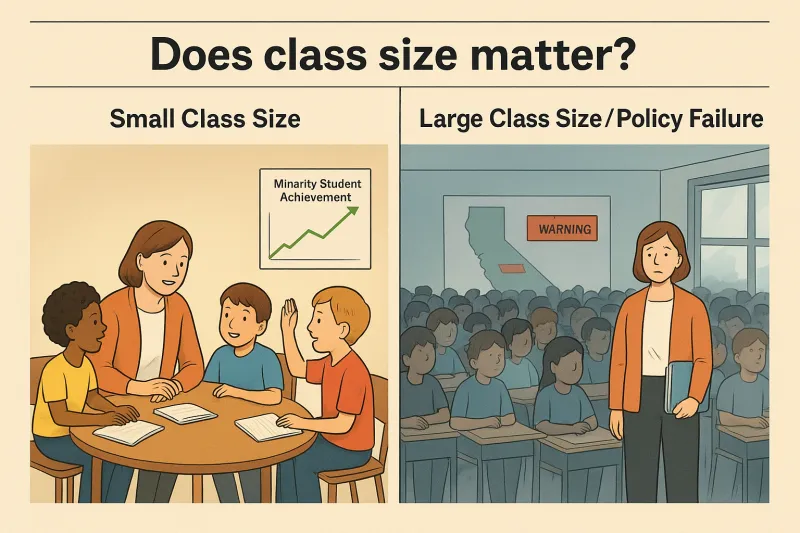
Does class size matter?
A Does class size matter? Of all the ideas for improving education, few are as simple or attractive as reducing the number of pupils per teacher. With its uncomplicated appeal, class-size reduction has lately gone from being a subject of primarily academic interest to become a public issue. In the U.S., more than 20 states have adopted policies aimed at decreasing class size.
B One way investigators have attempted to analyze the effects of class size is by reviewing existing data, such as records kept by the U.S. Department of Education. These show that between 1969 and 1997, the average number of pupils per teacher in American public and private elementary schools fell from 25 to 18, a decline of greater than 27 percent. In secondary schools, the number also fell, from 19 to 14. Does these findings mean that class size makes no difference? Not necessarily. For a variety of reasons, most researchers, including us, pay little attention to those figures. For instance, schools strive for more than just high test scores; they also usually try to keep their dropout rates low. And indeed, the dropout rate for students aged 16 to 24 fell from 15 to 1 percent over that period. Because dropouts generally come from the low end of the achievement distribution, a reduction in the dropout rate could, be expected to pull down average test scores in the upper grades. Ideally, U.S. students would all come from families that are financially well off, with two highly educated, English-speaking parents who are involved in their children’s schooling. Teachers would all be creative and have complete mastery of their subject matter. Schools would be nicely outfitted with libraries, computers and other resources.
C Over the past 35 years, hundreds of studies and analyses of existing data (such as the Department of Education records) have focused on class size. Unfortunately, most of these studies were poorly designed. The notable exception was the STAR project. Students entering kindergarten were randomly assigned to one of three kinds of classes: a small class of 13 to 17 students, a regular-size class of 22 to 26. The students remained in whatever category they had been assigned to through the third grade, after which they joined a regular classroom in the fourth. To ensure that teaching quality did not differ, teachers were randomly assigned to small and regular-size classrooms. Few teachers received any special training for working with small classes, and there were no new curricular materials.
D Charles M. Achilles of Eastern Michigan University found “an array of benefits of small classes” in their review. They also found that the effect was stronger for minority students. Black and Hispanic children improved their scores slightly more than did other students – a significant finding from a policy standpoint. He argues, the STAR data cannot be used to prove that the gains persist for years after a student has returned to regular-size classes. He and others have also shown that during the study, too many children migrated from the regular to the small classes, probably because school personnel caved in to parent demands. Criticism does not undermine the findings of a statistically significant benefit of being in a small class.
E California’s multi-billion-dollar effort, begun in 1996, stands more as a model of what not to do than as an initiative worthy of emulation. That state is trying to reduce classes in kindergarten through grade three from a maximum of 33 to a maximum of 20 in rich and poor districts alike – despite a shortage of qualified teachers, especially in low-income areas. This across-the-board approach may be politically expedient, but it seems to have actually exacerbated the disparity in resources available to rich and poor schools in California. The better-paying, more affluent districts got the best teachers – including a fair number that good teachers. The evaluators found a small but statistically significant achievement advantage in reading, writing and mathematics for students in classes that had been reduced to 20 or fewer pupils, as compared with the classes of more than 20. The second program, Wisconsin’s Student Achievement Guarantee in Education (SAGE), also begun in 1996, was a five-year study. It was small – class size was reduced in just 14 schools – but noteworthy because it targeted schools in which at least 30 percent of the students were below the poverty level.
F Studies such as STAR and SAGE have made it hard to argue that reducing class sizes makes no difference. On the other hand, the California initiative has shown that the strategy, applied with too little fore thought and insight, can consume billions of dollars and, at least in the short run, produce only minuscule gains and even some losses. Legislators and administrators need more solid information on the relative costs of the other options before they can make sensible policy decisions.
Questions 27 – 31
Which paragraph includes the following information?
27. Criticism about the STAR program due to some unreliable factors.
28. A comparison of one program’s failure and other programs’ successes.
29. The change of class-size reduction from an academic topic to a public one.
30. Actions that were taken to ensure the reliability of the data in a key study.
31. Reasons why analyzing existing data on class size is complex.
Questions 32 – 40
Classify the following statements as referring to:
- A The STAR project
- B The California initiative
- C The SAGE program
Write the correct letter, A, B, or C, in boxes 32-40 on your answer sheet.
32. The composition of its classes was determined by chance.
33. The topic of whether its benefits continued in later grades was discussed.
34. It demonstrated particular advantages for students from ethnic minorities.
35. Participants stayed in the same class category for four years.
36. It was specifically aimed at schools serving disadvantaged communities.
37. It was a very small-scale project.
38. Its implementation negatively affected the balance of resources between schools.
39. Its approach was applied equally to all types of districts.
40. It was noted that teacher quality varied between different types of schools in the program.
Tóm tắt nội dung bài đọc
Bài đọc khám phá cuộc tranh luận về việc “sĩ số lớp học” (class size) có ảnh hưởng đến chất lượng giáo dục hay không.
- Đoạn A: Giới thiệu chủ đề giảm sĩ số lớp học đã trở thành một vấn đề công chúng (public issue) thu hút, thay vì chỉ là chủ đề học thuật.
- Đoạn B: Phân tích dữ liệu có sẵn (existing data) của Bộ Giáo dục Hoa Kỳ cho thấy sĩ số lớp giảm nhưng điểm thi không tăng tương xứng. Tác giả giải thích dữ liệu này không đáng tin cậy vì có nhiều yếu tố khác ảnh hưởng (ví dụ: tỉ lệ bỏ học giảm, kéo điểm trung bình xuống).
- Đoạn C: Giới thiệu dự án STAR, một nghiên cứu đáng tin cậy duy nhất vì thiết kế tốt (phân bổ học sinh và giáo viên ngẫu nhiên).
- Đoạn D: Nêu kết quả của STAR: lớp học nhỏ có lợi ích, đặc biệt cho học sinh dân tộc thiểu số. Tuy nhiên, cũng nêu ra các chỉ trích (criticism) về STAR (không chứng minh được lợi ích kéo dài, học sinh bị chuyển lớp).
- Đoạn E: Mô tả hai chương trình khác: California (thất bại, tốn kém, làm gia tăng bất bình đẳng giáo dục) và SAGE (thành công, quy mô nhỏ, nhắm vào các trường nghèo).
- Đoạn F: Kết luận rằng STAR và SAGE chứng minh lớp học nhỏ có hiệu quả, nhưng California cho thấy việc áp dụng chính sách một cách thiếu suy nghĩ (too little forethought) sẽ thất bại và tốn kém.
Tổng hợp từ vựng quan trọng trong bài đọc
- primarily (adv) (Đoạn A): chủ yếu, chính.
- strive for (v.p) (Đoạn B): nỗ lực, phấn đấu để đạt được.
- Ví dụ: “…schools strive for more than just high test scores…”
- mastery of (n.p) (Đoạn B): sự làm chủ, thông thạo.
- Ví dụ: “…complete mastery of their subject matter.”
- randomly assigned (adv + v) (Đoạn C): được phân bổ một cách ngẫu nhiên.
- Ví dụ: “Students… were randomly assigned to one of three kinds of classes…”
- curricular materials (n.p) (Đoạn C): tài liệu giảng dạy.
- standpoint (n) (Đoạn D): quan điểm, lập trường.
- Ví dụ: “…a significant finding from a policy standpoint.”
- caved in to (v.p) (Đoạn D): nhượng bộ, đầu hàng (trước áp lực).
- Ví dụ: “…school personnel caved in to parent demands.”
- emulation (n) (Đoạn E): sự noi theo, bắt chước.
- Ví dụ: “…an initiative worthy of emulation.”
- politically expedient (adj) (Đoạn E): (một hành động) có lợi về mặt chính trị (nhưng có thể không đúng đắn).
- exacerbated the disparity (v.p) (Đoạn E): làm trầm trọng thêm sự chênh lệch/bất bình đẳng.
- forethought (n) (Đoạn F): sự suy tính trước, lo xa.
- minuscule (adj) (Đoạn F): cực kỳ nhỏ, không đáng kể.
- Ví dụ: “…produce only minuscule gains…”
Đáp án và giải thích chi tiết
27. D – Criticism about the STAR program due to some unreliable factors.
- Giải thích: Câu hỏi tìm “chỉ trích” (criticism) về STAR.
- Dẫn chứng (Đoạn D): “He and others have also shown that during the study, too many children migrated from the regular to the small classes… Criticism does not undermine the findings…”
- Phân tích: Đoạn D nói rõ về một chỉ trích rằng việc học sinh “di chuyển” (migrated) giữa các lớp làm yếu tố nghiên cứu không còn đáng tin cậy 100%.
28. F – A comparison of one program’s failure and other programs’ successes.
- Giải thích: Câu hỏi tìm sự so sánh “thất bại” và “thành công”.
- Dẫn chứng (Đoạn F): “Studies such as STAR and SAGE have made it hard to argue that reducing class sizes makes no difference. On the other hand, the California initiative has shown that the strategy… can consume billions of dollars… and produce only minuscule gains…”
- Phân tích: Đoạn F tóm tắt, so sánh thành công của STAR/SAGE với thất bại của California.
29. A – The change of class-size reduction from an academic topic to a public one.
- Giải thích: Câu hỏi tìm sự thay đổi từ “học thuật” (academic) sang “công chúng” (public).
- Dẫn chứng (Đoạn A): “…class-size reduction has lately gone from being a subject of primarily academic interest to become a public issue.”
- Phân tích: Khớp hoàn toàn với thông tin ở đoạn A.
30. C – Actions that were taken to ensure the reliability of the data in a key study.
- Giải thích: Câu hỏi tìm các hành động để “đảm bảo độ tin cậy” (ensure reliability).
- Dẫn chứng (Đoạn C): “To ensure that teaching quality did not differ, teachers were randomly assigned to small and regular-size classrooms.”
- Phân tích: Việc “phân bổ giáo viên ngẫu nhiên” (teachers were randomly assigned) chính là hành động được thực hiện để đảm bảo nghiên cứu STAR đáng tin cậy.
31. B – Reasons why analyzing existing data on class size is complex.
- Giải thích: Câu hỏi tìm lý do tại sao “dữ liệu có sẵn” (existing data) lại “phức tạp” (complex) để phân tích.
- Dẫn chứng (Đoạn B): “…most researchers… pay little attention to those figures. For instance, schools strive for more than… high test scores… they also usually try to keep their dropout rates low.”
- Phân tích: Đoạn B giải thích rằng không thể chỉ nhìn vào dữ liệu (sĩ số giảm mà điểm không tăng) vì có các yếu tố phức tạp khác xen vào, ví dụ như “tỷ lệ bỏ học” (dropout rates) cũng thay đổi, làm ảnh hưởng đến kết quả.
32. A (STAR)
- Câu hỏi: Thành phần lớp học được quyết định ngẫu nhiên.
- Dẫn chứng (Đoạn C): “Students entering kindergarten were randomly assigned to one of three kinds of classes…”
- Giải thích: “Left by chance” (để cho may rủi) đồng nghĩa với “randomly assigned” (phân bổ ngẫu nhiên).
33. A (STAR)
- Câu hỏi: Chủ đề về việc lợi ích có tiếp tục ở các lớp sau (lớp 4) hay không đã được thảo luận.
- Dẫn chứng (Đoạn D): “He argues, the STAR data cannot be used to prove that the gains persist for years after a student has returned to regular-size classes.”
- Giải thích: Bài đọc thảo luận về việc lợi ích có “kéo dài” (persist) sau khi học sinh lên “lớp 4” (sau “third grade”) hay không, và chủ đề này chỉ được thảo luận khi nói về dự án STAR.
34. A (STAR)
- Câu hỏi: Nó cho thấy lợi ích cụ thể cho các nhóm đặc biệt (học sinh dân tộc thiểu số).
- Dẫn chứng (Đoạn D): “They also found that the effect was stronger for minority students.”
- Giải thích: “Special groups” (nhóm đặc biệt) chính là “minority students” (học sinh thiểu số).
35. A (STAR)
- Câu hỏi: Những người tham gia giữ nguyên nhóm lớp của mình trong suốt 4 năm.
- Dẫn chứng (Đoạn C): “Students entering kindergarten were randomly assigned… The students remained in whatever category… through the third grade…”
- Giải thích: Từ Mẫu giáo (Kindergarten) đến hết Lớp 3 (through the third grade) là 4 năm học (K, 1, 2, 3).
36. C (SAGE)
- Câu hỏi: Nó được nhắm mục tiêu cụ thể vào các trường học phục vụ cộng đồng có hoàn cảnh khó khăn.
- Dẫn chứng (Đoạn E): “…Wisconsin’s… SAGE… it targeted schools in which at least 30 percent of the students were below the poverty level.”
- Giải thích: “Disadvantaged communities” (cộng đồng khó khăn) tương ứng với “below the poverty level” (dưới mức nghèo).
37. C (SAGE)
- Câu hỏi: Đó là một dự án quy mô tương đối nhỏ.
- Dẫn chứng (Đoạn E): “It was small – class size was reduced in just 14 schools…”
- Giải thích: “Small-scale project” (dự án quy mô nhỏ) khớp với “small” và “just 14 schools”.
38. B (California)
- Câu hỏi: Việc thực hiện nó đã ảnh hưởng tiêu cực đến sự cân bằng nguồn lực giữa các trường.
- Dẫn chứng (Đoạn E): “This across-the-board approach… seems to have actually exacerbated the disparity in resources available to rich and poor schools…”
- Giải thích: “Ảnh hưởng tiêu cực đến sự cân bằng” (negatively affected the balance) đồng nghĩa với “làm trầm trọng thêm sự chênh lệch” (exacerbated the disparity).
39. B (California)
- Câu hỏi: Cách tiếp cận của nó được áp dụng như nhau cho tất cả các loại học khu.
- Dẫn chứng (Đoạn E): “That state is trying to reduce classes… in rich and poor districts alike… This across-the-board approach…”
- Giải thích: “Across-the-board” (toàn diện, áp dụng cho mọi đối tượng) và “rich and poor districts alike” (các học khu giàu và nghèo như nhau) khớp với “applied equally to all types”.
40. B (California)
- Câu hỏi: Người ta ghi nhận rằng chất lượng giáo viên khác nhau giữa các loại trường trong chương trình.
- Dẫn chứng (Đoạn E): “…despite a shortage of qualified teachers… The better-paying, more affluent districts got the best teachers…”
- Giải thích: Việc học khu “giàu” (affluent) có được “giáo viên tốt nhất” (best teachers) cho thấy chất lượng giáo viên (teacher quality) là “khác nhau” (varied) giữa các trường.
Kết bài
Tóm lại, bài đọc “Does class size matter?” không đưa ra một câu trả lời đơn giản là “Có” hoặc “Không”. Thay vào đó, nó cho thấy rằng “Có, sĩ số lớp học quan trọng”, nhưng sự thành công của chính sách này phụ thuộc rất nhiều vào việc thực thi. Các nghiên cứu đáng tin cậy như STAR và SAGE chứng minh lợi ích rõ rệt của lớp học nhỏ. Tuy nhiên, thất bại đắt giá của chương trình California lại là một bài học cảnh tỉnh về việc áp dụng chính sách một cách máy móc, thiếu suy nghĩ (forethought).
Hy vọng bài phân tích chi tiết này của ECE đã giúp bạn hiểu rõ các lập luận phức tạp và tự tin hơn khi đối mặt với các chủ đề về giáo dục trong IELTS.










 Khai giảng Khóa học Hè cực HOT.
Mình thấy phần Nội dung bài đọc (Reading Passage) khá hữu ích khi tìm hiểu về Giải đề “Does class size matter” IELTS Reading | Đáp án & từ vựng. Nội dung trình bày rõ và dễ theo dõi.