


Tóm Tắt Nội Dung Bài Viết
Trong IELTS Speaking, các chủ đề liên quan đến News, Celebrities, Public figures và Media thường mang đến cơ hội tuyệt vời để thí sinh phô diễn vốn từ vựng xã hội và khả năng phát triển quan điểm đa chiều. Tuy nhiên, với đề bài “Describe a person on the news that you would like to meet”, nhiều học viên thường lúng túng vì không biết chọn ai hoặc dễ bị sa đà vào việc kể lể sự nổi tiếng của họ.
Thực ra, bạn không nhất thiết phải chọn một nhân vật quá đình đám. Điều cốt lõi là nhân vật đó phải mang lại đủ chất liệu để bạn nói về: lý do bạn biết họ, điều khiến họ nổi bật, sức ảnh hưởng xã hội và lý do thực sự khiến bạn muốn gặp mặt. Khi phát triển theo hướng này, bạn sẽ làm chủ được từ vựng và bước sang Part 3 một cách cực kỳ mượt mà.
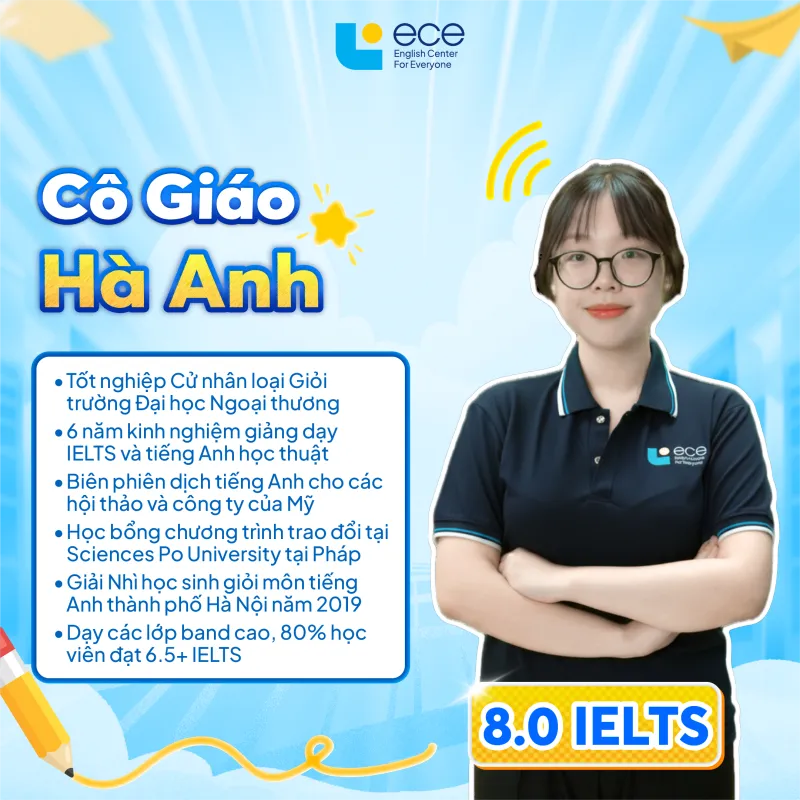
Các bạn hãy cùng trung tâm ngoại ngữ ECE tìm hiểu trọn bộ từ vựng, cấu trúc và bài mẫu cho cả 3 phần thi ngay dưới đây! Bài viết được tham khảo chuyên môn bởi cô Nguyễn Hà Anh – Giáo viên 8.0 ielts tại ECE.
Gợi ý từ vựng & cấu trúc hay chủ đề Person on the News
Thay vì dùng những từ cơ bản như famous hay on TV, hãy nâng cấp bài nói của bạn với 3 nhóm từ vựng (Collocations) mang tính báo chí và truyền thông chuyên sâu sau:
Từ vựng về tin tức và truyền thông (News & Media)
Từ vựng về ảnh hưởng của truyền thông (Media Influence)
-
Shape public opinion: Định hình dư luận / ý kiến công chúng.
-
Influence people’s perceptions / social attitudes: Ảnh hưởng đến nhận thức / thái độ của mọi người.
-
Draw attention to an important issue: Thu hút sự chú ý vào một vấn đề quan trọng.
-
Spark public debate: Làm nổ ra các cuộc tranh luận trong công chúng.
-
Bring an issue into the spotlight: Đưa một vấn đề ra ánh sáng / làm nổi bật vấn đề.
-
Spread information rapidly: Lan truyền thông tin nhanh chóng.
-
Have a far-reaching impact: Có tác động sâu rộng.
Cấu trúc dẫn dắt ăn điểm (Useful Structures)
Những cấu trúc này đặc biệt hiệu quả cho Part 2, giúp bài nói có sự liên kết tự nhiên, logic:
-
One person who has particularly caught my attention is… (Một người đặc biệt thu hút sự chú ý của tôi là…)
-
I first came across this person when… (Tôi tình cờ biết đến người này lần đầu tiên khi…)
-
What initially drew my attention to this person was… (Điều ban đầu thu hút sự chú ý của tôi đối với người này là…)
-
What I admire most about this individual is… (Điều tôi ngưỡng mộ nhất ở cá nhân này là…)
-
I would be genuinely fascinated to have a conversation with… (Tôi thực sự sẽ rất hào hứng nếu có một cuộc trò chuyện với…)
-
If I had the opportunity to meet this person, I would love to ask them about… (Nếu có cơ hội gặp người này, tôi rất muốn hỏi họ về…)
-
I believe their influence extends far beyond their professional achievements. (Tôi tin rằng sức ảnh hưởng của họ vươn xa hơn nhiều so với những thành tựu nghề nghiệp của họ.)
Bài mẫu IELTS Speaking Part 1 – Topic: News and Famous People
Question 1: Do you often read the news?
Sample: Yes, I do, although I don’t read newspapers on a regular basis. I usually keep up with the news through online platforms because they allow me to access information quickly and conveniently. I tend to pay particular attention to major social issues, international events and stories that have a direct impact on everyday life.
Question 2: What kind of news do you usually read?
Sample: I mostly follow news about society, education, technology and current affairs. I find these topics more meaningful because they help me understand what is happening around me and sometimes give me different perspectives on issues that I would not normally think about.
Question 3: Do you like reading news about famous people?
Sample: To some extent, yes. I’m interested in celebrities when the news focuses on their careers, achievements or contributions to society. However, I’m not particularly interested in gossip or stories that simply focus on their private lives. I think there is a big difference between being informed about a public figure and following every detail of their personal life.
Question 4: Do you think famous people receive too much attention from the media?
Sample: In some cases, definitely. Some celebrities receive constant media coverage even when they haven’t done anything particularly significant. This can create an unhealthy obsession with their personal lives and sometimes distract the public from more important social issues. That said, I think media attention can be positive when public figures use their influence responsibly to raise awareness of important causes.
Bài mẫu IELTS Speaking Part 2
Đề bài (Cue Card): Describe a person on the news that you would like to meet. You should say:
-
who this person is
-
how you know about this person
-
why this person is often in the news
-
and explain why you would like to meet this person.
Sample Answer:
One person I have seen in the news and would genuinely like to meet is Malala Yousafzai, the Pakistani activist who has become internationally recognised for her advocacy of girls’ education.
I first came across her story when I was reading an article about education and gender equality. What immediately caught my attention was not simply the fact that she had become internationally famous at such a young age, but the determination she showed in continuing to speak publicly about education despite facing extremely difficult circumstances.
Since then, I have occasionally come across interviews and news reports about her work. She has been involved in various initiatives aimed at improving access to education, particularly for girls who face social or economic barriers. Her story has also received extensive media coverage because of the broader issues it represents, including education, equality and the rights of young people.
What I admire most about her is her ability to turn a personal experience into a broader social cause. Rather than using her public profile simply for personal recognition, she has used her platform to raise awareness and encourage people to take education more seriously. I think that is particularly impressive because public attention can be extremely difficult to handle, especially for someone who became a household name at such a young age.
If I had the opportunity to meet her, I would love to have a conversation about her experiences and ask how she has managed to remain motivated despite the pressure that comes with being constantly in the public eye. I would also be interested in hearing her thoughts on how education systems can become more accessible and inclusive.
More than anything, I think meeting her would be inspiring because she represents the idea that one individual can have a far-reaching impact on society. I wouldn’t expect the conversation to be particularly long, but I believe it would be an experience that I would remember for a very long time.
Bài mẫu IELTS Speaking Part 3 – Topic: Media and Social Influence
Question 1: Why are some people more interested in celebrity news than other types of news?
Sample: I think one reason is that celebrity news is generally easier to consume than complicated political or economic stories. People may find it entertaining and emotionally engaging, particularly when they already feel connected to a particular public figure. Social media has also played a major role in this trend. People are constantly exposed to updates about celebrities through short videos, photographs and online discussions, so following famous individuals has become part of everyday digital life. Another factor is curiosity. People naturally want to know more about individuals who appear successful, attractive or influential, even if those people’s lives have little direct connection to their own.
Question 2: How can the media influence public opinion?
Sample: The media can have an enormous influence on public opinion because it determines which issues receive attention and how those issues are presented. When a particular story receives extensive coverage, it can shape the way people understand and evaluate that issue. For example, if the media repeatedly focuses on a particular social problem, it can raise public awareness and encourage people to demand change. On the other hand, biased or sensationalised reporting can create misconceptions and lead people to develop opinions based on incomplete information. For this reason, I think media literacy is increasingly important.
Question 3: Do famous people have a responsibility to influence society positively?
Sample: To some extent, yes. Public figures have access to a huge audience, so their words and behaviour can influence people’s attitudes, particularly among younger audiences. If they use their platform responsibly, they can draw attention to important issues and encourage positive social behaviour. However, I don’t think celebrities should be expected to become experts on every social or political issue simply because they are famous. They should be careful about the information they share, but they should also have the freedom to decide which causes they genuinely want to support.
Question 4: Is social media more influential than traditional news?
Sample: I think social media has become extremely influential because information can spread almost instantly. A single post or video can reach millions of people within a very short period of time, whereas traditional news tends to follow a more structured publishing process. However, I wouldn’t say traditional media has become irrelevant. Established news organisations still play an important role in investigating stories and verifying information. The real challenge is that people now have access to an enormous amount of information from different sources, and not all of it is reliable.
Question 5: What are the disadvantages of giving celebrities so much media attention?
Sample: One major disadvantage is that it can create unrealistic expectations about success, appearance and lifestyle. When people are constantly exposed to carefully presented images of celebrities, they may start comparing their own lives with an idealised version of someone else’s life. Another problem is the loss of privacy. Constant media attention can make it difficult for public figures to maintain a normal personal life. In extreme cases, excessive coverage can turn someone’s private experiences into entertainment for the general public. I think the media should therefore find a better balance between public interest and respect for individual privacy.
Việc chuẩn bị tốt cho các chủ đề liên quan đến truyền thông và người nổi tiếng không chỉ giúp bạn hoàn thành tốt bài thi Speaking mà còn là nền tảng ý tưởng vững chắc cho bài thi Writing Task 2. Hãy áp dụng ngay kho từ vựng chuyên sâu từ cô Hà Anh để rèn luyện tư duy phản biện. Trung tâm Ngoại ngữ ECE chúc bạn ôn luyện hiệu quả và sớm bứt phá target!











 Khai giảng Khóa học Hè cực HOT.
Chưa có bình luận nào!