
Giải mã bài đọc Roller Coaster IELTS Reading: Đáp án & từ vựng chi tiết



Tóm Tắt Nội Dung Bài Viết
Giải mã bài đọc Roller Coaster IELTS Reading: Đáp án & từ vựng chi tiết


Tóm Tắt Nội Dung Bài Viết
Chủ đề giải trí & kỹ thuật (Entertainment & Engineering) luôn mang đến những bài đọc thú vị trong IELTS. Bài đọc “Roller Coaster” (Tàu lượn siêu tốc) không chỉ khám phá lịch sử hình thành từ những máng trượt băng ở Nga đến những “con quái vật” kim loại hiện đại, mà còn giải thích cơ chế vật lý đằng sau cảm giác mạnh này.
Bài viết này từ trung tâm ngoại ngữ ECE sẽ cung cấp trọn bộ nội dung bài đọc, bản dịch song ngữ, hệ thống từ vựng chuyên ngành và đáp án kèm giải thích chi tiết từng câu. Xin mời các bạn cùng đón đọc!
IELTS Reading Passage: Roller Coaster
Paragraph A 600 years ago, roller coaster pioneers never would have imagined the advancements that have been made to create the roller coasters of today. The tallest and fastest roller coaster in the world is the Kingda Ka, a coaster in New Jersey that launches its passengers from zero to 128 miles per hour in 3.5 seconds (most sports cars take over four seconds to get to just 60 miles per hour). It then heaves its riders skyward at a 90-degree angle (straight up) until it reaches a height of 456 feet, over one and a half football fields, above the ground, before dropping another 418 feet (Coaster Grotto “Kingda Ka”). With that said, roller coasters are about more than just speed and height, they are about the creativity of the designers that build them, each coaster having its own unique way of producing intense thrills at a lesser risk than the average car ride. Roller coasters have evolved drastically over the years, from their primitive beginnings as Russian ice slides, to the metal monsters of today. Their combination of creativity and structural elements make them one of the purest forms of architecture.
Paragraph B At first glance, a roller coaster is something like a passenger train. It consists of a series of connected cars that move on tracks. But unlike a passenger train, a roller coaster has no engine or power source of its own. For most of the ride, the train is moved by gravity and momentum. To build up this momentum, you need to get the train to the top of the first hill or give it a powerful launch. The traditional lifting mechanism is a long length of chain running up the hill under the track. The chain is fastened in a loop, which is wound around a gear at the top of the hill and another one at the bottom of the hill. The gear at the bottom of the hill is turned by a simple motor. This turns the chain loop so that it continually moves up the hill like a long conveyer belt. The coaster cars grip onto the chain with several chain dogs, sturdy hinged hooks. When the train rolls to the bottom of the hill, the dogs catches onto the chain links. Once the chain dog is hooked, the chain simply pulls the train to the top of the hill. At the summit, the chain dog is released and the train starts its descent down the hill.
Paragraph C Roller coasters have a long, fascinating history. The direct ancestors of roller coasters were monumental ice slides – long, steep wooden-slides covered in ice, some as high as 70 feet – that were popular in Russia in the 16th and 17th centuries. Riders shot down the slope in sleds made out of wood or blocks of ice, crash-landing in a sand pile. Coaster historians diverge on the exact evolution of these ice slides into actual rolling carts. The most widespread account is that a few entrepreneurial Frenchmen imported the ice slide idea to France. The warmer climate of France tended to melt the ice, so the French started building waxed slides instead, eventually adding wheels to the sleds. In 1817, the Russes a Belleville (Russian Mountains of Belleville) became the first roller coaster where the train was attached to the track (in this case, the train axle fit into a carved groove). The French continued to expand on this idea, coming up with more complex track layouts, with multiple cars and all sorts of twists and turns.
Paragraph D In comparison to the world’s first roller coaster, there is perhaps an even greater debate over what was America’s first true coaster. Many will say that it is Pennsylvania’s own Maunch Chunk-Summit Hill and Switch Back Railroad. The Maunch Chunk-Summit Hill and Switch Back Railroad was originally America’s second railroad, and considered my many to be the greatest coaster of all time. Located in the Lehigh valley, it was originally used to transport coal from the top of Mount Pisgah to the bottom of Mount Jefferson, until Josiah White, a mining entrepreneur, had the idea of turning it into a part-time thrill ride. Because of its immediate popularity, it soon became strictly a passenger train. A steam engine would haul passengers to the top of the mountain, before letting them coast back down, with speeds rumored to reach 100 miles per hour! The reason that it was called a switch back railroad, a switch back track was located at the top – where the steam engine would let the riders coast back down. This type of track featured a dead end where the steam engine would detach its cars, allowing riders to coast down backwards. The railway went through a couple of minor track changes and name changes over the years, but managed to last from 1829 to 1937, over 100 years.
Paragraph E The coaster craze in America was just starting to build. The creation of the Switch Back Railway, by La Marcus Thompson, gave roller coasters national attention. Originally built at New York’s Coney Island in 1884, Switch Back Railways began popping up all over the country. The popularity of these rides may puzzle the modern-day thrill seeker, due to the mild ride they gave in comparison to the modern-day roller coaster. Guests would pay a nickel to wait in line up to five hours just to go down a pair of side-by-side tracks with gradual hills that vehicles coasted down at a top speed around six miles per hour. Regardless, Switchback Railways were very popular, and sparked many people, including Thompson, to design coasters that were bigger and better.
Paragraph F The 1910s and 1920s were probably the best decade that the roller coaster has ever seen. The new wave of technology, such as the “unstop wheels”, an arrangement that kept a coaster’s wheels to its tracks by resisted high gravitational forces, showed coasters a realm of possibilities that has never been seen before. In 1919, North America alone had about 1,500 roller coasters, a number that was rising rampantly. Then, the Great Depression gave a crushing blow to amusement parks all over America. As bad as it was, amusement parks had an optimistic look on the future in the late 1930s. But, in 1942 roller coasters could already feel the effects of World War Two, as they were forced into a shadow of neglect. Most, nearly all of America’s roller coasters were shut down. To this very day.
Questions
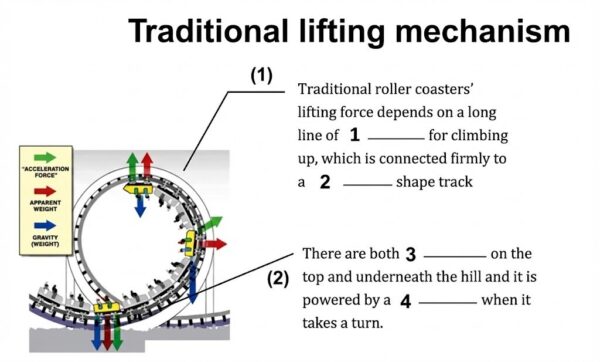
Questions 1-4: Diagram Labeling A diagram that explains the mechanism and working principles of roller coaster. Choose NO MORE THAN TWO WORDS AND/OR A NUMBER from the passage for each answer.
-
………………………………
-
………………………………
-
………………………………
-
………………………………
Questions 5-10: Summary Completion Complete the following summary of the paragraphs of Reading Passage, using NO MORE THAN TWO WORDS from the Reading Passage for each answer.
The first roller coaster was perhaps originated from Russia which is wrapped up by 5 …………………, which was introduced into France, and it was modified to 6 ………………….., because temperature there would 7 ………………….. the ice. This time 8 ……………… were installed on the board.
In America, the first roller coaster was said to appear in Pennsylvania, it was actually a railroad which was designed to send 9 ………………………. between two mountains. Josiah White turned it into a thrill ride, it was also called switch back track and a 10 ………………………. there allowed riders to slide downward back again.
Questions 11-14: YES/NO/NOT GIVEN Do the following statements agree with the information given in Reading Passage? In boxes 11-14 on your answer sheet, write:
-
YES if the statement agrees with the view of the writer
-
NO if the statement contradicts the view of the writer
-
NOT GIVEN if it is impossible to say what the writer thinks about this
11. The most exiting roller coaster in the world is in New Jersey.
12. French added more innovation on Russian ice slide including both cars and tracks.
13. Switch Back Railways began to gain popularity since its first construction in New York.
14. The Great Depression affected amusement parks yet did not shake the significant role of US roller coasters in the world.
Tóm tắt nội dung bài đọc
-
Đoạn A: Giới thiệu về sự phát triển vượt bậc của tàu lượn siêu tốc (từ 600 năm trước đến nay), lấy ví dụ về Kingda Ka – tàu lượn cao nhất và nhanh nhất thế giới. Tàu lượn là sự kết hợp giữa sáng tạo và kiến trúc.
-
Đoạn B: Giải thích nguyên lý hoạt động: Tàu lượn không có động cơ riêng mà di chuyển nhờ trọng lực và quán tính (gravity & momentum). Cơ chế nâng truyền thống sử dụng dây xích (chain) và động cơ (motor) để kéo tàu lên đỉnh dốc đầu tiên.
-
Đoạn C: Lịch sử ra đời từ các máng trượt băng (ice slides) ở Nga thế kỷ 16-17. Người Pháp nhập khẩu ý tưởng này nhưng thay băng bằng sáp (waxed slides) và thêm bánh xe (wheels) do khí hậu ấm hơn.
-
Đoạn D: Cuộc tranh luận về tàu lượn đầu tiên ở Mỹ. “Maunch Chunk-Summit Hill and Switch Back Railroad” ở Pennsylvania ban đầu dùng chở than, sau đó thành tàu chở khách du lịch. Nó dùng động cơ hơi nước (steam engine) kéo lên đỉnh rồi thả trôi xuống (gravity).
-
Đoạn E: Sự bùng nổ của tàu lượn ở Mỹ với “Switch Back Railway” của La Marcus Thompson tại Coney Island (1884). Dù tốc độ chậm (6 dặm/giờ) nhưng rất phổ biến.
-
Đoạn F: Thời kỳ hoàng kim (1910s-1920s) với công nghệ “unstop wheels”. Sau đó là sự suy thoái do Đại khủng hoảng (Great Depression) và Thế chiến II (WWII), khiến nhiều công viên giải trí đóng cửa.
Tổng hợp từ vựng quan trọng trong bài đọc
| Từ vựng | Loại từ | Nghĩa tiếng Việt | Ngữ cảnh trong bài |
| Momentum | (n) | Quán tính, đà | Tàu di chuyển nhờ gravity và momentum. |
| Gravity | (n) | Trọng lực | Lực kéo tàu xuống dốc. |
| Mechanism | (n) | Cơ chế | Cơ chế nâng (lifting mechanism). |
| Entrepreneurial | (adj) | (Thuộc) Khởi nghiệp/Doanh nhân | Những người Pháp có máu kinh doanh (entrepreneurial Frenchmen). |
| Descend / Descent | (v/n) | Đi xuống / Sự đi xuống | Tàu bắt đầu lao xuống (descent) từ đỉnh. |
| Summit | (n) | Đỉnh (núi/đồi) | Tại đỉnh (summit), xích được nhả ra. |
| Rampantly | (adv) | Lan tràn, mạnh mẽ | Số lượng tàu lượn tăng nhanh chóng (rising rampantly). |
| Optimistic | (adj) | Lạc quan | Có cái nhìn lạc quan về tương lai. |
| Neglect | (n) | Sự bỏ bê, lãng quên | Bị rơi vào sự lãng quên (shadow of neglect). |
Cấu trúc hay:
-
Diverge on…: Bất đồng ý kiến về… (Coaster historians diverge on the exact evolution…).
-
Spark someone to do something: Khơi mào/Thúc đẩy ai làm gì (Sparked many people… to design coasters…).
Đáp án & Giải thích chi tiết (Answers & Explanations)
Questions 1-4: Diagram Labeling
Yêu cầu: Điền từ vào biểu đồ giải thích cơ chế hoạt động của tàu lượn (dựa trên đoạn B).
1. Chain
-
Vị trí: Đoạn B: “The traditional lifting mechanism is a long length of chain running up the hill under the track.”
-
Giải thích: Cơ chế nâng truyền thống là một đoạn dây xích dài chạy lên đồi.
2. Loop
-
Vị trí: Đoạn B: “The chain is fastened in a loop, which is wound around a gear…”
-
Giải thích: Dây xích được buộc thành một vòng lặp.
3. Gear
-
Vị trí: Đoạn B: “…wound around a gear at the top of the hill and another one at the bottom…”
-
Giải thích: Dây xích quấn quanh một bánh răng ở đỉnh và một cái ở chân đồi.
4. (Simple) motor
-
Vị trí: Đoạn B: “The gear at the bottom of the hill is turned by a simple motor.”
-
Giải thích: Bánh răng ở chân đồi được quay bởi một động cơ đơn giản.
Questions 5-10: Summary Completion
Yêu cầu đề bài: Hoàn thành tóm tắt đoạn văn.
5. Ice
-
Vị trí: Đoạn C: “…long, steep wooden-slides covered in ice…”
-
Giải thích: Tàu lượn đầu tiên bắt nguồn từ Nga, được bao phủ bởi băng.
6. Waxed slides
-
Vị trí: Đoạn C: “…so the French started building waxed slides instead…”
-
Giải thích: Khi nhập khẩu vào Pháp, nó được sửa đổi thành các đường trượt sáp.
7. Melt
-
Vị trí: Đoạn C: “The warmer climate of France tended to melt the ice…”
-
Giải thích: Lý do đổi sang sáp là vì nhiệt độ ở Pháp sẽ làm tan băng.
8. Wheels
-
Vị trí: Đoạn C: “…eventually adding wheels to the sleds.”
-
Giải thích: Lần này các bánh xe đã được lắp vào ván trượt.
9. Coal
-
Vị trí: Đoạn D: “…originally used to transport coal from the top of Mount Pisgah…”
-
Giải thích: Ở Mỹ, đường sắt ở Pennsylvania ban đầu được thiết kế để vận chuyển than giữa hai ngọn núi.
10. Steam engine
-
Vị trí: Đoạn D: “…where the steam engine would let the riders coast back down.”
-
Giải thích: Một động cơ hơi nước ở đó cho phép người chơi trượt xuống ngược trở lại. (Lưu ý: Đoạn văn nói “steam engine would detach its cars” ở “dead end” – điểm cuối, cho phép trượt xuống).
Questions 11-14: YES/NO/NOT GIVEN
11. NOT GIVEN
-
Câu hỏi: Tàu lượn siêu tốc thú vị nhất (most exciting) thế giới nằm ở New Jersey.
-
Giải thích: Đoạn A nói Kingda Ka ở New Jersey là “tallest and fastest” (cao nhất và nhanh nhất), nhưng không khẳng định nó là “most exciting” (thú vị nhất). Sự thú vị là cảm nhận chủ quan.
12. YES
-
Câu hỏi: Người Pháp đã thêm nhiều cải tiến vào máng trượt băng Nga bao gồm cả xe và đường ray.
-
Giải thích: Đoạn C nói người Pháp “adding wheels to the sleds” (xe) và “coming up with more complex track layouts” (đường ray). Thông tin trùng khớp.
13. YES
-
Câu hỏi: Switch Back Railways bắt đầu trở nên phổ biến kể từ khi xây dựng lần đầu ở New York.
-
Giải thích: Đoạn E: “Originally built at New York’s Coney Island in 1884, Switch Back Railways began popping up all over the country… Regardless, Switchback Railways were very popular…”. Thông tin trùng khớp.
14. NO
-
Câu hỏi: Đại Khủng Hoảng ảnh hưởng đến các công viên giải trí nhưng không làm lung lay vai trò quan trọng của tàu lượn Mỹ trên thế giới.
-
Giải thích: Đoạn F nói: “Then, the Great Depression gave a crushing blow… nearly all of America’s roller coasters were shut down.” (Đại khủng hoảng giáng đòn chí mạng… gần như tất cả tàu lượn bị đóng cửa). Việc đóng cửa hàng loạt cho thấy vai trò của chúng bị ảnh hưởng nghiêm trọng, trái ngược với ý “did not shake”.
Bài đọc “Roller Coaster” là một ví dụ điển hình cho thấy đề thi IELTS thường lồng ghép các kiến thức kỹ thuật (cơ chế hoạt động) và lịch sử vào những chủ đề giải trí quen thuộc. Việc chinh phục thành công bài đọc này không chỉ giúp bạn mở rộng vốn từ vựng về cơ khí và vật lý, mà còn rèn luyện được sự tỉ mỉ cần thiết cho các dạng bài điền từ (Diagram Labeling & Summary Completion).
Hy vọng rằng phần phân tích và giải thích chi tiết trên đây đã giúp bạn nắm vững cách tư duy để tìm ra đáp án chính xác. Hãy biến những kiến thức này thành kỹ năng bằng cách thường xuyên ôn tập từ vựng và áp dụng chiến thuật đã học vào các bài đọc tương tự. Chúc bạn kiên trì và sớm đạt được band điểm mục tiêu!

Đoàn Nương
Tôi là Đoàn Nương - Giám đốc trung tâm ngoại ngữ ECE. Tôi hiện đang là giảng viên của khoa ngôn ngữ các nước nói tiếng Anh - Trường Đại Học Quốc Gia Hà Nội. Tôi đã có 19 năm kinh nghiệm giảng dạy IELTS và 15 năm là giảng viên Đại Học. Tôi mong muốn đưa ECE trở thành trung tâm ngoại ngữ cho tất cả mọi người, mang tới cho học viên môi trường học tập tiếng Anh chuyên nghiệp và hiệu quả.
Tìm hiểu các khóa học tại ECE
Tin Tức Cùng Danh Mục

Dịch nghĩa, đáp án chuẩn bài đọc The Beautiful Game IELTS Reading

Giải mã bài đọc: Money Transfers by Mobile IELTS Reading (dịch & đáp án chuẩn)

Neanderthals and Modern Humans IELTS Reading: Dịch bài đọc & Giải chi tiết
Astronaut Ice Cream Anyone IELTS Reading: Dịch bài đọc & giải chi tiết

Giải bài đọc Twist in the Tale IELTS Reading (dịch & đáp án chuẩn)
Các tin liên quan
Dịch nghĩa, đáp án chuẩn bài đọc The Beautiful Game IELTS Reading
Giải mã bài đọc: Money Transfers by Mobile IELTS Reading (dịch & đáp án chuẩn)
Neanderthals and Modern Humans IELTS Reading: Dịch bài đọc & Giải chi tiết
Astronaut Ice Cream Anyone IELTS Reading: Dịch bài đọc & giải chi tiết
Giải bài đọc Twist in the Tale IELTS Reading (dịch & đáp án chuẩn)

Saving Language IELTS Reading – Giải mã bài đọc về bảo tồn ngôn ngữ

Make that wine IELTS Reading – Bài đọc về quy trình sản xuất rượu vang

The Robots are coming IELTS Reading: Dịch & Giải đề chi tiết

Làm chủ IELTS Writing task 1: Hướng dẫn chi tiết từ A – Z
Đáp án + dịch bài đọc: Are You Experienced IELTS Reading

Innovation in Business IELTS Reading: Bài dịch & Giải chi tiết

Đáp án bài đọc: The Need to Belong IELTS Reading kèm bản dịch chuẩn




Lượt Đăng Ký

NHẬN TƯ VẤN NGAY
Vui lòng để lại thông tin để được tư vấn chi tiết lộ trình học và thi IELTS ở trên
