
Tóm Tắt Nội Dung Bài Viết
Have you ever wondered what secret ingredients, besides gum base and sugar, are hidden in your chewing gum? Or how producers manage to extract the maximum amount of oil from olives? The IELTS reading passage “Talc Powder” takes us on a surprising journey to discover the unexpected applications of talc—a mineral we often take for granted.
In this article, ECE provides an in-depth analysis of this fascinating passage, offering detailed explanations and key vocabulary to help you master Matching and Completion tasks in the IELTS Reading section.
Talc Powder: Passage & Questions
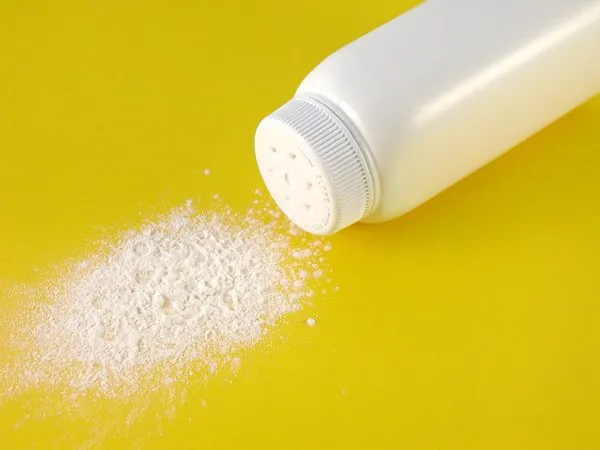
(A) High in the French Pyrenees… lies Trimouns, a huge deposit of hydrated magnesium silicate – talc… Talc from Trimouns… is used in the manufacture of a vast array of everyday products… But the true versatility of this remarkable mineral is nowhere better displayed than in its sometimes surprising use in certain niche markets in the food and agriculture industries.
(B) Take, for example, the chewing gum business. Every year, Talc de Luzenac France… supplies about 6,000 tons of talc to chewing gum manufacturers in Europe… long-term allegiance to a proven supplier is very much a feature of this sector… Switching sources… is not an easy option for chewing gum manufacturers…
(C) But how is talc actually used in the manufacture of chewing gum?… “Our talc is used as a filler in the gum base… Talc, on the other hand, makes an ideal filler because it’s non-reactive chemically. In the factory, talc is also used to dust the gum base pellets and to stop the chewing gum sticking during the lamination and packing process”…
(D) The chewing gum business is, however, just one example… For the past 20 years or so, olive oil processors in Spain have been taking advantage of talc’s unique characteristics to help them boost the amount of oil they extract… “Difficult” olives are those that are more reluctant than the norm to yield up their full oil content… These olives are easy to recognize because they produce a lot of extra foam during the stirring process… Not only that, if the waste water is disposed of directly into local fields… the emulsified oil may take some time to biodegrade and so be harmful to the environment.
(E) “If you add… talc… it absorbs the natural emulsifier in the olives and so boosts the amount of oil you can extract”, says Delord. “In addition, talc’s flat, ‘platy’ structure helps increase the size of the oil droplets liberated during stirring, which again improves the yield…”
(F) If the use of talc in olive oil processing and in chewing gum is long established, new applications… are also constantly being sought… One such promising new market is fruit crop protection…
(G) To combat this, farmers normally use either chemicals or spray a continuous fine canopy of mist… So our idea was to coat the fruit with talc to protect it from the sun…
(H) Initial trials… showed that when the product was sprayed onto Granny Smith apples, it reduced their surface temperature and lowered the incidence of sunburn by up to 60 per cent. Today the new product, known as Invelop Maximum SPF, is in its second commercial year… Apple growers are the primary target although Hunter believes grape growers represent another sector with long-term potential.
Questions
(Questions 1-6) Use the information in the passage to match each use of talc powder with the correct application from A, B or C.
Write the appropriate letters A-C in boxes 1-6 on your answer sheet.
NB you may use any letter more than once
A. Chewing gum manufacture
B. Olive oil extraction
C. Fruit crop protection
- Talc is used to prevent foaming.
- Talc is used to prevent stickiness.
- Talc is used to boost production.
- Talc is used as a filler to provide a base.
- Talc is used to prevent sunburn.
- Talc is used to help increase the size of the product.
(Questions 7-12) Complete the summary below using NO MORE THAN TWO WORDS from the Reading Passage for each answer. Write your answers in boxes 7-12 on your answer sheet.
The use of talc powder in the olive oil industry in Spain has been around for 7…………… years. It is extremely useful in dealing with “difficult” olives which often produce a lot of 8…………… due to the high content of solid matter. The traditional method of oil extraction used in some smaller plants often produces 9……………, which contains emulsified oil, and if it is directly disposed of, it may be 10…………… to the environment, because it cannot 11…………… . But adding talc powder can absorb the emulsifier and increase the production, because the size of oil 12…………… grows.
(Questions 13-14) Answer the questions below using NO MORE THAN THREE WORDS from the passage for each answer.
Write your answers in boxes 13-14 on your answer sheet.
13. What are the last two stages of the chewing gum manufacturing process?
14. Which group of farmers does Invelop intend to target next?
Summary of the Passage
The “Talc Powder” passage reveals the surprising applications of talc in the food and agricultural industries, far beyond its common use as baby powder.
- In chewing gum production: Talc is used as a chemically inert filler in the gum base and as a dusting agent to prevent sticking during manufacturing and packaging.
- In olive oil extraction: Talc significantly boosts oil yield by absorbing natural emulsifiers (which cause foaming and oil loss) and helping oil droplets coalesce into larger sizes.
- In crop protection: A promising new application involves spraying treated talc onto fruit (such as apples) to protect them from sunburn, reducing surface temperature and saving water compared to misting methods.
Key Vocabulary
- Versatility (noun): The ability to adapt or be adapted to many different functions or activities.
- Niche market (noun phrase): A specialized segment of the market for a particular kind of product or service.
- Allegiance (noun): Loyalty or commitment of a subordinate to a superior or of an individual to a group or cause.
- Reformulating (verb): Changing the composition or structure of something.
- Lamination (noun): The process of manufacturing a material in multiple layers.
- Centrifuge (verb): To subject to the action of a centrifuge (to separate substances).
- Emulsifier (noun): A substance that stabilizes an emulsion, in particular a food additive used to stabilize processed foods.
- Hydrophobic (adjective): Tending to repel or fail to mix with water.
- Viable (adjective): Capable of working successfully; feasible.
Suggested Answers & In-depth Analysis
1. B. Olive oil extraction
- Evidence (Paragraphs D, E): Paragraph D describes “difficult” olives producing “foam.” Paragraph E explains that adding talc “absorbs the natural emulsifier,” which is the cause of the foam.
2. A. Chewing gum manufacture
- Evidence (Paragraph C): “…to stop the chewing gum sticking during the lamination and packing process.”
3. B. Olive oil extraction
- Evidence (Paragraph D): “…to help them boost the amount of oil they extract…”
4. A. Chewing gum manufacture
- Evidence (Paragraph C): “Our talc is used as a filler in the gum base.”
5. C. Fruit crop protection
- Evidence (Paragraph H): “…it reduced their surface temperature and lowered the incidence of sunburn…”
6. B. Olive oil extraction
- Evidence (Paragraph E): “…helps increase the size of the oil droplets…” (The product here refers to the oil).
7. 20
- Evidence (Paragraph D): “For the past 20 years or so, olive oil processors in Spain have been taking advantage of talc’s unique characteristics.”
8. (extra) foam
- Evidence (Paragraph D): “…they produce a lot of extra foam during the stirring process…”
9. waste water
- Evidence (Paragraph D): “…if the waste water is disposed of directly into local fields…”
10. harmful
- Evidence (Paragraph D): “…and so be harmful to the environment.”
11. biodegrade
- Evidence (Paragraph D): “…may take some time to biodegrade…”
12. droplets
- Evidence (Paragraph E): “…increase the size of the oil droplets…”
13. lamination and packing
- Evidence (Paragraph C): “…during the lamination and packing process.”
14. grape growers
- Evidence (Paragraph H): “…Hunter believes grape growers represent another sector with long-term potential.”
From chewing gum to apple orchards, the “Talc Powder” passage demonstrates that science and practical applications can be found in the most unexpected places. In terms of skills, this is an excellent exercise for practicing scanning to locate specific details and categorizing them correctly.
An effective strategy for Matching tasks is to skim the options first, then actively look for these applications while reading the passage. We hope that with these detailed analyses from ECE, you have gained valuable experience in effectively handling IELTS Reading passages about technological applications.
We invite you to check out more IELTS Reading practice tests compiled by ECE:
A study of western celebrity ielts reading





 Khai giảng Khóa học Hè cực HOT.
Chưa có bình luận nào!