
Tóm Tắt Nội Dung Bài Viết
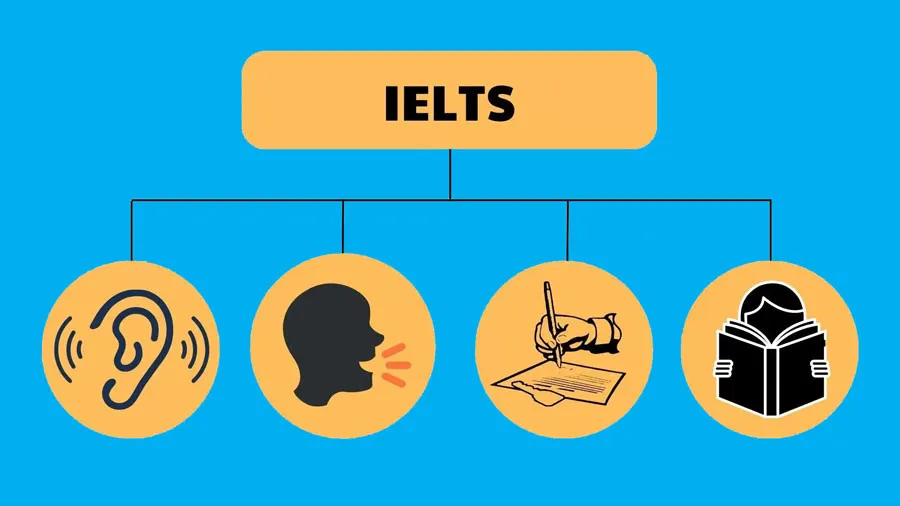
IELTS (International English Language Testing System) is one of the most popular international English proficiency exams today. The IELTS test consists of four skills: Listening, Reading, Writing, and Speaking, with each skill scored on a scale from 1.0 to 9.0. This article from the ECE Language Center provides detailed information on how each section is scored, the assessment criteria, and how the overall band score is calculated. Let’s dive in!

How IELTS scores are calculated for each skill
IELTS Listening scoring
The Listening test consists of 40 questions. Each correct answer is worth 1 point. This raw score is then converted into a band score from 1.0 to 9.0 based on the conversion tables provided by the British Council and IDP.
- If you answer 30 to 32 questions correctly, you may achieve a band 7.0.
- If you answer 35 to 36 questions correctly, you will achieve a band 8.0.
Listening scores are determined solely by the number of correct answers, with no additional assessment criteria.
| IELTS Listening and Reading conversion table based on correct answers
(IELTS Academic and IELTS General Training) |
|||
| Correct IELTS Listening answers | Correct IELTS Reading answers (Academic) | Correct IELTS Reading answers (General) | Band Score |
| 39 – 40 | 39 – 40 | 40 | 9.0 |
| 37 – 38 | 37 – 38 | 39 | 8.5 |
| 35 – 36 | 35 – 36 | 37 – 38 | 8.0 |
| 32 – 34 | 32 – 34 | 36 | 7.5 |
| 30 – 31 | 30 – 31 | 34 – 35 | 7.0 |
| 26 – 29 | 26 – 29 | 32 – 33 | 6.5 |
| 23 – 25 | 23 – 25 | 30 – 31 | 6.0 |
| 18 – 22 | 18 – 22 | 27 – 29 | 5.5 |
| 16 – 17 | 16 – 17 | 23 – 26 | 5.0 |
| 13 – 15 | 13 – 15 | 19 – 22 | 4.5 |
| 10 – 12 | 10 – 12 | 15 – 18 | 4.0 |
| 8 – 9 | 8 – 9 | 12 – 14 | 3.5 |
| 6 – 7 | 6 – 7 | 9 – 11 | 3.0 |
| 4 – 5 | 4 – 5 | 6 – 8 | 2.5 |
Note on rounding Listening scores: Your Listening band score (e.g., 7.0, 7.5, 8.0) is determined directly from the conversion table based on your number of correct answers. There is no separate rounding process for this skill; you will receive the band score that corresponds exactly to your number of correct answers.
IELTS Reading scoring
The IELTS Reading test consists of 3 reading passages with related questions. The total time allowed is 60 minutes. Test-takers must read the passages and answer various question types, such as True/False/Not Given, Multiple Choice, Matching, or sentence completion.
Like the Listening section, the Reading test has 40 questions and follows a similar scoring method. However, there are differences in the conversion tables for IELTS Academic and IELTS General Training based on the number of correct answers.
Examples of Reading scoring:
- For IELTS Academic: 30 – 31 correct answers result in a band 7.0, while 35 – 36 correct answers result in a band 8.0.
- For IELTS General Training: 30 – 31 correct answers result in a band 6.0, while 34 – 35 correct answers result in a band 7.0.
Note on rounding Reading scores: Similar to Listening, your Reading band score (e.g., 6.0, 6.5, 7.0) is determined directly from the conversion table (Academic or General Training) based on your number of correct answers. No rounding rules apply to individual Reading skill scores.
IELTS Writing scoring
The Writing test is divided into two tasks: Task 1 and Task 2. Each task is assessed based on four criteria, with a scale of 0 to 9 for each. The scores for both tasks are then averaged to determine the final Writing band score.
Writing assessment criteria:
- Task Achievement: Whether the response fully addresses all parts of the prompt.
- Coherence and Cohesion: Whether ideas are logically organized and well-connected.
- Lexical Resource: The range, accuracy, and appropriateness of vocabulary used.
- Grammatical Range and Accuracy: The range and accuracy of grammatical structures used.
Each criterion is scored from 1.0 to 9.0, and the final score is the average of these criteria.
Band 9
- Task Achievement: Fully addresses all parts of the task; presents a well-developed response with relevant, extended, and supported ideas.
- Coherence and Cohesion: Uses cohesion in such a way that it attracts no attention; skillfully manages paragraphing.
- Grammatical Range and Accuracy: Uses a wide range of structures with full flexibility and accuracy; rare minor errors occur only as “slips.”
- Lexical Resource: Uses a wide range of vocabulary with very natural and sophisticated control; rare minor errors occur only as “slips.”
Band 8
- Task Achievement: Sufficiently addresses all parts of the task; presents a well-developed response with relevant and supported ideas.
- Coherence and Cohesion: Sequences information and ideas logically; manages all aspects of cohesion well; uses paragraphing sufficiently and appropriately.
- Grammatical Range and Accuracy: Uses a wide range of structures; the majority of sentences are error-free; makes only very occasional errors or inappropriacies.
- Lexical Resource: Uses a wide range of vocabulary fluently and flexibly to convey precise meanings; uses less common lexical items with some awareness of style and collocation; may produce occasional inaccuracies.
Band 7
- Task Achievement: Addresses all parts of the task; presents a clear position throughout the response.
- Coherence and Cohesion: Logically organizes information and ideas; there is clear progression throughout; uses a range of cohesive devices appropriately.
- Grammatical Range and Accuracy: Uses a variety of complex structures; produces frequent error-free sentences; has good control of grammar and punctuation but may make a few errors.
- Lexical Resource: Uses a sufficient range of vocabulary to allow some flexibility and precision; uses less common lexical items with some awareness of style and collocation; may produce occasional errors in word choice, spelling, and/or word formation.
Band 6
- Task Achievement: Addresses all parts of the task; presents a relevant position throughout the response.
- Coherence and Cohesion: Arranges information and ideas coherently and there is a clear overall progression; uses cohesive devices effectively, but cohesion within and/or between sentences may be faulty or mechanical.
- Grammatical Range and Accuracy: Uses a mix of simple and complex sentence forms; makes some errors in grammar and punctuation but they rarely reduce communication.
- Lexical Resource: Uses an adequate range of vocabulary for the task; attempts to use less common vocabulary but with some inaccuracy; makes some errors in spelling and/or word formation, but they do not impede communication.
Band 5
- Task Achievement: Generally addresses the task; the format may be inappropriate in places.
- Coherence and Cohesion: Organizes information and ideas with some progression; may make inadequate, inaccurate, or over-use of cohesive devices.
- Grammatical Range and Accuracy: Uses only a limited range of structures; attempts complex sentences but these tend to be less accurate than simple sentences and may cause some difficulty for the reader.
- Lexical Resource: Uses a limited range of vocabulary, but this is minimally adequate for the task.
Band 4
- Task Achievement: Responds to the task only in a minimal way or the answer is tangential.
- Coherence and Cohesion: Presents information and ideas but these are not arranged coherently and there is no clear progression in the response; uses basic cohesive devices and these may be inaccurate or repetitive.
- Grammatical Range and Accuracy: Uses only a very limited range of structures with only rare use of subordinate clauses; some structures are accurate but errors predominate, and punctuation is often faulty.
- Lexical Resource: Uses only basic vocabulary which may be used repetitively or which may be inappropriate for the task at hand; spelling and/or word formation may cause some difficulty for the reader.
Band 3
- Task Achievement: Does not adequately address any part of the task.
- Coherence and Cohesion: Does not organize ideas logically; may use a very limited range of cohesive devices, and those used may not indicate a logical relationship between ideas.
- Grammatical Range and Accuracy: Attempts sentence forms but errors in grammar and punctuation predominate and distort the meaning.
- Lexical Resource: Uses only a very limited range of vocabulary; errors in spelling and/or word formation may severely distort the meaning.
Band 2
- Task Achievement: The answer is largely unrelated to the task.
- Coherence and Cohesion: Has little control of organizational features.
- Grammatical Range and Accuracy: Cannot use sentence forms except in memorized phrases.
- Lexical Resource: Uses an extremely limited range of vocabulary; essentially no control of word formation and/or spelling.
Band 1
- Task Achievement: The answer is completely unrelated to the task.
- Coherence and Cohesion: Fails to communicate any message.
- Grammatical Range and Accuracy: Cannot use sentence forms at all.
- Lexical Resource: Can only use a few isolated words.
Tips for a high Writing score
- Understand the prompt requirements and address all parts of the task.
- Use concise, logical, and well-connected sentences.
- Focus on building a rich and accurate academic vocabulary.
- Use a variety of accurate grammatical structures.
See more: Most popular types of IELTS tests today
Note on rounding Writing scores: Examiners assess your writing based on the four criteria and determine a final band score for the Writing skill (e.g., 6.0, 6.5, 7.0). The score you receive is the band score determined by the examiner after considering all factors; it is not the result of an average calculation of the criteria followed by rounding.
IELTS Speaking scoring
The Speaking test lasts 11–14 minutes and is also assessed based on four criteria similar to Writing, but with different content.
Speaking assessment criteria:
- Fluency and Coherence: The ability to speak continuously, coherently, without hesitation, and using linking words.
- Lexical Resource: The ability to use a wide range of vocabulary flexibly and accurately.
- Grammatical Range and Accuracy: The ability to use a variety of grammatical structures flexibly and accurately.
- Pronunciation: The ability to produce clear, intelligible speech with appropriate intonation and stress.
Each band score from 0 to 9.0 corresponds to specific performance criteria:
Band 9:
- Fluency and coherence: Speaks fluently with only rare repetition or self-correction; develops topics fully and coherently.
- Lexical resources: Uses vocabulary with full flexibility and precision in all topics; uses idiomatic language naturally and accurately.
- Grammatical range and accuracy: Uses a full range of structures naturally and appropriately.
- Pronunciation: Uses a wide range of pronunciation features; is effortless to understand.
Band 8:
- Fluency and coherence: Speaks fluently with only occasional repetition or hesitation; develops topics coherently and appropriately.
- Lexical resources: Uses a wide vocabulary resource readily and flexibly; uses less common and idiomatic vocabulary skillfully, with occasional inaccuracies; uses paraphrase effectively.
- Grammatical range and accuracy: Uses a wide range of structures flexibly; produces a majority of sentences that are error-free.
- Pronunciation: Uses a wide range of pronunciation features; is easy to understand throughout, though may have a slight regional accent.
Band 7:
- Fluency and coherence: Speaks at length without noticeable effort or loss of coherence; may demonstrate some language-related hesitation at times.
- Lexical resources: Uses vocabulary resource flexibly to discuss a variety of topics; uses some less common and idiomatic vocabulary and shows some awareness of style and collocation; uses paraphrase effectively.
- Grammatical range and accuracy: Uses a range of complex structures with some flexibility; frequently produces error-free sentences.
- Pronunciation: Shows all the positive features of Band 6 and some, but not all, of the positive features of Band 8.
Band 6:
- Fluency and coherence: Is willing to speak at length, though may lose coherence at times due to occasional repetition or self-correction; uses a range of connectives and discourse markers but not always appropriately.
- Lexical resources: Has a wide enough vocabulary to discuss topics at length and make meaning clear in spite of inappropriacies; generally paraphrases successfully.
- Grammatical range and accuracy: Uses a mix of simple and complex structures, but with limited flexibility; may make frequent mistakes with complex structures.
- Pronunciation: Uses a range of pronunciation features with mixed control; shows some effective use of features but this is not sustained.
Band 5:
- Fluency and coherence: Usually maintains flow of speech but uses repetition, self-correction, and/or slow speech to keep going; may over-use certain connectives and discourse markers.
- Lexical resources: Manages to talk about familiar and unfamiliar topics but uses vocabulary with limited flexibility; attempts to use paraphrase but with mixed success.
- Grammatical range and accuracy: Shows some flexibility in attempting to use a range of complex structures but with limited success; frequent errors may cause some comprehension problems.
- Pronunciation: Uses a range of pronunciation features, but with limited control; is generally intelligible, though mispronunciations of individual words or sounds reduce clarity at times.
Band 4:
- Fluency and coherence: Cannot respond without noticeable pauses and may speak slowly, with frequent repetition and self-correction; links basic sentences but with limited success.
- Lexical resources: Is able to talk about familiar topics but can only convey basic meaning on unfamiliar topics and makes frequent errors in word choice.
- Grammatical range and accuracy: Uses a limited range of structures; attempts complex sentences but these tend to be less accurate than simple sentences and may cause some difficulty for the listener.
- Pronunciation: Uses a limited range of pronunciation features; mispronunciations are frequent and cause some difficulty for the listener.
Band 3:
- Fluency and coherence: Speaks with long pauses; has limited ability to link simple sentences; gives only simple responses and is frequently unable to convey basic meaning.
- Lexical resources: Uses simple vocabulary to convey personal information; has insufficient vocabulary for less familiar topics.
- Grammatical range and accuracy: Attempts basic sentence forms but with limited success, or relies on simple memorized phrases.
- Pronunciation: Shows very limited control of pronunciation features; mispronunciations are frequent and cause significant difficulty for the listener.
Band 2:
- Fluency and coherence: Speaks with long pauses; has limited ability to link simple sentences; gives only simple responses and is frequently unable to convey basic meaning.
- Lexical resources: Uses only basic vocabulary; cannot produce basic sentence forms.
- Grammatical range and accuracy: Cannot produce basic sentence forms.
- Pronunciation: Speech is unintelligible.
Band 1:
- Fluency and coherence, Lexical resources, Grammatical range and accuracy, Pronunciation: Does not attend; no communication possible.
Tips for a high Speaking score
- Speak fluently with clear, logical connections.
- Use accurate pronunciation, stress, and natural intonation.
- Use rich, accurate, and contextually appropriate vocabulary.
- Apply a variety of grammatical structures.
Note on rounding Speaking scores: Similar to Writing, examiners assess your performance based on the four criteria and determine a final band score for the Speaking skill (e.g., 6.5, 7.0, 7.5). The score you receive is the band score decided by the examiner; there is no rounding step after averaging the criteria.
How to calculate the IELTS Overall band score
The IELTS Overall band score is calculated by taking the average of the four skills: Listening, Speaking, Reading, and Writing. The formula is as follows:
IELTS Overall = (Listening score + Speaking score + Reading score + Writing score) / 4
Suppose a test-taker achieves the following scores:
- Listening: 7.5
- Speaking: 6.5
- Reading: 7.0
- Writing: 6.0
The IELTS Overall score is calculated as: (7.5 + 6.5 + 7.0 + 6.0) / 4 = 6.75
The IELTS Overall score is rounded to the nearest whole or half band. For example:
- A score of 6.75 is rounded up to 7.0.
- A score of 6.25 is rounded up to 6.5.
- A score of 6.125 is rounded down to 6.0.
IELTS Overall rounding rules
The IELTS Overall Band Score is not always a whole number or a .5 increment like individual skill scores. It is the result of the average of the four skills, which is then rounded according to official IELTS rules as follows:
The average of the four skills is rounded to the nearest half band (.0 or .5). Specific rules:
- If the decimal of the average score is .25, the score is rounded up to .5.
- Example: Average score of 6.25 -> Overall score is 6.5.
- If the decimal of the average score is .75, the score is rounded up to the .0 of the next whole band.
- Example: Average score of 6.75 -> Overall score is 7.0.
- If the decimal is less than .25 (e.g., .1, .125, .2), the score is rounded down to the nearest .0.
- Example: Average score of 6.1 -> Overall score is 6.0.
- If the decimal is greater than .25 and less than .75 (e.g., .375, .625), the score is rounded up to the nearest .5.
- Example: Average score of 6.375 -> Overall score is 6.5.
- Example: Average score of 6.625 -> Overall score is 6.5. (Note: 6.5 is the nearest half band)
Frequently Asked Questions about IELTS scoring
Question 1: “I need a band 7.0, what scores do I need in each skill?”
Answer: To achieve an overall band 7.0, you should aim for an average of 7.0 across all four skills. This means if you score 7.0 in three skills and 6.5 in one, your overall score can still be 7.0. However, if there is a large discrepancy between your skill scores, achieving your target overall score becomes more difficult.
Question 2: “How is the Speaking score assessed if I hesitate?”
Answer: In the Speaking test, the Fluency and Coherence criterion assesses your flow. If you hesitate frequently or struggle to organize your answers, you will lose points in this criterion. To improve, practice speaking fluently and using cohesive devices.
Question 3: “Are Writing Task 1 and Task 2 equally important?”
Answer: Writing Task 2 accounts for 2/3 of the total Writing score, while Task 1 accounts for 1/3. Therefore, performing well on Task 2 will help you achieve a higher score.
Question 4: “Can I request an IELTS remark?”
Answer: Yes, you can request an Enquiry on Results (remark) for any part of the IELTS





 Khai giảng Khóa học Hè cực HOT.
Chưa có bình luận nào!