
Tóm Tắt Nội Dung Bài Viết
The SAT (Scholastic Assessment Test) is a standardized exam used to evaluate the academic readiness of high school students applying to universities, particularly in the United States. The SAT assesses critical thinking, problem-solving, and essay-writing skills—all of which are essential for success in higher education.
Beyond testing cognitive ability, the SAT serves as a benchmark for universities to gauge a candidate’s academic preparedness. SAT scores are considered a critical factor in the admissions process by many top-tier universities worldwide, especially when a student’s high school transcript doesn’t clearly distinguish them from other applicants. Therefore, having a clear SAT study plan from the start is vital for achieving a high score and increasing your chances of admission.
When should you start studying for the SAT?

One of the most common questions ECE receives from students new to the SAT is, “When should I start?” While there is no one-size-fits-all answer, many educational experts recommend that students begin their SAT preparation in 10th or 11th grade. This provides enough time to get comfortable with the exam format and allows for retakes if necessary to reach your target score.
Starting in 10th grade allows students to build a solid foundation of knowledge before moving into more intensive test prep. It also helps reduce academic pressure during the final year of high school (12th grade), when students are often juggling other commitments like graduation exams.
If you already have a strong foundation in English reading comprehension—roughly equivalent to an IELTS score of 6.0–6.5—you can start your SAT journey right away. Since SAT scores are valid for up to five years, you could spend 6 to 12 months in 10th grade preparing and then take the official exam during 11th grade. Studying for the SAT will also complement your IELTS preparation, as the SAT requires a significant command of vocabulary and grammar, particularly for the Reading and Writing sections.
How long does it take to prepare for the SAT?
The time required to prepare for the SAT depends on several factors, including your starting level, target score, and the amount of time you can dedicate to studying.
1. Starting Level
- Beginners: If you are unfamiliar with the SAT structure or lack confidence in your Math and Reading skills, your preparation time will be longer. Many students at this level need 6 months to a year to be fully prepared.
- Students with a strong foundation: If you already have a solid grasp of Math and Reading, you may only need 3 to 6 months. This time is primarily spent familiarizing yourself with the test format and refining specific skills.
2. Target Score
- Average score goal (1000–1200): For those aiming for this range, 2–4 months of consistent, focused study is often enough to master the test structure and achieve a solid score.
- High score goal (1400+): If you are aiming for a 1400+, you will need more thorough preparation, typically 4–6 months or longer, depending on your starting point and rate of improvement.
3. Study Intensity
- Full-time study: If you can dedicate 2–4 hours every day, you can complete your preparation faster, within 3–6 months.
- Part-time study: If you are busy with school or other activities and can only manage 5–10 hours per week, you may need 6 months to a year to reach your goals.
So, where do you start?
When beginning your SAT journey, the first step is to understand the test structure and the skills required. The SAT consists of two main sections:
- Math: This section covers algebra, geometry, and quantitative reasoning skills.
- Reading & Writing: This section tests your reading comprehension and grammar skills. You will be required to analyze passages and answer related questions.
Initially, focus on understanding how questions are structured and familiarizing yourself with the different question types. This will help you build a more effective study strategy.
>>> Check out this article: SAT Test Structure, compiled by ECE.
Challenges for beginners
1. Unfamiliarity with the test structure
The SAT has a specific structure consisting of Math and Reading & Writing. Each section features various question types that require different thinking and problem-solving strategies. Those new to the exam often feel overwhelmed by time management and test-taking strategies. Getting used to the question formats is a significant initial hurdle.
2. Weak vocabulary and grammar
The Reading & Writing section requires a rich vocabulary and precise grammatical knowledge. Students without a strong English foundation will struggle to understand complex passages, handle inference questions, and correct grammatical errors. Improving these areas takes time and consistent effort.
3. Time management
The SAT is a strictly timed exam that requires you to answer a large number of questions in a short period. Not being used to this pressure can lead to anxiety, mistakes, or running out of time. This requires regular practice to develop effective pacing.
4. Math challenges
While the math concepts on the SAT aren’t overly complex, many students struggle because the test requires logical reasoning and quick analysis. If you aren’t confident in your math skills, you may need to spend extra time reviewing fundamental concepts and practicing problem sets.
5. Lack of appropriate materials or methods
Not all SAT materials are suitable for beginners. Choosing the right resources can be a challenge. You need to find materials that match your level, such as introductory guides, video lectures, or official practice tests from the College Board.
6. Psychological pressure
Starting from scratch can be mentally taxing, especially if you have high ambitions for studying abroad. Comparing yourself to others who are more experienced can lead to anxiety and a loss of motivation.
Building a self-study roadmap for beginners

Phase 1 (3–4 months): Familiarization and basics
Goals:
- Understand the SAT structure, timing, and question types.
- Learn fundamental concepts in Math and Reading.
- Identify your initial strengths and weaknesses.
Study Method:
1. Take a diagnostic test: Start with a full-length practice test from an official source like the College Board. This is crucial for assessing your starting level.
2. Learn the basics:
– Math: Master core topics like algebra, geometry, and arithmetic. Start with lessons from Khan Academy for free resources and practice exercises.
– Reading: Learn to identify question types and analyze passages. Use books like “The Critical Reader” to get started.
3. Use study materials:
Math:
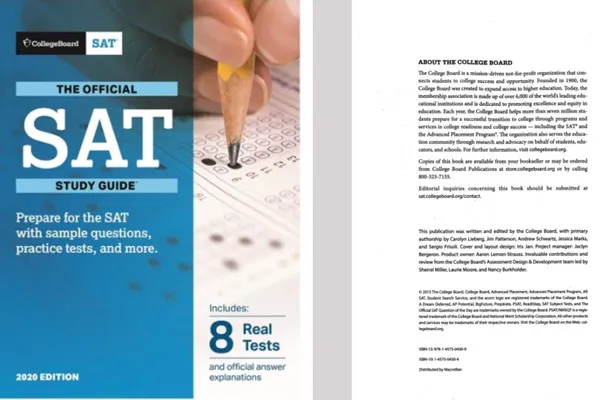
+ Book: “The Official SAT Study Guide” by the College Board is highly reliable and updated to the latest format.
+ Online: Khan Academy remains the best resource for video lectures and free practice.
Reading:
+ Book: “The Critical Reader” by Erica Meltzer is a highly regarded resource for improving reading and writing skills.
+ Online: Khan Academy SAT Reading Practice.
Advice:
Dedicate about 2–3 hours per day to study and practice. Focus on getting comfortable with the question types rather than stressing over your score.
Phase 2 (2–3 months): Addressing weaknesses and skill-building
Goals:
- Focus on weak areas and advance your skills.
- Practice solving more difficult questions.
- Analyze your practice test results.
Study Method:
1. Targeted improvement:
– If you struggle with advanced math, look for specialized resources like “PWN the SAT: Math Guide.”
– If Reading is your weak point, read complex texts from newspapers or academic journals, or use “Barron’s SAT Reading Workbook.”
This book provides a wealth of exercises to help you master the Reading section.
2. Increased practice: Take full-length, timed practice tests to improve your pacing and test-taking strategy.
Recommended materials:
– Math: “Dr. Jang’s SAT 800 Math Workbook” for challenging problems.
– Reading: “Barron’s SAT Reading Workbook” for extended practice.
3. Analyze your mistakes: After every test, carefully review your errors to understand why they happened and ensure you don’t repeat them.
Advice: Increase your study time to 3–4 hours per day. Balance your time across all sections.
Phase 3 (Final 1–2 months): Comprehensive review and optimization
Goals:
- Comprehensive review and mental preparation.
- Refine time management.
- Optimize test-taking strategies.
Study Method:
1. Full-length practice: Use official College Board tests to simulate the real exam environment.
2. Optimize strategy: Focus on tactics like answering easy questions first, managing time effectively, and avoiding traps.
If you encounter a question that is too difficult, skip it and come back later to ensure you don’t lose time. Stay alert for “traps” in math questions by reading carefully.
Materials:
– Math: Continue with “Barron’s SAT Math Workbook.”
– Reading: Focus on official College Board practice tests.
3. Mental preparation: Practice in a quiet environment with strict time limits to get used to exam pressure.
Advice: In this final stretch, you can study 4–5 hours per day, but don’t forget to rest to avoid burnout.
SAT Verbal (Reading & Writing) roadmap at ECE
| Phase 1: Sessions 1–10 |
|
| Phase 2: Sessions 11–20 |
|
| Phase 3: Sessions 21–30 |
|
Notes:
- Each ECE SAT session lasts 2 hours.
- After 30 sessions (60 hours), students may opt for additional sessions if needed.
- Starting from the 3rd session of Phase 1, there is a vocabulary quiz each session. Quizzes include definition and multiple-choice questions to help students learn words in context.
- From Phase 2 onwards, there are comprehensive Reading and Grammar quizzes to build test-taking stamina and time management.
- Score improvement depends on individual effort and ability, but on average, students can increase their score by 150–200 points after 40 hours of study.
- SAT prep classes open 5–6 months before the exam date.
Preparing for the SAT is a long-term process that requires persistence and effort. A roadmap for beginners must be carefully structured, moving from basic knowledge to advanced test-taking skills. Remember, there is no shortcut to success, but with a clear plan and determination, you can conquer the SAT.





 Khai giảng Khóa học Hè cực HOT.
Chưa có bình luận nào!