
Tóm Tắt Nội Dung Bài Viết
The Listening section plays a crucial role in the IELTS exam. It not only tests your ability to understand English in diverse communicative contexts but also directly impacts your overall band score. To conquer this section, regular practice with high-quality, relevant materials is key. However, with the vast array of books on the market, choosing the right “study companion” can be overwhelming for many IELTS candidates.
This article, compiled by the ECE language center, aims to provide you with a comprehensive overview of some of the most popular and highly regarded IELTS listening books trusted by countless learners. We will dive deep into the content, pros, and cons of each book, while also exploring the most effective study methods to optimize your preparation process.
Classic IELTS Listening Practice: The Cambridge IELTS Practice Tests Series (Cambridge University Press & Assessment)
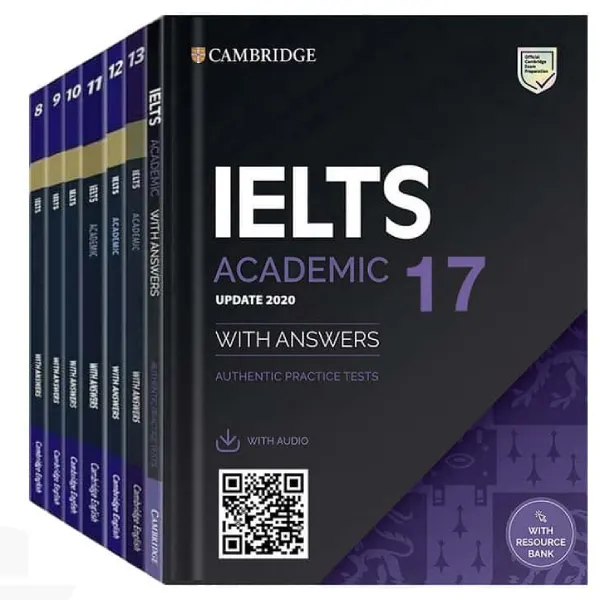
When it comes to IELTS preparation materials, the “legendary” Cambridge IELTS Practice Tests series is a must-mention. It is considered the “go-to” resource for every candidate on their journey to achieving this prestigious certification.
Overview
- Author/Publisher: Cambridge University Press & Assessment (formerly Cambridge ESOL), one of the three co-owners of the IELTS exam (alongside IDP Education and the British Council). This ensures the highest level of authenticity and reliability.
- Publisher: Cambridge University Press.
- Target Audience (Brief): IELTS learners who already have a solid foundation in English, typically at band 4.0-5.0 or above, especially those looking to familiarize themselves with the exam format, difficulty level, and assess their progress during the practice phase.
Target Audience (Detailed)
- Candidates with a solid foundation: This series is not ideal for absolute beginners. You need a relatively stable grasp of vocabulary and grammar to understand and complete the tests effectively.
- Learners wanting a real exam experience: This is the series’ greatest value. The tests are designed based on the structure, question types, and difficulty level of actual or standardized IELTS practice exams.
- Suitable for the practice phase: Once you have mastered the basics and test-taking strategies, the Cambridge IELTS books are excellent tools for practicing, getting used to time pressure, and objectively evaluating your performance.
- Those wanting to get used to various accents: The IELTS Listening section is famous for its variety of accents, including British, American, Australian, Canadian, and occasionally others. This series helps you encounter and train your ears to understand these different accents.
Content Overview
- Structure: As of early 2025, the series has reached book 19 (Cambridge IELTS 19). Each book typically includes 4 complete Practice Tests for both Academic and General Training modules. Note that the Listening and Reading sections are identical for both modules in each test.
- Listening Section Content: Each Listening test in the book consists of 4 sections, totaling 40 questions, lasting approximately 30 minutes, plus 10 minutes to transfer answers to the answer sheet. The question types are diverse and accurately reflect the real exam structure, including:
- Multiple Choice
- Matching
- Map/Diagram/Plan Labelling
- Form/Note/Table/Flow-chart/Summary Completion
- Sentence Completion
- Short Answer Questions
- Supplementary Materials: Each book comes with audio files (formerly CDs, now usually accessible via QR codes or links for download/online streaming), detailed answer keys, and audioscripts.
- Up-to-date: The latest books (e.g., Cambridge IELTS 16, 17, 18, 19) most clearly reflect the current trends and minor adjustments (if any) in recent IELTS exams.
Pros
- The most official and reliable source: This is an undeniable advantage. Being compiled by the exam organizers themselves ensures that the content, structure, and difficulty of the tests are as close to the real exam as possible.
- Difficulty and format match the real exam: Helps candidates get familiar with the test, avoid surprises, and build confidence before entering the exam room.
- Diverse accents: Provides a great opportunity to practice listening to and distinguishing between different accents, a crucial skill for success in the Listening section.
- Annual updates: Regular releases ensure learners always have access to the latest question types and topics.
- Detailed answer keys and audioscripts: Provides maximum support for self-study, self-assessment, error analysis, and learning from mistakes.
Cons
- No detailed theory or test-taking strategies: This series focuses primarily on providing practice tests. It does not explain tips or strategies for each question type in depth. Learners should supplement this knowledge with specialized skill-building textbooks or guidance from a teacher.
- Can be discouraging for beginners: If your English level is low or you are not yet familiar with the IELTS format, starting directly with the Cambridge series can be quite challenging and overwhelming.
- Cost: Original books can be expensive, though there are now many e-book options or reprints available at more reasonable prices.
IELTS Listening for Beginners: Basic IELTS Listening (Author: Li Ya Bin)
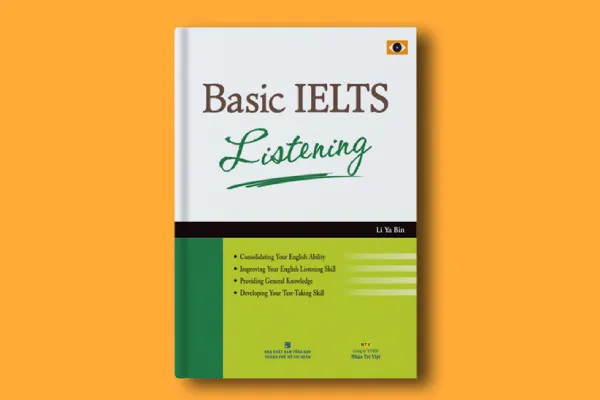
If you are at the beginning of your IELTS journey and feel that the Cambridge series is too advanced, “Basic IELTS Listening” by Li Ya Bin (or similar books based on this author’s methodology) may be a suitable starting point.
Overview
- Author: Li Ya Bin is a familiar name in the Asian IELTS community, known for several high-quality prep books, especially for Listening and Speaking.
- Publisher: In Vietnam, books by Li Ya Bin or based on his methods are often licensed, translated, or adapted by publishers like Nhan Tri Viet or General Publishing House of Ho Chi Minh City to better suit local learners.
- Target Audience (Brief): Beginners getting acquainted with IELTS, with a basic level of English (typically aiming for band 3.5 – 5.5+), who need to build their listening skills gradually.
Target Audience (Detailed)
- Learners with limited vocabulary and grammar: The book is designed with listening exercises of moderate difficulty, ensuring learners aren’t overwhelmed from the start.
- Those needing to get familiar with basic listening tasks: The book focuses on question types commonly found in Sections 1 and 2 of the IELTS Listening test, such as filling in personal information, phone numbers, addresses, and understanding short conversations on everyday topics.
- Students wanting to build a foundation from scratch: Provides a structured learning path, helping learners gradually get used to the speaking speed, vocabulary, and question types in IELTS Listening.
Content Overview
- Thematic Structure: The book is typically divided into about 5 major Units, each focusing on familiar topics encountered in daily life and the easier parts of the IELTS Listening test. Common topics include:
- Names and Places
- Numbers (including phone numbers, house numbers, dates, prices)
- Survival English (basic communication in daily situations like booking tickets, asking for directions, shopping)
- Popular Science (at a simple level)
- Academic English (basic level, usually related to short lectures or discussions in an educational setting)
- Diverse Exercises: Each Unit provides many small listening exercises, ranging from 5-15 per unit, with increasing difficulty. These exercises help reinforce vocabulary and listening skills for specific topics.
- Learner Support: The book comes with audio files for all listening exercises, detailed answer keys, and audioscripts. Some versions also include notes on key points, common mistakes, and explanations of important vocabulary and structures.
- Goal: To help learners get familiar with the exam format, grasp basic listening tips, and build a foundational vocabulary for the Listening skill.
Pros
- Accessible content, beginner-friendly: The listening tracks are usually short, the speaking speed is relatively slow and clear, and the content revolves around familiar topics, making it easy for learners to follow and grasp information.
- Clear thematic organization: Helps learners systematically organize vocabulary and knowledge related to each topic, creating better associations and improving retention.
- Detailed guidance (depending on the version): Many versions include explanations, notes on common mistakes, and new vocabulary, helping learners study more effectively on their own.
- Builds confidence: Completing the exercises in the book helps learners feel a sense of progress and provides motivation to continue studying.
- Reasonable price: Usually more affordable than the original Cambridge series.
Cons
- Difficulty level does not match the real exam for higher bands: The book’s main goal is to build a foundation; therefore, the difficulty of the listening tracks and exercises does not fully reflect the complexity of the real IELTS exam, especially in Sections 3 and 4. Learners should move on to more advanced materials once their level improves.
- Limited accent variety: Compared to the Cambridge series, the accents in “Basic IELTS Listening” may be less diverse, sometimes focusing primarily on standard British or American English.
- Some versions are written entirely in English: This can be difficult for absolute beginners without the guidance of a teacher or an experienced person. However, there are also versions that are translated or include Vietnamese annotations.
Other Notable IELTS Listening Books (Brief Introduction)
Besides the two “giants” mentioned above, the market offers many other quality IELTS listening books that you can refer to to enrich your study resources:
1. Tactics for Listening Series (Authors: Jack C. Richards & Grant Trew – Publisher: Oxford University Press)
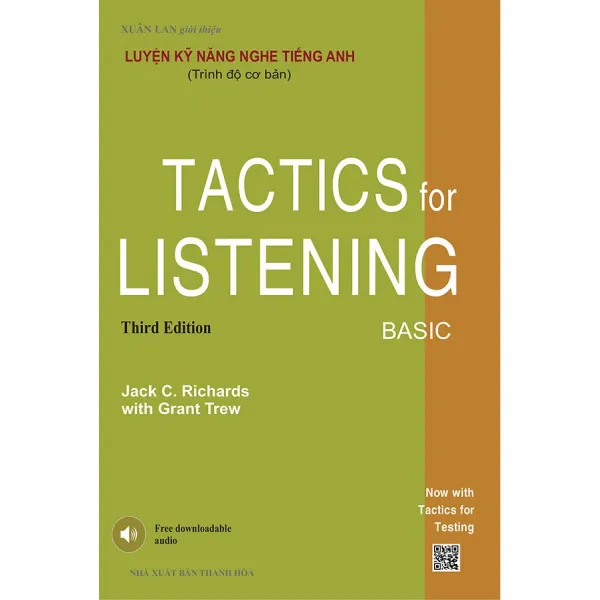
- A classic general English listening series consisting of 3 books corresponding to 3 levels: Basic, Developing, and Expanding.
- Each book provides lessons on diverse topics, from daily life to more formal situations, accompanied by a wide range of exercises.
- Pros: Helps develop listening skills comprehensively and systematically, getting you used to natural speech. It serves not only IELTS but also improves general listening comprehension.
- Target Audience: Suitable for all levels, from beginners (Basic) to those wanting to improve their skills (Expanding).
2. Get Ready for IELTS Listening (Publisher: Collins)
- Part of the “Get Ready for IELTS” series by Collins, this book is designed for learners at a basic level, aiming for band 3.0 – 4.0.
- Content is divided into 12 thematic units. Each unit includes 3 parts: Language development, Skills development, and Exam Practice (following the IELTS format).
- Pros: Provides a solid foundation, with vocabulary summaries and notes after each lesson.
- Cons: Written entirely in English, which may be difficult for beginners. It may not be as up-to-date as the latest series since it was published some time ago (around 2012).
3. Collins Listening for IELTS (Authors: Fiona Aish & Jo Tomlinson – Publisher: Collins)
- For those who already have a certain foundation (around band 5.0) and want to conquer band 6.0 and above.
- Includes 12 units, with the first 11 units focusing on common question types and topics, and the final unit being a complete practice test.
- Pros: Focuses on test-taking strategies and reinforces vocabulary in context.
- Cons: Similar to “Get Ready for IELTS Listening,” it was published in 2011, so its relevance to the current exam format may be limited.
4. Intensive IELTS Listening (Author: New Oriental Education & Technology Group)
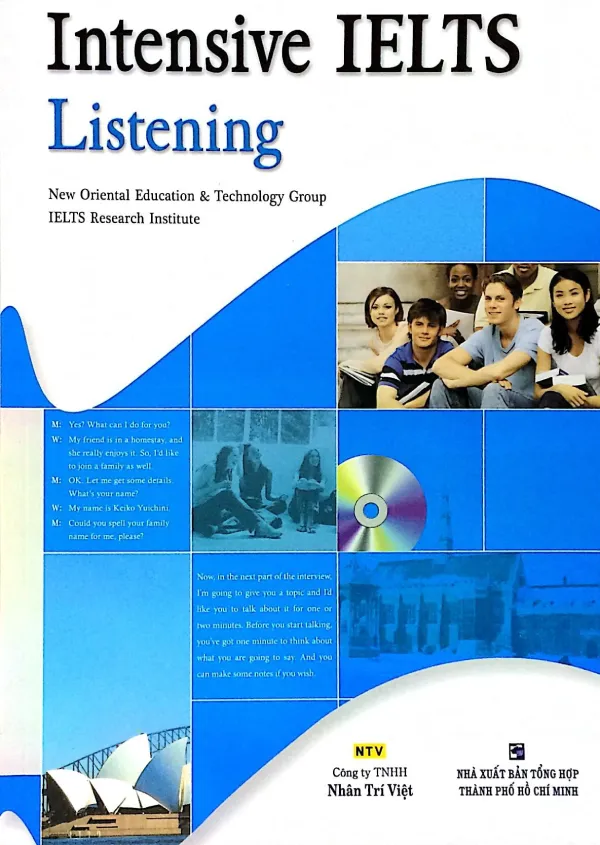
- This book focuses on helping learners get familiar with and master specific question types commonly found in the IELTS Listening test, such as Ticking and Table filling, Map Labelling, Short Answer, Matching, and Multiple Choice.
- Suitable for those with a band of 3.5-4.0 or above who want to practice intensively by question type.
- Pros: Diverse exercises, helping to train reflexes effectively.
- Cons: Primarily exercises, with little theory or detailed guidance; might not be suitable if you need to review foundational knowledge.
5. IELTS Recent Actual Listening Tests (Multiple Volumes)
- This series compiles tests that are said to have appeared in recent actual IELTS exams.
- Suitable for those who already have decent listening skills (from band 4.5 and up) and want to get more practice with actual exam-style tests.
- Pros: Provides a rich source of tests, helping you get used to many question types and diverse topics.
- Cons: The authenticity of “actual exam tests” is sometimes hard to verify, and the audio quality and editing may not be as consistent as the official Cambridge series.
How to Study IELTS Listening with Books for Maximum Effectiveness
Owning good books is just the first step. More importantly, you must know how to utilize them effectively. Below are strategies and tips to help you optimize your IELTS listening preparation with books:
1. Determine your level and choose the right book
This is a prerequisite. Don’t try to “skip ahead” to books that are too difficult when your foundation isn’t solid; this easily leads to discouragement. Conversely, if you are at an intermediate level, sticking only to basic listening exercises won’t help you progress much. Assess your own ability or ask a teacher for advice to choose a suitable starting point.
2. Build a solid vocabulary and grammar foundation
- Thematic vocabulary: Listening skills require you to recognize and understand words quickly. Actively learn vocabulary related to common IELTS Listening topics (education, work, travel, environment, society, popular science…).
- Basic grammar: Mastering basic sentence structures, tenses, passive voice, relative clauses, etc., will help you understand the meaning of sentences even if you don’t hear every single word.
- Correct pronunciation: Learning the correct pronunciation of words not only helps you speak better but also improves your ability to recognize words while listening. Pay attention to word stress, sentence stress, and intonation.
3. Practice listening actively and strategically
-
Pre-listening
Read questions and instructions carefully: This is an extremely important step. Clearly identify the requirements for each question type (e.g., word count limits, number of choices).
Underline keywords: In the questions and options (if any), underline words that carry key information (nouns, verbs, adjectives, adverbs, proper names, numbers…). This helps you focus on the information you need to find while listening.
Predict content: Based on keywords and the general topic, try to imagine what the listening track might be about and what information might appear.
-
While-listening
- Stay highly focused: Eliminate all distractions. You only get to hear the IELTS Listening track once.
- Apply skimming and scanning skills: Skim to grasp the main idea and topic of the conversation/talk. Scan to find specific information related to the identified keywords.
- Practice note-taking: For long lectures or conversations (Sections 3 and 4), quick note-taking is essential. Use abbreviations, symbols, and simple mind maps to record main ideas, numbers, and important names. Don’t try to write down every word.
- Pay attention to linking words, synonyms/antonyms, and paraphrasing: Speakers rarely repeat the exact words from the questions. They will use synonyms, antonyms, or paraphrase ideas. Practice recognizing these expressions. Linking words (however, but, so, therefore, firstly, finally…) are also important cues to follow the flow of the talk.
- Be careful with “distractors”: Sometimes the speaker will provide initial information and then correct or negate it. Listen carefully until the end to determine the correct answer. Example: “I was thinking of going on Tuesday, but actually Wednesday is better for me.”
- Don’t dwell on missed questions: If you miss an answer or aren’t sure, don’t panic and try to recall it. Quickly shift your focus to the next question so you don’t miss further information. You can return to that question later if time permits.
-
Post-listening
- Check and finalize answers: Use the final 10 minutes to transfer answers to the answer sheet. Check for spelling and grammar errors (especially singular/plural forms, word forms).
- Read audioscripts and analyze mistakes: This is the most important learning step. Compare your answers with the correct ones and read the corresponding transcript. Understand why you got it wrong: was it a misheard word, lack of vocabulary, missed information, misunderstanding, or a “trap”?
- Learn new vocabulary and structures: Note down useful vocabulary, phrases, and sentence structures from the audioscripts to expand your knowledge.
- Listen again: Listen to the track again without looking at the script to see if you understand it better. Then, listen again while following the script to reinforce your learning.
-
4. Practice regularly and persistently
- “Practice makes perfect.” Dedicate time to listening practice every day, even if it’s just 30 minutes to an hour. Consistency is more important than a large volume of practice in one sitting.
- Diversify your listening sources: Besides prep books, expose yourself to English through various channels like podcasts (BBC Learning English, VOA Learning English, TED Talks), news (BBC, CNN), movies, and TV shows with English subtitles. This helps you get used to different accents, speaking speeds, and contexts, while making learning more enjoyable.
Applying this to the reviewed books
For the Cambridge IELTS Practice Tests series
- Do full tests like the real exam: Once you are more confident, try doing a complete test under real exam conditions (30 minutes listening + 10 minutes to transfer answers), without pausing or using a dictionary. This helps you train your focus and time management.
- Analyze mistakes meticulously: After each test, spend plenty of time analyzing your mistakes as guided above. This is the best way to learn from your errors.
- Focus on getting used to speed and variety: This series is a golden opportunity to adapt to the natural speaking speed and the richness of question types and accents in the real exam.
For “Basic IELTS Listening”
- Study unit by unit: Go slowly, mastering the vocabulary and basic sentence structures of each topic.
- Practice listening repeatedly: With short listening tracks, don’t be afraid to listen multiple times to understand every detail.
- Practice dictation: Choose short conversations suitable for your level to practice listening and transcribing exactly what you hear. This is a very effective method to improve sound recognition, vocabulary, and spelling.
- Build confidence: The main goal when using this book is to get familiar and build a foundation. Don’t be too pressured by scores; focus on understanding and learning.
Conclusion
The journey to conquering IELTS Listening requires persistence, effort, and a smart study method. Choosing the right listening book that fits your level and goals, combined with applying effective study strategies, will be the key to helping you make significant progress.
Whether you choose the “Cambridge IELTS Practice Tests” to get used to the real exam, “Basic IELTS Listening” to build a foundation, or any other book, remember that no book is absolutely perfect. The important thing is that you know how to maximize their value, turning them into powerful tools on your path to achieving your desired IELTS Listening band score. Wishing you effective study and success in your upcoming IELTS exam!





 Khai giảng Khóa học Hè cực HOT.
Chưa có bình luận nào!