


Tóm Tắt Nội Dung Bài Viết
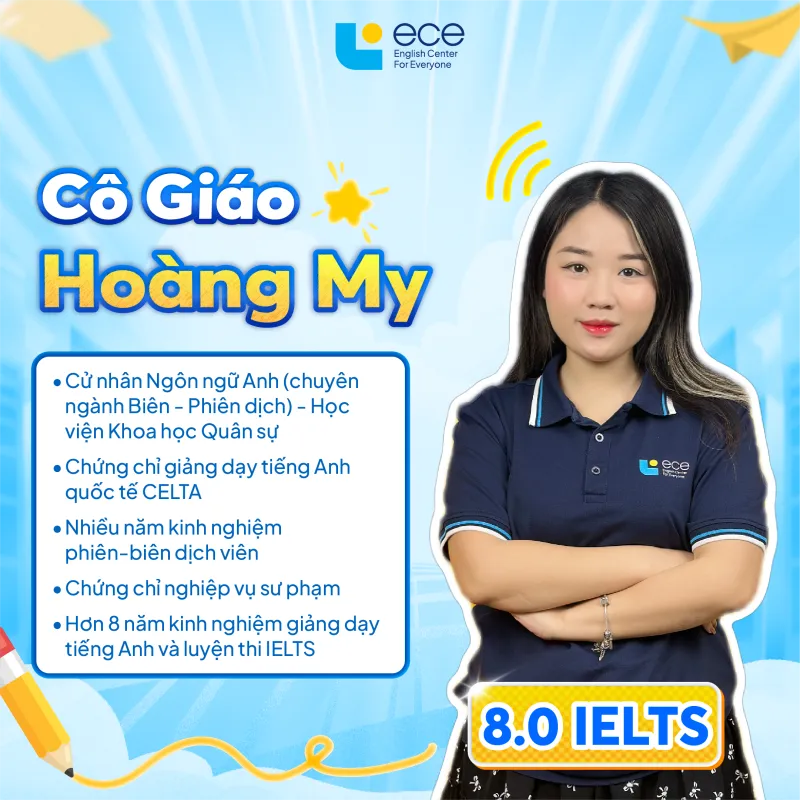
Hi everyone, I’m Hoàng My, an instructor here at ECE. Today, we’re going to tackle a topic that is both incredibly relatable and full of challenges in the IELTS Speaking test: Parenting.
This topic can appear in all three parts of the test, requiring you to not only share personal experiences (Part 1 & 2) but also analyze and evaluate social issues related to raising children (Part 3). To score high, you need to demonstrate a rich vocabulary regarding personality, emotions, and family relationships, as well as the ability to construct logical arguments.
This article provides a complete set of sample questions and answers for Parts 1, 2, and 3, along with explanations of “high-value” vocabulary and useful practice tips. Let’s get started!
IELTS Speaking Part 1: Topic Parenting
In this part, the examiner will ask concise questions about your personal experience with your parents. Answer naturally, honestly, and try to expand your response by 1–2 sentences.
1. Do you think that your parents did the best parenting possible?
(Do you think your parents did the best they could in raising you?)
Sample Answer: Yes, I genuinely believe they did their best with the resources and knowledge they had at the time. They created a nurturing environment where I felt both loved and disciplined. Of course, no parenting is perfect, but their intentions were always in the right place.
✨ Highlighted vocabulary:
-
resources (n): assets (financial, time, knowledge, etc.)
-
nurturing (a): caring and encouraging growth
-
disciplined (a): showing a controlled form of behavior
2. How much time did your parents spend with you when you were a child?
(How much time did your parents spend with you when you were a child?)
Sample Answer: They were quite involved in my upbringing despite their busy work schedules. We always had dinner together and they made time for weekend outings or family activities. Looking back, their consistent presence meant a lot to me.
✨ Highlighted vocabulary:
-
involved (a): actively participating or engaged
-
upbringing (n): the way a child is raised
-
consistent (a): steady, regular, and unchanging
3. What was the best advice that your parents gave you when you were a child?
(What was the best advice your parents gave you when you were a child?)
Sample Answer: The most valuable advice they gave me was to always take responsibility for my actions. That mindset helped shape my character and taught me accountability from a young age. It’s something I still live by today.
✨ Highlighted vocabulary:
-
take responsibility (v): to accept the consequences of one’s actions
-
accountability (n): the state of being responsible for one’s decisions
-
live by (phr v): to follow a principle or belief
4. Do you think parenting is an easy task?
(Do you think parenting is an easy task?)
Sample Answer: Not at all. Parenting is one of the most demanding roles a person can have. It requires emotional resilience, patience, and constant learning. Every child is different, so there’s no one-size-fits-all approach.
✨ Highlighted vocabulary:
-
demanding (a): requiring much effort, time, or patience
-
emotional resilience (n): the ability to adapt to stressful situations
-
one-size-fits-all (a): suitable for everyone or every situation
5. Are your parents your role model in life?
(Are your parents your role models in life?)
Sample Answer: Yes, they are. Their integrity, work ethic, and compassion have always inspired me. They’ve shown me what it means to lead a meaningful and principled life.
✨ Highlighted vocabulary:
-
role model (n): someone whose behavior is an example to others
-
integrity (n): the quality of being honest and having strong moral principles
-
principled (a): acting in accordance with moral principles
IELTS Speaking Part 2: Topic Parenting
You will have 1 minute to prepare and 2 minutes to speak on the following topic.
Topic: Describe someone who is a good parent. You should say:
-
Who the parent is
-
How you know the parent
-
What the parent looks like
-
And explain why you think the parent is good.
Sample Answer:
One person that comes to mind when I think of a good parent is my former high school literature teacher, Ms. Hạnh. I got to know her not just as a teacher but also as a neighbor, since she lives just two houses away from mine.
I often saw her picking up her daughter after school or taking her for walks in the evening. From the outside, Ms. Hạnh appears calm and graceful. She’s in her early forties, wears a simple áo dài on most days, and always carries herself with quiet confidence.
What makes her stand out as a parent is the way she raises her child with a perfect balance of discipline and warmth. She never shouts or loses her temper in public, but her daughter is still incredibly well-behaved, polite, and independent. I’ve also seen how much attention she gives to her child’s emotional well-being. For example, whenever her daughter has a school performance, no matter how small, she’s always there in the front row, smiling proudly and cheering her on.
She also encourages her daughter to read a lot, rather than spending too much time on screens, which, honestly, is something quite rare nowadays. I once had a chat with her and she told me that to be a good parent, you need to listen more than you speak, and always try to understand what your child is feeling, even if they can’t express it well.
I truly admire her parenting style because it’s not based on strict rules, but on connection, trust, and presence. Seeing how kind, curious, and confident her daughter is makes me believe that Ms. Hạnh is doing an amazing job as a mother.
✨ Highlighted Vocabulary (Band 6.5+):
- comes to mind (phrase): the first thing you think of
- graceful (a): elegant and refined
- carry herself with confidence (v phrase): to project self-assurance through posture and movement
- discipline and warmth (n): a balance of firmness and affection
- well-behaved (a): having good manners
- emotional well-being (n): mental and emotional health
- school performance (n): a school play or presentation
- in the front row (phrase): the closest seating area
- cheering her on (v): to encourage someone
- encourages her to read (v): to promote reading habits
- spending time on screens (v phrase): using electronic devices
- listen more than you speak (phrase): to prioritize active listening
- can’t express it well (phrase): struggling to articulate feelings
- parenting style (n): the approach to raising children
- based on connection and trust (phrase): built on a strong bond
- kind, curious, and confident (a): positive personality traits
- doing an amazing job (phrase): performing very well
💡 Practice Notes
1. Choose a real person you know well—it doesn’t have to be your parents; it could be a teacher, neighbor, or older sibling.
2. Cover all 4 points: who they are ➜ how you know them ➜ appearance ➜ why they are a good parent.
3. Use descriptive words for personality and parenting: well-behaved, patient, supportive, calm.
4. Add small examples to support your points: always attends school events, teaches life values, never raises her voice.
Advanced expansion formula:
1. Introduction ➜ How you know them ➜ Appearance ➜ Unique parenting approach ➜ Personal feelings & lessons learned.
2. Useful collocations: raise a child with love and discipline, encourage curiosity, support emotional development, build trust with children.
3. Grammar: Conditionals (If more parents followed her approach, children would grow up more emotionally balanced.), relative clauses (who always puts her child’s well-being first), advanced structures (Rather than controlling, she chooses to connect.)
IELTS Speaking Part 3: Topic Parenting
In this part, the examiner will ask more abstract, social questions related to the topic of Parenting.
1. How much time do parents spend with their children in your country? Do you think that is enough?
(How much time do parents spend with their children in your country? Do you think that is enough?)
Sample Answer: In my country, the amount of time parents spend with their children varies greatly depending on their work schedule and lifestyle. On average, working parents may only manage a few hours in the evening, which often isn’t enough for meaningful interaction. Many families compensate by prioritizing weekends or family holidays, but the daily connection can still feel limited. I believe quality matters more than quantity, but consistent presence is essential for emotional bonding. Sadly, in some urban areas, parents are too preoccupied with work, and that affects the child’s development and sense of security.
✨ Highlighted vocabulary:
-
vary (v): to differ or fluctuate
-
meaningful (a): significant or purposeful
-
compensate (v): to make up for something
-
emotional bonding (n): the development of a close relationship
-
preoccupied (a): engrossed or busy with something
-
sense of security (n): a feeling of safety and stability
2. How important do you think spending time together is for the relationships between parents and children? Why?
(How important do you think spending time together is for the relationship between parents and children? Why?)
Sample Answer: Spending time together is absolutely crucial for building trust and emotional closeness between parents and children. It gives parents the opportunity to understand their child’s thoughts, feelings, and challenges, which helps prevent emotional distance. Shared activities, whether simple like cooking or playing games, can foster communication and create lasting memories. Without regular time together, relationships may become superficial or strained, especially during adolescence. So, investing time in each other is the foundation of a healthy parent-child relationship.
✨ Highlighted vocabulary:
-
emotional closeness (n): intimacy and connection
-
prevent (v): to stop something from happening
-
emotional distance (n): a lack of closeness
-
foster (v): to encourage or promote development
-
superficial (a): shallow or lacking depth
-
strained (a): tense or difficult
-
adolescence (n): the teenage years
3. Have relationships between parents and children changed in recent years? Why do you think that is?
(Have relationships between parents and children changed in recent years? Why do you think that is?)
Sample Answer: Yes, I think parent-child relationships have evolved significantly in recent years due to social and technological shifts. In the past, parenting was more authoritarian, with clear boundaries and less open dialogue. Today, modern parents tend to adopt a more democratic approach, encouraging children to express their opinions and emotions. Additionally, technology has reshaped how families interact. While it can help maintain communication, it also sometimes causes distraction and emotional detachment. So, while there is more openness, maintaining genuine connection remains a challenge.
✨ Highlighted vocabulary:
-
evolve (v): to develop gradually
-
authoritarian (a): favoring strict obedience to authority
-
boundary (n): a limit or rule
-
democratic (a): favoring equality and participation
-
emotional detachment (n): a lack of emotional involvement
-
genuine connection (n): an authentic bond
4. How can parents supervise their children’s free-time activities?
(How can parents supervise their children’s free-time activities?)
Sample Answer: Parents can supervise their children’s free time by being involved without being overly controlling. One effective way is to co-participate in certain activities like playing sports, going on outings, or watching movies together, which allows them to observe naturally. They can also set clear routines and boundaries regarding screen time or curfews. Open communication is key. This means that children are more likely to be honest when they don’t feel judged. Rather than strict surveillance, gentle guidance tends to be more effective and helps build mutual respect.
✨ Highlighted vocabulary:
-
supervise (v): to oversee or watch over
-
co-participate (v): to join in together
-
outing (n): a trip or excursion
-
curfew (n): a set time to be home
-
surveillance (n): close observation
-
mutual respect (n): respect shared by both parties
5. Should parents monitor what their young children do online? Why?
(Should parents monitor what their young children do online? Why?)
Sample Answer: Yes, I think it’s essential for parents to keep an eye on their children’s online activities, especially during the early years of internet use. The digital world can expose children to harmful content, cyberbullying, or inappropriate interactions that they may not yet know how to handle. That said, monitoring doesn’t mean invading their privacy. It should involve setting parental controls, discussing online safety, and being approachable when problems arise. The goal is to protect them while teaching responsible digital habits. As children mature, this supervision can gradually be reduced to encourage independence.
✨ Highlighted vocabulary:
-
monitor (v): to observe or check
-
harmful content (n): dangerous or inappropriate material
-
cyberbullying (n): bullying via digital platforms
-
parental controls (n): software to restrict access
-
approachable (a): easy to talk to
-
responsible (a): reliable and accountable
-
independence (n): the state of being self-reliant
Conclusion
That covers the complete set of sample questions and answers for the Parenting topic in IELTS Speaking.
The keys to scoring high on this topic are:
-
Sincerity (Part 1 & 2): Share real stories and genuine emotions. This makes your speech more natural and fluent.
-
Critical Thinking (Part 3): View parenting issues from a social perspective, compare the past and present, and offer multi-dimensional solutions or evaluations.
-
Rich Vocabulary: Actively use collocations related to emotions, personality, and educational methods provided in this article (e.g., emotional bonding, authoritarian vs. democratic approach, set boundaries…).
Practice regularly by recording yourself and listening back to improve your pronunciation and intonation. Good luck with your studies and feel confident in conquering this topic in the exam room!
Check out more academic articles by Ms. Hoàng My:





 Khai giảng Khóa học Hè cực HOT.
No comments yet!