


The topic of “Friends” is a staple in the IELTS Speaking test. It’s a fantastic opportunity to showcase your language proficiency, fluency, and vocabulary. This guide provides a detailed breakdown, including useful vocabulary, sentence structures, common question types, sample answers, and expert tips to help you achieve a high score in your IELTS Speaking exam when discussing “Friends.”
1. An Overview of the “Friends” Topic in IELTS Speaking
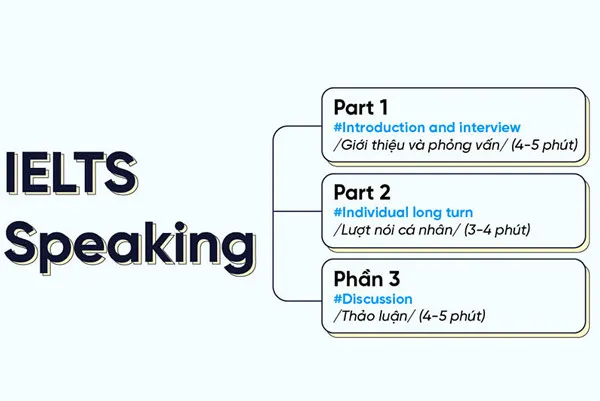
In the IELTS Speaking test, the “Friends” topic can appear in all three parts (Part 1, Part 2, and Part 3) with increasing levels of complexity. Examiners will assess your performance based on four criteria:

- Fluency and Coherence: Your ability to speak naturally and fluently, organize ideas logically, and use appropriate linking words and transition phrases.
- Lexical Resource: Your ability to use a wide range of vocabulary accurately and appropriately for the topic and context.
- Grammatical Range and Accuracy: Your ability to use a variety of grammatical structures correctly.
- Pronunciation: Your ability to speak clearly and intelligibly with natural intonation.
2. Common Question Types for the “Friends” Topic
Below are the types of questions you are likely to encounter in each part of the IELTS Speaking test regarding “Friends”:
a) Part 1: Introduction and Interview
Part 1 typically lasts 4–5 minutes and covers simple questions about yourself and familiar daily topics. For the “Friends” topic, you might be asked questions such as:
- Do you have many friends?
- Do you prefer to have one close friend or many friends?
- How often do you see your friends?
- What do you usually do with your friends?
- Are your friends mostly your age or different ages?
- Do you think it’s important to keep in contact with friends you knew as a child?
- What makes a friend into a best friend?
- Do you still have friends from your childhood?
- How do people make friends nowadays?
- Is it important to have friends from different countries?
Related article: Pausing & chunking in IELTS Speaking
b) Part 2: Individual Long Turn
Part 2 lasts 3–4 minutes, including 1 minute of preparation and 1–2 minutes to speak on a given topic. For the “Friends” topic, you might receive a cue card asking you to describe:
Describe a friend you have known for a long time.
You should say:
- Who this person is
- How you met
- What you usually do together
- And explain why you like this person.
Describe a friend who you think is a good leader.
You should say:
- Who this person is
- How you know this person
- What skills he/she has for leadership
- And explain why you think he/she is a good leader.
Describe a friend you enjoy talking with.
You should say:
- Who he/she is
- What you usually talk about
- How often you talk to each other
- And explain why you enjoy talking with him/her.
Describe a childhood friend of yours.
You should say:
- Who this person is
- How long you have known each other
- What you used to do together
- And explain what made you become friends
c) Part 3: Two-way Discussion
Part 3 lasts 4–5 minutes and involves a deeper discussion related to your Part 2 topic. Questions are more abstract and general, requiring you to express opinions, analyze, and argue. For the “Friends” topic, you might encounter questions like:
- What are the qualities of a good friend?
- What are the advantages and disadvantages of having close friends?
- Do you think friends are as important as family?
- How do friendships change as people get older?
- Is it important to have friends from different age groups? Why?
- How important is trust in a friendship?
- What are some reasons why people lose touch with their friends?
- How has technology affected friendships?
- Do you think it’s possible to be friends with someone you’ve never met in person?
- What is the role of social media in maintaining friendships?
- What are the differences between male and female friendships?
- How can people maintain long-distance friendships?
- Why are friends important in our lives?
- How does having international friends broaden our perspective?
Check out this related article: IELTS Speaking about friends
3. Useful Vocabulary for the “Friends” Topic
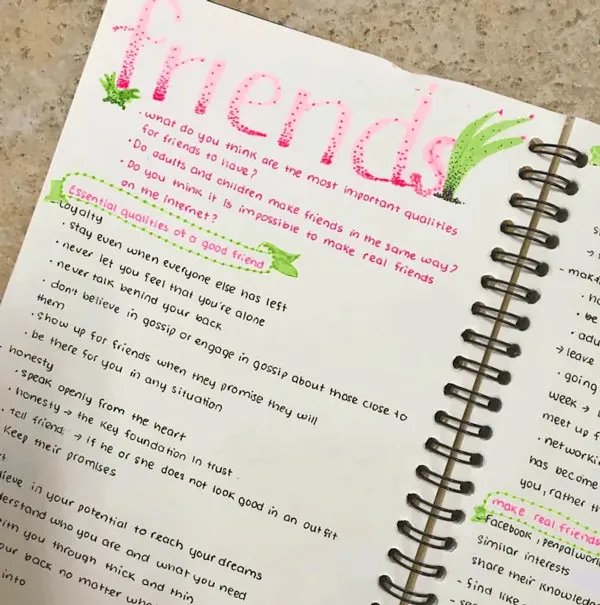
Using rich and precise vocabulary is key to achieving a high score in IELTS Speaking. Here is some useful vocabulary related to the “Friends” topic:
a) Adjectives to Describe Personality
| No. | Vocabulary | Pronunciation | Meaning | Example |
| 1 | Affable | /ˈæfəbl/ | Friendly, good-natured |
He’s such an affable guy; he gets along with everyone.
|
| 2 | Amiable | /ˈeɪmiəbl/ | Kind, pleasant |
She has an amiable personality, always smiling and friendly.
|
| 3 | Benevolent | /bəˈnevələnt/ | Kind, generous |
A benevolent friend is always willing to lend a helping hand.
|
| 4 | Charismatic | /ˌkærɪzˈmætɪk/ | Compelling, charming |
With his charismatic personality, he easily makes friends wherever he goes.
|
| 5 | Convivial | /kənˈvɪviəl/ | Cheerful, sociable |
She’s a convivial party guest, always engaging in lively conversations.
|
| 6 | Diligent | /ˈdɪlɪdʒənt/ | Hardworking, attentive |
Even in friendship, he’s very diligent in maintaining contact and showing he cares.
|
| 7 | Exuberant | /ɪɡˈzjuːbərənt/ | Energetic, enthusiastic |
Her exuberant personality is infectious; being around her always lifts my spirits.
|
| 8 | Insightful | /ˈɪnsaɪtfl/ | Perceptive, wise |
He gives insightful advice; he really understands people.
|
| 9 | Intuitive | /ɪnˈtjuːɪtɪv/ | Instinctive, perceptive |
She’s an intuitive friend, she always seems to know when something is wrong.
|
| 10 | Meticulous | /məˈtɪkjələs/ | Thorough, precise |
He’s meticulous in planning our outings, ensuring everything is perfect.
|
| 11 | Observant | /əbˈzɜːvənt/ | Attentive, sharp |
Being observant, she noticed I was upset even though I tried to hide it.
|
| 12 | Sociable | /ˈsəʊʃəbl/ | Outgoing, friendly |
He’s a very sociable person, he loves meeting new people.
|
| 13 | Witty | /ˈwɪti/ | Humorous, clever |
Her witty remarks always make our conversations entertaining.
|
| 14 | Aloof | /əˈluːf/ | Distant, reserved |
He may seem aloof at first, but he’s actually very kind once you get to know him.
|
| 15 | Cynical | /ˈsɪnɪkl/ | Skeptical, pessimistic |
After being betrayed by a friend, she became quite cynical about friendships.
|
| 16 | Impulsive | /ɪmˈpʌlsɪv/ | Rash, spontaneous |
His impulsive decisions sometimes cause problems in his relationships.
|
| 17 | Insolent | /ˈɪnsələnt/ | Disrespectful, rude |
Her insolent behavior towards her friends eventually drove them away.
|
| 18 | Pessimistic | /ˌpesɪˈmɪstɪk/ | Negative, gloomy |
He’s always so pessimistic; it’s hard to stay positive around him.
|
| 19 | Reckless | /ˈrekləs/ | Careless, rash |
His reckless actions put our friendship at risk.
|
| 20 | Vindictive | /vɪnˈdɪktɪv/ | Vengeful, spiteful |
After their argument, she spread vindictive rumors about him.
|
b) Vocabulary for Describing Relationships
- Close friend/Best friend/Bosom friend/Childhood friend
- Acquaintance
- Circle of friends
- To make friends with someone
- To get along/on well with someone
- To have a lot in common
- To keep in touch/contact
- To lose touch/contact
- To drift apart
- To fall out with someone
- To build a strong bond
- To stand by someone
- To rely on someone
- To confide in someone
- To look up to someone
- To have each other’s back
- To share a special bond
- To go through thick and thin together
- To be on the same wavelength
- Shoulder to cry on
c) Vocabulary for Describing Activities
- Hang out
- Catch up
- Grab a coffee/drink/bite to eat
- Go to the movies/cinema
- Have a picnic
- Play sports/games
- Go shopping
- Travel together
- Share hobbies
- Attend events
- Have a heart-to-heart talk
d) Useful Idioms and Phrases
- Birds of a feather flock together
- A friend in need is a friend indeed
- To hit it off (with someone)
- To see eye to eye (with someone) on something
- To be there for someone
- To have someone’s best interests at heart
- To get on like a house on fire
- To know someone inside out
4. Useful Sentence Structures
- Comparison: My best friend is more outgoing than I am. / He is not as talkative as my other friends.
- Emphasis: What I really like about him is his sense of humor. / The thing that makes her a great friend is her loyalty.
- Cause and Effect: Because of his kindness, he has many friends. / We became friends due to our shared interest in music. / As a result of our long friendship, we know each other very well.
- Purpose: We often hang out together in order to relax and have fun. / She called me so that we could catch up.
- Condition: If I need help, I know I can always count on him. / Unless we have a major argument, I think we’ll be friends for life.
- Concession: Although we have different personalities, we get along very well. / Despite living far apart, we still keep in touch regularly. / Even though we don’t see each other often, our bond remains strong.
- Hypothetical: Supposing you could only have one friend, what qualities would you look for?
- Giving Examples: For instance, we both enjoy hiking and camping. / For example, she was always there for me when I was going through a difficult time.
- Expressing Preferences: I’m really into… / I’m a big fan of… / I’m keen on… / I have a passion for…
- Frequency: We meet up every so
Chia sẻ:




 Khai giảng Khóa học Hè cực HOT.
No comments yet!