


Tóm Tắt Nội Dung Bài Viết
The art of tattooing in ancient societies was far more than a mere form of body ornamentation; it functioned as a sophisticated system expressing social hierarchy, genealogy, and the spiritual life force of a community. The reading passage Tattoo on Tikopia transports learners to a remote, isolated island in the Pacific that preserves highly ritualistic, primitive tattooing traditions. For IELTS candidates, this serves as a classic Passage 1 text to hone scanning skills using proper nouns and to practice navigating Cambridge’s strict word limit filters.
Reading Passage
[Paragraph A] There are still debates about the origins of Polynesian culture, but one thing we can ensure is that Polynesia is not a single tribe but a complex one. Polynesians which include Marquesans, Samoans, Niueans, Tongans, Cook Islanders, Hawaiians, Tahitians, and Maori, are genetically linked to indigenous peoples of parts of Southeast Asia. It’s a sub-region of Oceania, comprising of a large grouping of over 1,000 islands scattered over the central and southern Pacific Ocean, within a triangle that has New Zealand, Hawaii and Easter Island as its corners.
[Paragraph B] Polynesian history has fascinated the western world since Pacific cultures were first contacted by European explorers in the late 18th century. The small island of Tikopia, for many people – even for many Solomon Islanders – is so far away that it seems like a mythical land; a place like Narnia, that magical land in C. S. Lewis’s classic, ‘The Chronicles of Narnia.’ Maybe because of it – Tikopia, its people, and their cultures have long fascinated scholars, travelers, and casual observers. Like the pioneers’ Peter Dillion, Dumont D’Urville and John Coleridge Patterson who visit and write about the island in the 1800s, Raymond Firth is one of those people captured by the alluring attraction of Tikopia. As a result, he had made a number of trips to the island since the 1920s and recorded his experiences, observations, and reflections on Tikopia, its people, cultures and the changes that have occurred.
[Paragraph C] While engaged in the study of the kinship and religious life of the people of Tikopia, Firth made a few observations on their tattooing. Brief though these notes are they may be worth putting on record as an indication of the sociological setting of the practice in this primitive Polynesian community. The origin of the English word tattoo’ actually comes from the Tikopia word ‘tatau’. The word for tattoo marks, in general, is tau, and the operation of tattooing is known as ta tau, ta being the generic term for the act of striking.
[Paragraph D] The technique of tattooing was similar through Polynesia. Traditional tattoo artists create their indelible tattoos using pigment made from the candlenut or kukui nut. First, they burn the nut inside a bowl made of half a coconut shell. They then scrape out the soot and use a pestle to mix it with liquid. Bluing is sometimes added to counteract the reddish hue of the carbon-based pigment. It also makes the outline of the inscribed designs bolder on the dark skin of tattooing subjects.
[Paragraph E] For the instruments used when tattooing, specialists used a range of chisels made from albatross wing bone which were hafted onto a handle which was made from the heart wood of the bush and struck with a mallet. The tattooer began by sketching with charcoal a design on the supine subject, whose skin at that location was stretched taut by one or more apprentices. The tattooer then dipped the appropriate points – either a single one or a whole comb – into the ink (usually contained in a coconut-shell cup) and tapped it into the subject’s skin, holding the blade handle in one hand and tapping it with the other. The blood that usually trickled from the punctures was wiped away either by the tattooer or his apprentice, the latter having also inevitably painful – a test of fortitude that tattooers sought to shorten by working as fast as possible. In fact, tattoos nearly always festered and often led to sickness – and in some cases death.
[Paragraph F] In ancient Polynesian society, nearly everyone was tattooed. It was an integral part of ancient culture and was much more than a body ornament. Tattooing indicated ones’ genealogy and/or rank in society. It was a sign of wealth, of strength and of the ability to endure pain. Those who went without them were seen as persons of lower social status. As such, chiefs and warriors generally had the most elaborate tattoos. Tattooing was generally begun at adolescence, and would often not be completed for a number of years. Receiving tattoos constituted an important milestone between childhood and adulthood, and was accompanied by many rites and rituals. Apart from signaling status and rank, another reason for the practice in traditional times was to make a person more attractive to the opposite sex.
[Paragraph G] The male facial tattoo is generally divided into eight sections of the face. The center of the forehead designated a person’s general rank. The area around the brows designated his position. The area around the eyes and the nose designated his hapu, or sub-tribe rank. The area around the temples served to detail his signature. This signature was once memorized by tribal chiefs who used it when buying property, signing deeds, and officiating orders. The cheek area designated the nature of the person’s work. The chin area showed the person’s mana. Lastly, the jaw area designated a person’s birth status.
[Paragraph H] A person’s ancestry is indicated on each side of the face. The left side is generally the father’s side, and the right side was the mother’s. The manutahi design is worked on the men’s back. It consists of two vertical lines drawn down the spine, with short vertical lines between them. When a man had the manutahi on his back, he took pride in himself. At gatherings of the people he could stand forth in their midst and display his tattoo designs with songs. And rows of triangles design on the men’s chest indicate his bravery.
[Paragraph I] Tattoo was a way of delivering information about its owner. It’s also a traditional method to fetch spiritual power, protection and strength. The Polynesians use this as a sign of character, position and levels in a hierarchy. Polynesian people believe that a person’s mana, their spiritual power or life force, is displayed through their tattoo.
Questions
Questions 1 – 4
Do the following statements agree with the information given in Reading Passage? In boxes 1-4 on your answer sheet, write:
YES if the statement agrees with the view of the writer.
NO if the statement contradicts the view of the writer.
NOT GIVEN if it is impossible to say what the writer thinks about this.
1. Scientists like to do research in Tikopia because this tiny place is of great remoteness.
2. Firth was the first scholar to study on Tikopia.
3. Firth studied the culture differences on Tikopia as well as on some other islands of Pacific.
4. The English word ‘tattoo’ is evolved from the local language of the island.
Questions 5 – 9
Label the diagram below. Choose NO MORE THAN TWO WORDS from Reading Passage for each answer. Write your answers on boxes 5-9 in your answer sheet.
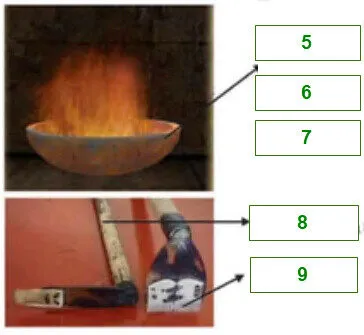
Questions 10 – 14
Complete the notes below. Choose NO MORE THAN TWO WORDS from the passage for each answer. Write your answers on boxes 10-14 in your answer sheet.
Significance of Tattoos based on Location
Location on the body: Significance
10. _______________ of male face: general rank.
11. _______________ of male face: prestige / mana.
Female’s right side of the face: 12. _______________.
Location on the body: Geometric patterns
Male back: 13. _______________ drawn down the spine.
Male chest: Rows of 14. _______________ indicating bravery.
Complete Reading Translation
[Paragraph A] Debates regarding the origins of Polynesian culture persist, but one certainty is that Polynesia is not a single tribe, but rather a complex collective. Polynesians—including Marquesans, Samoans, Niueans, Tongans, Cook Islanders, Hawaiians, Tahitians, and Māori—are genetically linked to the indigenous peoples of parts of Southeast Asia. This sub-region of Oceania comprises a vast grouping of over 1,000 islands scattered across the central and southern Pacific Ocean, enclosed within a triangle whose corners are marked by New Zealand, Hawaii, and Easter Island.
[Paragraph B] Polynesian history has captivated the Western world since European explorers first made contact with Pacific cultures in the late 18th century. To many people—even to many Solomon Islanders—the small island of Tikopia is so remote that it feels like a mythical realm, much like Narnia, the magical land in C. S. Lewis’s classic The Chronicles of Narnia. Perhaps because of this mystique, Tikopia, its people, and their cultures have long fascinated scholars, travelers, and casual observers alike. Much like early pioneers such as Peter Dillon, Dumont d’Urville, and John Coleridge Patterson who visited and wrote about the island in the 1800s, Raymond Firth was captivated by the magnetic allure of Tikopia. Consequently, he made numerous trips to the island starting in the 1920s, documenting his experiences, observations, and reflections on Tikopia, its inhabitants, their cultures, and the changes that unfolded over time.
[Paragraph C] While studying the kinship and religious life of the Tikopian people, Firth made several observations regarding their tattooing practices. Though brief, these notes are worth recording as an illustration of the sociological context of the practice within this primitive Polynesian community. The English word “tattoo” actually derives from the Tikopian word “tatau.” The general term for tattoo marks is “tau,” and the tattooing procedure is known as “ta tau,” with “ta” serving as the generic term for the act of striking.
[Paragraph D] Tattooing techniques were largely consistent across Polynesia. Traditional tattoo artists created indelible tattoos using pigments derived from the candlenut, or kukui nut. First, they burned the nut inside a bowl made from half a coconut shell. They then scraped out the soot and used a pestle to mix it with liquid. Bluing was occasionally added to counteract the reddish tint of the carbon-based pigment, which also made the outlines of the inscribed designs stand out more boldly against the dark skin of the subjects.
[Paragraph E] Regarding the instruments used for tattooing, specialists employed a range of chisels crafted from albatross wing bones, which were hafted onto handles made from bush heartwood and struck with wooden mallets. The tattooist began by sketching a design in charcoal onto the supine subject, whose skin at that area was pulled taut by one or more apprentices. The tattooist then dipped the appropriate points—either a single tip or an entire comb-like cluster—into ink (typically held in a coconut-shell cup) and tapped it into the subject’s skin, holding the handle in one hand while striking it with the other. The blood usually oozing from the punctures was wiped away by either the tattooist or his apprentice; the process was inevitably excruciating—a test of fortitude that tattooists sought to minimize by working as swiftly as possible. In reality, tattoos almost invariably festered, frequently leading to illness and, in some cases, death.
[Paragraph F] In ancient Polynesian society, nearly everyone was tattooed. Far more than mere body ornamentation, it was an integral part of ancient culture that denoted an individual’s genealogy and/or social rank. Tattoos served as markers of wealth, strength, and the capacity to endure pain. Those without tattoos were viewed as holding a lower social status; consequently, chiefs and warriors generally bore the most elaborate designs. Tattooing typically commenced during adolescence and often took several years to complete. Receiving tattoos constituted a vital milestone marking the transition from childhood to adulthood and was accompanied by numerous rites and rituals. Beyond signaling status and rank, another traditional motivation for the practice was to enhance one’s attractiveness to the opposite sex.
[Paragraph G] Male facial tattoos were generally divided into eight distinct sections. The center of the forehead denoted a person’s general rank. The area surrounding the brows indicated his position, while the region around the eyes and nose represented his hapu, or sub-tribe rank. The area around the temples served to detail his personal signature—a signature once memorized by tribal chiefs, who relied on it when acquiring property, executing deeds, and issuing decrees. The cheek area signified the nature of a person’s occupation, the chin area reflected his mana, and finally, the jaw area indicated his birth status.
[Paragraph H] An individual’s ancestry was mapped across the sides of the face, with the left side generally representing the paternal lineage and the right side the maternal. The manutahi design was worked onto men’s backs, consisting of two vertical lines drawn down the spine with shorter vertical lines interspersed between them. Wearing the manutahi instilled a deep sense of pride; during public gatherings, a man could step into the center of the crowd and display his tattoo designs accompanied by song. Additionally, rows of triangular designs across a man’s chest signified his bravery.
[Paragraph I] Tattoos served as a medium for conveying information about their bearers, as well as a traditional method for invoking spiritual power, protection, and strength. Polynesians utilized them as emblems of character, position, and hierarchical standing. They firmly believed that a person’s mana—their spiritual power or life force—was visibly manifested through their tattoos.
Academic Vocabulary Summary
-
Kinship (n): Blood relationship, family ties.
-
Indelible (adj): Permanent, unable to be removed or forgotten.
-
Soot (n): A powdery black carbon deposit resulting from incomplete combustion.
-
Supine (adj): Lying face upward (opposed to prone).
-
Fortitude (n): Courage and mental strength in facing adversity or pain.
-
Genealogy (n): A line of descent traced continuously from an ancestor.
-
Milestone (n): An important stage or event in development.
-
Mana (n): Spiritual power, prestige, or authority.
Detailed Answer Key: Tattoo on Tikopia
Questions 1 – 4: Yes / No / Not Given
1. Scientists like to do research in Tikopia because this tiny place is of great remoteness.
Answer: NOT GIVEN
Explanation:
Passage data: Paragraph B mentions that the island is very far away (so far away). The author then states: “Maybe because of it – Tikopia, its people, and their cultures have long fascinated scholars…”.
IELTS Strategy: The phrase “Maybe because of it” indicates that this is merely a speculative hypothesis by the writer; the text does not definitively confirm that remoteness is the direct cause driving scholars there. Furthermore, the statement specifies “Scientists,” whereas the text uses the broader term “scholars” (which encompasses writers, anthropologists, historians, etc.). Equating scholar = scientist is an unwarranted assumption, rendering the answer NOT GIVEN.
2. Firth was the first scholar to study on Tikopia.
Answer: NO
Explanation:
Passage data: Paragraph B lists: “Like the pioneers’ Peter Dillion, Dumont D’Urville and John Coleridge Patterson who visit and write about the island in the 1800s, Raymond Firth is…”.
<i data-path-to-node="33,1,1,1,1,1,0" data-index-in-node





 Khai giảng Khóa học Hè cực HOT.
No comments yet!