


Tóm Tắt Nội Dung Bài Viết
Henry Moore was more than just a sculptor; he was an architect of form, a visionary who redefined our perception of modern sculpture. From his humble beginnings in the small town of Castleford to his status as an internationally acclaimed icon, Moore’s life and career were a continuous journey of artistic discovery and breakthrough.
The IELTS reading passage “Henry Moore” not only provides deep insight into the evolution of his style but also guides IELTS learners through a challenging journey involving various question types. Let’s join ECE in “excavating” the layers of meaning within this text, exploring the influences that shaped this genius, and equipping ourselves with the strategies needed to conquer the exam effectively.
Reading Content & Questions
Henry Moore
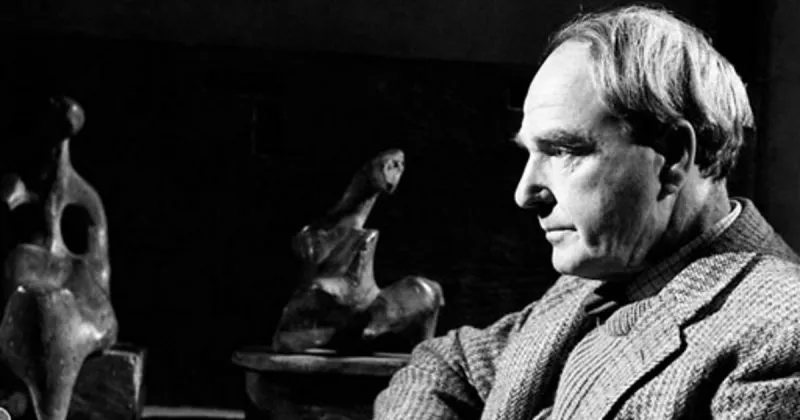
(A) Henry Moore was born in Castleford, a small town near Leeds in the north of England. He was the seventh child of Raymond Moore and his wife Mary Baker. He studied at Castleford Grammar School from 1909 to 1915, where his early interest in art was encouraged by his teacher Alice Gostick. After leaving school, Moore hoped to become a sculptor, but instead he complied with his father’s wish that he train as a schoolteacher (Q1). He had to abandon his training in 1917 when he was sent to France to fight in the First World War.
(B) After the war, Moore enrolled at the Leeds School of Art, where he studied for two years. In his first year, he spent most of his time drawing. Although he wanted to study sculpture, no teacher was appointed until his second year (Q2). At the end of that year, he passed the sculpture examination and was awarded a scholarship to the Royal College of Art in London. In September 1921, he moved to London and began three years of advanced study in sculpture.
(C) Alongside the instruction he received at the Royal College, Moore visited many of the London museums, particularly the British Museum, which had a wide-ranging collection of ancient sculpture. During these visits, he discovered the power and beauty of ancient Egyptian and African sculpture (Q4). As he became increasingly interested in these “primitive” forms of art, he turned away from European sculptural traditions.
(D) After graduating, Moore spent the first six months of 1925 travelling in France. When he visited the Trocadero Museum in Paris, he was impressed by a cast of a Mayan sculpture of the rain spirit (Q5). It was a male reclining figure with its knees drawn up together, and its head at a right angle to its body. Moore became fascinated with this stone sculpture, which he thought had a power and originality that no other stone sculpture possessed (Q6). He himself started carving a variety of subjects in stone, including depictions of reclining women, mother-and-child groups, and masks.
(E) Moore’s exceptional talent soon gained recognition, and in 1926 he started work as a sculpture instructor at the Royal College. In 1933, he became a member of a group of young artists called Unit One. The aim of the group was to convince the English public of the merits of the emerging international movement in modern art and architecture (Q7).
(F) Around this time, Moore moved away from the human figure to experiment with abstract shapes. In 1931, he held an exhibition at the Leicester Galleries in London. His work was enthusiastically welcomed by fellow sculptors, but the reviews in the press were extremely negative and turned Moore into a notorious figure. There were calls for his resignation from the Royal College (Q8), and the following year, when his contract expired, he left to start a sculpture department at the Chelsea School of Art in London.
(G) Throughout the 1930s, Moore did not show any inclination to please the British public. He became interested in the paintings of the Spanish artist Pablo Picasso, whose work inspired him to distort the human body in a radical way. At times, he seemed to abandon the human figure altogether. The pages of his sketchbooks from this period show his ideas for abstract sculptures that bore little resemblance to the human form.
(H) In 1940, during the Second World War, Moore stopped teaching at the Chelsea School and moved to a farmhouse about 20 miles north of London. A shortage of materials forced him to focus on drawing (Q9). He did numerous small sketches of Londoners, later turning these ideas into large coloured drawings in his studio. In 1942, he returned to Castleford to make a series of sketches of the miners who worked there (Q10). In 1944, Harlow, a town near London, offered Moore a commission for a sculpture depicting a family (Q11). The resulting work signifies a dramatic change in Moore’s style, away from the experimentation of the 1930s towards a more natural and humanistic subject matter. He did dozens of studies in clay for the sculpture, and these were cast in bronze and issued in editions of seven to nine copies each. In this way, Moore’s work became available to collectors all over the world (Q12). The boost to his income enabled him to take on ambitious projects and start working on the scale he felt his sculpture demanded (Q13).
(I) Critics who had begun to think that Moore had become less revolutionary were proven wrong by the appearance, in 1950, of the first of Moore’s series of standing figures in bronze, with their harsh and angular pierced forms and distinct impression of menace. Moore also varied his subject matter in the 1950s with such works as Warrior with Shield and Falling Warrior. These were rare examples of Moore’s use of the male figure and owe something to his visit to Greece in 1951, when he had the opportunity to study ancient works of art.
(J) In his final years, Moore created the Henry Moore Foundation to promote art appreciation and to display his work. Moore was the first modern English sculptor to achieve international critical acclaim and he is still regarded as one of the most important sculptors of the 20th century.
Question 1 – 7
Do the following statements agree with the information given in Reading Passage 1?
TRUE if the statement agrees with the information
FALSE if the statement contradicts the information
NOT GIVEN if there is no information on this
- On leaving school, Moore did what his father wanted him to do.
- Moore began studying sculpture in his first term at the Leeds School of Art.
- When Moore started at the Royal College of Art, its reputation for teaching sculpture was excellent.
- Moore became aware of ancient sculpture as a result of visiting London museums.
- The Trocadero Museum’s Mayan sculpture attracted a lot of public interest.
- Moore thought the Mayan sculpture was similar in certain respects to other stone sculptures.
- The artists who belonged to Unit One wanted to make modern art and architecture more popular.
Question 8 – 13
Complete the notes below. Choose ONE WORD ONLY from the passage for each answer.
8. 1930s: Moore is urged to offer his…………… and leave the Royal College.
9. 1940s: Moore turns to drawing because…………….for sculpting are not readily available.
10. 1940s: While visiting his hometown, Moore does some drawings of……………
11. 1940s: Moore is employed to produce a sculpture of a……………..
12. 1940s:…………..start to buy Moore’s work.
13. 1940s: Moore’s increased ….. makes it possible for him to do more ambitious sculptures.
Summary of the IELTS Reading passage on Henry Moore
The “Henry Moore” reading passage offers a detailed portrait of the life and career of one of the most significant sculptors of the 20th century.
- Early life and career path (Paragraph A): Born in Castleford, Henry Moore showed an early interest in art. Although he wanted to be a sculptor, he followed his father’s wishes to become a teacher, but later had to abandon this to serve in the First World War.
- Artistic education and discovery (Paragraphs B, C): After the war, he studied at the Leeds School of Art (spending his first year drawing due to the lack of a sculpture teacher). He later received a scholarship to the Royal College of Art in London. There, he discovered the beauty of ancient Egyptian and African sculpture in museums, gradually moving away from European traditions.
- Influence of Mayan sculpture (Paragraph D): During a 1925 trip to France, he was captivated by a Mayan rain spirit sculpture at the Trocadero Museum, admiring its power and originality. This influenced his own work, leading him to carve subjects like reclining women, mother-and-child groups, and masks.
- Teaching career and Unit One (Paragraph E): Moore’s talent was soon recognized, and he became a sculpture instructor at the Royal College. In 1933, he joined Unit One, a group aiming to promote modern art and architecture.
- Criticism and evolution (Paragraphs F, G): In 1931, his exhibition of abstract shapes faced harsh press criticism, leading him to leave the Royal College and establish a sculpture department at the Chelsea School of Art. Throughout the 1930s, he experimented constantly, influenced by Picasso, distorting or even abandoning the human form.
- Wartime and a return to humanism (Paragraph H): During the Second World War, material shortages forced him to focus on drawing. In 1944, he received a commission for a family sculpture in Harlow, marking a shift toward a more natural and humanistic style. This also boosted his income, allowing him to undertake larger-scale projects.
- Continued innovation and international stature (Paragraphs I, J): In the 1950s, he surprised critics with bronze standing figures and explored male figures after visiting Greece. In his later years, he established the Henry Moore Foundation and is recognized as the first modern English sculptor to achieve international acclaim and one of the most important artists of the 20th century.
Key Vocabulary from the Passage
- Comply with (verb): To act in accordance with a wish or command.
- Enrolled (verb): To officially register as a member of an institution.
- Wide-ranging (adj): Covering a large variety of subjects or items.
- Primitive forms of art (noun phrase): Early or ancient styles of artistic expression.
- Fascinated with (adjective phrase): Extremely interested in something.
- Originality (noun): The quality of being new and unique.
- Gained recognition (verb phrase): To be acknowledged or appreciated for one’s achievements.
- Merits (noun): The quality of being particularly good or worthy.
- Emerging international movement (noun phrase): A new, developing global trend.
- Notorious figure (noun phrase): A person well-known for some bad quality or deed.
- Resignation (noun): The act of formally giving up a job or position.
- Expired (verb): To come to an end.
- Distort (verb): To pull or twist out of shape.
- Bore little resemblance to (verb phrase): To look very different from something.
- Shortage of materials (noun phrase): A lack of necessary supplies.
- Commission (noun): An instruction or order for a piece of work to be produced.
- Humanistic subject matter (noun phrase): Themes focusing on human values and experiences.
- Boost to his income (noun phrase): A significant increase in earnings.
- Ambitious projects (noun phrase): Large-scale or challenging undertakings.
- Critical acclaim (noun phrase): Public praise from critics.
- Regarded as (verb phrase): To be considered in a particular way.
Answer Key & In-depth Analysis
1. TRUE
Evidence (Paragraph A): “…Moore hoped to become a sculptor, but instead he complied with his father’s wish that he train as a schoolteacher.”
Explanation: This statement perfectly matches the information in the text.
2. FALSE
Evidence (Paragraph B): “In his first year, he spent most of his time drawing. Although he wanted to study sculpture, no teacher was appointed until his second year.”
Explanation: Moore did not start studying sculpture in his first year; he had to wait until the second year when a teacher was appointed.
3. NOT GIVEN
Evidence (Paragraph B): “At the end of that year, he passed the sculpture examination and was awarded a scholarship to the Royal College of Art in London.”
Explanation: The text mentions he received a scholarship to the Royal College of Art, but it does not comment on the school’s reputation for teaching sculpture at that time.
4. TRUE
Evidence (Paragraph C): “During these visits [to London museums], he discovered the power and beauty of ancient Egyptian and African sculpture.”
Explanation: Visiting London museums directly led to his discovery of ancient sculpture.
5. NOT GIVEN
Evidence (Paragraph D): “When he visited the Trocadero Museum in Paris, he was impressed by a cast of a Mayan sculpture of the rain spirit.”
Explanation: The text states Moore was impressed, but it provides no information regarding whether the sculpture attracted “a lot of public interest.”
6. FALSE
Evidence (Paragraph D): “Moore became fascinated with this stone sculpture, which he thought had a power and originality that no other stone sculpture possessed.”
Explanation: Moore believed the Mayan sculpture was unique and possessed qualities no other sculpture had, meaning it was not “similar” to others.
7. TRUE
Evidence (Paragraph E): “The aim of the group [Unit One] was to convince the English public of the merits of the emerging international movement in modern art and architecture.”
Explanation: “Convincing the public of the merits” is synonymous with wanting to make it “more popular.”
8. resignation
Evidence (Paragraph F): “There were calls for his resignation from the Royal College.”
Explanation: The keyword “urged to offer his…” aligns with “calls for his resignation.”
9. materials
Evidence (Paragraph H): “A shortage of materials forced him to focus on drawing.”
Explanation: “Materials” is the correct word to explain why he shifted his focus to drawing.
10. miners
Evidence (Paragraph H): “In 1942, he returned to Castleford to make a series of sketches of the miners who worked there.”
Explanation: He sketched the “miners” in his hometown.
11. family
Evidence (Paragraph H): “In 1944, Harlow, a town near London, offered Moore a commission for a sculpture depicting a family.”
Explanation: He was commissioned to sculpt a “family.”
12. collectors
Evidence (Paragraph H): “In this way, Moore’s work became available to collectors all over the world.”
Explanation: “Collectors” are the people who began purchasing his work.
13. income
Evidence (Paragraph H): “The boost to his income enabled him to take on ambitious projects…”
Explanation: His increased “income” allowed him to pursue more ambitious work.
The “Henry Moore” passage is an excellent example of biographical IELTS Reading texts, which are typically organized chronologically and contain many proper nouns, locations, and figures. Mastering TRUE/FALSE/NOT GIVEN and Sentence Completion tasks is crucial for success.
Through this analysis, ECE hopes you not only gain knowledge about an artistic icon but also refine your skimming, scanning, and detail-oriented reading skills, helping you feel more confident when facing similar passages in the IELTS exam.
We invite you to explore more IELTS Reading practice samples curated by ECE:
What Lucy taught us IELTS Reading
Electroreception IELTS Reading




 Khai giảng Khóa học Hè cực HOT.
No comments yet!