
Tóm Tắt Nội Dung Bài Viết
With the sheer number of IELTS preparation materials available today, finding a reliable and effective resource can be a challenge. The “IELTS Essential Guide” from the British Council stands out as a comprehensive handbook, designed to guide candidates from their very first steps to confidently conquering the exam. The book provides not only essential knowledge but also the strategies and skills needed to succeed, making it an indispensable companion for students and professionals alike.
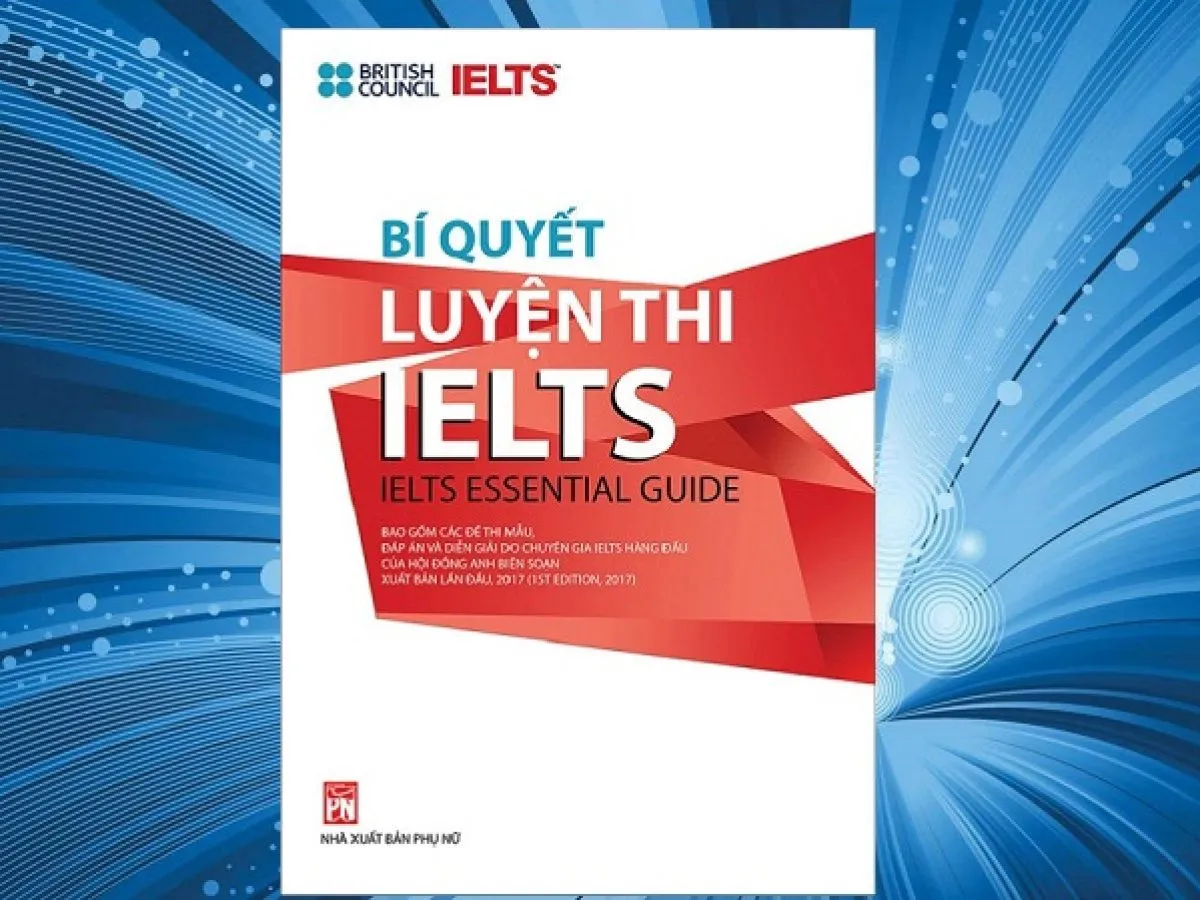
1. Overview of the IELTS Essential Guide
- Author/Publisher: The book is compiled by the British Council – one of the three co-owners of the IELTS test worldwide (alongside IDP Education and Cambridge Assessment English). This ensures the content is accurate, up-to-date, and closely aligned with the actual exam format. The material was developed by the British Council’s leading IELTS experts.
- Price: The price of the “IELTS Essential Guide” varies depending on the edition, distributor, and current pricing policies. Generally, it falls within an affordable range for most students (approximately 150,000 – 300,000 VND for printed copies in Vietnam, though imported original copies may cost more).
- Format: The book is typically published in a paperback format, making it easy to carry. It usually comes with audio CDs or a link to download audio files for the Listening sections, helping learners practice all four skills comprehensively.
2. Who is this book for?
The “IELTS Essential Guide” is designed to serve a wide range of learners, but it is particularly well-suited for the following groups:
- Beginners/Foundation learners: This book is an ideal starting point for those who have never taken the IELTS or are unfamiliar with the test structure and question types. It provides a clear and detailed overview of every section of the exam.
- Learners looking to strengthen their English foundation and general IELTS knowledge: Even if you have some prior knowledge, if your grammar or vocabulary base feels shaky, or if you want to systematize your basic IELTS knowledge, this book will help you build a solid foundation.
- Self-study candidates: With its clear layout, detailed instructions, and practice exercises with answer keys, the “IELTS Essential Guide” is an effective self-study resource that allows learners to track and evaluate their own progress.
- IELTS teachers or tutors: The book serves as a useful reference to systematize basic knowledge, teaching approaches for new students, and common question types.
- Candidates aiming for an average band score (5.0 – 6.5): The book provides enough knowledge and strategy for learners to confidently reach these band scores. For higher goals (7.0+), learners may need to supplement their studies with more advanced, specialized materials.
3. Detailed content review of the IELTS Essential Guide
The “IELTS Essential Guide” is more than just a theory book; it is a practical handbook that dives deep into each skill with a clear, scientific structure:
-
Overview of the IELTS exam:
- The book begins by explaining the structure of the four skills: Listening, Reading, Writing, and Speaking.
- It analyzes the differences between IELTS Academic and General Training, helping learners choose the right test format.
- It provides the scoring system and assessment criteria for each skill, helping learners understand exactly how they are graded.
-
Detailed analysis of each skill (Listening, Reading, Writing, Speaking):
For each skill, the book covers:
- Exam structure: Explaining the number of sections, number of questions, and time limits.
- Common question types: Listing and analyzing each type (e.g., Listening – Multiple Choice, Gap Filling; Reading – True/False/Not Given, Matching Headings; Writing Task 1 – Bar Chart, Line Graph; Writing Task 2 – Opinion Essay, Discussion Essay; Speaking Parts 1, 2, and 3).
- Test-taking strategies: Providing tips and techniques to approach each question type to maximize your score. For example: skimming and scanning techniques for Reading; note-taking for Listening; idea development for Writing; and expanding answers for Speaking.
- Practice exercises: After each theory and strategy section, the book provides practice exercises with detailed answer keys.
- Illustrative examples: Clear, specific examples help learners visualize how to apply theory to practice.
- Common mistakes and how to fix them: Highlighting frequent errors candidates make and offering advice on how to avoid them.
-
Grammar and vocabulary:
While not an intensive grammar textbook, the “IELTS Essential Guide” integrates key grammar points that frequently appear in IELTS and are necessary for boosting your score (e.g., tenses, clauses, complex and compound sentences). The book also suggests popular IELTS vocabulary topics and effective ways to learn new words.
-
Practice Tests:
The book typically includes one or two full practice tests that simulate the actual exam. These tests come with detailed answer keys and explanations for each question, helping learners assess their level and get used to exam-day time pressure.
4. Pros and cons of the book
Pros:
- High reliability: Compiled by the British Council – a co-owner of the IELTS exam – ensuring the most accurate, up-to-date, and trustworthy information regarding the test format and scoring criteria.
- Comprehensive: The book covers all four skills (Listening, Reading, Writing, Speaking) along with an overview of the exam and basic grammar and vocabulary.
- Clear and easy-to-understand structure: The content is presented logically, moving from general overviews to specific question types, accompanied by examples and exercises.
- Suitable for beginners and self-study: Step-by-step instructions and basic test-taking tips make it easy for learners to study effectively at home.
- Practical strategies: The book provides test-taking strategies derived from the experience of IELTS experts, helping learners optimize their scores.
- Official source material: The exercises and practice tests are designed according to British Council standards, helping learners get familiar with the question types and style of the real exam.
- Includes Audio/Transcripts: The book effectively supports Listening skill practice.
Cons:
- Not specialized for high band scores: While comprehensive, for candidates aiming for a band score of 7.0+, this book may not provide enough advanced knowledge or specialized tactics for difficult question types. They will need to supplement with other materials.
- No personalized Writing/Speaking feedback: Like all self-study books, it only provides sample answers and general guidance; it cannot offer personalized feedback on your specific writing or speaking. This requires learners to seek additional support (e.g., a teacher or mentor).
- Difficult for those with zero English foundation: Although suitable for “beginners,” if you have absolutely no English foundation, you may need a general grammar and vocabulary course before starting this book to get the most out of it.
5. How to study effectively with the “IELTS Essential Guide”
To maximize the potential of the “IELTS Essential Guide,” you should follow a scientific and consistent study plan:
-
Read the overview and understand the book’s structure: Start by reading the introduction to grasp the book’s goals, the IELTS exam structure, and how the book is organized. This gives you a big-picture view and helps guide your studies.
-
Create a personalized study plan:
- Check your level: If possible, take a full IELTS practice test first to identify your strengths and weaknesses.
- Break down your goals: Based on your target band score, break the book’s content into weekly or daily goals. For example: focus on Matching questions for Listening this week, and True/False/Not Given for Reading next week.
- Prioritize weak skills: Spend more time on the skills you find most challenging or that need the most improvement.
-
Study each skill in the order presented:
- Read theory and strategies: Read the theory, question type explanations, and strategies provided carefully. Take notes on key points.
- Review examples: Analyze the illustrative examples to understand how to apply the strategies.
- Practice exercises: Complete all exercises in the book seriously. Time yourself for each exercise to get used to exam pressure.
- Check and analyze mistakes: After finishing, check your answers, and most importantly, thoroughly analyze why you got a question wrong. Don’t just look at the correct answer and move on. This helps you learn from your mistakes so you don’t repeat them.
-
Make the most of the Audio/Transcripts for Listening:
- Do the Listening exercises as if you were in the real exam (listen only once or twice, depending on the question type).
- Check your answers.
- Listen again multiple times with transcripts: This is a crucial step. Read the transcripts while listening to understand every sentence, word, and grammar point. Underline words or phrases you couldn’t hear or didn’t understand.
- Shadowing: Practice speaking along with the audio to improve your pronunciation and intonation.
-
Practice Writing and Speaking with external support (if available):
- Even though the book provides sample answers, try to write and speak on your own first.
- If possible, find a teacher or an experienced person to grade your work and provide personalized feedback on your Writing and Speaking. This is the most effective way to improve these two skills.
- If self-studying, compare your work with the book’s samples, identify the differences, and learn from the structure, vocabulary, and ideas. Record your Speaking practice to evaluate yourself.
-
Take the practice tests:
- After studying the skills, take the full practice tests included in the book.
- Do the tests under conditions as close to the real exam as possible (timed, quiet space, no dictionary).
- Grade and analyze your results seriously to understand your current level and areas that need further improvement.
-
Review and supplement:
- Regularly review the vocabulary, grammar, and strategies you have learned.
- If you need to reach a higher band score, use the “IELTS Essential Guide” as a foundation and supplement it with more specialized materials for each skill or advanced practice test sets.
With persistence, the right study method, and support from an official resource like the “IELTS Essential Guide,” you can confidently achieve your IELTS goals.





 Khai giảng Khóa học Hè cực HOT.
Chưa có bình luận nào!