
Tóm Tắt Nội Dung Bài Viết
Creating a detailed study plan for the IELTS exam is a top priority for many candidates looking to boost their scores. Self-study requires persistence and effective learning methods to achieve the best possible results.
For those unable to attend prep courses at a center, self-study at home is a practical option. In this article, ECE Language Center will guide you through the journey from zero to a 7.0 band score and share how to prepare effectively as a beginner.
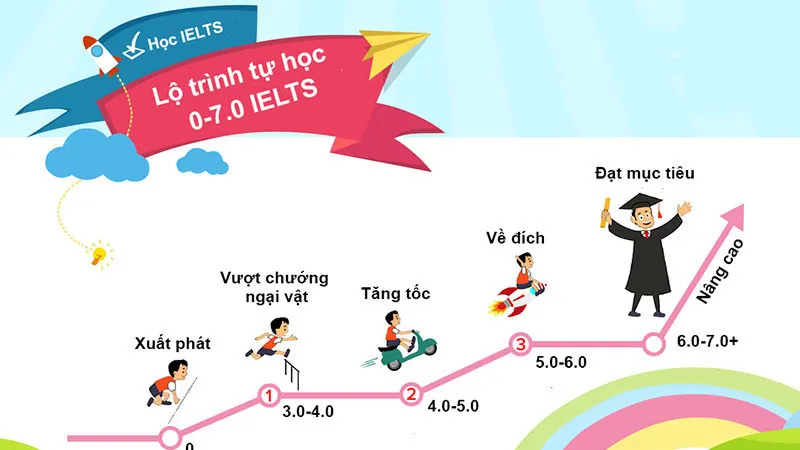
Requirements for an IELTS Band 7.0
To achieve an overall Band 7.0, you generally need to score at least 7.0 in each skill. Here are the criteria for each:
- Listening: You need to score 30-32/40. This means understanding the main ideas and specific details of long, complex talks, as well as grasping the context and the speaker’s purpose.
- Reading: You need to score 30-32/40. This involves reading and understanding complex texts, identifying main ideas and specific details, and recognizing the relationships between pieces of information.
- Speaking: You must speak fluently and coherently in both sentences and long paragraphs, using linking words effectively. You need a rich, flexible vocabulary, diverse expressions, the ability to discuss various topics, and a strong command of complex grammatical structures.
- Writing: Your essay must fully address all parts of the prompt. Ideas should be clear, well-developed, and supported by specific examples. Information and ideas must be organized logically, showing a clear progression throughout the piece. You should use vocabulary flexibly and accurately, including idiomatic language and less common lexical items.

Achieving a high score is no easy feat; it requires immense effort and determination throughout your study journey. However, you can confidently reach your goal with this free home-study plan compiled and shared by ECE.
This study plan is scientifically structured, including specific steps to help you effectively improve your Listening, Speaking, Reading, and Writing skills. The highlight of this method is that it is completely free, helping you save on study costs while still achieving high results.
What to prepare before building your study plan
Before you start, you need to determine your current English proficiency level. You can take free placement tests on websites like ielts.org, britishcouncil.org, or ielts-explorer.com. The results will show you where you stand and which skills need the most improvement.
Once you know your level, set your target score and create a suitable self-study plan. Your plan should include study hours, the skills you need to focus on, and the reference materials you intend to use.
Finally, determine how much time you can dedicate to studying each day or week. This will help you manage your time effectively and ensure you don’t miss any lessons.
IELTS roadmap for absolute beginners
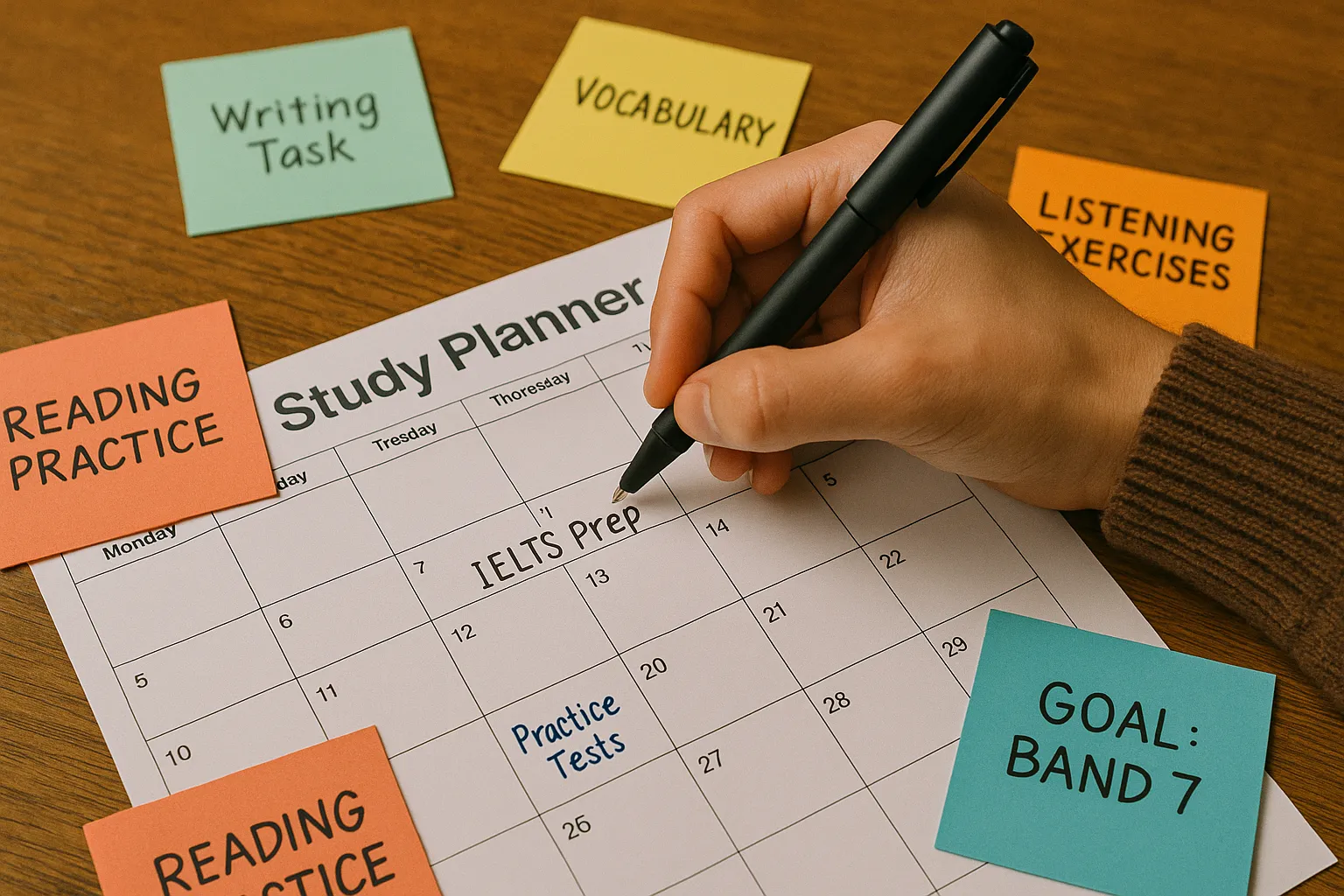
To reach a 7.0 in IELTS, you need a structured roadmap and consistent effort. Below is an IELTS roadmap from zero to 7.0, broken down into different stages.
Stage 1: Reaching Band 3.0 – 3 months, 48 study hours
Skills to improve:
Listening:
– Build foundational vocabulary through topic-based listening exercises.
– Practice basic listening comprehension at a slow pace, gradually increasing speed.
Speaking:
– Apply the vocabulary learned from listening exercises to your speaking practice.
– Apply grammar knowledge from your Grammar-Writing sessions to your speaking.
– Intensive pronunciation practice, focusing on correcting common errors influenced by Vietnamese.
Reading:
– Build foundational vocabulary through simple reading passages.
– Develop reading comprehension and logical thinking skills through guided questions.
Writing:
– Grammar: Review basic sentence components, master fundamental verb tenses, and apply them to Listening, Reading, and Speaking.
– Learn to form complete simple sentences.
– Practice basic paraphrasing.
Reference materials:
- Basic IELTS books like “English Grammar in Use” or “English Vocabulary in Use”
- Online exercises from sites like ielts-simon.com or ielts-explorer.com
- Basic pronunciation apps like ELSA or Duolingo

Stage 2: Reaching Band 4.0 – 9 weeks, 45 study hours
Skills to improve:
- Listening:
– Expand vocabulary through diverse topic-based listening. The audio is longer and more complex than in Stage 1 but remains manageable.
– Practice basic listening comprehension at a faster pace than the previous stage.
Speaking:
– Apply vocabulary from listening exercises to speaking.
– Apply grammar knowledge from Grammar-Writing sessions to speaking.
– Intensive pronunciation practice, focusing on correcting common errors.
Reading:
– Build vocabulary through simple, longer reading passages. Develop reading comprehension and logical thinking through guided questions.
Writing:
– Grammar: Learn to form compound sentences with increasing complexity.
– Distinguish between different types of compound sentences and their purposes.
– Practice basic paraphrasing.
Reference materials:
- Intermediate IELTS books like “Get Ready for IELTS”, “Mindset for IELTS”, or “Complete IELTS”
- Online exercises from sites like ielts-simon.com or ielts-explorer.com
See more: How is the IELTS score calculated?
Stage 3: Reaching Band 5.0 – 10 weeks, 60 study hours
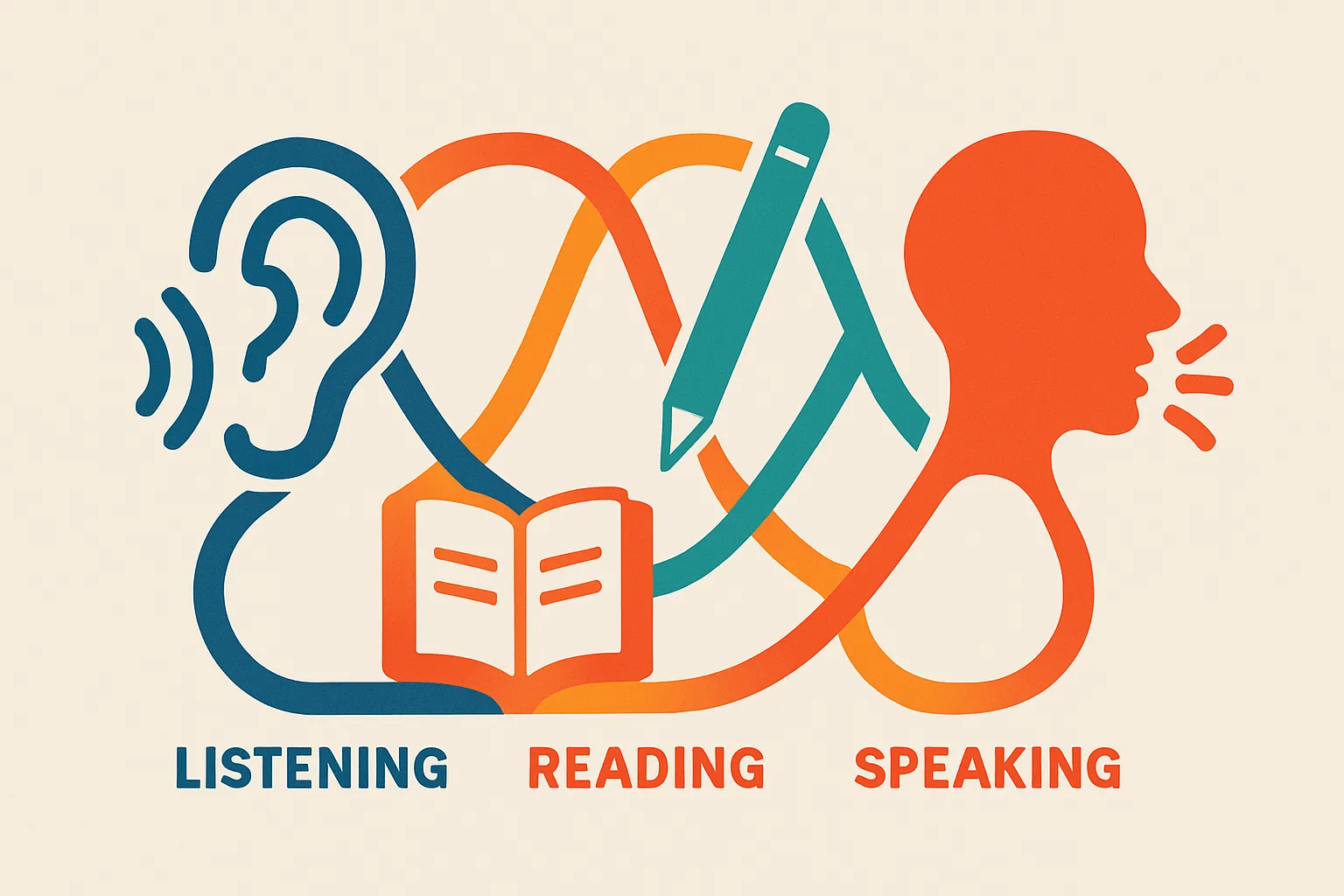
Skills to improve:
Listening:
– Expand vocabulary from listening passages.
– Practice through dictation.
– Paraphrasing practice.
– Get familiar with IELTS Listening question types (at an easier level).
Speaking:
– Expand vocabulary across 8 basic topics.
– Intensive pronunciation practice through shadowing.
– Get familiar with the Speaking test format and understand its purpose.
Reading:
– Expand vocabulary from reading passages.
– Develop skimming and scanning skills through simple texts.
– Paraphrasing practice.
– Get familiar with IELTS Reading question types (at an easier level).
Writing:
– Grammar: Review compound sentences.
– Paragraphs: Get familiar with different types of paragraphs and language styles; apply grammar knowledge to paragraph writing.
– Get familiar with Writing Task 1: structure and language for statistics.
Reference materials:
- Intermediate IELTS books like “The Official Cambridge Guide to IELTS” or “Cambridge IELTS”
- Online exercises from sites like ielts-simon.com or ielts-explorer.com
Stage 4: Reaching Band 6.0 – 10 weeks, 60 study hours
Skills to improve:
Listening:
– Enhance vocabulary from long, academic listening passages.
– Intensive paraphrasing practice.
– Intensive practice with IELTS Listening question types.
Speaking:
– Expand vocabulary across 8 advanced social topics.
– Intensive pronunciation practice through shadowing.
– Intensive practice for Speaking Parts 1, 2, and 3.
Reading:
– Enhance vocabulary from challenging reading passages.
– Intensive skimming and scanning practice with longer, more difficult texts.
– Intensive paraphrasing practice.
– Intensive practice with IELTS Reading question types (at an intermediate level).
Writing:
– Grammar: Review compound sentences.
– Essays: Learn to build a complete essay; understand the purpose of each section; learn to form arguments and use varied language.
– Writing Task 1: All types.
Reference materials:
- Advanced IELTS books like “Hackers IELTS” or “IELTS Trainer 1-2”
- Online exercises from ielts-simon.com or ielts-explorer.com
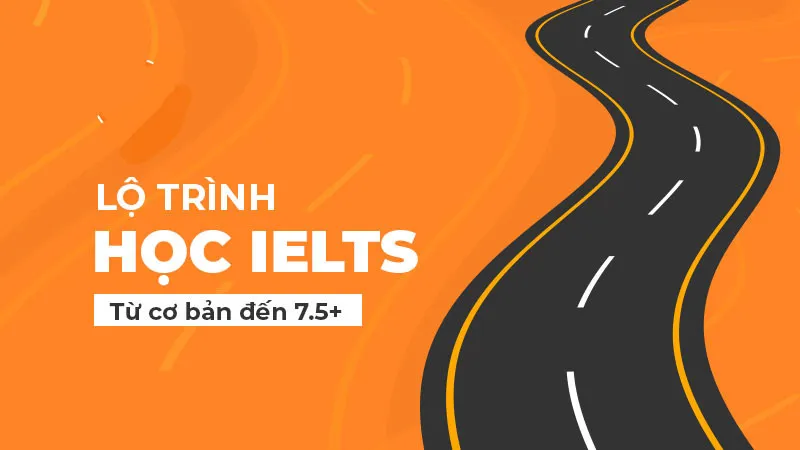
Stage 5: Reaching Band 6.5 – 10 weeks, 60 study hours
Skills to improve:
Listening:
– Enhance vocabulary from long, academic listening passages.
– Intensive paraphrasing practice.
– Intensive practice with IELTS Listening question types (at an intermediate level) under timed conditions.
Speaking:
– Expand vocabulary across 8 advanced social topics.
– Intensive pronunciation practice through shadowing.
– Intensive practice for Speaking Parts 1, 2, and 3.
Reading:
– Enhance vocabulary from challenging reading passages.
– Intensive skimming and scanning practice with longer, more difficult texts.
– Intensive paraphrasing practice.
– Intensive practice with IELTS Reading question types (at an advanced level) under timed conditions.
Writing:
– Intensive practice in logical thinking to form persuasive arguments.
– Expand academic vocabulary for essays.
– Writing Task 1: Understand prompt requirements and apply all learned knowledge.
– Practice writing under timed conditions.
Stage 6: Reaching Band 7.5+ – 10 to 16 weeks
1. Listening
– Goal: Understand fast-paced talks with complex vocabulary and topics; get familiar with various accents and pronunciations.
– Practice time: 1 hour/day, 5-6 days/week.
Weeks 1 – 4:
Skill analysis: Re-listen to difficult sections of Band 6.5 IELTS Listening tests and identify reasons for errors (speed, vocabulary, accent).
Practice sources:
– English podcasts (BBC, TED Talks, The Guardian).
– International news channels (BBC News, CNN) to practice British and American accents.
Techniques:
– Listen and note keywords.
– Listen to short segments and pause to identify difficult vocabulary and structures.
Weeks 5 – 8:
– Practice Tests: Do weekly IELTS Listening tests and analyze them in detail afterward.
– Increase difficulty: Listen to speakers with various accents (Australian, Canadian, Irish).
– Test strategies: Practice time management and quick answering.
Weeks 9 – 12:
– Intensive Paraphrasing: Focus on rephrasing information to handle paraphrased questions.
– Do full Listening practice tests weekly, aiming for 7.5+ before the exam.
2. Reading
– Goal: Quickly grasp and understand complex information and academic vocabulary.
– Practice time: 1 hour/day, 5-6 days/week.
Weeks 1 – 4:
– Expand vocabulary: Focus on academic vocabulary through IELTS books (Cambridge, Collins).
– Skimming and Scanning strategies: Practice reading quickly to find information.
– Reading sources: Academic articles, newspapers (The Economist, National Geographic, The Guardian).
Weeks 5 – 8:
– Practice Tests: Do weekly Reading tests. Pay attention to time management and error analysis.
– Improve reading speed: Use a stopwatch to push your pace.
Weeks 9 – 12:
– Focus on True/False/Not Given & Matching Headings: Intensive practice on the most difficult IELTS Reading question types.
– Do full Reading practice tests: Aim for 33-35 correct answers.
3. Writing
– Goal: Achieve at least Band 7 in Writing with precise language and tightly structured essays.
– Practice time: 1.5 hours/day, 5-6 days/week.
Weeks 1 – 4:
– Analyze current writing: Compare your essays with Band 7.5+ samples.
– Practice Task 2 first: Focus on building clear ideas for argument essays (advantages, disadvantages, opinion essays).
Vocabulary and grammar: Learn academic phrases and complex grammar (linking words, conditional sentences).
Weeks 5 – 8:
– Practice Task 1: Focus on describing charts and trends (within 150 words).
– Feedback from teachers or peers: Regularly get feedback and make corrections.
– Practice under timed conditions: Write both Task 1 and Task 2 within 60 minutes.
Weeks 9 – 12:
– Focus on coherence and cohesion: Use techniques to connect sentences and paragraphs.
– Weekly Writing practice: Aim to improve on small errors and maintain strict timing.
4. Speaking
– Goal: Develop fluent, logical, and natural speaking skills with clear pronunciation.
– Practice time: 30 minutes – 1 hour/day, 5-6 days/week.
Weeks 1 – 4:
– Analyze Band 6.5 Speaking: Review weaknesses in pronunciation, fluency, and vocabulary.
– Practice Topic Cards: Choose common IELTS Speaking Part 2 topics to practice extended speaking.
– Practice sources: Use speaking apps (Cambly, ELSA Speak) or find a speaking partner in IELTS study groups.
Weeks 5 – 8:
– Focus on Part 3: Discuss and analyze questions requiring opinions and arguments in depth.
– Vocabulary and phrases: Learn idioms and collocations to make your answers sound more natural.
Weeks 9 – 12:
– Speaking practice: Perform mock tests with teachers or friends to improve.
– Pronunciation and intonation: Focus on improving intonation to make your speech natural and easy to understand.
In summary, to reach your 7.5+ IELTS goal, you need to focus on these key factors:
- Track your progress: Take a full mock test every two weeks to monitor your score and identify weaknesses.
- Learn from feedback: Get feedback from teachers or reliable sources to improve continuously.
- Increase study time: Intensify your practice in the final 2-3 weeks before the exam by doing continuous practice tests.
Notes when applying this home-study plan

To make your IELTS self-study effective, keep the following points in mind:
When studying Reading
- Read plenty of English newspapers, magazines, and books to get familiar with common sentence structures and vocabulary.
- Practice reading comprehension by doing online exercises or using textbooks.
- Pay attention to new words and note them down for future review.
When studying Listening
- Listen to audio clips or watch English movies to get used to native speaker accents and speeds.
- Practice listening comprehension by doing online exercises or using textbooks.
- Pay attention to new words and note them down for future review.
When studying Speaking
In the IELTS Speaking test, your score is determined by four main criteria: Pronunciation, Fluency, Lexical Resources, and Grammar range and accuracy. How to study Speaking:
- Find a study partner with the same IELTS goal to practice speaking together.
- Practice speaking English daily by talking to friends or family.
- Practice common Speaking questions and topics using online exercises or textbooks.
When studying Writing
There are 4 criteria used to evaluate the IELTS Writing test: Task Achievement, Lexical Resource, Grammatical Range & Accuracy, and Coherence & Cohesion. How to study Writing:
- Read sample essays, analyze their structure, and master paraphrasing phrases to write simple essays.
- Practice writing by doing online exercises or using textbooks.
- Ask a study partner or someone with exam experience to correct your essays to improve your writing skills.
To achieve a 7.0 or even 7.5+ in the exam, you need a structured study plan and persistence. You also need to pay attention to the skills required at each stage and apply effective learning methods to reach your goal. We hope this article provides you with useful information and direction for your preparation. Good luck!




 Khai giảng Khóa học Hè cực HOT.
Chưa có bình luận nào!