


Tóm Tắt Nội Dung Bài Viết
“Flying Tortoises” is one of the most engaging IELTS Reading passages, telling the true story of a conservation project for the giant Galapagos tortoise. Beyond providing scientific insights into a unique species, the passage serves as a brilliant example of how conservation organizations leverage technology to tackle environmental challenges.
In this article, ECE English will provide an in-depth analysis of the passage, highlight key academic vocabulary, explain the questions in detail, and share effective strategies to help you master this type of reading task.
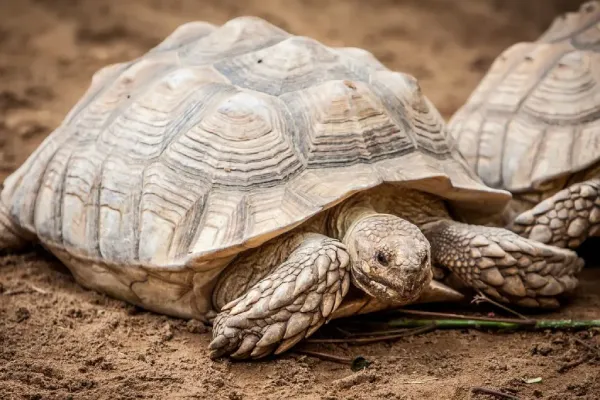
FLYING TORTOISES
An airborne reintroduction programme has helped conservationists take significant steps to protect the endangered Galapagos tortoise.
A
Forests of spiny cacti cover much of the uneven lava plains that separate the interior of the Galapagos island of Isabela from the Pacific Ocean. With its five distinct volcanoes, the island resembles a lunar landscape. Only the thick vegetation at the skirt of the often cloud-covered peak of Sierra Negra offers respite from the barren terrain below.
This inhospitable environment is home to the giant Galapagos tortoise. Some time after the Galapagos’s birth, around five million years ago, the islands were colonised by one or more tortoises from mainland South America. As these ancestral tortoises settled on the individual islands, the different populations adapted to their unique environments, giving rise to at least 14 different subspecies. Island life agreed with them. In the absence of significant predators, they grew to become the largest and longest-living tortoises on the planet, weighing more than 400 kilograms, occasionally exceeding 1.8 metres in length and living for more than a century.
B
Before human arrival, the archipelago’s tortoises numbered in the hundreds of thousands. From the 17th century onwards, pirates took a few on board for food, but the arrival of whaling ships in the 1790s saw this exploitation grow exponentially. Relatively immobile and capable of surviving for months without food or water, the tortoises were taken on board these ships to act as food supplies during long ocean passages. Sometimes, their bodies were processed into high-grade oil.
In total, an estimated 200,000 animals were taken from the archipelago before the 20th century. This historical exploitation was then exacerbated when settlers came to the islands. They hunted the tortoises and destroyed their habitat to clear land for agriculture. They also introduced alien species – ranging from cattle, pigs, goats, rats and dogs to plants and ants – that either prey on the eggs and young tortoises or damage or destroy their habitat.
C
Today, only 11 of the original subspecies survive and of these, several are highly endangered. In 1989, work began on a tortoise-breeding centre just outside the town of Puerto Villamil on Isabela, dedicated to protecting the island’s tortoise populations. The centre’s captive-breeding programme proved to be extremely successful, and it eventually had to deal with an overpopulation problem.
D
The problem was also a pressing one. Captive-bred tortoises can’t be reintroduced into the wild until they’re at least five years old and weigh at least 4.5 kilograms, at which point their size and weight – and their hardened shells – are sufficient to protect them from predators. But if people wait too long after that point, the tortoises eventually become too large to transport.
E
For years, repatriation efforts were carried out in small numbers, with the tortoises carried on the backs of men over weeks of long, treacherous hikes along narrow trails. But in November 2010, the environmentalist and Galapagos National Park liaison officer Godfrey Merlin, a visiting private motor yacht captain and a helicopter pilot gathered around a table in a small cafe in Puerto Ayora on the island of Santa Cruz to work out a more ambitious reintroduction. The aim was to use a helicopter to move 300 of the breeding centre’s tortoises to various locations close to Sierra Negra.
F
This unprecedented effort was made possible by the owners of the 67-metre yacht White Cloud, who provided the Galapagos National Park with free use of their helicopter and its experienced pilot, as well as the logistical support of the yacht, its captain and crew. Originally an air ambulance, the yacht’s helicopter has a rear double door and a large internal space that’s well suited for cargo, so a custom crate was designed to hold up to 33 tortoises with a total weight of about 150 kilograms. This weight, together with that of the fuel, pilot and four crew, approached the helicopter’s maximum payload, and there were times when it was clearly right on the edge of the helicopter’s capabilities. During a period of three days, a group of volunteers from the breeding centre worked around the clock to prepare the young tortoises for transport. Meanwhile, park wardens, dropped off ahead of time in remote locations, cleared landing sites within the thick brush, cacti and lava rocks.
G
Upon their release, the juvenile tortoises quickly spread out over their ancestral territory, investigating their new surroundings and feeding on the vegetation. Eventually, one tiny tortoise came across a fully grown giant who had been lumbering around the island for around a hundred years. The two stood side by side, a powerful symbol of the regeneration of an ancient species.
Questions 1-7
Reading Passage 230 has seven paragraphs, A-G.
Choose the correct heading for each paragraph from the list of headings below.
Write the correct number, i-viii, in boxes 1-7 on your answer sheet.
1. Paragraph A
2. Paragraph B
3. Paragraph C
4. Paragraph D
5. Paragraph E
6. Paragraph F
7. Paragraph G
List of Headings
i. The importance of getting the timing right
ii. Young meets old
iii. Developments to the disadvantage of tortoise
populations
iv. Planning a bigger idea
v. Tortoises populate the islands
vi. Carrying out a carefully prepared operation
vii. Looking for a home for the islands’ tortoises
viii. The start of the conservation project
Questions 8-13
Complete the notes below.
Choose ONE WORD ONLY from the passage for each answer.
Write your answers in boxes 8-13 on your answer sheet.
The decline of the Galapagos tortoise
• Originally from mainland South America
• Numbers on Galapagos islands increased, due to lack of predators
• 17th century: small numbers taken onto ships used by 8 ……………..
• 1790s: very large numbers taken onto whaling ships, kept for 9 …………….. and also used to produce 10 ……………..
• Hunted by 11 …………….. on islands
• Habitat destruction: for the establishment of agriculture and by various 12 …………….. not native to the islands, which also fed on baby tortoises and tortoises’ 13 ……………..
Overview of the Reading Passage
The “Flying Tortoises” passage is a true story presented in chronological order, detailing the journey of conserving the giant Galapagos tortoise.
- Paragraph A introduces the Galapagos archipelago, the unique habitat of the giant tortoise, and how they adapted and evolved from ancestors arriving from mainland South America.
- Paragraph B describes the severe decline in the tortoise population due to human activities, ranging from pirates and whaling ships to settlers and invasive species.
- Paragraph C discusses the establishment of a tortoise-breeding centre and the unexpected success of the project.
- Paragraph D addresses a dilemma: reintroducing young tortoises into the wild requires strict adherence to size and weight criteria to protect them from predators.
- Paragraph E introduces a breakthrough solution for transporting the tortoises: using a helicopter.
- Paragraph F provides a detailed account of how volunteers and support teams prepared for the helicopter transport mission, including the design of custom crates.
- Paragraph G recounts the moment the young tortoises were released into their natural habitat and the meaningful encounter between a juvenile and an elderly tortoise.
Key Vocabulary & Structures in “Flying Tortoises”
Mastering the following vocabulary and phrases will help you understand the passage more fluently.
Answer Key and Detailed Explanations
a. Task: Matching Headings
- Question 1 (Paragraph A):
Analysis: Paragraph A describes the initial habitat of the tortoises and how they adapted to “populate the islands.”
Answer: v. Tortoises populate the islands.
- Question 2 (Paragraph B):
Analysis: Paragraph B discusses negative factors affecting the tortoise population, such as “pirates,” “whaling ships,” “settlers,” and “alien species.”
Answer: iii. Developments to the disadvantage of tortoise populations.
- Question 3 (Paragraph C):
Analysis: Paragraph C introduces “a tortoise-breeding centre” and a “captive-breeding programme” to protect the tortoises.
Answer: viii. The start of the conservation project.
- Question 4 (Paragraph D):
Analysis: Paragraph D emphasizes the importance of “getting the timing right” for reintroduction—not too early (to avoid predation) and not too late (to avoid being too large).
Answer: i. The importance of getting the timing right.
- Question 5 (Paragraph E):
Analysis: Paragraph E describes a meeting to “work out a more ambitious reintroduction” plan.
Answer: iv. Planning a bigger idea.
- Question 6 (Paragraph F):
Analysis: Paragraph F details how volunteers and the flight crew prepared for the mission, from designing crates to clearing landing sites.
Answer: vi. Carrying out a carefully prepared operation.
- Question 7 (Paragraph G):
Analysis: Paragraph G recounts the meeting between a young tortoise and an old one that had been there “for around a hundred years.”
Answer: ii. Young meets old.
b. Task: Notes Completion
- Question 8: pirates
Location: Paragraph B states “pirates took a few on board for food.”
- Question 9: food
Location: Paragraph B states “the tortoises were taken on board these ships to act as food supplies.”
- Question 10: oil
Location: Paragraph B states “their bodies were processed into high-grade oil.”
- Question 11: settlers
Location: Paragraph B states “This historical exploitation was then exacerbated when settlers came to the islands. They hunted the tortoises…”
- Question 12: species
Location: Paragraph B states “…They also introduced alien species…”
- Question 13: eggs
Location: Paragraph B states “…that either prey on the eggs and young tortoises…”
Conclusion
The “Flying Tortoises” passage is an excellent example of an IELTS Reading task, testing not only your reading comprehension but also your ability to locate specific information. By mastering the content of each paragraph and applying skimming and scanning strategies, you can easily tackle various question types. We hope this analysis from ECE helps you better approach similar academic reading passages in your upcoming IELTS exam.





 Khai giảng Khóa học Hè cực HOT.
No comments yet!