
Tóm Tắt Nội Dung Bài Viết
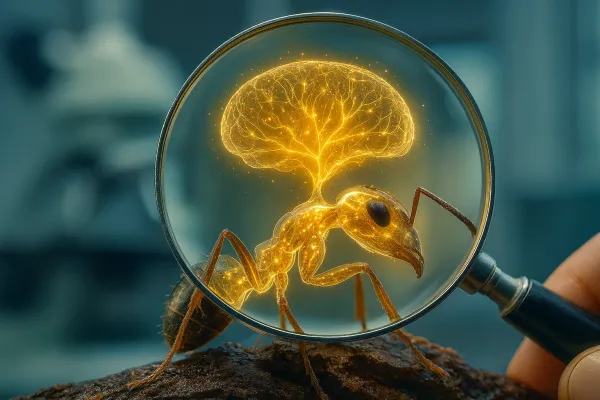
“The secret to eternal youth” has always been a fascinating topic for humanity. In the IELTS exam, this subject is explored through a scientific lens in the reading passage “The Secret of Staying Young,” which focuses on an ant species that seemingly never ages. This is an engaging yet challenging text, featuring gap-fill and True/False/Not Given questions. In this article, ECE English provides an in-depth analysis of the entire passage, offering detailed explanations for the answers and a summary of key vocabulary to help you master this type of reading task effectively.
Detailed Reading Passage and Questions: The Secret of Staying Young
Reading Content
(Paragraph 1) Pheidole dentata, a native ant of the south-eastern U.S., isn’t immortal. But scientists have found that it doesn’t seem to show any signs of aging. Old worker ants can do everything just as well as the youngsters, and their brains appear just as sharp. ‘We get a picture that these ants really don’t decline,’ says Ysabel Giraldo, who studies the ants for her doctoral thesis at Boston University.
(Paragraph 2) Such age-defying feats are rare in the animal kingdom. Naked mole rats can live for almost 30 years and stay fit for nearly their entire lives. They can still reproduce even when old, and they never get cancer. But the vast majority of animals deteriorate with age just like people do. Like the naked mole rat, ants are social creatures that usually live in highly organised colonies. ‘It’s this social complexity that makes P. dentata useful for studying aging in people,’ says Giraldo, now at the California Institute of Technology. Humans are also highly social, a trait that has been connected to healthier aging. By contrast, most animal studies of aging use mice, worms or fruit flies, which all lead much more isolated lives.
(Paragraph 3) In the lab, P. dentata worker ants typically live for around 140 days. Giraldo focused on ants at four age ranges: 20 to 22 days, 45 to 47 days, 95 to 97 days and 120 to 122 days. Unlike all previous studies, which only estimated how old the ants were, her work tracked the ants from the time the pupae became adults, so she knew their exact ages. Then she put them through a range of tests.
(Paragraph 4) Giraldo watched how well the ants took care of the young of the colony… She compared how well 20-day-old and 95-day-old ants followed the telltale scent that the insects usually leave to mark a trail to food. She tested how ants responded to light… And she experimented with how ants react to live prey: a tethered fruit fly. Giraldo expected the older ants to perform poorly in all these tasks. But the elderly insects were all good caretakers and trail-followers… And when it came to reacting to prey, the older ants attacked the poor fruit fly just as aggressively as the young ones did…
(Paragraph 5) Then Giraldo compared the brains of 20-day-old and 95-day-old ants… She saw no major differences with age, nor was there any difference in the location of the dying cells… Ants and other insects have structures in their brains called mushroom bodies, which are important for processing information, learning and memory. She also wanted to see if aging affects the density of synaptic complexes within these structures – regions where neurons come together. Again, the answer was no. What was more, the old ants didn’t experience any drop in the levels of either serotonin or dopamine – brain chemicals whose decline often coincides with aging. In humans, for example, a decrease in serotonin has been linked to Alzheimer’s disease.
(Paragraph 6) ‘This is the first time anyone has looked at both behavioral and neural changes in these ants so thoroughly,’ says Giraldo… Scientists have looked at some similar aspects in bees, but the results of recent bee studies were mixed – some studies showed age-related declines, which biologists call senescence, and others didn’t. ‘For now, the study raises more questions than it answers,’ Giraldo says, ‘including how P. dentata stays in such good shape.’
(Paragraph 7) Also, if the ants don’t deteriorate with age, why do they die at all? Out in the wild, the ants probably don’t live for a full 140 days thanks to predators, disease and just being in an environment that’s much harsher than the comforts of the lab. ‘The lucky ants that do live into old age may suffer a steep decline just before dying,’ Giraldo says, but she can’t say for sure because her study wasn’t designed to follow an ant’s final moments.
(Paragraph 8) ‘It will be important to extend these findings to other species of social insects,’ says Gene E. Robinson, an entomologist at the University of Illinois at Urbana-Champaign. This ant might be unique, or it might represent a broader pattern among other social bugs with possible clues to the science of aging in larger animals. Either way, it seems that for these ants, age really doesn’t matter.
Questions
Questions 1-8 (Note Completion) Complete the notes below. Choose ONE WORD ONLY from the passage for each answer.
Ysabel Giraldo’s research Focused on a total of 1………………………….. different age groups of ants, analyzing:
Behaviour:
- how well ants looked after their 2…………………………..
- their ability to locate 3………………………… using a scent trail
- the effect that 4………………………….. had on them
- how 5…………………………. they attacked prey
Brains:
- comparison between age and the 6…………………………… of dying cells in the brains of ants
- condition of synaptic complexes (areas in which 7…………………………… meet) in the brain’s ‘mushroom bodies’
- level of two 8………………………….. in the brain associated with ageing
Questions 9-13 (True/False/Not Given) Do the following statements agree with the information given in Reading Passage?
9. Pheidole dentata ants are the only known animals which remain active for almost their whole lives.
10. Ysabel Giraldo was the first person to study Pheidole dentata ants using precise data about the insects’ ages.
11. The ants in Giraldo’s experiments behaved as she had predicted that they would.
12. The recent studies of bees used different methods of measuring age-related decline.
13. Pheidole dentata ants kept in laboratory conditions tend to live longer lives.
Summary of the Reading Passage
The passage introduces the research of scientist Ysabel Giraldo on the ant species Pheidole dentata, a rare creature that shows no signs of aging. Unlike other animals, elderly worker ants remain as active and sharp-minded as their younger counterparts. Giraldo conducted behavioral tests (caring for the young, foraging, reacting to light and prey) and brain analyses (dying cells, synaptic density, chemical levels) across groups of ants of precise ages. The surprising result was that there was no decline in the older ants. This research raises new questions about the aging process and suggests that this ant species could be a useful model for studying human aging due to their complex social structure.
Key Vocabulary and Structures
- Age-defying feats (noun phrase): Achievements that challenge or withstand the effects of aging.
- Deteriorate with age (verb phrase): To decline or weaken as one gets older.
- Social complexity (noun phrase): The intricate nature of social structures.
- Telltale scent (noun phrase): A characteristic or revealing smell.
- Counterparts (noun): People or things that have the same function or characteristics as another (in this context, the younger ants).
- Synaptic complexes (noun phrase): Structures where neurons connect and communicate.
- Coincides with (verb): To happen at the same time as something else.
- Senescence (noun): The biological process of aging.
Answer Key and Detailed Explanations
Questions 1-8
1. four
- Keywords: different age groups.
- Evidence (Paragraph 3): “Giraldo focused on ants at four age ranges…”
- Explanation: The text explicitly lists the four age groups Giraldo studied.
2. young
- Keywords: looked after their.
- Evidence (Paragraph 4): “Giraldo watched how well the ants took care of the young of the colony…”
- Explanation: The question paraphrases “took care of”; the answer is the object being cared for, which is the “young.”
3. food
- Keywords: locate, using a scent trail.
- Evidence (Paragraph 4): “…followed the telltale scent that the insects usually leave to mark a trail to food.”
- Explanation: Ants follow scent trails to locate “food.”
4. light
- Keywords: effect that … had on them.
- Evidence (Paragraph 4): “She tested how ants responded to light…”
- Explanation: Giraldo tested the ants’ response to “light.”
5. aggressively
- Keywords: how … they attacked prey.
- Evidence (Paragraph 4): “…the older ants attacked the poor fruit fly just as aggressively as the young ones did…”
- Explanation: The question asks for an adverb describing how they attacked, and “aggressively” is the term used in the text.
6. location
- Keywords: comparison, age, dying cells.
- Evidence (Paragraph 5): “…nor was there any difference in the location of the dying cells…”
- Explanation: The study compared and found no difference in the “location” of dying cells.
7. neurons
- Keywords: areas in which … meet.
- Evidence (Paragraph 5): “…regions where neurons come together.”
- Explanation: Synaptic complexes are regions where “neurons” meet.
8. chemicals
- Keywords: level of two … in the brain.
- Evidence (Paragraph 5): “…drop in the levels of either serotonin or dopamine – brain chemicals whose decline often coincides with aging.”
- Explanation: Serotonin and dopamine are defined as “chemicals” in the brain.
Questions 9-13
9. FALSE
- Keywords: only known animals.
- Evidence (Paragraph 2): “Naked mole rats can live for almost 30 years and stay fit for nearly their entire lives.”
- Explanation: The text mentions that naked mole rats also maintain fitness throughout their lives. Therefore, claiming P. dentata is the “only” such animal is incorrect.
10. TRUE
- Keywords: first person, precise data, exact ages.
- Evidence (Paragraph 3): “Unlike all previous studies, which only estimated how old the ants were… so she knew their exact ages.”
- Explanation: The text confirms that unlike previous studies (which only estimated), Giraldo’s work tracked the ants to know their exact ages, implying she was the first to do so.
11. FALSE
- Keywords: behaved as she had predicted.
- Evidence (Paragraph 4): “Giraldo expected the older ants to perform poorly in all these tasks. But the elderly insects were all good caretakers…”
- Explanation: Giraldo “expected” them to perform poorly, but they actually performed well. This contradicts her prediction.
12. NOT GIVEN
- Keywords: bees, different methods.
- Evidence (Paragraph 6): “…the results of recent bee studies were mixed – some studies showed age-related declines… and others didn’t.”
- Explanation: The text states the results were “mixed,” but it provides no information regarding whether the studies used different “methods.”
13. TRUE
- Keywords: laboratory conditions, live longer.
- Evidence (Paragraph 7): “Out in the wild, the ants probably don’t live for a full 140 days… much harsher than the comforts of the lab.”
- Explanation: The lifespan in the lab is about 140 days. The text notes that in the wild, they likely don’t live that long, meaning they tend to live longer in laboratory conditions.
Conclusion
Through analyzing “The Secret of Staying Young,” we have practiced two common IELTS Reading question types: Note Completion and True/False/Not Given. The most important lesson is to pay close attention to limiting or absolute words like “only” or “all,” as they are often the key to determining whether a statement is True or False. Hopefully, these detailed explanations provide you with valuable experience to apply in your actual exam.





 Khai giảng Khóa học Hè cực HOT.
Chưa có bình luận nào!