


Tóm Tắt Nội Dung Bài Viết
Idioms, with their metaphorical meanings and unique nuances, are essential elements that make your IELTS Speaking performance more impressive and memorable. Using idioms not only demonstrates a rich vocabulary but also showcases a natural grasp of the language, much like a native speaker.
However, to use idioms effectively, you need to understand how to learn them, their specific contexts, and practice regularly. In this article, we will explore optimal methods for learning idioms and key tips to boost your Speaking score.
What are Idioms?

Idioms are phrases or expressions whose meaning cannot be deduced from the individual words. Instead, they must be understood figuratively or through specific cultural usage within that language. Translating an idiom word-for-word usually fails to convey the correct meaning; therefore, learners must grasp the overall sense of the phrase within its specific context.
Characteristics of Idioms
- Non-literal meaning: The meaning of an idiom cannot be understood by looking at the literal definitions of its separate words. Instead, it carries a meaning that native speakers easily understand based on cultural experience and communication.
For example, the phrase “spill the beans” does not mean you actually dropped a container of beans; it means to reveal a secret or information that was meant to be kept private.
- Figurative nature: Many idioms are highly visual and relate to specific imagery, evoking associations in the listener’s mind. This makes idioms vivid and easy to remember.
Example: “A blessing in disguise” refers to something that initially seems bad but ultimately results in something good.
- Reflecting linguistic culture: Idioms are not just random phrases; they reflect the cultural characteristics, customs, and habits of native speakers. Understanding idioms helps learners gain deeper insight into the society and culture of that language.
For example, in English, “a piece of cake” means something is very easy, whereas other cultures might have different expressions to convey the same sentiment using different cultural references.
The Importance of Idioms in IELTS Speaking

IELTS Speaking Scoring Criteria
The IELTS Speaking test evaluates candidates based on four main criteria:
- Fluency and Coherence: This is the ability to maintain a logical, continuous, and clear conversation. Candidates need to show confidence, avoiding excessive hesitation or fragmented ideas.
- Lexical Resource: This criterion assesses the range and flexibility of vocabulary, including idioms, phrasal verbs, and collocations. Using idioms is a key factor in achieving a high score here, as they demonstrate a natural and vivid command of the language.
- Grammatical Range and Accuracy: This evaluates the ability to use correct and diverse grammatical structures. Candidates should use a variety of sentence structures and tenses to express ideas clearly and accurately.
- Pronunciation: This is the ability to speak clearly and understandably while using correct intonation. Accurate pronunciation helps candidates communicate effectively and convey their ideas more easily.
Why Idioms Matter in IELTS Speaking
1. Boosting Lexical Resource Scores
Using idioms in the Speaking test allows candidates to showcase a sophisticated vocabulary, which is a key requirement for higher bands in Lexical Resource. Idioms make your speech sound more natural and engaging, proving that you understand how native speakers communicate in specific situations rather than just relying on basic textbook vocabulary.
For example, using an idiom like “break the ice” when discussing meeting new people shows that you understand the nuance of social interactions beyond simple word choices.
2. Enhancing Coherence and Natural Flow
One of the strengths of idioms is their ability to make your speech smoother and more relatable, reducing awkward pauses. When used correctly, idioms make the conversation more interesting and demonstrate your communicative flexibility. This contributes to a higher score in Fluency and Coherence, as you can sustain the conversation effortlessly.
Example: Saying “I’m on cloud nine” to describe a feeling of extreme happiness is not only clear but also shows linguistic flexibility, making you sound more natural to the examiner.
3. Making a Strong Impression on the Examiner
Examiners are impressed by candidates who can use idioms accurately and spontaneously. It signals a high level of English proficiency, showing you can express complex ideas through diverse and vivid means. This demonstrates a deep understanding of the language and culture—qualities examiners look for in high-band candidates.
4. Important Considerations
While idioms can boost your score, they are only effective when used in the right context. Overusing idioms or using them incorrectly can make your speech sound forced or lead to misunderstandings. If you are unsure about the meaning or usage of a specific idiom, it is better to avoid it.
For instance, using “kick the bucket” (to die) in a situation unrelated to death would be confusing and could lower your score in Fluency and Coherence.
Related article: Effective methods for learning IELTS vocabulary
Common Idioms by Topic for IELTS Speaking
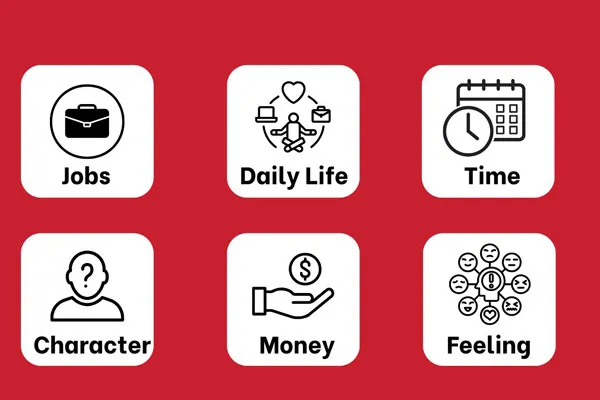
1. Idioms Related to Work and Effort
- Work flat out: To work as hard or as fast as possible.
Example: The team worked flat out to prepare for the big event next month.
- Go the extra mile: To make a special effort to achieve something.
Example: The restaurant went the extra mile by offering free dessert to customers during the holiday season.
- Keep your nose to the grindstone: To work hard and continuously for a long period.
Example: Sarah kept her nose to the grindstone, studying late into the night for the final exams.
- A drop in the ocean: A very small amount compared to what is needed or expected.
Example: A single volunteer’s effort is just a drop in the ocean when compared to the overall community needs.
- Bump into: To meet someone unexpectedly.
Example: We bumped into our neighbors at the park during the weekend.
2. Idioms Related to Emotions and States
- Bent out of shape: To become very angry, upset, or annoyed.
Example: Mary was bent out of shape when she found out her report had been ignored.
- In high spirits: To be in a very good mood or feeling cheerful.
Example: They were in high spirits after winning the championship game.
- Keep your chin up: To stay positive in a difficult situation; often used to encourage someone.
Example: Don’t worry about the setbacks, keep your chin up and keep moving forward.
- Up in the air: Used to describe a situation, plan, or decision that is still uncertain or undecided.
Example: The decision about the new policy is still up in the air.
3. Idioms Related to Situations and Results
- A blessing in disguise: Something that seems bad at first but results in something good later on.
Example: Breaking my leg was a blessing in disguise; it gave me time to focus on my writing.
- A piece of cake: Something that is very easy to do.
Example: The test was a piece of cake; I didn’t even need to study much for it.
- Get off the ground: To start successfully or begin to make progress. Often used for projects, businesses, or ideas.
Example: The new community project is still struggling to get off the ground due to lack of funding.
- Hit the books: To study hard or begin studying seriously.
Example: Before the big exam, it’s important to hit the books and revise all the key concepts.
- Now and then: Occasionally or from time to time.
Example: We should have a movie night now and then to unwind.
4. Idioms Related to Change and Decisions
- Back to the drawing board: To start over because a previous attempt failed.
Example: After the proposal was rejected, it was back to the drawing board to come up with a better plan.
- Show your hand: To reveal your intentions, plans, or secrets, especially in a competitive situation.
Example: The politician was forced to show his hand during the debate and clarify his position on the issue.
- Leave well enough alone: To stop changing something that is already satisfactory to avoid making it worse.
Example: The design of the website works perfectly; let’s leave well enough alone.
- Fingers crossed: To hope for a good outcome or good luck. Often accompanied by the physical gesture of crossing fingers.
Example: We’re waiting for the test results. Fingers crossed that everything is okay.
Read more: Com IELTS Colloc by Topic
5. Idioms Related to Ease and Preparation
- As easy as pie: Very easy or simple to do; requiring little effort.
Example: The test was as easy as pie; I finished it in no time.
- A mile a minute: Very quickly. Often used to describe how fast someone talks or how fast things are happening.
Example: She was so excited that she was talking a mile a minute about her new job.
- Get the ball rolling: To start an activity or process; to get things started.
Example: Let’s get the ball rolling on this project by setting up a meeting next week.
- Touch base: To briefly contact or connect with someone to check in or update them.
Example: Let’s touch base after the meeting to discuss the next steps.
6. Idioms Related to Help and Support
- Give (lend) somebody a hand: To help someone with something.
Example: She gave me a hand with organizing the documents.
- A hot potato: A controversial or difficult issue that people want to avoid.
Example: The issue of abortion is a political hot potato in many countries.
- In the same boat: To be in the same difficult situation as someone else.
Example: Everyone in the team is in the same boat regarding the tight deadlines.
- Rack one’s brain: To think very hard or try desperately to remember something or find a solution.
Example: He racked his brain for hours trying to come up with a solution.
7. Idioms Related to Judgment and Awareness
- Read my/your/his mind: To know what someone else is thinking without them saying it.
Example: She read my mind and brought me a cup of coffee just when I needed it.
- Know something inside out: To know something thoroughly or be very familiar with it.
Example: He knows the rules of the game inside out, which is why he’s such a great coach.
- Get a kick out of: To enjoy something very much or find it exciting.
Example: I get a kick out of watching movies from the 80s.
- A penny for your thoughts: A way of asking someone what they are thinking about, especially if they look pensive.
Example: You look deep in thought—a penny for your thoughts?
8. Idioms Related to Disagreement and Teamwork
- Sit on the fence: To remain neutral or undecided in a conflict or when a choice needs to be made.
Example: It’s time to stop sitting on the fence and choose a side.
- Against the clock: To work very fast to finish something before a deadline.
Example: The team worked against the clock to get the project finished on time.
- A breath of fresh air: Someone or something new and refreshing that makes a situation better.
Example: After months of bad news, her optimism was a breath of fresh air.
- By the book: To do something exactly according to the rules or official procedures.
Example: The new manager insists on doing everything by the book.
9. Idioms Related to Difficulty and Challenges
- Far-fetched: Unlikely to be true or difficult to believe.
Example: Her explanation of the event seemed far-fetched and unbelievable.
- Run of the mill: Ordinary or average; nothing special.
Example: The concert was good, but the performance was a bit run of the mill.
- Under the weather: Feeling slightly ill or not quite yourself.
Example: He’s been under the weather all week and had to miss work.
- Beating around the bush: Avoiding the main topic or not speaking directly about an issue.
Example: I wish she would stop beating around the bush and get to the point.
ECE recommends: Cambridge Vocabulary for IELTS Advanced: A-Z Review and Download Link
Methods to Learn and Apply Idioms Effectively for IELTS Speaking
1. Understand Meaning and Context
Explanation: Before using any idiom, it is crucial to understand its literal meaning, figurative meaning, and appropriate context. Idioms are metaphorical; using them in the wrong context can make your answer sound unnatural or confuse the examiner.
Example:
Idiom: “Break the ice”
Meaning: To start a conversation or relieve tension in a social setting.
Context: Used when meeting someone for the first time.
Sample Sentence: When I joined the party, I told a funny story to break the ice.
2. Learn by Topic
Explanation: Categorizing idioms into common IELTS topics like Education, Work, Family, or Health makes it easier to recall them during the Speaking test.
Example:
Topic: Education
Idiom: “Hit the books”
Meaning: To study hard.
Sample Sentence: I have to hit the books tonight because I have an important exam tomorrow.
Topic: Work
Idiom: “Burn the midnight oil”
Meaning: To work or study late into the night.
Sample Sentence: To meet the deadline, I had to burn the midnight oil for several days.
3. Daily Practice
Explanation: Incorporate idioms into your daily Speaking practice to build the habit of using them naturally. Recording yourself and listening back will help you identify mistakes and improve your delivery.
Practice Method:
Answer IELTS Speaking sample questions and try to use at least 1-2 idioms in each response.
Example:
Question: Can you describe a close friend?
Answer: I have a friend who is always there for me, through thick and thin.
4. Understand the Cultural Background
Explanation: Idioms reflect the culture of native speakers. Understanding the cultural origin helps you use them appropriately and avoid misunderstandings.
Example:
Idiom: “A piece of cake”
Meaning: Something very easy to do.
Context: Native speakers use this to describe tasks that require little effort.
Sample Sentence: The test was a piece of cake; I finished it in just 10 minutes.
5. Use Flashcards
Explanation: Flashcards are an effective tool for memorizing idioms along with their meanings and examples.
How to do it:
Front of flashcard: Write the idiom and include an illustration if possible.
Back of flashcard: Write the meaning, context, and a sample sentence.
Example:
Front: “Spill the beans”
Back: Reveal a secret. E.g.: She accidentally spilled the beans about the surprise party.
Conclusion
Idioms are a powerful tool in IELTS Speaking, helping to boost your scores in Lexical Resource and Fluency. However, to use them effectively, you must master their meanings and contexts through consistent practice. With the right approach, idioms will become a key asset in helping you reach your target of Band 7.5+.





 Khai giảng Khóa học Hè cực HOT.
No comments yet!