
Tóm Tắt Nội Dung Bài Viết
Preparing for the IELTS Reading test and struggling with long, information-heavy passages? In this article, ECE English will guide you through an in-depth analysis of a fascinating sample passage on “Bird Migration”—a topic that frequently appears in IELTS exams. We will not only explore the mysteries behind the incredible migratory journeys of birds but also provide a detailed breakdown of how to analyze and answer each type of IELTS Reading question, helping you sharpen your test-taking skills and achieve a high score.
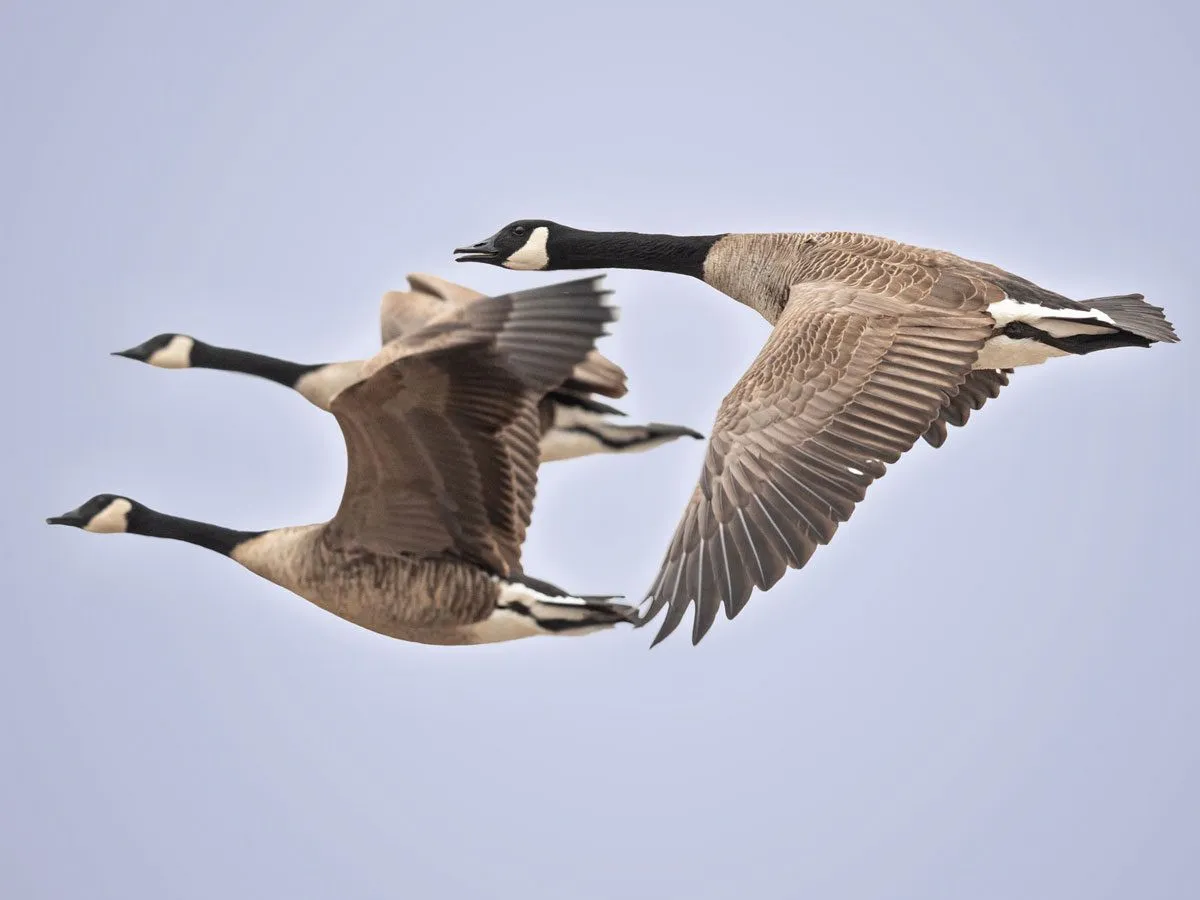
Bird Migration
A. Birds have many unique design features that enable them to perform such amazing feats of endurance. They are equipped with lightweight, hollow bones, intricately designed feathers providing both lift and thrust for rapid flight, navigation systems superior to any that man has developed, and an ingenious heat-conserving design that, among other things, concentrates all blood circulation beneath layers of warm, waterproof plumage, leaving them fit to face life in the harshest of climates. Their respiratory systems have to perform efficiently during sustained flights at altitude, so they have a system of extracting oxygen from their lungs that far exceeds that of any other animal. During the later stages of the summer breeding season, when food is plentiful, their bodies can accumulate considerable layers of fat, to provide sufficient energy for their long migratory flights.
B. The fundamental reason that birds migrate is to find adequate food during the winter months when it is in short supply. This particularly applies to birds that breed in the temperate and Arctic regions of the Northern Hemisphere, where food is abundant during the short growing season. Many species can tolerate cold temperatures if food is plentiful, but when food is not available, they must migrate. However, intriguing questions remain.
C. One puzzling fact is that many birds journey much further than would be necessary just to find food and good weather. Nobody knows, for instance, why British swallows, which could presumably survive equally well if they spent the winter in equatorial Africa, instead fly several thousands of miles further to their preferred winter home in South Africa’s Cape Province. Another mystery involves the huge migrations performed by arctic terns and mudflat-feeding shorebirds that breed close to Polar Regions. In general, the further north a migrant species breeds, the further south it spends the winter. For arctic terns, this necessitates an annual round trip of 25,000 miles. Yet, en route to their final destination in far-flung southern latitudes, all these individuals overfly other areas of seemingly suitable habitat spanning two hemispheres. While we may not fully understand birds’ reasons for going to particular places, we can marvel at their feats.
D. One of the greatest mysteries is how young birds know how to find the traditional wintering areas without parental guidance. Very few adults migrate with juveniles in tow, and youngsters may even have little or no inkling of their parents’ appearance. A familiar example is that of the cuckoo, which lays its eggs in another species’ nest and never reencounters its young. It is mind-boggling to consider that, once raised by its host species, the young cuckoo makes its way to ancestral wintering grounds in the tropics before returning single-handedly to northern Europe the next season to seek out a mate among its kind. The obvious implication is that it inherits from its parents an inbuilt route map and direction-finding capability, as well as a mental image of what another cuckoo looks like. Yet nobody has the slightest idea as to how this is possible.
E. Mounting evidence has confirmed that birds use the positions of the sun and stars to obtain compass directions. They also seem to be able to detect the earth’s magnetic field, probably due to having minute crystals of magnetite in the region of their brains. However, accurate navigation also requires an awareness of position and time, especially when lost. Experiments have shown that after being taken thousands of miles over an unfamiliar landmass, birds are still capable of returning rapidly to nest sites. Such phenomenal powers are the product of computing several sophisticated cues, including an inborn map of the night sky and the pull of the earth’s magnetic field. How the birds use their ‘instruments’ remains unknown, but one thing is clear: they see the world with a superior sensory perception to ours. Most small birds migrate at night and take their direction from the position of the setting sun. However, as well as seeing the sun go down, they also seem to see the plane of polarized light caused by it, which calibrates their compass. Travelling at night provides other benefits. Daytime predators are avoided and the danger of dehydration due to flying for long periods in warm, sunlit skies is reduced. Furthermore, at night the air is generally cool and less turbulent and so conducive to sustained, stable flight.
F. Nevertheless, all journeys involve considerable risk, and part of the skill in arriving safely is setting off at the right time. This means accurate weather forecasting and utilizing favourable winds. Birds are adept at both, and, in laboratory tests, some have been shown to detect the minute difference in barometric pressure between the floor and ceiling of a room. Often birds react to weather changes before there is any visible sign of them. Lapwings, which feed on grassland, flee west from the Netherlands to the British Isles, France, and Spain at the onset of a cold snap. When the ground surface freezes, the birds could starve. Yet they return to Holland ahead of a thaw, their arrival linked to a pressure change presaging an improvement in the weather.
G. In one instance a Welsh Manx shearwater carried to America and released was back in its burrow on Skokholm Island, off the Pembrokeshire coast, one day before a letter announcing its release! Conversely, each autumn a small number of North American birds are blown across the Atlantic by fast-moving westerly tailwinds. Not only do they arrive safely in Europe, but, based on ringing evidence, some make it back to North America the following spring, after probably spending the winter with European migrants in sunny African climes.
Questions 1 – 7: Reading passage has seven paragraphs, A-G.
Choose the correct heading for each paragraph from the list of headings below. Write the correct number, i-x, in boxes 1-7 on your answer sheet
List of headings
i. The best moment to migrate
ii. The unexplained rejection of closer feeding ground
iii. The influence of weather on the migration route
iv. Physical characteristics that allow birds to migrate
v. The main reason why birds migrate
vi. The best wintering grounds for birds
vii. Research findings on how birds migrate
viii. Successful migration despite the trouble of wind
ix. The contrast between long-distance migration and short-distance migration
x. Mysterious migration despite lack of teaching
Check answers
1. Paragraph A
2. Paragraph B
3. Paragraph C
4. Paragraph D
5. Paragraph E
6. Paragraph F
7. Paragraph G
Questions 8-9:
Choose TWO letters, A-E.
Write the correct letters in your answer sheet.
Which TWO of the following statements are true of bird migration?
Check answers
A Birds often fly further than they need to.
B Birds travelling in family groups are safe.
C Birds flying at night need less water.
D Birds have much sharper eyesight than humans.
E Only shorebirds are resistant to strong winds.
Questions 10-13: Complete the sentences below using NO MORE THAN ONE WORD OR NUMBER from the passage. Write your answers in your answer sheet
Check answers
10. It is a great mystery that young birds like cuckoos can find their wintering grounds without………
11. Evidence shows birds can tell directions like a……….by observing the sun and the stars.
12. One advantage for birds flying at night is that they can avoid contact with……..
13. Laboratory tests show that birds can detect weather without……..signs.
IELTS Reading “Bird Migration” Analysis & Answer Key
The “Bird Migration” passage covers many intriguing and mysterious aspects of avian migration, from the biological features that enable long journeys and the reasons for migrating, to unanswered questions about their navigation, the impact of weather, and remarkable case studies.
Let’s break down each section of the questions.
Part 1: Matching Headings (Questions 1-7)
This question type asks you to select the most appropriate heading for each paragraph. To excel, skim each paragraph to grasp the main idea, then review the provided headings and eliminate the unsuitable ones.
1. Paragraph A
- Analysis: This paragraph focuses on the biological design features of birds: hollow bones, feathers, efficient respiratory systems, and fat storage. All these traits serve their ability to fly long distances and endure harsh conditions. Phrases like “unique design features,” “lightweight, hollow bones,” and “respiratory systems” point directly to physical traits.
- Matching: iv. Physical characteristics that allow birds to migrate.
- Answer: 1. iv
2. Paragraph B
- Analysis: The paragraph begins with “The fundamental reason that birds migrate is to find adequate food…” This directly addresses the primary reason for migration. It then explains that while some species can tolerate cold, they must migrate when food becomes scarce.
- Matching: v. The main reason why birds migrate.
- Answer: 2. v
3. Paragraph C
- Analysis: This paragraph raises “puzzling” and “mysterious” questions about why birds travel further than necessary, such as British swallows flying to South Africa instead of staying in equatorial Africa, or arctic terns flying 25,000 miles despite passing through suitable habitats. It highlights the mystery of why they reject closer, seemingly suitable grounds.
- Matching: ii. The unexplained rejection of closer feeding ground.
- Answer: 3. ii
4. Paragraph D
- Analysis: This paragraph focuses on the mystery of how young birds find traditional wintering areas without parental guidance. The example of the cuckoo, which is raised by a host species and finds its way to ancestral grounds alone, is key.
- Matching: x. Mysterious migration despite lack of teaching.
- Answer: 4. x
5. Paragraph E
- Analysis: This paragraph discusses the “instruments” birds use to navigate: the sun, stars, and the earth’s magnetic field. It mentions “accurate navigation,” “sophisticated cues,” and experiments showing their ability to return to nest sites. These are findings from research into how they migrate.
- Matching: vii. Research findings on how birds migrate.
- Answer: 5. vii
6. Paragraph F
- Analysis: This paragraph starts by noting that journeys involve risk and that success depends on setting off at the right time, which requires “accurate weather forecasting.” It describes how birds react to weather changes, such as Lapwings fleeing cold snaps.
- Matching: iii. The influence of weather on the migration route.
- Answer: 6. iii
7. Paragraph G
- Analysis: This paragraph provides two specific examples of successful migration despite obstacles. A Manx shearwater returned to its burrow after being released in America, and North American birds blown across the Atlantic still reached Europe safely. These demonstrate success despite wind-related challenges.
- Matching: viii. Successful migration despite the trouble of wind.
- Answer: 7. viii
Part 2: Multiple Choice (Questions 8-9)
This question requires you to select TWO correct statements from the given options.
8-9. Which TWO of the following statements are true of bird migration?
- A: Birds often fly further than they need to. (True: Paragraph C mentions they journey further than necessary to find food/weather.)
- B: Birds travelling in family groups are safe. (False: The text says few adults migrate with juveniles.)
- C: Birds flying at night need less water. (True: Paragraph E states that night travel reduces the danger of dehydration.)
- D: Birds have much sharper eyesight than humans. (Not confirmed: The text mentions “superior sensory perception,” not specifically eyesight.)
- E: Only shorebirds are resistant to strong winds. (False: The text mentions other species like the Manx shearwater.)
- Answers: 8. A and 9. C (Order does not matter).
Part 3: Sentence Completion (Questions 10-13)
10. It is a great mystery that young birds like cuckoos can find their wintering grounds without guidance. (Paragraph D: “…without parental guidance.”)
11. Evidence shows birds can tell directions like a compass by observing the sun and the stars. (Paragraph E: “…use the positions of the sun and stars to obtain compass directions.”)
12. One advantage for birds flying at night is that they can avoid contact with predators. (Paragraph E: “Daytime predators are avoided…”)
13. Laboratory tests show that birds can detect weather without visible signs. (Paragraph F: “…before there is any visible sign of them.”)
The “Bird Migration” passage provides deep insight into the miraculous journey of birds—from their superior biological traits to their extraordinary navigation skills—and serves as an excellent resource for IELTS Reading practice. We hope these analyses from ECE English help you master the knowledge and skills needed to conquer this type of question.





 Khai giảng Khóa học Hè cực HOT.
Chưa có bình luận nào!