
Tóm Tắt Nội Dung Bài Viết
If you’re learning English, you’ve surely struggled with idioms and collocations that sound confusingly similar. For instance, what’s the difference between “on time” and “in time”? Or how do you distinguish between “make up” and “make up for”?
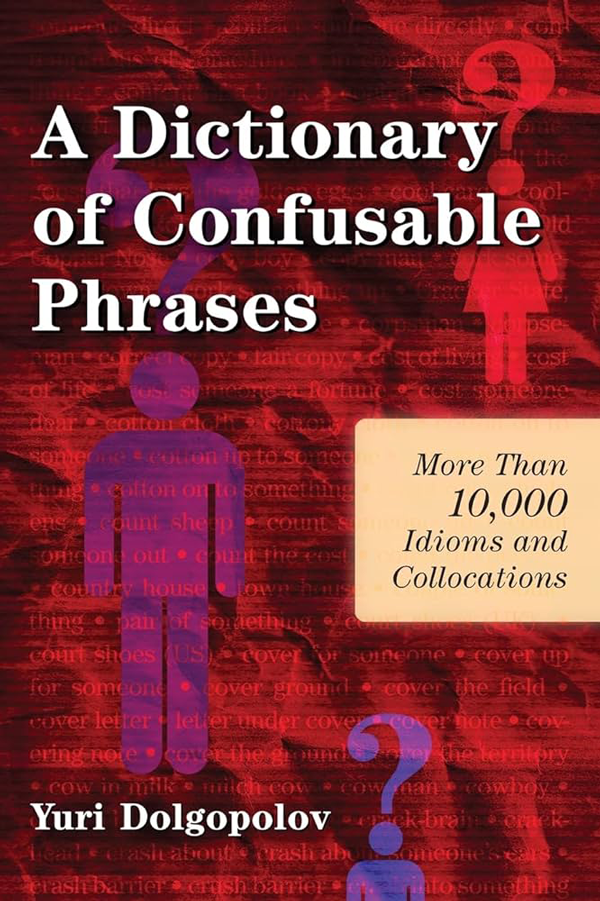
“A Dictionary of Confusable Phrases: More Than 10,000 Idioms and Collocations” was created to help you solve exactly these kinds of problems.
What Makes This Dictionary Special?
- Common Challenges: Idioms and collocations are essential for sounding more natural in English. However, they often trip learners up because so many of them are easily confused.
- The Book’s Approach: Rather than just listing definitions, this dictionary focuses on comparing and explaining the nuances between similar phrases, helping you avoid common pitfalls.
Key Content
- A Wealth of Knowledge: Over 10,000 carefully selected idioms and collocations, covering everything from everyday expressions to specialized terminology.
- Clear, Precise Definitions: Each phrase is explained in simple, accessible language, avoiding overly complex jargon so you can grasp the meaning instantly.
- Vivid Illustrative Examples: Examples are thoughtfully chosen to show how phrases function in various contexts—written, spoken, formal, and informal—helping you visualize how to apply them in real life.
- In-depth Comparative Analysis (Core Feature): This is the book’s standout feature. Confusing phrases are placed side-by-side, with meticulous analysis of their differences in meaning, nuance, and usage.
Illustrative examples:
on time / in time: Clearly distinguishes between “on time” (at the scheduled time, not early or late) and “in time” (with enough time to spare, before it’s too late).
make up / make up for: Explains the difference between “make up” (invent a story, apply cosmetics, reconcile) and “make up for” (compensate for something).
borrow / lend: Clarifies the usage of these two antonyms.
- Useful Supplementary Notes:
- Etymology: Explains the origins of certain phrases (where applicable) to make learning more engaging and memorable.
- Formality: Clearly indicates whether a phrase is formal, informal (for daily conversation), or neutral.
- Variations: Provides alternative ways to express the same idea, helping you expand your vocabulary and communicate with more flexibility.
- Related Phrases: Expands your vocabulary network by linking to similar or opposite expressions, helping you build connections between concepts.
- Scientific and Convenient Structure:
- Alphabetical Order: Phrases are organized by the first word, making them easy to look up.
- Detailed Index: The book includes a comprehensive index at the back, allowing you to search by any word within a phrase for maximum flexibility.
- User Guide: Explains how to use the book effectively and decodes symbols and abbreviations.
Who Is This For?
- Intermediate and Advanced Learners:
- Those with a solid foundation in grammar and vocabulary.
- Learners looking to refine their English to sound more sophisticated, precise, and natural.
- Those who need English for academic, professional, or international communication.
- Students:
- Preparing for international exams like IELTS, TOEFL, TOEIC, or Cambridge exams.
- Planning to study abroad or in an English-speaking environment.
- English Teachers:
- Looking for high-quality reference material for teaching idioms and collocations.
- Wanting to update their knowledge and teaching methods.
- Professionals in International Environments:
- Needing to use English proficiently for work (writing emails, reports, presentations, negotiations, and communicating with international partners).
- Looking to improve communication skills and project a professional image.
- English Enthusiasts:
- Wanting to explore the richness, diversity, and fun of the language.
- Seeking self-study materials to level up their English.
How to Use Effectively
- Shift Your Mindset: Don’t just memorize mechanically; focus on deeply understanding the differences between confusing phrases.
- Learn in Context: Read the illustrative examples carefully to grasp how phrases are used in real-life situations, rather than just learning the definition.
- Practice Regularly and Varied:
- Use the phrases you’ve learned in daily conversation (with friends or native speakers).
- Write essays, emails, or journal entries in English, trying to incorporate your new vocabulary.
- Do exercises related to idioms and collocations (found in workbooks, online, or via language learning apps).
- Combine with Other Resources: Use this dictionary alongside:
- English-English dictionaries (Oxford, Cambridge, Longman).
- Grammar references (to better understand sentence structure).
- Test preparation materials (if you are studying for an exam).
- Be Proactive: When you encounter a new phrase or aren’t sure about usage, look it up immediately to avoid developing bad habits.
- Personalize Your Notes: Keep a notebook or digital file to record:
- Phrases you find useful, interesting, or hard to remember.
- Common mistakes you tend to make.
- Examples you create yourself.
- Focus by Topic: If you work or study in a specific field (business, travel, IT), focus on phrases relevant to that industry.
- Apply Effective Memory Techniques:
- Association: Connect phrases with images, stories, sounds, or personal experiences to make them more memorable.
- Spaced Repetition: Review phrases periodically, increasing the intervals between reviews to strengthen long-term memory.
- Flashcards: Use flashcards for quick and effective memory checks.
- Teach Someone Else: Explaining a phrase to someone else (a friend or family member) is a fantastic way to test your knowledge and reinforce your memory.
- Learn in a Community: Find a study partner, join English clubs, or participate in online forums to exchange ideas, discuss, and practice using what you’ve learned.
“A Dictionary of Confusable Phrases” is a valuable tool for mastering English idioms and collocations. By using it effectively, you can significantly improve your English proficiency. Thanks for reading!





 Khai giảng Khóa học Hè cực HOT.
Chưa có bình luận nào!