


Tóm Tắt Nội Dung Bài Viết
The Writing section is often the biggest hurdle preventing many candidates from reaching their dream IELTS band score. For self-learners, the lack of a mentor to point out mistakes and provide guidance is a common challenge. Fortunately, technological advancements have introduced many free online essay-grading tools.
This article from ECE English will not only list the top 7 completely free and high-quality websites for grading IELTS Writing, but also provide a smart, integrated strategy to help you maximize their potential and achieve significant progress.
Why use online IELTS Writing grading websites?
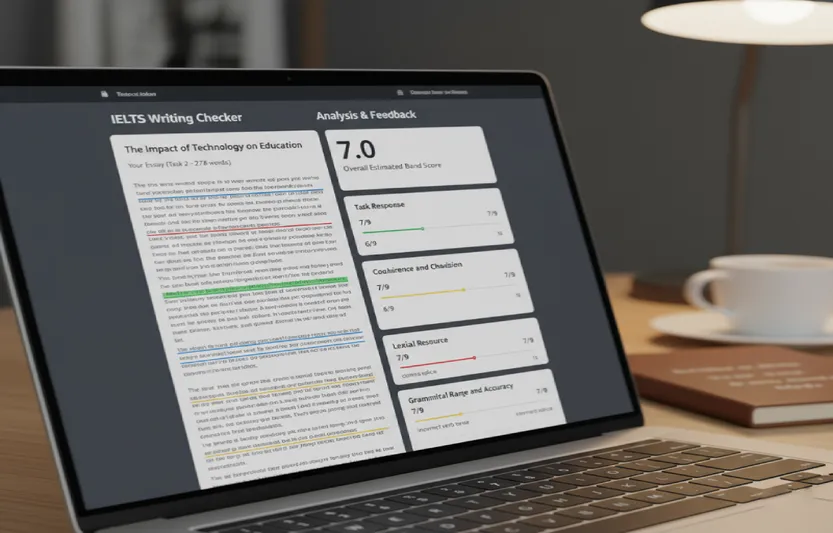
Before diving into the list, let’s clarify the value of these tools. Using online grading websites offers three main benefits:
- Cost-effective: This is the most obvious benefit. You can receive feedback on dozens of essays without spending a dime, compared to the high costs of professional grading services.
- Instant feedback: Most AI tools provide results in just a few seconds, helping you quickly identify and correct mistakes, which keeps your study momentum going.
- Accessible anytime, anywhere: As long as you have an internet connection, you can practice writing and receive feedback whenever you want, breaking down all barriers of time and space.
Who should (and shouldn’t) use these tools?
This is crucial for setting realistic expectations and using these tools effectively.
✅ These tools are GREAT for:
- Beginners to Intermediate learners (Band 4.0 – 6.0): At this stage, errors are mainly related to grammar, basic vocabulary, and sentence structure. AI tools are excellent at detecting these issues.
- Those needing to practice reflexes and time management: Using these tools helps you get accustomed to the pressure of writing within a set time limit.
- Those needing a quick reference for vocabulary and paraphrasing: Tools like ChatGPT are an endless “bank of ideas.”
❌ These tools are NOT suitable (or should only be used for reference) for:
- Advanced learners (Band 6.5+ aiming for 7.5+): At this level, the difference lies in logical thinking, sharp argumentation, and subtle coherence (Task Response & Coherence), which are the biggest weaknesses of AI.
- Those needing an absolutely accurate band score estimate before the real test: AI-generated scores are for reference only.
- Those needing deep feedback on the originality and persuasiveness of their ideas.
Top 7 free IELTS Writing grading websites for 2025
To help you choose easily, ECE English has divided this list into two main groups: AI-based grading (suitable for quick results and grammar correction) and Peer Review (suitable for deep feedback on ideas and arguments).
Group 1: AI-based grading – Fast & linguistically effective
These tools use algorithms to analyze your writing almost instantly, making them very strong at detecting grammar and vocabulary errors.
1. ChatGPT (and similar AIs like Google Gemini, Claude)
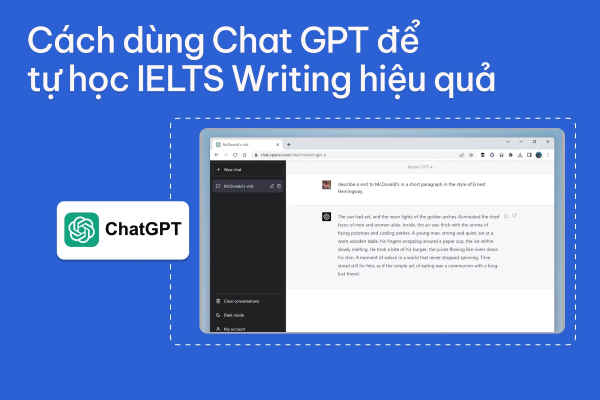
Features: ChatGPT is not a dedicated grading website, but a versatile “language assistant.” You can ask it to act as an IELTS examiner by using detailed prompts. For example: “Act as an IELTS examiner. Evaluate this Task 2 essay based on the 4 official criteria, provide an estimated band score for each, and suggest improvements.”
Pros:
- Super flexible: You can ask it to do anything: grade, brainstorm ideas, suggest academic vocabulary, paraphrase sentences, or even write a sample essay for reference.
- Instant feedback: Helps you correct errors and learn immediately without waiting.
- Good for active learning: You can ask follow-up questions about your mistakes: “Why is this word choice inappropriate in an academic context?”
Cons:
- Weak at evaluating Task Response & Coherence: AI can check if you have enough points, but it struggles to assess logic, persuasiveness, and the depth of your arguments. This is its biggest weakness.
- Band scores are for reference only: Don’t put too much faith in the band score AI gives you. Focus on the comments regarding grammar and vocabulary.
Best for: Brainstorming, enriching vocabulary, paraphrasing, and basic grammar checks.
Link: https://chatgpt.com/
2. Grammarly (Free version)
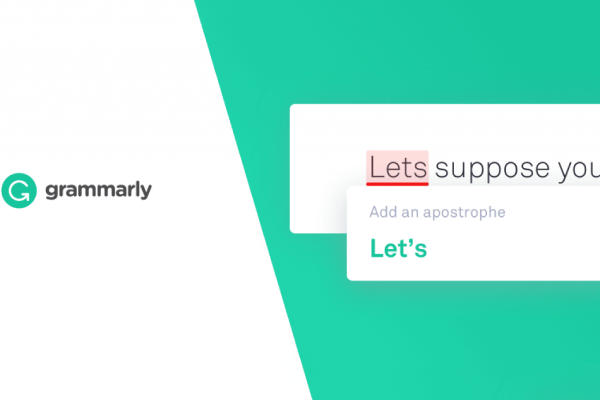
Features: This is the “classic” tool for checking grammar and spelling. The free version automatically underlines grammar, punctuation, and spelling errors, providing accurate correction suggestions.
Pros:
- High accuracy for basic grammar: The most reliable tool to “clean up” your writing from elementary mistakes.
- Intuitive, easy-to-use interface: Features a browser extension, helping you check for errors everywhere.
- Clear explanations: Helps you understand why you made a mistake and learn from it.
Cons:
- Not an IELTS-specific tool: It doesn’t understand or grade based on the 4 IELTS criteria.
- Can make writing less academic: Sometimes Grammarly suggests changing complex sentences into simpler ones, reducing the grammatical variety required in IELTS Writing.
Best for: The final step—after you are confident about your ideas and structure, use Grammarly to proofread for grammar and spelling errors.
Link: https://www.grammarly.com/
3. Write & Improve with Cambridge
Features: This is an official product from Cambridge, the organization that administers the IELTS test. You choose a topic, write your essay, and the system grades it according to the CEFR scale (from A1 to C2) and points out areas for improvement.
Pros:
- High reliability: Developed by the test-makers themselves, so the language suggestions are very accurate.
- Promotes active learning: The tool often doesn’t correct errors directly but asks guiding questions, forcing you to think and find your own mistakes.
- Track progress: The system saves your writing history and evaluations, helping you clearly see your improvement over time.
Cons:
- Doesn’t grade by IELTS band: The CEFR scale (e.g., B2, C1) can be hard to visualize for candidates used to the 1-9 band system.
- Feedback is less detailed than other AIs: Primarily focuses on assessing overall level and language errors, with little deep analysis of structure.
Best for: Highly self-motivated learners who want to practice with diverse topics and receive reliable general assessments.
Link: https://writeandimprove.com/
4. Virtual Writing Tutor
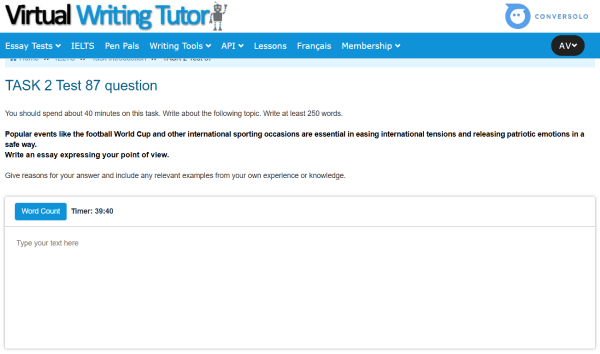
Features: This is an incredibly powerful free tool designed specifically for ESL learners. You paste your essay, and the system returns a highly detailed analysis of various aspects: word count, grammar errors, sentence structure, and especially vocabulary analysis (general vs. academic vocabulary).
Pros:
- In-depth vocabulary analysis: This tool can show you how many words from the Academic Word List (AWL) you have used—a key factor for high IELTS scores.
- Comprehensive check: Beyond grammar, it also checks sentence structure (e.g., are you using too many simple sentences?).
- Completely free with many features: Offers more value than the free versions of other tools.
Cons:
- Interface is a bit dated and academic: Can be overwhelming for new users due to the sheer amount of information and metrics.
- No direct IELTS band estimation: Despite the detailed analysis, it doesn’t provide a specific band score.
Best for: Those who want a deep analysis of their academic vocabulary usage and sentence structure variety.
Link: https://virtualwritingtutor.com/
5. TestBig
Features: TestBig is a large platform where you can post your essays for AI grading and error checking. Its most unique feature is a massive archive of essays written by other users.
Pros:
- Huge library of sample essays: For the same topic, you can read dozens of essays from others, see how they were graded, and read the comments. This is an extremely effective way to learn.
- Fast feedback: AI provides results almost instantly.
Cons:
- Interface is quite outdated and full of ads: User experience is not great.
- Basic AI grading quality: TestBig’s algorithm is not as sophisticated as newer tools, focusing mainly on grammar and simple spelling errors.
Best for: Referencing ideas and phrasing from a large community and learning from others’ work.
Link: https://www.testbig.com/
Group 2: Peer Review – Deep insights into ideas & arguments
6. Essay Forum
Features: This is a reputable and long-standing online forum. You post your essay and receive feedback from other community members, including English teachers and experienced experts.
Pros:
- Receive feedback from real people: This is the biggest advantage. Humans can understand and provide feedback on the depth of ideas, the logic of arguments, and the coherence of structure—things AI currently cannot do well.
- Completely free.
- Multi-dimensional learning: You can receive various perspectives on the same essay.
Cons:
- No guarantees: You might have to wait a long time for a response, or sometimes get no response at all.
- Inconsistent feedback quality: Depends entirely on the level and enthusiasm of the reviewer.
- High standards for posts: If your essay has too many basic grammar errors, experienced members will often skip it without commenting.
Best for: The later stages, when you are confident in your grammar and vocabulary and need in-depth feedback to push your band score from 6.5 and above.
Link: https://essayforum.com/
7. IELTS Online Tests (Writing Practice Section)
Features: This famous IELTS preparation site has a Writing practice section. After you write and submit your essay, it is displayed publicly so other community members can read and leave comments.
Pros:
- Integrated into a comprehensive prep platform: You can do Reading and Listening tests right on this site and switch to Writing practice very conveniently.
- Access to a large community: Many IELTS learners use this site, increasing the chances of your essay being read and commented on.
Cons:
- Similar to Essay Forum: Quality and response time are not guaranteed.
- No “certified” experts: Most reviewers are also IELTS learners like you, so the feedback is mainly for reference and sharing study experiences.
Best for: Practicing writing under timed conditions and getting quick feedback from fellow learners.
Link: https://ieltsonlinetests.com/ielts-exam-library?tab&search&sort&skill=writing
A 4-step process to maximize free Writing grading tools
Instead of relying on just one tool, combine them into a process to optimize your results. This is the strategy ECE recommends:
Step 1: Brainstorming and drafting with ChatGPT
If you are stuck for ideas or unsure about the structure, start with ChatGPT. This is the warm-up for your thinking process.
- Action: Use prompts like: “Brainstorm some ideas for an IELTS essay about [topic]” or “Create a 4-paragraph outline for this topic.”
- Goal: Get a clear outline and some initial ideas/vocabulary. Then, write your complete draft based on this outline.
Step 2: “Cleaning up” grammar & spelling with Grammarly
Before diving into deep analysis, your essay needs to be “clean” in terms of basic grammar and spelling. This is a crucial step.
- Action: Paste your entire draft into Grammarly (free version).
- Goal: Fix all obvious grammar, punctuation, and spelling errors identified by the tool. This ensures that the tools in the next steps and human reviewers won’t be distracted by elementary mistakes.
Step 3: Deep analysis of vocabulary & sentence structure with Virtual Writing Tutor
This is the technical upgrade step for your essay. Virtual Writing Tutor is a very powerful language analysis tool.
- Action: Paste the “cleaned” essay from Step 2 into Virtual Writing Tutor.
- Goal: Read the analysis results carefully, focusing on these metrics:
- Vocabulary Analysis: Check how many words from the Academic Word List (AWL) you have used. If the ratio is low, try replacing some common words with more academic ones.
- Sentence Structure: Review the analysis of sentence variety. If you use too many simple sentences, this is the time to combine them into complex or compound sentences.
Step 4: Seeking in-depth feedback on argumentation from humans (Essay Forum)
This is the final and most valuable step to raise your band score. Once your essay is optimized linguistically, you need feedback on ideas and logic.
- Action: Post your finalized essay from Step 3 on Essay Forum.
- Goal: Receive valuable feedback on the two criteria where AI is weakest: Task Response (Are the arguments persuasive? Are the ideas fully developed?) and Coherence and Cohesion (Are the ideas linked smoothly and logically?). Since your essay is already grammatically clean, reviewers can focus on these strategic improvements.
Conclusion
The biggest lesson from using free IELTS Writing grading websites is not to trust their scores blindly, but to recognize the role of each tool in your learning journey. AI tools are great assistants for fixing grammar and enriching vocabulary, while community feedback helps you hone your thinking and argumentation. By combining them strategically, you can absolutely raise your Writing band score effectively without spending a fortune.





 Khai giảng Khóa học Hè cực HOT.
No comments yet!