


Tóm Tắt Nội Dung Bài Viết
On the journey to conquering the IELTS exam, every learner faces a crossroads: to blaze their own trail through self-study or to seek the guidance of a professional center. This isn’t just a question of methodology; it’s a balancing act between cost, time, personal discipline, and learning efficiency.
There is no one-size-fits-all answer, as the right choice depends heavily on your individual circumstances and unique needs. To help you gain an objective perspective and make the most informed decision, this ECE article will dive deep into the pros and cons of each approach—self-study versus attending a center—along with the key factors you need to consider.
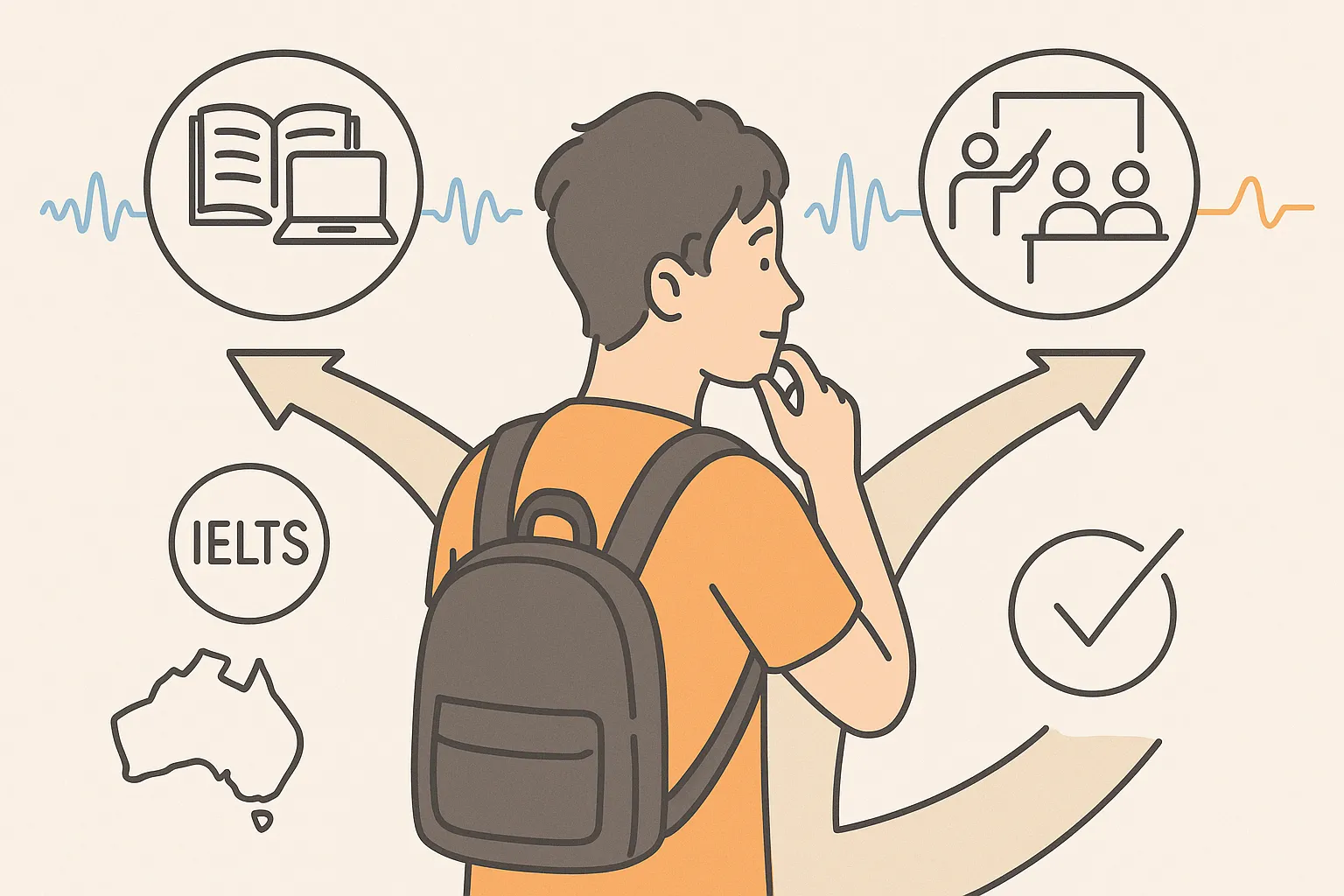
1. IELTS Self-Study – A Journey of Autonomy and Discovery
Self-studying for IELTS means taking full responsibility for your preparation process—from setting goals and building a roadmap to sourcing materials, managing your time, and evaluating your own progress. This approach demands a high level of initiative and self-discipline.
1.1. Pros of IELTS Self-Study
- Maximum Cost Savings: This is the most obvious and attractive benefit. You don’t have to pay millions in tuition fees as you would at a center. Your primary investments will be official textbooks (like the Cambridge IELTS Practice Tests series), grammar and vocabulary references, or online learning subscriptions, which are significantly cheaper than in-person classes. There is also a wealth of free resources online if you know how to curate them.
- Flexibility in Time and Location: You can study whenever and wherever you feel most comfortable and focused—at home, in the library, or at a café. You can adjust your study schedule to fit a busy personal life, free from the constraints of fixed class times or locations. This is ideal for working professionals, students with fluctuating school schedules, or those living far from major centers.
- Autonomy in Choosing Methods and Materials: When self-studying, you decide what to learn, how to learn it, and which resources to use. You can focus deeply on your weakest skills, spend less time on your strengths, or experiment with different learning techniques (e.g., using flashcards for vocabulary, practicing listening via podcasts, or recording yourself to improve speaking). This personalization allows you to optimize your learning based on your own interests and learning style.
- Developing Self-Study Skills and Discipline: The IELTS self-study process requires you to cultivate self-motivation, time management, perseverance, and constant effort. If successful, these soft skills will be invaluable not just for English, but for many other aspects of your life and future career. You learn how to research information, evaluate sources, and solve problems independently.
- Deep Focus on Personal Weaknesses: You can dedicate all your time and energy to fixing specific knowledge gaps without having to keep pace with a class. For example, if your grammar is weak, you can spend hours drilling a specific point. If you struggle with Diagram Labeling in Listening, you can devote multiple sessions to mastering that specific task type.
1.2. Cons of IELTS Self-Study
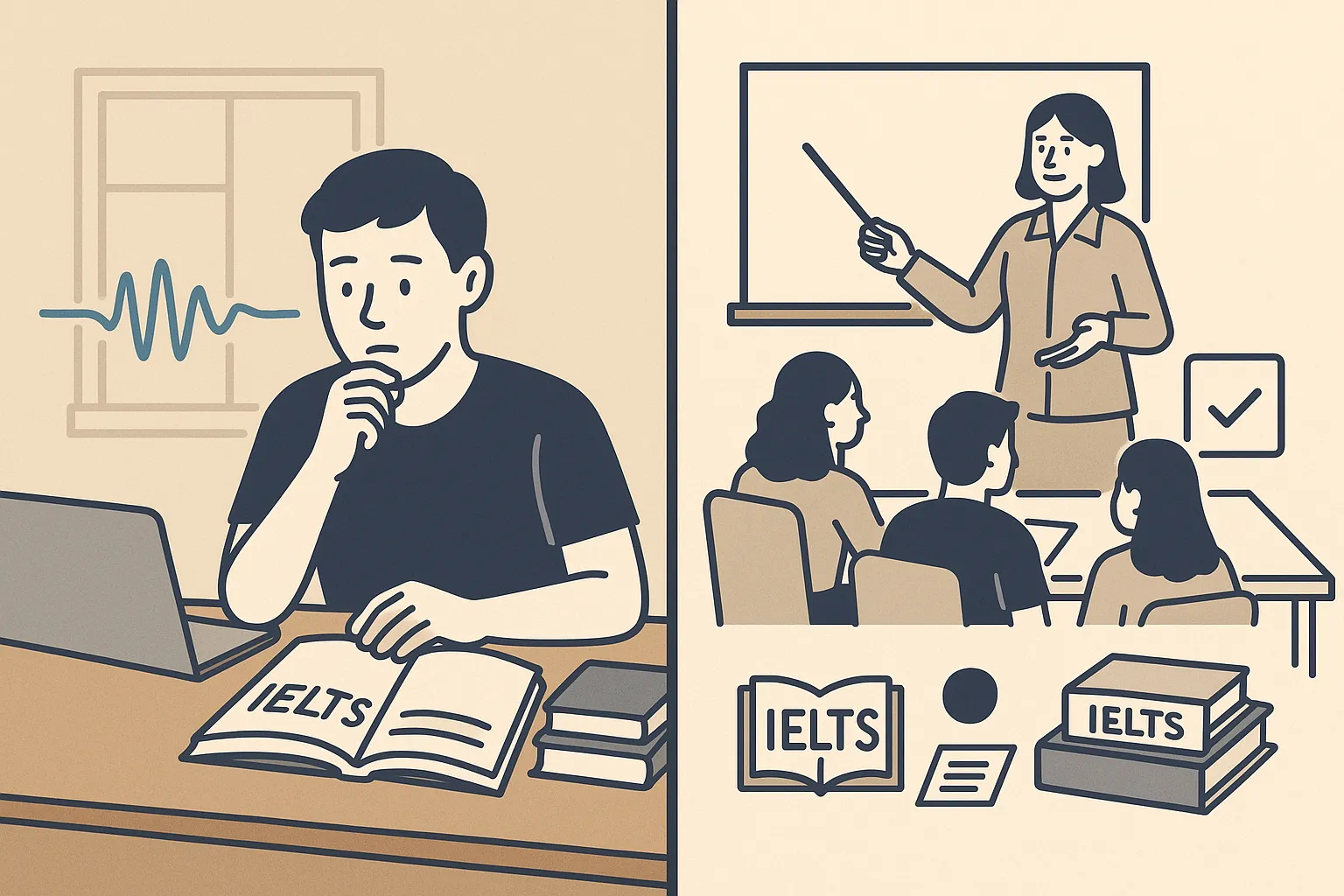
- Lack of a Clear Roadmap and Risk of Getting Lost: This is the biggest hurdle for many, especially beginners. The market is flooded with countless materials, methods, and conflicting advice, making it easy to feel overwhelmed and unsure where to start or how to build an effective study plan. Studying aimlessly or in the wrong direction can waste significant time and effort without yielding the desired results.
- Difficulty in Accurately Assessing Progress: Self-assessment is often subjective. It is hard to know what band your Writing would actually receive based on IELTS criteria, or how your pronunciation and grammar errors in Speaking affect your score. Without professional feedback from a teacher, it is difficult to identify deep-seated mistakes, leading to repetitive errors and a plateau in your band score.
- Lack of an Interactive Environment: Speaking requires a space to practice regularly with others. Self-study limits these opportunities, often leaving you to talk to yourself or record and listen back (which, while useful, cannot replace real-time interaction). The absence of study partners also reduces opportunities for discussion, peer learning, and group activities.
- Susceptibility to Losing Motivation and Procrastination: When you hit a wall, there is no one to answer your questions or keep you encouraged, making it easy to feel lonely, frustrated, and tempted to quit. While high discipline is necessary, not everyone can maintain it over a long period without external pressure or support.
- Time Spent Filtering Materials: While there are many free resources, finding, evaluating, and selecting what is truly suitable for you is a time-consuming process that requires experience. You can easily get lost in a “sea” of materials or end up using outdated or inaccurate sources.
2. Studying at an IELTS Center – A Guided and Supported Path
Studying at a center means joining classes organized by professional IELTS training providers. You follow a pre-set curriculum, syllabus, and schedule, taught by instructors with peers by your side.
2.1. Pros of Studying at a Center
- Structured, Clear, and Professional Roadmap: This is the core advantage. Reputable centers have researched and built comprehensive roadmaps from basic to advanced levels, tailored to specific target bands. You will take a placement test to join the right class and simply follow the designed path, saving significant time spent guessing what or how to study.
- Quality and Experienced Teachers: You learn from instructors with deep knowledge of the IELTS structure, requirements, and grading criteria. They have teaching experience, know how to explain concepts effectively, answer questions promptly, and most importantly, can grade and provide detailed, accurate feedback on your Writing and Speaking—which is crucial for improving these two difficult skills.
- Interactive and Dynamic Learning Environment: The classroom is a great place to practice Speaking through pair work, group activities, and discussions. You have the chance to communicate and learn from peers, seeing others’ progress to motivate yourself. A lively classroom atmosphere also helps maintain interest and reduces the feeling of isolation during preparation.
- Standardized and Updated Materials: Centers usually provide textbooks and internal materials that are carefully compiled, closely aligned with the actual exam format, and regularly updated to reflect changes in the test. You don’t have to worry about finding or vetting resources yourself.
- Regular and Timely Support and Assessment: You will have periodic tests to track your progress. Teachers monitor your learning, promptly address any confusion, and offer advice to adjust your study methods if needed. This companionship helps keep you on track.
- Score Guarantees: Some centers offer band score guarantees. This not only creates positive pressure for the learner but also serves as a commitment to training quality (though you should carefully check the conditions attached, which usually involve full attendance and homework completion).
- Saves Time on Material Selection: The center has already done the work of selecting high-quality materials for you, allowing you to focus entirely on studying.
2.2. Cons of Studying at a Center
- High Cost: This is the most obvious drawback and a barrier for many. The total tuition for a professional IELTS course is a significant investment that not everyone can afford.
- Lack of Flexibility in Time and Pace: You must follow the class’s fixed schedule. If you miss a session, it can be hard to catch up on the material. The pace of learning is set for the whole class, which may be too fast or too slow for your personal learning speed in certain areas.
- Class Size Can Be an Issue: If the class is too large, the teacher’s time for one-on-one interaction with each student is limited, affecting their ability to answer questions or provide personalized feedback.
- Inconsistent Quality of Centers/Teachers: With the number of IELTS centers growing, choosing a truly reputable and high-quality one is not always easy. You risk wasting money if you choose a place with inexperienced teachers or ineffective programs. Thoroughly researching information and student reviews is essential.
- Less Deep Personalization: Even with level-based classes, the curriculum is still designed for the group. Teachers may not have enough time to “root out” the very specific weaknesses of each individual as you might when self-studying and focusing deeply.
- Potential for Dependency: Having a teacher and a pre-set roadmap can lead some learners to reduce their own initiative and ability to research and solve problems independently when no guide is present.
3. Factors to Consider When Making Your Choice
To decide whether to self-study or attend a center, you need to honestly evaluate yourself and your surrounding factors:
- Current English Proficiency:
- If you are a beginner, have lost your foundation, or have a very weak base (below 3.0-3.5 IELTS), studying at a center with a structured roadmap and teacher guidance is generally recommended to build a solid foundation. Self-studying from scratch requires immense effort and self-direction.
- If you have a decent foundation (4.0-5.0 IELTS), you can consider self-study if you are highly self-motivated and know how to find materials. Alternatively, take intensive/test-prep courses at a center to break through to a higher band.
- If you are at a fairly advanced level (above 5.5-6.0 IELTS) and just want to improve to reach high bands (7.0+), self-study is a viable option if you have enough discipline and can find suitable materials and a grader (for Writing/Speaking). At this stage, center-based learning can focus on specialized, advanced test-prep classes.
- Target Band Score: The higher your goal (e.g., 7.0 or above), especially in skills that are hard to improve quickly like Writing and Speaking, the more you need deep guidance and detailed feedback from experienced teachers who understand high-band criteria.
- Self-Study Ability and Personal Discipline: Be honest with yourself. Are you someone who easily follows a plan, doesn’t procrastinate, and can research and solve problems when stuck? If the answer is “no,” or if you are easily distracted and lose motivation, then studying at a center with an environment and external pressure might be more suitable.
- Time Available for Study: Do you have enough free time to build and follow an effective self-study schedule, or do you need a fixed class schedule to force yourself into a routine and ensure consistency?
- Budget: What is your financial capacity? If your budget is tight, self-study or combining self-study with low-cost online courses is a viable option. If finances allow, investing in a reputable center can save you time and increase efficiency.
- Learning Style: When do you learn most effectively? When you are free to explore and experiment? Or when you have a guide and peers to discuss and compete with?
4. The Hybrid Approach – Optimizing IELTS Preparation
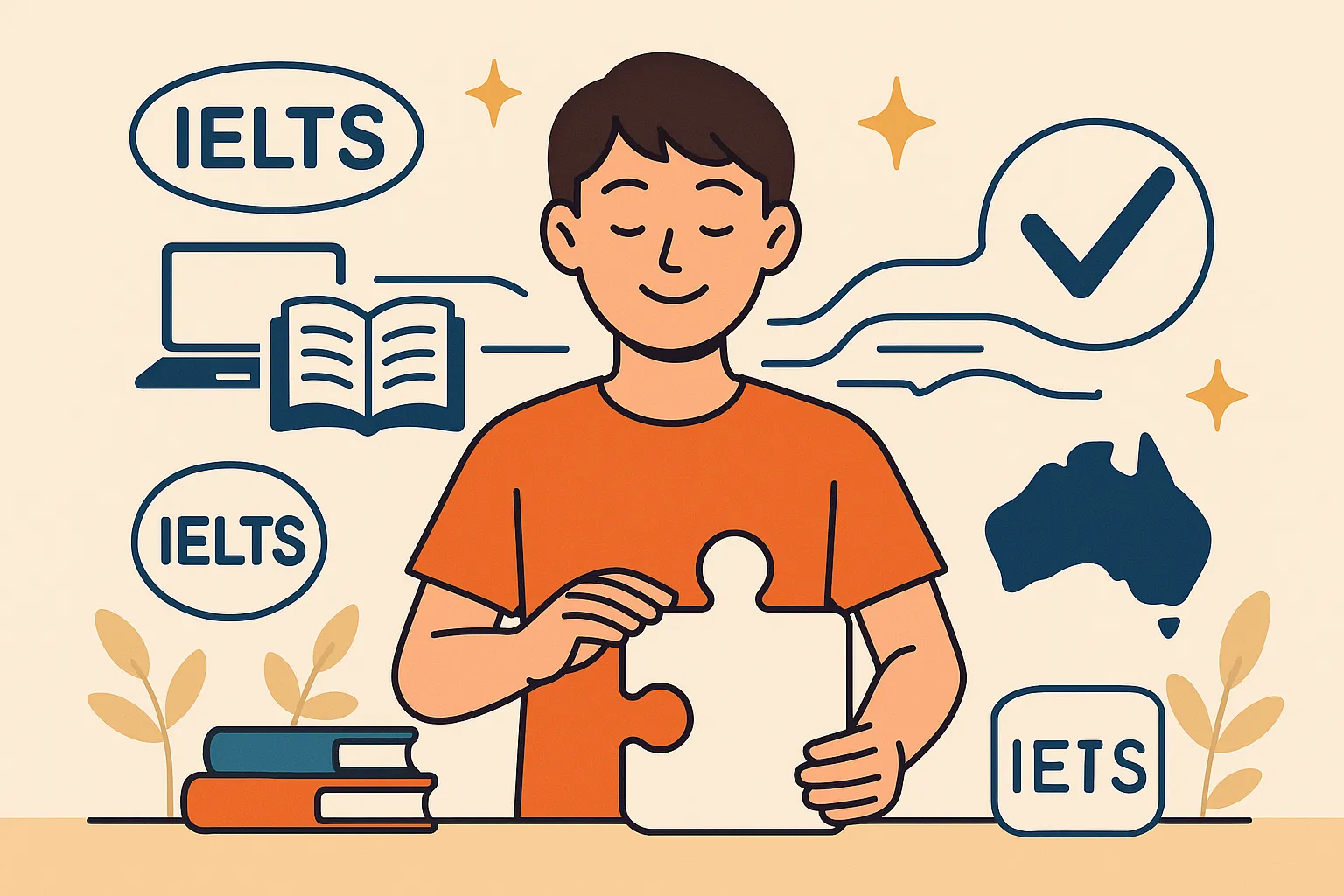
Instead of viewing self-study and center-based learning as two opposing paths, you can absolutely combine the strengths of both to create an optimal preparation strategy for yourself:
- Build a Foundation at a Center, Then Self-Study Intensively: You can enroll in a basic course at a center to get oriented on the exam structure, question types, and initial effective strategies. Afterward, based on the roadmap and teacher guidance, you can self-study intensively, practice tests, and focus on your specific weaknesses.
- Self-Study the Basics, Attend a Center for Writing & Speaking or Test Prep: If you are good at self-studying skills like Reading, Listening, grammar, and vocabulary, you can handle those parts on your own. When you reach the stage where you need a breakthrough or struggle with Writing and Speaking, you can sign up for short-term courses or intensive test-prep classes at a center to get feedback from teachers and solidify your test-taking strategies under time pressure.
- Online Learning (Hybrid Model): Many centers now offer online IELTS courses. This can be a hybrid option that combines the time flexibility of self-study with the roadmap, teacher support, and materials of a center, often at a lower cost than in-person classes.
Combining these methods requires finesse and the ability to recognize when you need which type of support, thereby utilizing resources most effectively.
Conclusion
The decision of whether to self-study or attend an IELTS center is a deeply personal one. There is no single “best” choice for everyone. Self-study offers flexibility and cost savings while building discipline, but it requires high self-direction and assessment skills. Studying at a center provides a structured roadmap, professional teachers, and an interactive environment, but comes with higher costs and less flexibility.
The important thing is to understand yourself: where is your current level, what is your target band, how disciplined are you, what is your budget, and what is your best learning style? Carefully weigh the pros and cons analyzed here, consult with experienced people (whether they succeeded through self-study or at a center), and if possible, try both options to a certain extent (e.g., try self-studying for a short time, or sign up for a trial class at a center) before making your final decision.
Regardless of the path you choose, the key factor determining your success remains your own effort, perseverance, and serious attitude toward learning. Choose the method that best fits you to optimize your IELTS preparation journey and achieve your goals.


 Khai giảng Khóa học Hè cực HOT.
No comments yet!