


Tóm Tắt Nội Dung Bài Viết
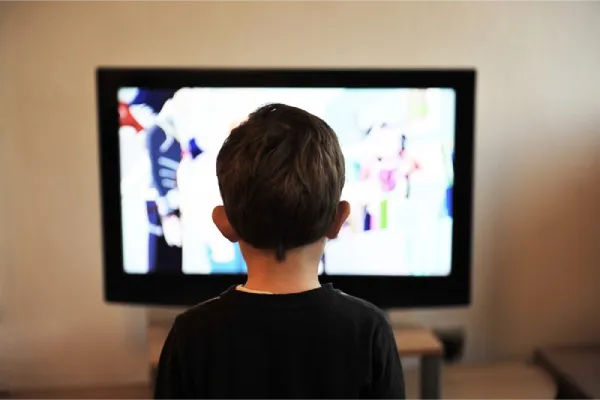
“TV Programs” is a familiar topic that frequently appears in the IELTS Speaking test across Parts 1, 2, and 3. Examiners may ask about your viewing habits, favorite shows, how your viewing style has changed, or even about a specific science program you’ve watched. To help you prepare effectively, this ECE article compiles sample answers based on the framework provided by Ms. Hong Hanh—an 8.0 IELTS instructor at ECE—along with high-scoring vocabulary. Use these to build your own ideas and boost your vocabulary range!
Part 1: Sample Questions & Answers
Below are some common IELTS Speaking Part 1 questions regarding TV programs, along with suggested responses:
1. Do you watch TV programs?
Answer: Yes, I watch TV quite regularly, especially in the evenings after work. It’s a great way for me to unwind and stay updated with what’s happening around the world. It’s become a regular habit for me to just pass the time before bed.
Vocab highlight:
- Unwind: To relax and de-stress
- Stay updated: To keep informed / keep up with the news
- Pass the time: To do something to avoid boredom
- Regular habit: Something you do consistently
2. What type of TV programs do you like best?
Answer: I really enjoy documentaries and crime dramas. Documentaries are both educational and eye-opening, while crime series keep me on the edge of my seat. I find them quite thought-provoking as well.
Vocab highlight:
- Crime dramas: Shows focused on criminal investigations
- Educational: Providing knowledge or information
- Eye-opening: Revealing something surprising or new
- On the edge of my seat: Very excited or nervous about what will happen next
- Thought-provoking: Stimulating careful consideration or thought
3. What’s your favorite TV show?
Answer: My favorite show right now is Breaking Bad. I have been binge-watching it for over a week now. The storyline is intense and the characters are so well developed. I love how unpredictable it is; it’s quite addictive.
Vocab highlight:
- Storyline: The plot of a show
- Character development: The process of building a character’s personality
- Binge-watch: To watch multiple episodes in one sitting
- Addictive: So enjoyable that you want to keep watching
- Unpredictable: Not able to be foreseen or known beforehand
4. Did you watch a lot of TV when you were a child?
Answer: Yes, I did. I used to watch animated shows every weekend. Shows like Tom and Jerry and SpongeBob were my favorites—they were so light-hearted and entertaining. I sometimes watch them again, and I feel they are now very nostalgic, bringing back fond childhood memories.
Vocab highlight:
- Animated shows: Cartoons
- Nostalgic: Evoking a sentimental longing for the past
- Childhood memories: Recollections from when you were young
- Light-hearted: Amusing and entertaining; not serious
5. Do you think children nowadays watch too much TV?
Answer: Yes, I think so. Many kids spend hours in front of the screen, which can give rise to a sedentary lifestyle, ultimately affecting their physical health and social skills. I believe parents should set boundaries regarding screen time and encourage a balanced routine that includes more social interaction.
Vocab highlight:
- Screen time: Time spent using devices like phones, TVs, or computers
- Sedentary lifestyle: A way of life that involves little physical activity
- Social interaction: Communicating and engaging with others
- Set boundaries: To establish limits
- Have a balanced routine: To have a healthy mix of activities
Part 2: Sample Cue Card
Describe a TV program about science you watch
You should say:
-
What the program is
-
What is it about
-
How often you watch it
-
and explain if you like it
Sample Answer: One science TV program that I really enjoy watching is “Cosmos: A Spacetime Odyssey,” hosted by Neil deGrasse Tyson. It’s a documentary-style series that explores the universe, space, time, and the laws of nature in a way that’s both visually stunning and easy to understand.
The program covers a wide range of topics—from the origins of the universe and the theory of evolution, to black holes, gravity, and the role of famous scientists like Isaac Newton and Albert Einstein. It doesn’t just present dry facts; instead, it tells a story and explains complex scientific concepts through beautiful animations and clear explanations.
I don’t watch it regularly anymore, but when it first came out, I was completely hooked. I binge-watched the entire series in just a few days. Now, I occasionally re-watch some of my favorite episodes when I feel like learning something new or just being inspired.
What I love most about this program is that it makes science accessible and exciting. It sparked my interest in astrophysics and made me realize how vast and mysterious the universe really is. It’s truly thought-provoking and eye-opening, and I think it’s perfect for both science lovers and curious minds in general.
Vocab highlight:
- Documentary-style series: A series presented in a factual, documentary format
- Visually stunning: Impressive to look at
- Complex scientific concepts: Difficult or intricate scientific ideas
- Binge-watch: To watch many episodes in a row
- Sparked my interest: Triggered my curiosity
- Accessible and exciting: Easy to understand and engaging
- Thought-provoking: Stimulating deep thought
- Eye-opening: Revealing new perspectives
- Astrophysics: The branch of astronomy dealing with the physical nature of stars and celestial bodies
- Curious minds: People who are eager to learn
Part 3: Discussion Questions & Answers
Part 3 delves deeper into the topic of TV programs. Here are some questions and suggested answers:
1. Why do some people enjoy watching science programs?
Answer: Many people enjoy science programs because they offer more than just entertainment—they provide valuable insights into how the world and the universe work. For example, shows like Cosmos or Planet Earth explain complex scientific ideas in a way that’s easy to understand, even for people without a scientific background. These programs are often visually stunning, which makes the learning experience more enjoyable. Additionally, they can spark curiosity and encourage viewers to explore new topics, such as astronomy, biology, or climate change. In short, science programs satisfy the mind and imagination.
Vocab highlight:
- Visually stunning: Impressive to look at
- Scientific background: Previous knowledge or education in science
- Spark curiosity: To ignite a desire to learn
- Explore new topics: To look into subjects you haven’t studied before
- Satisfy the mind and imagination: To fulfill intellectual and creative needs
2. Do you think science programs are suitable for children?
Answer: Absolutely, science programs can be extremely beneficial for children, especially when they’re designed with young audiences in mind. Programs like Magic School Bus or Brainchild present scientific concepts in a fun and engaging way, using colorful animations and simple explanations. These types of shows not only spark children’s natural curiosity but also help them build foundational knowledge that can support their learning in school. Moreover, watching educational content at a young age can help form good learning habits and encourage a lifelong interest in science. Of course, it’s important to choose age-appropriate content that matches the child’s level of understanding.
Vocab highlight:
- Foundational knowledge: Basic knowledge that serves as a base for further learning
- Natural curiosity: An innate desire to know or learn
- Age-appropriate: Suitable for a specific age group
- Lifelong interest: A passion that lasts throughout one’s life
3. How has the way people watch TV changed in recent years?
Answer: The way people watch TV has changed dramatically in the past decade, mainly due to the rise of streaming platforms like Netflix, YouTube, and Disney+. In the past, viewers had to follow fixed schedules and wait for their favorite shows to air weekly. Nowadays, people prefer on-demand content that they can watch anytime and anywhere, often on their phones or tablets. Binge-watching has become incredibly common, especially among younger audiences. Another major shift is that people now have more control over what they watch, when they watch it, and even at what speed. These changes reflect how technology has given viewers more autonomy and flexibility than ever before.
Vocab highlight:
- Streaming platforms: Services that deliver media over the internet
- On-demand content: Media that can be watched whenever the user chooses
- Binge-watching: Watching many episodes in a row
- Viewer autonomy: The freedom for viewers to choose their own viewing experience
- Flexibility: The ability to adapt to different circumstances
4. What kinds of TV programs are popular in your country nowadays?
Answer: In my country, people tend to enjoy a wide variety of TV programs. Dramas—especially romantic and family-oriented ones—are hugely popular, as they often reflect real-life emotions and situations. Reality shows, such as singing competitions or survival challenges, also attract a lot of viewers because of their entertainment value and unpredictability. Recently, there has been a noticeable rise in educational programs and documentaries, especially among younger audiences who watch them on platforms like YouTube or TikTok. Cooking shows, travel series, and science-related content are also gaining popularity as people seek both fun and knowledge in their free time.
Vocab highlight:
- Romantic/family-oriented dramas: Shows focused on relationships and family dynamics
- Reality shows: Unscripted television programs documenting real-life situations
- Unpredictability: The quality of being impossible to foresee
- Entertainment value: How much enjoyment a program provides
5. Should TV programs be used in education?
Answer: Yes, I strongly believe that TV programs, especially those with educational value, should be integrated into the learning process. They can make abstract concepts more concrete by using visuals, storytelling, and real-life examples. For instance, a science documentary can explain complex topics like climate change or genetics much more effectively than a textbook. Moreover, educational TV shows can reach students with different learning styles—some may learn better through watching than reading. Incorporating media into education also keeps students engaged and motivated, as it breaks the routine and brings a dynamic element to the classroom.
Vocab highlight:
- Integrate into the learning process: To include as part of the curriculum
- Visuals and real-life examples: Images and practical applications
- Different learning styles: Various ways individuals learn best
- Abstract concepts: Ideas that are not physical or concrete
- Keep students engaged: To maintain student interest and participation
Conclusion
We hope that these sample answers and vocabulary suggestions for the “TV Programs” topic in IELTS Speaking Parts 1, 2, and 3 have given you more ideas and the confidence to prepare for your test. Mastering phrases related to habits, preferences, and genres, as well as knowing how to express your opinions on the influence of TV, will help you score higher. Remember, consistent practice and making these structures and vocabulary your own are the keys to success. Good luck with your studies and your IELTS exam!



 Khai giảng Khóa học Hè cực HOT.
No comments yet!