


Tóm Tắt Nội Dung Bài Viết
Many people often wonder if studying online can actually help them reach their target band score, or if it’s just a waste of time and money. This is a very practical question, especially as the IELTS exam becomes increasingly critical for university admissions and studying abroad.
In 2026, as top-tier universities like the Academy of Journalism and Communication or the Foreign Trade University continue to prioritize IELTS certificates, the pressure to secure a score early has left many students and parents caught in a maze of information. This article from ECE will help you cut through the noise to determine exactly whether online learning is a breakthrough opportunity or just a superficial choice.

How does Online IELTS study differ from Offline classes?
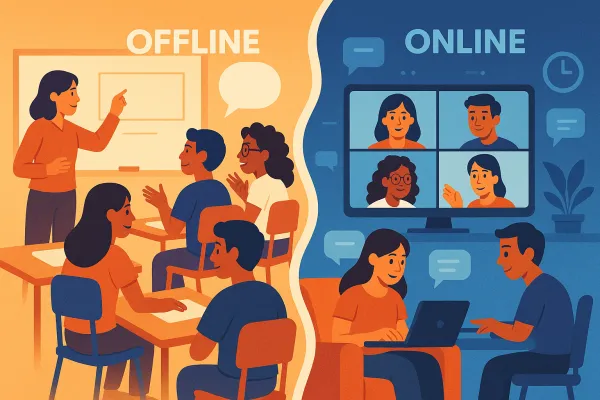
Evaluating the effectiveness of Online IELTS study
Studying IELTS online can be extremely effective—even superior to offline learning—if done correctly and through a reputable center. Effectiveness doesn’t lie in the format, but in the student’s commitment and the quality of the training program.
Key advantages of Online IELTS
- Maximum flexibility in time and location: This is the biggest advantage. You can attend classes, practice, and review lessons anytime, anywhere, with just an internet-connected device. This is especially suitable for busy individuals with packed schedules or those living far from quality test preparation centers.
- Significant cost savings: Online course fees are usually lower than in-person classes due to reduced operational and rental costs. Additionally, you save on incidental expenses like commuting, dining out, and printing materials.
- Access to diverse, high-quality resources and teachers: Online learning opens the door to a vast treasure trove of digital resources (video lectures, e-books, interactive exercises, online mock tests) and, most importantly, the opportunity to learn from experienced, top-tier teachers worldwide without geographical constraints.
- Promotes self-study and time management skills: When studying online, you are forced to be more proactive in scheduling, researching information, and completing assignments. This not only helps you progress in IELTS but also builds essential soft skills for your future studies and career.
- Innovative and modern teaching methods: With technological support, teachers can integrate novel methods like gamification, AI-powered grading, or virtual interactive tools, making lessons more engaging and dynamic.
- Encourages students to express personal opinions: The online environment sometimes helps students feel less self-conscious, making them more comfortable asking questions or sharing opinions, especially for those who are shy or afraid of making mistakes in a traditional classroom.
- Potential for great results: Scientific studies have shown that with the right methods and high self-discipline, online learners can achieve results equivalent to or even better than traditional learners, thanks to the ability to learn at their own pace and access diverse resources.
Challenges to overcome in Online IELTS
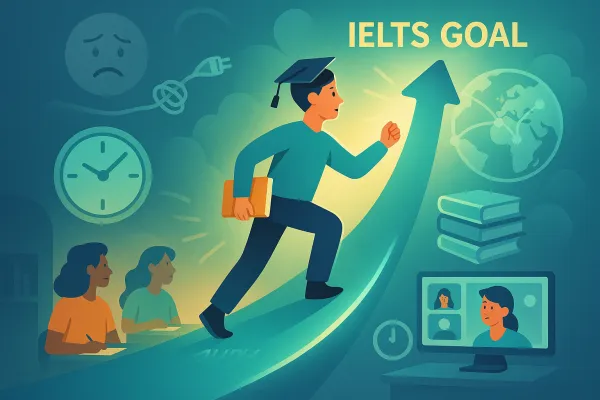
- Requires high self-discipline and personal accountability:
- Challenge: This is the biggest drawback. Without direct teacher supervision, learners are easily distracted by external factors (social media, chores, entertainment) or prone to procrastination.
- Solution: Create a strict study plan, use reminder apps, find a study buddy for motivation, or choose courses that offer close mentorship.
- Limited face-to-face interaction (especially for Speaking):
- Challenge: While online platforms have improved, they are hard to replace entirely. Some students struggle when they need immediate answers or “hands-on” guidance.
- Solution: Maximize the platform’s interactive features (Q&A, live chat), join group discussions, look for small-sized classes to increase interaction, or use AI tools for Speaking practice.
- Dependence on Internet quality and equipment:
- Challenge: Online learning requires a stable connection and functional equipment (computer, headset, mic). Technical issues can disrupt lessons and cause frustration.
- Solution: Ensure a stable internet connection, check your equipment before every session, and have a backup plan (e.g., mobile data).
- Difficulty in controlling the learning environment:
- Challenge: The home environment may not always be ideal for concentration (noise, interruptions from family).
- Solution: Choose a quiet, tidy space with minimal distractions; inform family members of your study schedule to avoid being disturbed.
- Feeling of isolation/lack of motivation:
- Challenge: Some learners may feel disconnected from teachers and peers, leading to a sense of isolation and a drop in motivation.
- Solution: Actively participate in online student communities, connect with classmates via group chats, or seek centers with strong support systems and community engagement.
- Eye strain and fatigue from prolonged screen time:
- Challenge: Studying for long periods on a computer or phone can cause eye strain and affect your health.
- Solution: Follow the 20-20-20 rule (every 20 minutes, look at something 20 feet away for 20 seconds), take frequent breaks, and adjust screen brightness.
Who is Online IELTS study for?
Whether you should study IELTS online depends heavily on your individual needs, circumstances, and personal learning style.
You SHOULD study IELTS online if:
- Your schedule is busy or irregular: If you are a student, a working professional with flexible hours, or a homemaker wanting to manage your own timetable, online learning allows you to fit study sessions into the best gaps in your day without being tied to a center’s fixed schedule.
- You possess high self-discipline: The ability to manage your time, study space, and focus is key. If you can proactively research, complete assignments, and stay motivated without constant reminders, online learning will be highly effective for you.
- You don’t live near reputable test prep centers: For those living far from city centers or in other provinces, online learning is a fantastic opportunity to access top-tier teachers and high-quality programs without the cost and time of commuting.
- You want to optimize costs: Online tuition is usually more economical than offline, and you significantly reduce travel and dining expenses, allowing you to invest more effectively in your learning journey.
- You love technology and modern learning environments: If you enjoy smart learning platforms, AI-powered grading, or interactive video lessons, this format will provide an engaging and effective experience.
Conversely, you SHOULD CAREFULLY CONSIDER (or AVOID) online IELTS if:
- You are easily distracted and need direct supervision: If you need a lively classroom atmosphere and close guidance from a teacher to stay motivated, online learning might not be the right fit.
- You prioritize face-to-face interaction: Some learners feel they connect better and learn more effectively through direct communication with teachers and peers.
- Your internet connection is unstable or your equipment is limited: This is a crucial factor that directly affects the quality of your online sessions, leading to frequent disruptions and frustration.
In summary, studying IELTS online is no longer just an “alternative” option; it has become a highly effective learning method when you choose the right platform, commit to the process, and know how to leverage its advantages. With its benefits of flexibility, cost-effectiveness, access to expert teachers, and abundant resources, Online IELTS offers a great opportunity for anyone looking to improve their English proficiency and conquer their dream IELTS band score.
If you are ready to start your journey, apply the criteria and advice in this article to find and choose a reputable online IELTS course. A smart decision today will be a solid foundation for your dream score in the future!



 Khai giảng Khóa học Hè cực HOT.
No comments yet!