


Tóm Tắt Nội Dung Bài Viết
Hello everyone! The shift from printed books to the Internet for storing knowledge is a classic yet evergreen topic in IELTS Writing Task 2. How can you analyze the prompt sharply, build persuasive arguments, and use appropriate academic vocabulary to hit a band score of 7.0+?
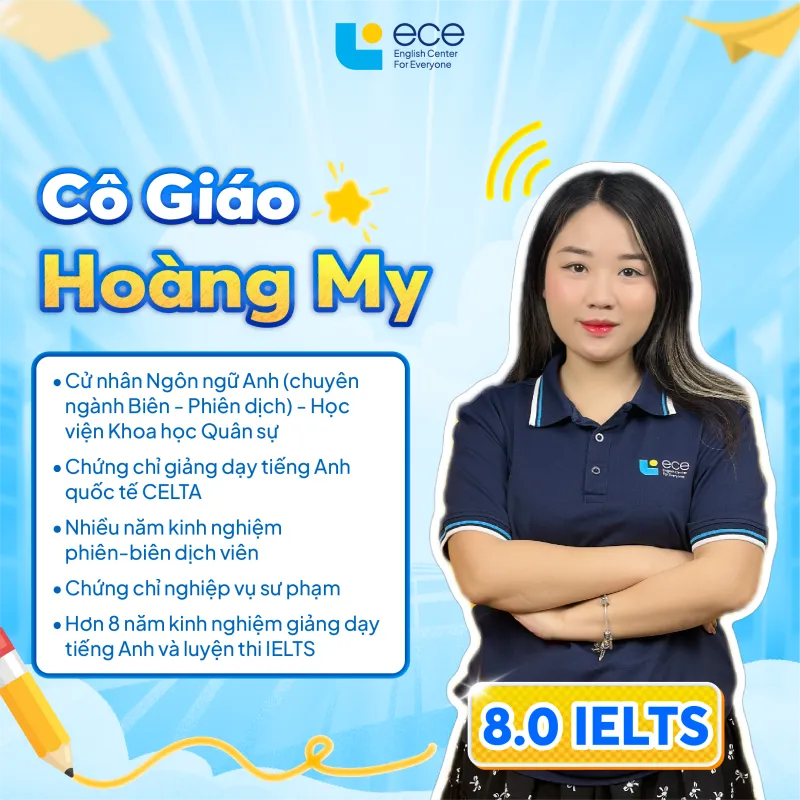
In today’s article, we will break down a specific prompt in detail, based on expert materials from Ms. Hoang My (an 8.0 IELTS instructor at ECE), to give you a comprehensive overview and a clear roadmap to conquer this topic.
Analyzing the prompt & defining your approach
To write a high-scoring essay, the first and most important step is to analyze the prompt thoroughly to understand the requirements and direct your arguments. Let’s dive into this specific prompt:
Prompt: In the past, knowledge was stored in books. Today, we store knowledge on the Internet. Do the advantages of this development outweigh the disadvantages?
- Task Type: Advantage > Disadvantage. This type requires you to compare the significance of the pros and cons, then provide a clear conclusion on which side “weighs” more.
- Topic: Technology & Knowledge Storage.
- Requirements:
- Present the advantages of storing knowledge on the Internet.
- Present the disadvantages of this trend.
- Provide a definitive personal opinion: do the advantages outweigh the disadvantages?
💡 Effective strategy: For this type of essay, a smart strategy is to state your position clearly in the introduction (e.g., “I believe the advantages outweigh the disadvantages”) and defend that stance throughout the essay.
Detailed Outline (Band 7.0+)
A logical outline is the foundation of a coherent essay. Below is a detailed structure for the prompt above.
- Introduction:
- Paraphrase the prompt, introducing the shift in knowledge storage from printed books to the Internet.
- State your personal opinion (Thesis Statement): Despite some drawbacks, I believe the advantages of this shift significantly outweigh the disadvantages.
- Body Paragraph 1: Analyzing the major advantages.
- Point 1: Provides instant and convenient access to information.
- Development: Compared to books (which are limited by physical availability and geography), the Internet allows information to be retrieved in seconds, serving everyone from students and researchers to professionals.
- Point 2: The dynamic nature of online information, which is easily and constantly updated.
- Development: Unlike printed books (which can become obsolete), online knowledge—such as scientific research or news—can be revised as soon as new findings emerge, ensuring users access the latest information.
- Body Paragraph 2: Addressing disadvantages & Rebuttal.
- Point 1 (Disadvantage): Risks of misinformation and an overload of unverified content.
- Point 2 (Disadvantage): Potential reduction in critical thinking and attention spans.
- Rebuttal: However, these issues can be mitigated. We can overcome them through digital literacy education and the use of trusted sources and filters. When used correctly, the Internet remains a powerful tool.
- Note: This rebuttal is crucial; it reinforces the “advantages outweigh disadvantages” stance stated in the introduction.
- Conclusion:
- Summarize and reaffirm your position: Despite potential risks, the benefits of speed, accessibility, and flexibility of the Internet are undeniable and far greater.
- Final thought: With proper guidance, this development will continue to enhance how we learn.
Sample Essay (Band 7.0+) for IELTS Writing Task 2: Books
Prompt: In the past, knowledge was stored in books. Today, we store knowledge on the Internet. Do the advantages of this development outweigh the disadvantages?
Sample Essay:
The way people access and store knowledge has dramatically changed over time. While information used to be preserved in printed books, it is now primarily stored and shared online. Although this shift brings certain drawbacks, I believe that the advantages of storing knowledge on the Internet significantly outweigh the disadvantages.
One of the major benefits of online knowledge storage is the instant and convenient access it provides. Unlike traditional books, which may be limited by physical availability or geography, digital information can be retrieved within seconds by anyone with an internet connection. This accessibility empowers not only students and academics but also professionals across all industries. Additionally, the dynamic nature of online platforms allows information to be updated constantly, ensuring that users are not relying on outdated sources. For instance, scientific research or news articles can be revised as new discoveries emerge.
However, one concern is the risk of misinformation and the overload of unverified content, which may lead to confusion or even harm. Moreover, relying too heavily on the Internet might reduce people’s critical thinking or attention spans. Nevertheless, these issues can be addressed through digital literacy education and the use of trusted sources and filters. When used responsibly, the Internet serves as an immensely powerful tool for learning and intellectual growth.
In conclusion, despite the potential downsides, I am convinced that the advantages of storing knowledge online—especially in terms of speed, accessibility, and flexibility—far outweigh its disadvantages. With proper guidance, this development can enhance the way we learn and share information.
(Word count: 287)
High-scoring academic vocabulary summary
To upgrade your writing, ensure you use these academic words and collocations accurately.
| Vocabulary / Collocation | Vietnamese Meaning |
| access and store knowledge | tiếp cận và lưu trữ kiến thức |
| preserved | được lưu giữ, bảo tồn |
| drawbacks | mặt hạn chế, nhược điểm |
| instant and convenient access | quyền truy cập nhanh chóng và tiện lợi |
| digital information | thông tin kỹ thuật số |
| retrieved | được truy xuất, lấy lại |
| dynamic nature | bản chất linh hoạt, có thể thay đổi |
| outdated sources | nguồn thông tin lỗi thời |
| risk of misinformation | nguy cơ thông tin sai lệch |
| unverified content | nội dung chưa được kiểm chứng |
| digital literacy education | giáo dục về kỹ năng số |
| trusted sources and filters | các nguồn tin và bộ lọc đáng tin cậy |
| intellectual growth | sự phát triển về mặt trí tuệ |
Final thoughts
Through today’s analysis by Ms. Hoang My, you now have a complete roadmap for handling the “Do the advantages outweigh the disadvantages?” essay type for the Books topic in IELTS Writing Task 2. The key to success lies in building a solid argument, defending your position logically, and using a diverse range of vocabulary. Practice regularly to turn these insights into your own skills!





 Khai giảng Khóa học Hè cực HOT.
No comments yet!