


Tóm Tắt Nội Dung Bài Viết
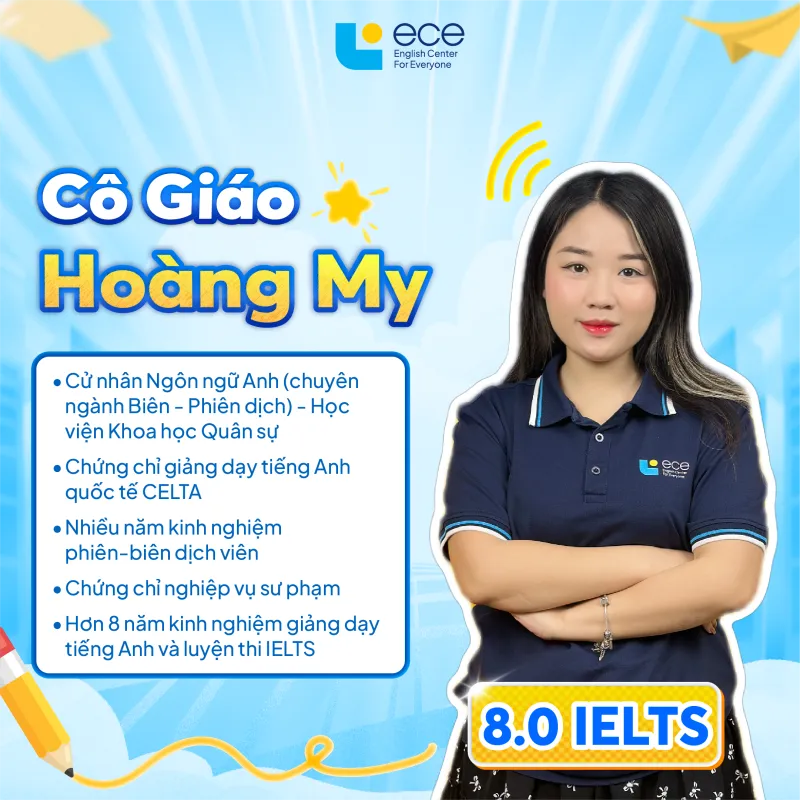
Hello everyone! I’m Hoang My, an instructor for the II and IH classes here at ECE. In today’s lesson, we’ll be practicing a common type of Opinion Essay for IELTS Writing Task 2. Our topic today concerns advertising aimed at children—an issue that is becoming increasingly prevalent in modern society.
Topic Analysis
Prompt:
Nowadays there is a growing amount of advertising aimed at children. Some people think this has negative effects on children and should be banned. To what extent do you agree or disagree?
- Task type: Opinion – To what extent do you agree or disagree?
- Topic: Media, impact on children
- Keywords: advertising aimed at children, negative effects, should be banned
- Task: State your level of agreement or disagreement with the idea of banning advertising aimed at children.
Detailed Outline
Introduction:
- Introduce the issue of the rising amount of advertising aimed at children.
- State your position clearly: strongly agree, as advertising has many negative impacts on a child’s development.
Body Paragraph 1 – Negative effects of advertising on children:
- Children are easily influenced because they lack the ability to distinguish between right and wrong.
- It leads to uncontrolled consumer behavior and pestering parents.
- Example: ads for toys or fast food → impacts on health & consumer habits.
Body Paragraph 2 – Reasons for a ban (and a brief counter-argument):
- A ban is necessary to protect a vulnerable group.
- Some argue that regulation is better than a total ban.
- However, in reality, controlling advertising content is difficult to implement effectively.
Conclusion: Reiterate your position: most advertising aimed at children should be banned to limit long-term consequences.
IELTS Writing Task 2 Sample Answer: Advertising
Nowadays there is a growing amount of advertising aimed at children. Some people think this has negative effects on children and should be banned. To what extent do you agree or disagree?
In recent years, there has been a noticeable increase in advertisements specifically targeting children. While some argue that these ads are harmless or even entertaining, I strongly agree that they often do more harm than good and that most of them should be banned.
Children are particularly vulnerable to advertising because they lack the maturity and critical thinking skills to distinguish between genuine information and marketing manipulation. Commercials that promote junk food, expensive toys, or unrealistic lifestyles can easily influence young minds, leading to unhealthy habits and unnecessary consumerism. For example, many children pester their parents to buy sugary snacks or fast food after seeing colorful and appealing ads, which contributes to issues such as childhood obesity and poor nutrition.
In addition, banning advertisements aimed at children is an important step in protecting their mental and emotional development. Although some argue that proper regulation is a better solution than a total ban, the reality is that enforcing strict advertising rules is often difficult and inconsistent across platforms. Given the rapid growth of digital media, children are exposed to targeted ads on websites, games, and social media, making it nearly impossible to monitor everything they see. Therefore, an outright ban is a more effective and responsible approach to shielding children from exploitative content.
In conclusion, I believe that advertising aimed at children should be banned in most cases. Protecting the wellbeing of the younger generation should take priority over commercial interests.
Word count: 276
Vocabulary Highlight
- advertisements specifically targeting children (n): advertisements aimed specifically at children
- do more harm than good (idiom): causing more damage than benefit
- vulnerable to advertising (a): easily influenced by advertising
- critical thinking skills (n): the ability to analyze information objectively
- marketing manipulation (n): the use of deceptive or persuasive marketing tactics
- unnecessary consumerism (n): excessive or unneeded consumption
- pester their parents (v): to nag or annoy parents into buying things
- childhood obesity (n): excess weight in children
- mental and emotional development (n): growth in psychological and emotional well-being
- proper regulation (n): appropriate oversight or control
- enforcing strict advertising rules (v): to implement and uphold rigorous advertising standards
- targeted ads (n): advertisements tailored to specific audiences
- exploitative content (n): content that takes unfair advantage of someone
- an outright ban (n): a complete and total prohibition
- commercial interests (n): profit-driven motives
With today’s topic, we have practiced how to develop a clear, strong argument for a position that leans toward “agree,” while also learning academic vocabulary related to advertising, child psychology, and consumerism. When writing “To what extent” essays, don’t be afraid to clearly state your position, as long as you develop it logically and provide specific examples.





 Khai giảng Khóa học Hè cực HOT.
No comments yet!