


Tóm Tắt Nội Dung Bài Viết
The IELTS Trainer series, published by Cambridge University Press, is a highly-regarded IELTS preparation resource trusted by thousands of candidates worldwide. Featuring authentic practice tests that mirror the actual exam, this series provides not only a wealth of practice material but also the essential strategies and skills needed to achieve your target score.
1. Overview of the IELTS Trainer Series
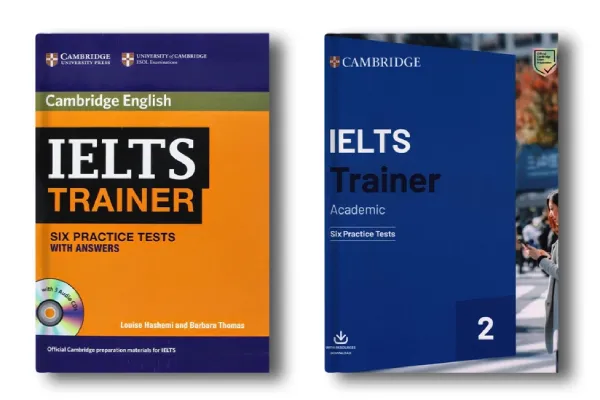
The IELTS Trainer series is a reliable practice resource compiled by experts with extensive experience in IELTS teaching and exam preparation.
- Authors: Notable authors include Louise Hashemi and Barbara Thomas (for IELTS Trainer 1), along with Amanda French, Miles Hordern, Anethea Bazin, Katy Salisbury, Kate Chandler, and Carole Allsop (for IELTS Trainer 2).
- Publisher: Cambridge University Press – one of the world’s oldest and most prestigious academic publishers. This ensures the highest quality, reliability, and relevance, strictly adhering to the formats and standards of the IELTS exam managed by Cambridge Assessment English.
- Volumes and Publication Dates: The series consists of 3 main books serving specific purposes:
- IELTS Trainer 1: Published in 2011.
- IELTS Trainer 2 Academic: Published in 2019, designed for candidates taking the Academic module.
- IELTS Trainer 2 General Training: Published in 2019, designed for candidates taking the General Training module. Each book provides independent practice tests with no overlapping content.
- Price: The price for each book typically ranges from 250,000 VNĐ to 400,000 VNĐ in the Vietnamese market, depending on the bookstore, edition, and time of purchase.
2. Who is this series for?
IELTS Trainer is suitable for learners at various levels, especially those in the final stretch of their IELTS preparation:
- Intermediate to Advanced learners (B1/5.0 IELTS and above): The series focuses on practice tests and test-taking strategies rather than basic grammar or vocabulary. Therefore, a solid foundation is necessary to use it effectively.
- Candidates wanting to familiarize themselves with the official IELTS format: The books accurately simulate the structure, question types, and timing of each section (Listening, Reading, Writing, and Speaking).
- Test-takers seeking high-quality practice material: The tests are compiled by Cambridge, ensuring a level of difficulty and realism that closely matches the actual IELTS exam.
- Self-study students: With detailed answer keys, listening scripts, sample writing answers, and clear explanations, the series is ideal for home practice.
- Teachers and IELTS centers: This is a valuable resource for instructors to use as homework or mock exams for their students.
- Candidates needing module-specific practice: The clear distinction between IELTS Trainer 2 Academic and IELTS Trainer 2 General Training allows you to focus specifically on your chosen module.
Download the IELTS Trainer series (including IELTS Trainer 1, IELTS Trainer 2 Academic, and IELTS Trainer 2 General Training) along with the audio files here.
3. Detailed Content Review
Each book in the IELTS Trainer series focuses on providing complete practice tests along with unique highlights. The difficulty level of this series is often rated as slightly higher than the actual exam, helping you challenge yourself and hone your skills under high pressure.
General Structure of Each Book:
- Introduction: An overview of the IELTS exam, test structure, scoring system, and how to use the book effectively.
- Practice Tests: The core section featuring several full IELTS practice tests covering all 4 skills:
- Listening: 4 sections, 40 questions, with high-quality audio and diverse question types.
- Reading: 3 passages, 40 questions, with a wide range of question formats (content varies between Academic and General Training).
- Writing: 2 Tasks. Task 1 (Academic: charts, tables; General Training: letter writing). Task 2: Essay.
- Speaking: Topics and sample questions for all 3 parts of the speaking test.
- Answer Key and Recording Scripts: Detailed answers for Listening and Reading, including explanations and transcripts.
- Sample Writing Answers: Model answers for both Task 1 and Task 2 across various band scores.
- Speaking Test advice and sample answers: Tips and model responses for the Speaking section.
3.1. Cambridge IELTS Trainer 1 (Published 2011)
IELTS Trainer 1 includes 6 full practice tests. The standout feature of this volume is the “Training” section included in Test 1 and Test 2.
- In-depth “Training” Section: Each skill in Test 1 and Test 2 begins with detailed training, providing:
- Section Guides: Requirements, assessment criteria, and how to approach the tasks.
- Specific Strategies: From analyzing the prompt and understanding information to organizing ideas and presenting answers.
- Step-by-Step Practice: Helping learners get used to and master the methods for each specific question type.
- Special Support for Writing: The book provides a step-by-step guide to completing a writing task. For example, for a Bar Chart, it outlines steps from analyzing the prompt and reading the chart to selecting data, filling in blanks in a sample response, and post-writing analysis. The same applies to Task 2. Practical tips are provided with illustrations, making it extremely helpful for self-study.
- Speaking Support: The book breaks down each part of the test, explaining how it is assessed and providing useful knowledge and specific tips. Learners practice with exercises such as expanding on answers, using adjectives, note-taking for Part 2, expressing opinions, and common vocabulary.
IELTS Trainer 1 is ideal for those just starting their IELTS preparation or those who want to build a systematic strategic foundation before diving deep into intensive practice.
3.2. Cambridge IELTS Trainer 2 Academic (Published 2019)
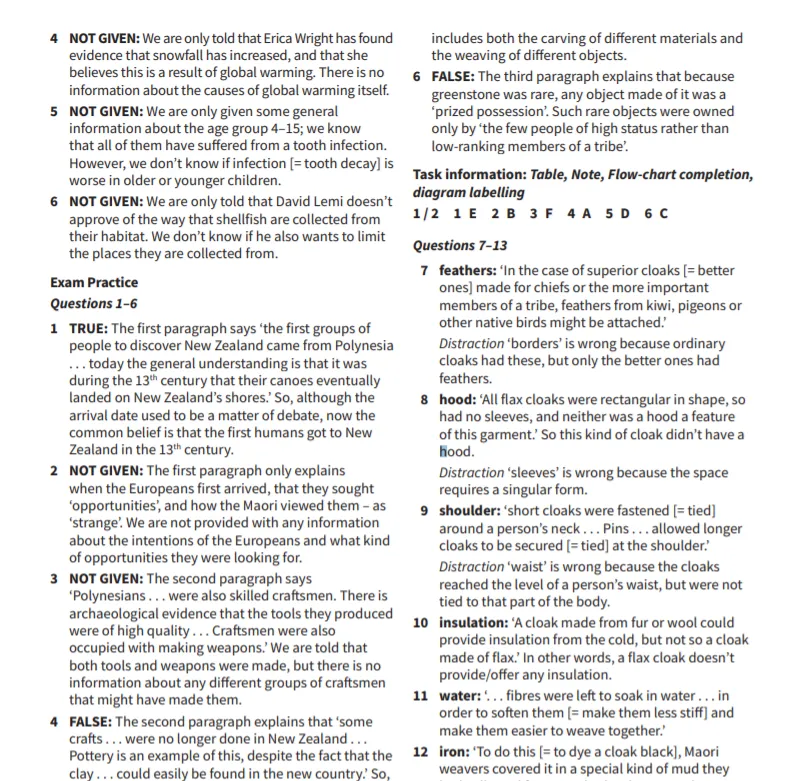
IELTS Trainer 2 Academic includes 6 full practice tests, focusing entirely on the Academic module.
- Specialized Academic Content:
- Reading: Passages are selected and compiled in an academic style, closely matching the difficulty and question types of the Academic Reading section.
- Writing Task 1: Focuses entirely on charts, tables, maps, and processes, as required by IELTS Academic Writing Task 1.
- Writing Task 2: Academic essay topics that require analytical thinking and strong argumentation.
- Updated and Practical: Published in 2019, the content remains highly relevant, helping you familiarize yourself with the exam and practice skills according to the latest Academic module trends.
- Detailed Guidance: The book maintains its strength in providing step-by-step instructions, from prompt analysis and question types to completing the full test.
This book is suitable for candidates with a good English foundation who are preparing for the IELTS Academic exam and need practice with updated tests and detailed guidance to avoid common mistakes.
3.3. Cambridge IELTS Trainer 2 General Training (Published 2019)
IELTS Trainer 2 General Training also includes 6 full practice tests, but specifically for the General Training module.
- Specialized General Training Content:
- Reading: Passages are designed in the General Training style, including texts related to daily life, advertisements, notices, or shorter articles.
- Writing Task 1: Focuses on Letter Writing, covering everyday communication scenarios such as job applications, complaint letters, thank-you notes, etc.
- Writing Task 2: Essay topics usually revolve around social issues and personal opinions, with a more practical application to daily life.
- Updated and Practical: Similar to the Academic version, the content of IELTS Trainer 2 General Training is highly practical, helping you effectively prepare for this specific module.
- Detailed Guidance: It continues the tradition of providing detailed step-by-step instructions, from analyzing the prompt and identifying question types to performing full practice tests.
This book is ideal for candidates with a good English foundation preparing for the IELTS General Training exam who want to practice with challenging tests tailored to this module.
4. Pros and Cons of the IELTS Trainer Series
Pros:
- High Reliability: Compiled and published by Cambridge University Press, ensuring accuracy and up-to-date content and exam formats.
- Realistic Simulation: Tests are designed to mirror the actual IELTS exam in terms of structure, difficulty, question types, and timing, helping candidates prepare mentally.
- Diverse Exercises: Provides comprehensive practice for all 4 skills—Listening, Speaking, Reading, and Writing—with various question formats.
- Comprehensive Support Materials: Detailed answer keys, transcripts, and sample Writing and Speaking responses with explanations make it easy for self-study students to check their work and learn from mistakes.
- Useful “Training” Sections: Particularly in IELTS Trainer 1 and the Trainer 2 editions, the “Training” sections provide detailed strategic guidance, helping learners understand how to approach each question type.
- Clear Differentiation: Separate books for Academic and General Training help candidates focus on their specific module.
- Regularly Updated: Later versions (Trainer 2) are updated to reflect minor changes in the exam format and question trends.
Cons:
- Not for Beginners: The series focuses on practice tests and strategies rather than teaching foundational knowledge.
- Limited Number of Tests: Each book only contains 6 practice tests. You may need to combine it with other materials if you want more practice.
- Speaking and Writing are for Reference Only: While sample answers are provided, improving these two skills still requires guidance from a teacher or an experienced person for personalized feedback and grading.
- IELTS Trainer 1 May Be Slightly Dated: Since it was published in 2011, some question types or trends may have shifted slightly compared to current exams.
5. How to Study Effectively with IELTS Trainer
To optimize your learning with the IELTS Trainer series, consider the following steps:
- Thoroughly Study the “Training” Sections (especially in IELTS Trainer 1 and 2):
- Before taking the full tests, read and understand the instructions, strategies, and examples in the “Training” sections of Test 1 and Test 2. This is the “key” to mastering the approach for each question type.
- Complete the small exercises in the “Training” section to reinforce your knowledge and skills.
- Take Practice Tests Under Exam Conditions:
- Set a Timer: Use a stopwatch to ensure you complete the tasks within the allotted time (Listening: 30 mins, Reading: 60 mins, Writing: 60 mins).
- Quiet Space: Choose a noise-free environment to maximize concentration, especially for the Listening section.
- Complete All 4 Skills: Try to do all 4 sections in one sitting to simulate the pressure and focus required during the actual exam.
- Check Answers and Analyze Mistakes in Detail:
- For Listening and Reading: After finishing, check your answers carefully. Mark the ones you got wrong and find out why.
- Listening: Listen again to the segments containing the wrong answers, and read the script to cross-reference and understand better. Pay attention to synonyms, paraphrasing, and distractors.
- Reading: Re-read the passages containing the incorrect information, identify keywords, and understand why the answer is correct or incorrect. Analyze sentence structures and how the author presents ideas.
- For Writing and Speaking:
- Writing: Refer to the sample answers and compare them with your own in terms of idea development, structure, grammar, and vocabulary. If possible, have a teacher or experienced person grade your work and provide personalized feedback.
- Speaking: Record your own speaking, then listen back to evaluate your pronunciation, intonation, fluency, and word choice. Refer to sample answers to learn how to respond effectively and expand on your ideas.
- For Listening and Reading: After finishing, check your answers carefully. Mark the ones you got wrong and find out why.
- Learn Vocabulary and Grammar from the Tests:
- Note New Vocabulary: Write down new words, useful phrases, and grammar structures encountered during practice and while checking answers.
- Learn by Topic: Take advantage of common themes in the reading and listening passages to expand your topic-based vocabulary.
- Apply to Practice: Try to use the newly learned vocabulary and structures in your own writing or speaking practice.
- Focus on Weaknesses:
- After analyzing your mistakes, you will identify which skills or question types you are struggling with. Dedicate more time to practicing those specific areas.
- Don’t hesitate to go back to grammar or vocabulary books if you discover gaps in your foundational knowledge.
- Practice Regularly and Persistently:
- Aim to complete all the tests in the book before moving on to the next one.
- Maintain a consistent study schedule to build a habit and retain knowledge.
- Combine with Other Resources:
- IELTS Trainer is an excellent practice series, but it shouldn’t be your only resource. Combine it with specialized vocabulary and grammar books, or other Cambridge IELTS materials (e.g., the Cambridge IELTS Practice Tests series) for a more comprehensive study plan.
- Join forums or study groups to exchange experiences and find practice partners.
With the detailed guidance and high reliability of Cambridge University Press, the IELTS Trainer series will undoubtedly be a powerful companion on your journey to conquering your target IELTS band score. ECE wishes you the best of luck with your studies!





 Khai giảng Khóa học Hè cực HOT.
No comments yet!