


Tóm Tắt Nội Dung Bài Viết
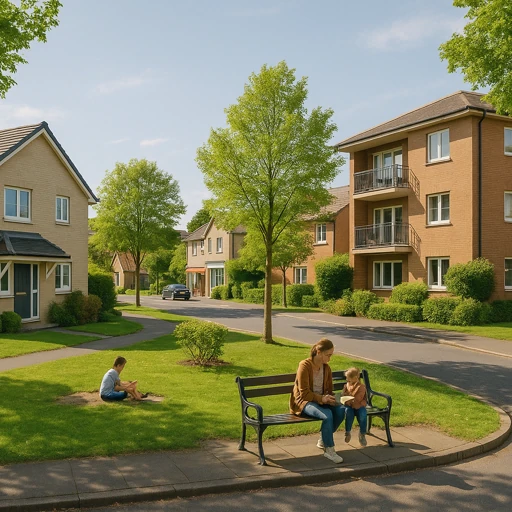
Do you ever feel stuck when trying to describe where you live or comparing different neighborhoods? Don’t worry! ECE English Center is here to help you confidently conquer the Neighborhood topic in IELTS Speaking with our exclusive set of sample answers.
Compiled and professionally reviewed by Ms. Hoang My, an 8.0 IELTS instructor at ECE, these samples provide not only fresh ideas but also a treasure trove of high-scoring vocabulary and expressions. We believe that once you’ve carefully read through, noted down the “power phrases,” and practiced them, you’ll find that talking about your neighborhood has never been easier or more fluent!
Let’s dive in with ECE right now!
PART 1
- Do you like your neighbors?
Yes, I genuinely appreciate my neighbors because they’re friendly and respectful of each other’s privacy. We occasionally have casual chats, which helps foster a sense of community. It’s comforting to know that people are considerate and approachable.
Highlighted vocabulary:
- appreciate (v): to value or be grateful for
- foster (v): to encourage or promote the development of
- considerate (a): thoughtful and careful not to inconvenience others
- Are your neighbors usually close to each other in your country?
In Vietnam, people in rural areas tend to be very close-knit, often helping each other out in times of need. In urban areas, however, relationships can be more distant due to busy lifestyles. Still, there’s usually a sense of solidarity during community events or emergencies.
Highlighted vocabulary:
- close-knit (a): characterized by strong social and emotional bonds
- solidarity (n): unity or agreement of feeling or action
- emergencies (n): serious, unexpected situations requiring immediate action
- What is your neighborhood like?
My neighborhood is relatively quiet and well-maintained, with plenty of green spaces and amenities nearby. It has a good balance of residential and commercial areas, which makes life convenient. I’d say it’s a safe and family-friendly environment overall.
Highlighted vocabulary:
- well-maintained (a): kept in good condition
- amenities (n): useful features or services of a place
- residential (a): designed for people to live in
- How can neighbors be helpful?
Neighbors can be incredibly helpful in emergencies or when you need a small favor, like watering plants while you’re away. They can also keep an eye out for suspicious activity, which enhances security. In my opinion, a supportive neighborhood can make daily life much less stressful.
Highlighted vocabulary:
- emergencies (n): serious, unexpected situations requiring immediate action
- suspicious (a): potentially dishonest or dangerous
- supportive (a): providing encouragement or emotional help
- Do you think your neighborhood is a good place for children?
Absolutely. It’s safe with low traffic and plenty of green spaces where kids can play freely. There are also reputable schools and playgrounds within walking distance. Such an environment definitely nurtures children’s development.
Highlighted vocabulary:
- low traffic (n): having few vehicles on the road
- reputable (a): having a good reputation
- nurtures (v): to care for and encourage the growth of
- What facilities are available in your neighborhood?
My neighborhood has a good range of facilities, including a community center, sports courts, and a public library. There are also various shops and cafes that add to its vibrancy. I think these amenities contribute a lot to our quality of life.
Highlighted vocabulary:
- community center (n): a place where people from a neighborhood can meet for social activities
- vibrancy (n): the quality of being full of energy and life
- amenities (n): useful features or services of a place
- How could your neighborhood be improved?
I think it could be improved by adding more green spaces and better waste management systems. More recreational areas would encourage people to spend time outdoors and socialize. Additionally, enhancing public transport would make commuting more convenient.
Highlighted vocabulary:
- waste management (n): the collection and disposal of garbage
- recreational (a): relating to activities done for enjoyment
- commuting (n): the act of traveling to work or school
- Do you think it is important to have a good relationship with your neighbors?
Definitely, having a good rapport with neighbors builds trust and a sense of belonging. It’s reassuring to know you can rely on each other in tough times. Strong neighborly ties also contribute to a harmonious living environment.
Highlighted vocabulary:
- rapport (n): a close and harmonious relationship
- reassuring (a): removing doubts and fears
- harmonious (a): free from disagreement or dissent
PART 2
Describe an interesting neighbor.
You should say:
- Who this person is
- How you know this person
- What this person likes to do
And explain why you think this neighbor is interesting.
***
I’d like to talk about my neighbor, Cô Mai, who I think is one of the most interesting people in my neighborhood. She’s around 65 years old and has lived next door to my family for as long as I can remember.
I got to know her really well during the pandemic, when everyone had to stay home and we started chatting more often over the fence. Before that, I only knew her as the friendly lady who sold homemade sticky rice and bánh cuốn every morning at the small market near our house.
One thing that makes her so fascinating is how resourceful and warm-hearted she is. Even though she’s retired now, she still wakes up at the crack of dawn to prepare breakfast for the neighbors, especially for students who leave early for school. She loves gardening too. Her tiny front yard is always full of herbs, chillies, and colorful flowers. She often shares homegrown vegetables or freshly cooked food with everyone on the street.
What really amazes me is her positive energy. She always has a big smile on her face and greets everyone kindly, no matter how busy she is. She even organizes small charity drives to help low-income families in our ward. Thanks to her, our neighborhood feels more like an extended family.
I find her inspiring because she reminds me that living a simple life but caring for people around you can make a huge difference. Every time I see her, I feel grateful that we have such a generous and warm neighbor who brings everyone closer together.
Highlighted Vocab
- as long as I can remember (phrase): for a very long time
- over the fence (phrase): informal chatting between neighbors
- resourceful (a): having the ability to find quick and clever ways to overcome difficulties
- at the crack of dawn (idiom): very early in the morning
- charity drives (n): organized efforts to collect money or goods for those in need
- low-income families (n): households with limited financial resources
- extended family (n): a group of people who feel as close as a family
- brings everyone closer together (phrase): fosters unity and connection
Tips for your practice:
- Choose a realistic story that reflects local culture: neighbors sharing food, helping out, and being friendly.
2. Cover all points: who they are ➜ how you know them ➜ what they do ➜ why they are interesting.
3. Use specific details: local food, nearby markets, small gardens.
4. Express emotion: I feel grateful, She inspires me, She makes our area feel like a family.
5. Use natural transition phrases: Before that, Since then, Besides, What amazes me is…
Advanced expansion formula:
- Introduction ➜ Context of your bond ➜ Describe unique traits (habits, hobbies) ➜ Analyze their impact ➜ Lesson learned or personal feelings.
2. Use natural collocations: share homemade food, organize charity drives, keep a tiny garden, spread positive energy.
3. Use varied grammar: relative clauses (who I think is…), conditionals (If she didn’t live next door, our street wouldn’t feel so warm.), participle clauses (Having lived next to her for years, I really admire her.).
PART 3
1. Do you think neighbors are important?
Sample Answer:
Yes, I strongly believe that neighbors play a vital role in our daily lives, especially in fostering a sense of community and security. Having good neighbors means you have people nearby who can lend a helping hand in emergencies or simply look out for your property when you’re away. They can also become trusted friends who offer emotional support and companionship, which is particularly valuable for the elderly or people living alone.
Highlighted Vocabulary:
- foster (v): to encourage or promote
- sense of community (n): a feeling of belonging to a group
- lend a helping hand (idiom): to assist someone
- look out for (phr v): to keep watch over or protect
- companionship (n): the feeling of friendship and being with others
2. What are the qualities of a good neighbor?
Sample Answer:
A good neighbor, in my opinion, should be respectful and considerate of others’ privacy and noise levels. They should understand that living in close proximity requires compromises to maintain harmony. Another important quality is being approachable and willing to offer support when needed, such as watering plants or feeding pets during vacations. Small gestures like these can build trust and create a friendly atmosphere in the neighborhood. Essentially, a good neighbor strikes a balance between being helpful and minding their own business.
Highlighted Vocabulary:
- respectful (a): showing politeness and consideration
- considerate (a): thoughtful of others
- proximity (n): nearness in space
- compromise (n): an agreement reached by mutual concessions
- approachable (a): friendly and easy to talk to
- gesture (n): an action performed to show kindness
- strike a balance (idiom): to find a fair middle ground
3. Now that most people use technology in communicating with others, how do you think this has affected people’s relationships with their neighbors?
Sample Answer:
I think the widespread use of technology has made people more connected globally but often less engaged with those living next door. Many people prefer to interact through social media or messaging apps rather than having face-to-face conversations with neighbors. This can lead to a sense of isolation within communities and weaken neighborhood bonds. On the other hand, some neighborhoods use online groups to share local updates, which can actually strengthen community ties if used wisely. So, technology can be both a barrier and a bridge depending on how it’s used.
Highlighted Vocabulary:
- widespread (a): common or extensive
- engage (v): to participate or connect
- face-to-face (a): in person
- isolation (n): the state of being alone
- bond (n): a connection or link
- forum (n): a place for discussion
- barrier (n): an obstacle
4. How should modern people communicate with their neighbors?
Sample Answer:
I think modern people should find a healthy balance between using digital tools and maintaining in-person interactions with their neighbors. For example, it’s practical to use group chats or neighborhood apps for quick updates about security or local events. However, nothing can replace casual conversations in shared spaces like gardens or lobbies, which help build genuine rapport. Community gatherings or block parties are also excellent ways to strengthen relationships. Ultimately, it’s about combining convenience with real human connection.
Highlighted Vocabulary:
- healthy balance (n): a sensible middle ground
- practical (a): useful and sensible
- shared spaces (n): areas used by everyone in the community
- genuine (a): authentic and sincere
- rapport (n): a close, harmonious relationship
- block party (n): a social gathering for people living on the same street
- convenience (n): the state of being easy to use
We hope these sample answers on the Neighborhood topic have provided you with plenty of ideas and effective exam strategies. ECE English is always here to support you. If you have any questions or need further assistance with any other topics, please leave us feedback so we can continue to provide the highest quality content. Wishing you great success!





 Khai giảng Khóa học Hè cực HOT.
No comments yet!