


Tóm Tắt Nội Dung Bài Viết
Welcome back to the ECE Language Center’s IELTS Reading practice series. “Robert Louis Stevenson” is a passage that frequently appears in IELTS practice tests, particularly within the Cambridge IELTS series. In this article, ECE will not only provide detailed answers but also offer an in-depth analysis of the vocabulary, sentence structures, and strategies for identifying correct answers, helping you grasp the essence of the passage and sharpen your test-taking skills.
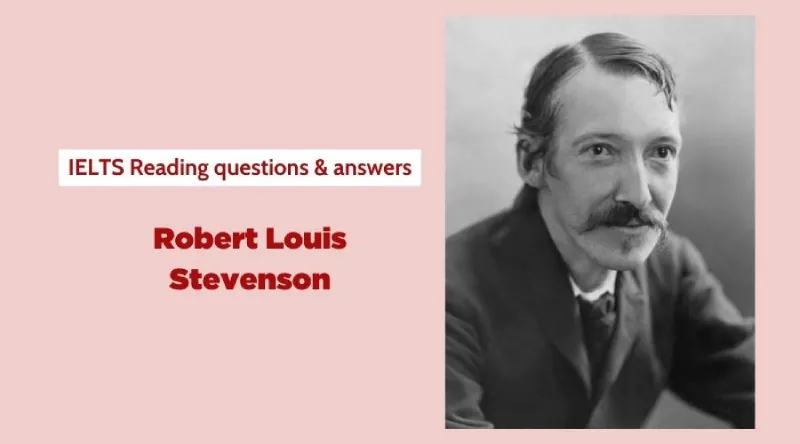
Detailed Reading Passage and Questions: Robert Louis Stevenson
Reading Passage
Paragraph A
Scottish novelist, poet, essayist, and travel writer, Robert Louis Stevenson was born at 8 Howard Place, Edinburgh, Scotland, on 13 November 1850. It has been more than 100 years since his death. Stevenson was a writer who caused conflicting opinions about his works. On one hand, he was often highly praised for his expert prose and style by many English-language critics. On the other hand, others criticised the religious themes in his works, often misunderstanding Stevenson’s own religious beliefs. Since his death a century before, critics and biographers have disagreed on the legacy of Stevenson’s writing. Two biographers, KF and CP, wrote a biography about Stevenson with a clear focus. They chose not to criticise aspects of Stevenson’s personal life. Instead, they focused on his writing, and gave high praise to his writing style and skill.
Paragraph B
The literary pendulum has swung these days. Different critics have different opinions towards Robert Louis Stevenson’s works. Though today, Stevenson is one of the most translated authors in the world, his works have sustained a wide variety of negative criticism throughout his life. It was like a complete reversal of polarity—from highly positive to slightly less positive to clearly negative; after being highly praised as a great writer, he became an example of an author with corrupt ethics and lack of moral. Many literary critics passed his works off as children’s stories or horror stories, and thought to have little social value in an educational setting. Stevenson’s works were often excluded from literature curriculum because of its controversial nature. These debates remain, and many critics still assert that despite his skill, his literary works still lack moral value.
Paragraph C
One of the main reasons why Stevenson’s literary works attracted so much criticism was due to the genre of his writing. Stevenson mainly wrote adventure stories, which was part of a popular and entertaining writing fad at the time. Many of us believe adventure stories are exciting, offers engaging characters, action, and mystery but ultimately can’t teach moral principles. The plot points are one-dimensional and rarely offer a deeper moral meaning, instead focusing on exciting and shocking plot twists and thrilling events. His works were even criticised by fellow authors. Though Stevenson’s works have deeply influenced Oscar Wilde, Wilde often joked that Stevenson would have written better works if he wasn’t born in Scotland. Other authors came to Stevenson’s defence, including Galsworthy who claimed that Stevenson is a greater writer than Thomas Hardy.
Paragraph D
Despite Wilde’s criticism, Stevenson’s Scottish identity was an integral part of his written works. Although Stevenson’s works were not popular in Scotland when he was alive, many modern Scottish literary critics claim that Sir Walter Scott and Robert Louis Stevenson are the most influential writers in the history of Scotland. While many critics exalt Sir Walter Scott as a literary genius because of his technical ability, others argue that Stevenson deserves the same recognition for his natural ability to capture stories and characters in words. Many of Scott’s works were taken more seriously as literature for their depth due to their tragic themes, but fans of Stevenson praise his unique style of story-telling and capture of human nature. Stevenson’s works, unlike other British authors, captured the unique day to day life of average Scottish people. Many literary critics point to this as a flaw of his works. According to the critics, truly important literature should transcend local culture and stories. However, many critics praise the local taste of his literature. To this day, Stevenson’s works provide valuable insight to life in Scotland during the 19th century.
Paragraph E
Despite much debate of Stevenson’s writing topics, his writing was not the only source of attention for critics. Stevenson’s personal life often attracted a lot of attention from his fans and critics alike. Some even argue that his personal life eventually outshone his writing. Stevenson had been plagued with health problems his whole life, and often had to live in much warmer climates than the cold, dreary weather of Scotland in order to recover. So he took his family to a south pacific island Samoa, which was a controversial decision at that time. However, Stevenson did not regret the decision. The sea air and thrill of adventure complimented the themes of his writing, and for a time restored his health. From there, Stevenson gained a love of travelling, and for nearly three years he wandered the eastern and central Pacific. Much of his works reflected this love of travel and adventure that Stevenson experienced in the Pacific islands. It was as a result of this biographical attention that the feeling grew that interest in Stevenson’s life had taken the place of interest in his works. Whether critics focus on his writing subjects, his religious beliefs, or his eccentric lifestyle of travel and adventure, people from the past and present have different opinions about Stevenson as an author. Today, he remains a controversial yet widely popular figure in Western literature.
Questions
Questions 27-31 (Multiple Choice) Choose the correct letter, A, B, C or D.
27. Stevenson’s biographers KF and CP
A. underestimated the role of family played in Stevenson’s life.
B. overestimated the writer’s works in the literature history.
C. exaggerated Stevenson’s religious belief in his works.
D. elevated Stevenson’s role as a writer.
28. The main point of the second paragraph is
A. the public give a more fair criticism to Stevenson’s works.
B. recent criticism has been justified.
C. the style of Stevenson’s works overweigh his faults in his life.
D. Stevenson’s works’ drawback is lack of ethical nature.
29. According to the author, adventure stories
A. do not provide plot twists well.
B. cannot be used by writers to show moral values.
C. are more fashionable art form.
D. can be found in other’s works but not in Stevenson’s.
30. What does the author say about Stevenson’s works?
A. They describe the life of people in Scotland.
B. They are commonly regarded as real literature.
C. They were popular during Stevenson’s life.
D. They transcend the local culture and stories.
31. The lifestyle of Stevenson
A. made his family envy him so much.
B. should be responsible for his death.
C. gained more attention from the public than his works.
D. didn’t well prepare his life in Samoa.
Questions 32-35 (True/False/Not Given) Do the following statements agree with the information given in Reading Passage 3?
32. Although Oscar Wilde admired Robert Louis Stevenson very much, he believed Stevenson could have written greater works.
33. Robert Louis Stevenson encouraged Oscar Wilde to start writing at first.
34. Galsworthy thought Hardy is greater writer than Stevenson is.
35. Critics only paid attention to Robert Louis Stevenson’s writing topics.
Questions 36-40 (Note Completion) Complete the notes using the list of words, A-I, below.
Sir Walter Scott and Robert Louis Stevenson A lot of people believe that Sir Walter Scott and Robert Louis Stevenson are the most influential writer in the history of Scotland, but Sir Walter Scott is more proficient in 36…………., while Stevenson has better 37………….. Scott’s books illustrate 38…………………. especially in terms of tragedy, but a lot of readers prefer Stevenson’s 39………………. What’s more, Stevenson’s understanding of 40……………. made his works have the most unique expression of Scottish people.
Summary of the Passage
The passage analyzes the life, career, and literary legacy of the Scottish writer Robert Louis Stevenson.
- Paragraph A: Introduces Stevenson and the conflicting opinions surrounding his work. Critics praised his prose, while others criticized his religious themes.
- Paragraph B: Discusses the shift in critical reception, from high praise to harsh criticism, with claims that his work lacked moral value and was excluded from curricula.
- Paragraph C: Explains that the primary criticism stemmed from the adventure genre, which was often viewed as lacking moral depth.
- Paragraph D: Highlights the importance of Scottish identity in his work and compares him to Sir Walter Scott, another influential Scottish writer.
- Paragraph E: Covers Stevenson’s turbulent personal life, his health struggles, and his move to Samoa, noting that his life often drew as much attention as his writing.
Key Vocabulary and Structures
- Conflicting opinions (noun phrase): Opposing or contradictory views.
- Example: “Stevenson was a writer who caused conflicting opinions about his works.”
- Literary pendulum has swung (idiom): Literary trends or perspectives have shifted.
- Example: “The literary pendulum has swung these days.”
- A complete reversal of polarity (noun phrase): A total shift (e.g., from positive to negative).
- Example: “It was like a complete reversal of polarity—from highly positive to… clearly negative.”
- Passed sth off as sth (phrasal verb): To dismiss something as being of lesser value.
- Example: “Many literary critics passed his works off as children’s stories or horror stories.”
- An integral part of (phrase): An essential component of.
- Example: “Stevenson’s Scottish identity was an integral part of his written works.”
- Exalt sb as sth (verb): To praise or glorify someone as something.
- Example: “While many critics exalt Sir Walter Scott as a literary genius…”
- Transcend (verb): To go beyond or rise above.
- Example: “…truly important literature should transcend local culture and stories.”
- Outshone (verb, past tense of outshine): To be much better than someone or something else.
- Example: “Some even argue that his personal life eventually outshone his writing.”
Answer Key and Detailed Explanations
Questions 27-31
27. D. elevated Stevenson’s role as a writer.
- Keywords: biographers KF and CP.
- Evidence (Paragraph A): “They chose not to criticise aspects of Stevenson’s personal life. Instead, they focused on his writing, and gave high praise to his writing style and skill.”
- Explanation: “Gave high praise” is synonymous with “elevated his role as a writer.”
28. D. Stevenson’s works’ drawback is lack of ethical nature.
- Keywords: main point, second paragraph.
- Evidence (Paragraph B): “…he became an example of an author with corrupt ethics and lack of moral.” and “These debates remain, and many critics still assert that despite his skill, his literary works still lack moral value.”
- Explanation: Paragraph B focuses on the criticism that his work lacks moral value. This is the “drawback” emphasized.
29. B. cannot be used by writers to show moral values.
- Keywords: adventure stories.
- Evidence (Paragraph C): “…adventure stories are exciting… but ultimately can’t teach moral principles.”
- Explanation: “Can’t teach moral principles” means they cannot be used to demonstrate moral values.
30. A. They describe the life of people in Scotland.
- Keywords: author say, Stevenson’s works.
- Evidence (Paragraph D): “Stevenson’s works, unlike other British authors, captured the unique day to day life of average Scottish people.”
- Explanation: The text explicitly states that his work captured the daily life of Scottish people.
31. C. gained more attention from the public than his works.
- Keywords: lifestyle of Stevenson.
- Evidence (Paragraph E): “…interest in Stevenson’s life had taken the place of interest in his works.”
- Explanation: “Taken the place of” means it attracted more attention than his actual writing.
Questions 32-35
32. TRUE
- Keywords: Oscar Wilde, admired, could have written greater works.
- Evidence (Paragraph C): “Though Stevenson’s works have deeply influenced Oscar Wilde, Wilde often joked that Stevenson would have written better works if he wasn’t born in Scotland.”
- Explanation: “Deeply influenced” indicates admiration, and the quote matches the question.
33. NOT GIVEN
- Keywords: encouraged Oscar Wilde, start writing.
- Explanation: The passage mentions Stevenson influenced Wilde, but there is no information about whether he encouraged him to start writing.
34. FALSE
- Keywords: Galsworthy, Hardy, greater writer than Stevenson.
- Evidence (Paragraph C): “…Galsworthy who claimed that Stevenson is a greater writer than Thomas Hardy.”
- Explanation: The text says Galsworthy thought Stevenson was greater than Hardy, which contradicts the question.
35. FALSE
- Keywords: Critics, only, writing topics.
- Evidence (Paragraph E): “Whether critics focus on his writing subjects, his religious beliefs, or his eccentric lifestyle…”
- Explanation: Critics focused on more than just his writing topics, making the word “only” incorrect.
Questions 36-40
36. F. technical control
- Keywords: Sir Walter Scott, proficient.
- Evidence (Paragraph D): “…many critics exalt Sir Walter Scott as a literary genius because of his technical ability…”
- Explanation: “Proficient” corresponds to “technical ability.”
37. A. natural ability
- Keywords: Stevenson, better.
- Evidence (Paragraph D): “…others argue that Stevenson deserves the same recognition for his natural ability to capture stories…”
- Explanation: The text contrasts Scott’s technical ability with Stevenson’s natural ability.
38. H. depth
- Keywords: Scott’s books, illustrate, tragedy.
- Evidence (Paragraph D): “Many of Scott’s works were taken more seriously as literature for their depth due to their tragic themes…”
- Explanation: Scott’s work is noted for its “depth” due to tragic themes.
39. G. storytelling
- Keywords: readers prefer, Stevenson’s.
- Evidence (Paragraph D): “…but fans of Stevenson praise his unique style of story-telling…”
- Explanation: Fans prefer his unique “story-telling.”
40. I. human nature
- Keywords: Stevenson’s understanding, unique expression.
- Evidence (Paragraph D): “…and capture of human nature. Stevenson’s works… captured the unique day to day life of average Scottish people.”
- Explanation: Capturing “human nature” allowed him to express the lives of Scottish people uniquely.
Conclusion
We hope this detailed analysis of the IELTS Reading “Robert Louis Stevenson” passage has provided you with valuable insights. Beyond just checking answers, understanding the “why” behind each choice and learning new vocabulary is the key to rapid progress. Continue following ECE’s practice series to conquer your target IELTS Reading score!





 Khai giảng Khóa học Hè cực HOT.
No comments yet!