


Tóm Tắt Nội Dung Bài Viết
For centuries, humans have tried to “tame” rivers with sturdy concrete dams and levees, hoping to flush floodwaters out to sea as quickly as possible. Yet, paradoxically, flooding has only grown worse. The IELTS reading passage “Keeping the water away” explores a revolution in hydrological thinking: instead of fighting the water, we should learn to “make friends” with it. In this article, ECE provides an in-depth analysis of this compelling passage, offering detailed explanations and key vocabulary to help you master complex question types like Locating Information and Summary Completion.
Reading Passage & Questions
Keeping the water away
New approaches to flood control
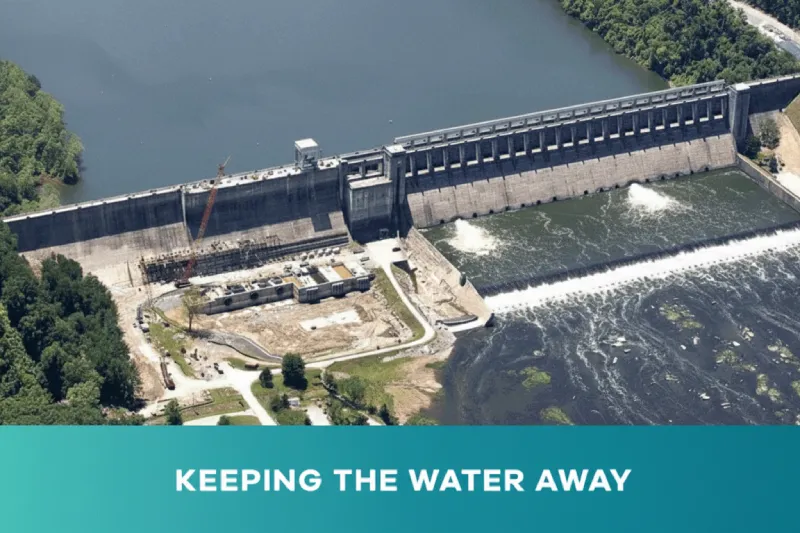
(A) Recently, winter floods on the rivers of central Europe have been among the worst for 600 to 700 years, and dams and dykes (protective sea walls) have failed to solve the problem…
(B) Engineers are now turning to a different plan: to sap the water’s destructive strength by dispersing it into fields… Back in the days when rivers took a winding path to the sea, floodwaters lost force and volume while meandering across flood plains…
(C) …The Rhine, Europe’s most engineered river, is a good example. For a long time engineers have erased its backwaters and cut it off from its plain. The aim was partly to improve navigation, and partly to speed floodwaters out of Alps and down to the North Sea. The same thing has happened in the US on the Mississippi river…
(D) …To help keep London’s feet dry, the UK Environment Agency is reflooding 10 square kilometres of the ancient flood plain of the River Thames outside Oxford… Similar ideas are being tested in Austria… The engineers calculate that the restored flood plain of the Drava River can now store up to 10 million cubic metres of floodwater… protecting towns not only in Austria, but as far downstream as Slovenia and Croatia.
(E) The Dutch… have broken one of their most enduring national stereotypes by allowing engineers to punch holes in dykes. They plan to return up to a sixth of the country to its former waterlogged state in order to better protect the rest.
(F) Water use in cities also needs to change… A new breed of ‘soft engineers’ wants cities to be porous. Berlin is one place where this is being done. Tough new rules for new developments mean that drains will be prevented from becoming overloaded after heavy rains. Architects of new urban buildings are diverting rainwater from the roofs for use in toilets and the irrigation of roof gardens…
(G) Could this be expanded to protect a whole city? The test case could be Los Angeles. …Result: less flooding and more water for the city. It may sound expensive, until we realise how much is spent trying to drain cities and protect areas from flooding, and how little this method achieves.
Questions
Question 1 – 6
Reading Passage 2 has seven paragraphs, A-G
Which paragraph contains the following information?
Write the correct letter. A-G, in boxes 1-6 on your answer sheet
- how legislation has forced building designers to improve water use
- two reasons why one river was isolated from its flood plain
- how natural water courses in the past assisted flood control
- an example of flood control on one river, affecting three countries
- a country which has partly destroyed one of its most typical features in order to control water
- the writer’s comment on the comparative cost effectiveness of traditional flood control and newer methods
Questions 7 – 8
Choose TWO letters A-E.
Write the correct letter, in boxes 7-8 on your answer sheet
According to the article, which TWO of these statements are true of the new approach to flood control?
A. It aims to slow the movement of water to the sea.
B. It aims to channel water more directly into rivers.
C. It will cost more than twice as much as former measures.
D. It will involve the loss of some areas of land.
E. It has been tested only in The Netherlands.
Questions 9 -13
Complete the sentences below.
Choose NO MORE THAN TWO WORDS from the passage for each answer. Write your answers in boxes 9 -13 on your answer sheet.
9. Some of the most severe floods for many centuries have recently occurred in parts of __________.
10. The Rhine and the __________ rivers have experienced similar problems with water control.
11. An area near Oxford will be reflooded to protect the city of __________.
12. Planners who wish to allow water to pass more freely through city surfaces are called __________.
13. A proposal for part of the city of __________ could show whether small-scale water projects could apply on a large scale.
Summary of “Keeping the water away”
The article “Keeping the water away” analyzes the failure of traditional flood control methods and introduces a new, more flexible, and nature-oriented approach.
- The problem with old methods: Engineers attempted to build high levees and straighten rivers to drain water to the sea quickly. However, this made the flow more violent, harder to control, and caused worse flooding.
- New thinking: Instead of fighting, modern engineers seek to sap the water’s strength by dispersing it into flood plains, marshes, and natural meanders.
- Practical examples:
- UK: Reflooding ancient flood plains of the River Thames to protect London.
- Austria: Restoring the Drava River flood plain, helping protect towns in both Slovenia and Croatia.
- The Netherlands: Breaking sturdy dykes to return land to the water, better protecting the rest of the country.
- Urban solutions: “Soft engineers” propose making cities “porous” to collect and reuse rainwater, reducing the burden on drainage systems. Berlin and Los Angeles are pioneering examples.
Key Vocabulary
- Dykes (noun): Protective embankments or sea walls.
- Sap (verb): To gradually weaken or destroy.
- Dispersing (verb): Distributing or spreading over a wide area.
- Meandering (adjective/verb): Following a winding, indirect course.
- Barricaded (adjective/verb): Blocked or obstructed.
- Waterlogged (adjective): Saturated with water.
- Porous (adjective): Having minute spaces or holes through which liquid may pass.
- Irrigation (noun): The supply of water to land or crops to help growth.
Answer Key & In-depth Analysis
1. F
- Information needed: Legislation forcing designers to improve water use.
- Evidence (Paragraph F): “Tough new rules for new developments mean that drains will be prevented from becoming overloaded…”
2. C
- Information needed: Two reasons a river was isolated from its flood plain.
- Evidence (Paragraph C): “The aim was partly to improve navigation, and partly to speed floodwaters out…”
3. B
- Information needed: How natural water courses in the past assisted flood control.
- Evidence (Paragraph B): “…when rivers took a winding path to the sea, floodwaters lost force and volume while meandering across flood plains…”
4. D
- Information needed: Example of flood control on one river affecting three countries.
- Evidence (Paragraph D): “…protecting towns not only in Austria, but as far downstream as Slovenia and Croatia.”
5. E
- Information needed: A country destroying a typical feature to control water.
- Evidence (Paragraph E): “The Dutch have broken one of their most enduring national stereotypes by allowing engineers to punch holes in dykes.” (Dykes are a national symbol of the Netherlands).
6. G
- Information needed: Writer’s comment on cost-effectiveness.
- Evidence (Paragraph G): “It may sound expensive, until we realise how much is spent trying to drain cities and protect areas from flooding, and how little this method achieves.”
Questions 7 – 8
- Correct answers: A, D.
A. It aims to slow the movement of water to the sea.
- Evidence (Paragraph B): “…reviving river bends and marshes to curb the flow…” (“Curb the flow” implies slowing it down).
D. It will involve the loss of some areas of land.
- Evidence (Paragraph D, E): “…reflooding 10 square kilometres of the ancient flood plain…” and “They plan to return up to a sixth of the country to its former waterlogged state…” (Reflooding and returning land to water implies losing land for other uses).
9. central Europe
- Evidence (Paragraph A): “…winter floods on the rivers of central Europe have been among the worst…”
10. Mississippi
- Evidence (Paragraph C): “The same thing has happened in the US on the Mississippi river…”
11. London
- Evidence (Paragraph D): “To help keep London’s feet dry, the UK Environment Agency is reflooding 10 square kilometres of the ancient flood plain…”
12. soft engineers
- Evidence (Paragraph F): “A new breed of ‘soft engineers’ wants cities to be porous.”
13. Los Angeles
- Evidence (Paragraph G): “The test case could be Los Angeles.”
“Keeping the water away” is an excellent example of how IELTS uses environmental and urban planning topics to test reading comprehension. The key to success is the ability to grasp the main idea of each paragraph (for Locating Information) and skim for proper nouns and specific numbers (for Sentence Completion). We hope that through ECE’s detailed analysis, you feel more confident and equipped with effective strategies to tackle complex social science passages in your exam.
Check out more IELTS Reading practice tests compiled by ECE:
Robert Louis Stevenson IELTS Reading
Elephant communication IELTS Reading





 Khai giảng Khóa học Hè cực HOT.
No comments yet!