


Tóm Tắt Nội Dung Bài Viết
Freya Stark, a name synonymous with daring adventures and a sharp wit, is a compelling biographical subject often featured in the IELTS Reading test. The passage about her is not just a story of an extraordinary life but also a test of your ability to scan for information in chronological order. In this article, ECE English provides an in-depth analysis of the entire passage, complete with answers, detailed explanations, and a summary of key vocabulary to help you confidently conquer Flow Chart Completion tasks.
Detailed passage and questions: Freya Stark, explorer and writer
Reading Passage
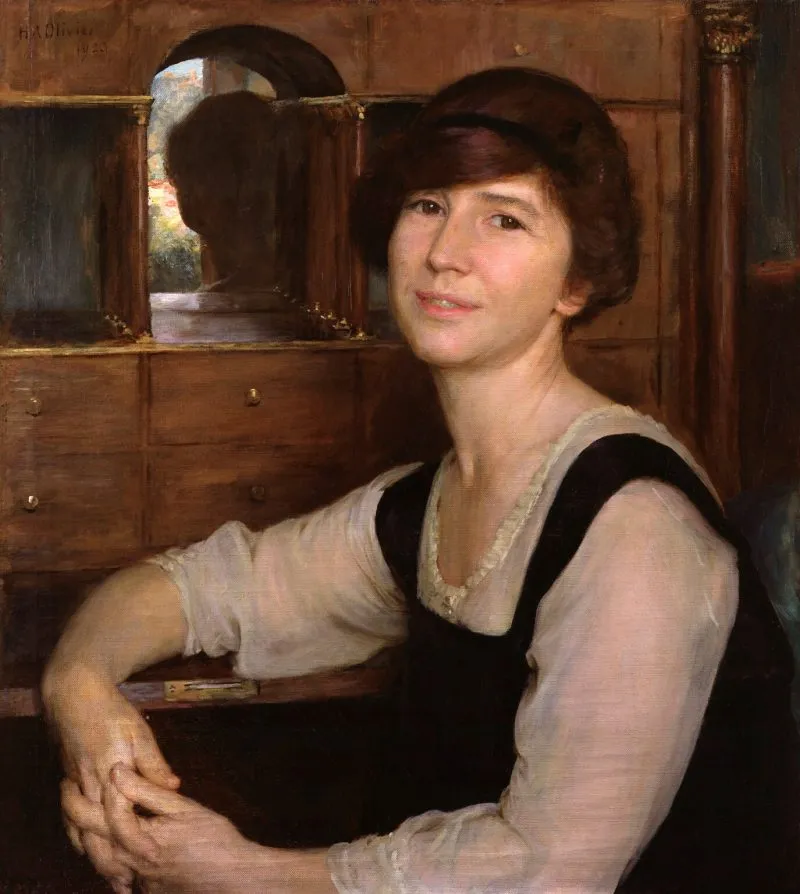
Freya Stark travelled to many areas of the Middle East, often alone. Freya Stark was an explorer who lived during a time when explorers were regarded as heroes. She travelled to distant areas of the Middle East, where few Europeans – especially women – had travelled before. She also travelled extensively in Turkey, Greece, Italy, Nepal and Afghanistan.
Stark was born in Paris in 1893. Although she had no formal education as a child, she moved about with her artist parents and learned French, German and Italian. She entered London University in 1912, but at the start of World War I, she joined the nurse corps and was sent to Italy. After the war, she returned to London and attended the School of Oriental Studies.
Her studies there led to extensive travel in the Middle East, enabling her to eventually become fluent in Persian, Russian and Turkish. Stark became well known as a traveller and explorer in the Middle East. She travelled to the Lebanon in 1927 at the age of 33 when she had saved enough money, and while there, she studied Arabic.
In 1928, she travelled by donkey to the Jebel Druze, a mountainous area in Syria. During another trip, she went to a distant region of the Elburz, a mountain range in Iran, where she made a map. She was searching for information about an ancient Muslim sect known as the Assassins, which she wrote about in Valley of the Assassins (1934), a classic for which she was awarded a Gold Medal by the Royal Geographic Society.
For the next 12 years, she continued her career as a traveller and writer, establishing a style which combined an account of her journey with personal commentary on the people, places, customs, history and politics of the Middle East.
Questions
Questions 1-6 (Flow Chart Completion) Read the passage and complete the flowchart below. Using NO MORE THAN TWO WORDS AND/OR A NUMBER from the passage for each answer.
Freya Stark
- Born in Paris in 1893
- First formal education at 1. …………
- Worked as a 2. ………… in Italy
- Studied at School of Oriental Studies
- Travelled to the Lebanon, where she learned 3. …………
- Made a journey to the Syrian mountains on a 4. …………
- In 1934, won a 5. ………… for a book
- Spent a further 6. ………… in the Middle East
Passage Summary
The passage provides a biographical summary of the life and career of Freya Stark, a renowned British explorer and writer. It follows a chronological order, starting from her birth in Paris, through a childhood without formal schooling but rich in language acquisition. It then covers her time at London University, her service as a nurse during World War I, and her studies at the School of Oriental Studies.
These studies sparked her passion for travel in the Middle East, leading to daring expeditions to Lebanon, Syria, and Iran. Her book about her travels in Iran earned her a prestigious Gold Medal. The passage concludes by describing the unique writing style she developed over the following 12 years of her career.
Key Vocabulary and Structures
- Regarded as (verb phrase): To be considered or thought of in a particular way.
- Example: “…explorers were regarded as heroes.”
- Formal education (noun phrase): Education received in an institutional setting (school/university).
- Example: “Although she had no formal education as a child…”
- Nurse corps (noun phrase): A military unit consisting of nurses.
- Example: “…she joined the nurse corps and was sent to Italy.”
- Extensive travel (noun phrase): Traveling to many places or over a wide area.
- Example: “Her studies there led to extensive travel in the Middle East…”
- Fluent in (adjective phrase): Able to speak or write a language easily and accurately.
- Example: “…enabling her to eventually become fluent in Persian, Russian and Turkish.”
- Sect (noun): A group of people with somewhat different religious beliefs from those of a larger group.
- Example: “…an ancient Muslim sect known as the Assassins…”
- Awarded a Gold Medal (verb phrase): To be given a Gold Medal as an honor.
- Example: “…for which she was awarded a Gold Medal by the Royal Geographic Society.”
Answer Key and Detailed Explanations
1. London University
- Keywords: First formal education.
- Evidence: “Although she had no formal education as a child… She entered London University in 1912…”
- Explanation: The passage notes she had no formal education as a child; her first formal educational experience mentioned is entering “London University.”
2. nurse
- Keywords: Worked as a, in Italy.
- Evidence: “…at the start of World War I, she joined the nurse corps and was sent to Italy.”
- Explanation: The flowchart asks for her occupation in Italy. The text states she joined the “nurse corps.” The answer is “nurse.”
3. Arabic
- Keywords: Travelled to the Lebanon, learned.
- Evidence: “She travelled to the Lebanon in 1927… and while there, she studied Arabic.”
- Explanation: While in Lebanon, she studied the “Arabic” language.
4. donkey
- Keywords: journey to the Syrian mountains, on a.
- Evidence: “In 1928, she travelled by donkey to the Jebel Druze, a mountainous area in Syria.”
- Explanation: The mode of transport she used to reach the Syrian mountains was a “donkey.”
5. Gold Medal
- Keywords: won a, for a book.
- Evidence: “…which she wrote about in Valley of the Assassins (1934), a classic for which she was awarded a Gold Medal…”
- Explanation: For her book, she was awarded a “Gold Medal.”
6. 12 years
- Keywords: Spent a further, in the Middle East.
- Evidence: “For the next 12 years, she continued her career as a traveller and writer…”
- Explanation: The text explicitly states she spent the next “12 years” continuing her career in the Middle East.
Conclusion
The passage about “Freya Stark” is an excellent exercise for the Flow Chart Completion task in IELTS Reading. This task tests your ability to scan for specific information (names, locations, numbers, events) in a clear chronological sequence. The key to success is to follow the narrative flow of the passage and match it against the milestones in the flowchart. We hope that with this detailed analysis from ECE, you have mastered how to handle this task and are ready for your next challenge.





 Khai giảng Khóa học Hè cực HOT.
No comments yet!