


Tóm Tắt Nội Dung Bài Viết
Why do many IELTS candidates, despite having a solid foundation, remain “stuck” at a certain band score? The answer often lies in small, subtle grammatical errors and repetitive word choices. To address this issue precisely, Cambridge University Press has released “Common Mistakes at IELTS Advanced” – an intensive error-correction tool for those aiming for a band score of 7.0+.
In this article, ECE English provides a detailed review of the book across five key aspects to help you decide if this is the “key” you have been looking for.
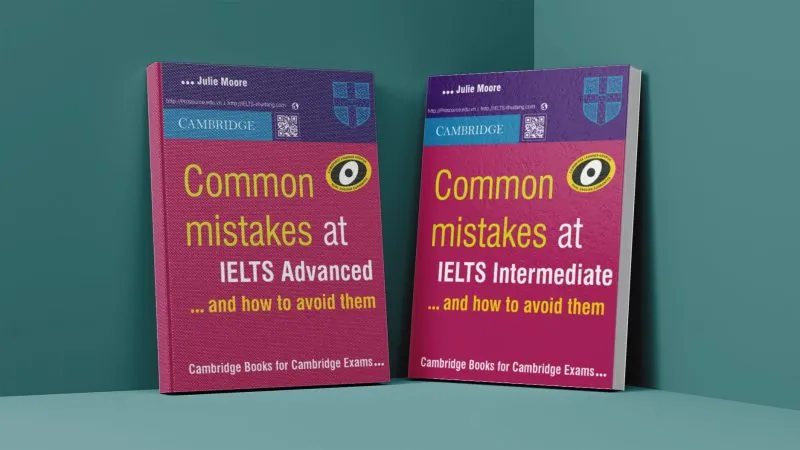
Overview of Cambridge Common Mistakes at IELTS Advanced
- Author: Julie Moore.
- Publisher: Cambridge University Press, in collaboration with Cambridge ESOL Examinations. This serves as a guarantee of the book’s top-tier quality and reliability.
- First published: 2007.
- Content foundation: This is the book’s most valuable asset. The entire content is built upon analysis from the
Cambridge Learner Corpus – a massive database containing thousands of actual IELTS exam scripts. This means every error addressed in the book is one that real candidates have actually made.
- Pricing: The price may vary depending on the retailer and edition. We recommend purchasing authentic copies from major bookstores or reputable e-commerce platforms to ensure print quality and respect copyright.
Target Audience
Identifying the right audience is crucial for the book’s effectiveness. “Common Mistakes at IELTS Advanced” is not for everyone.
- Primary audience: The book is designed for learners at the B2 to C1 level of the Common European Framework of Reference, equivalent to those currently at an IELTS band score of 5.5–6.5 who are aiming for 7.0+.
- Learning needs: This book is ideal for those who have a strong foundation in grammar and vocabulary but are still struggling with minor, recurring errors that prevent them from breaking through to higher scores, particularly in Writing and Speaking.
- Other users: IELTS instructors can also use this book as a valuable reference to compile common errors and design targeted lessons for their students.
Detailed Review of Cambridge Common Mistakes at IELTS Advanced
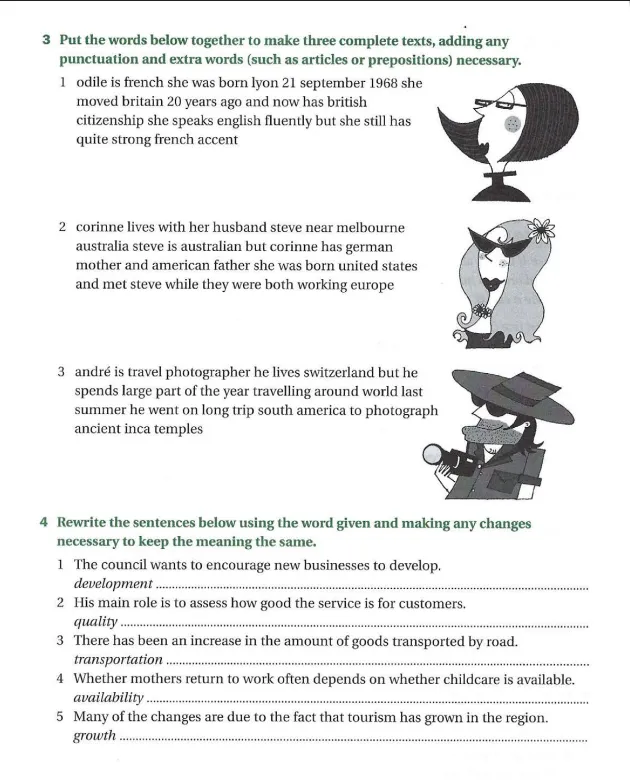
“Common Mistakes at IELTS Advanced” features a smart, focused structure designed to maximize learner efficiency.
- Logical 30+10 structure: The book is divided into 30 units, each only 1–2 pages long, focusing on a specific error. Every three units, there is a review test to consolidate knowledge and check your progress. This structure breaks down information into manageable chunks, preventing overwhelm and providing a clear learning path.
- Active “Self-Correction” method: This is a highlight of the book’s pedagogy. Instead of presenting theory passively, each lesson typically begins with small exercises like “Choose the correct sentence” or “Correct the error in the sentence.” This approach forces learners to think, judge, and identify their own knowledge gaps before reading the explanation. This leads to much deeper and more effective retention.
- Content focused on “costly” errors: The book avoids fluff and goes straight to the issues that actually cause high-level candidates to lose marks. Topics are selected based on the analysis of thousands of real exam papers. Specifically:
- Subtle Grammar & Punctuation: The book clarifies points that learners often find ambiguous, such as: using the article
thewith general concepts (Unit 1), when to use capitalization (Unit 3), comma usage with connectors (Unit 5), or using prepositions correctly when describing charts (Units 12 & 13). - Advanced Vocabulary & Collocations: The book focuses on distinguishing easily confused pairs that are common in IELTS Writing Task 2, such as
habits / customs / practices(Unit 25) oreffect / influence / impact(Unit 26). Additionally, it highlights important verb collocations for more natural expression, such asmake progressorhave an effect(Unit 24). - Academic language for Task 1: A series of lessons (Units 13–15) is dedicated to handling errors when describing statistics, including the use of prepositions, nouns (
percentvspercentage), and verbs (risevsraise). - IELTS-style exercises: The practice exercises, especially in the 10 review tests, are designed to simulate actual exam tasks, helping learners apply what they have learned directly to an exam context.
- Subtle Grammar & Punctuation: The book clarifies points that learners often find ambiguous, such as: using the article
Pros and Cons
Pros
- Absolute authenticity: This is the biggest advantage. Because the content is based on the Cambridge Learner Corpus, learners can trust that they are investing time and effort into truly important errors—the ones that actually cause candidates to lose marks—rather than studying abstract, irrelevant grammar theory.
- Focused, concise, and encouraging: The book is not overly thick, and each unit addresses only one specific issue. This prevents learners from feeling overwhelmed, makes it easy to manage daily study time, and creates a sense of clear progress after completing each unit, which helps maintain motivation.
- Smart, effective learning method: The “Self-Correction -> Theory -> Practice” structure turns the learner into an active editor of their own work. Discovering mistakes yourself leads to much longer-lasting retention than passive reading.
- Enhances exam skills: With IELTS-style exercises, the book not only reinforces grammar and vocabulary but also familiarizes learners with how these issues are tested in the real exam, bridging the gap between theory and practice.
Cons
- Language barrier: The book is written 100% in English. For learners with limited vocabulary or those unaccustomed to reading English materials, this may make understanding subtle grammatical explanations difficult, slowing down progress and requiring frequent dictionary use.
- Supplementary material only: This book is a “specialized treatment” for error correction, not a comprehensive textbook. It does not provide detailed strategies for all four skills (Listening, Speaking, Reading, Writing) or build vocabulary across major topics. Therefore, learners must use it alongside other primary IELTS preparation materials for the best results.
How to use the book most effectively
To optimize the value of this book, follow these strategies:
- Study diagnostically: Do not read the book from cover to cover like a novel. Try the Tests first to identify your weakest areas, then prioritize studying the corresponding units.
- Think actively first: Before reading the explanations, always try to complete the initial exercises in each unit. Finding the error yourself is far more effective than just reading and absorbing information passively.
- Combine study with practice: After learning about an error, actively apply that knowledge to your own Writing and Speaking practice. Create a “personal error log” based on the topics in the book.
- Don’t skip exercises: Be persistent and complete all exercises. Skipping an exercise might mean missing the chance to fix a hidden error.
- Don’t be complacent: Even if you are already at a high band score, reviewing seemingly basic errors is essential. Complacency with small mistakes is exactly why many candidates remain “stuck” at a certain score for a long time.
In summary, “Common Mistakes at IELTS Advanced” is not a typical exam prep book. It is an intensive “error-correction” tool designed to help learners with a solid foundation overcome the final hurdles to reach a band score of 7.0+.
If you feel “stuck” at a certain score and want to uncover the subtle errors that are silently holding you back, this book is definitely a worthwhile investment. With its focus, conciseness, and authentic data, it will be an effective companion on the final leg of your journey to conquer IELTS.





 Khai giảng Khóa học Hè cực HOT.
No comments yet!