


Tóm Tắt Nội Dung Bài Viết
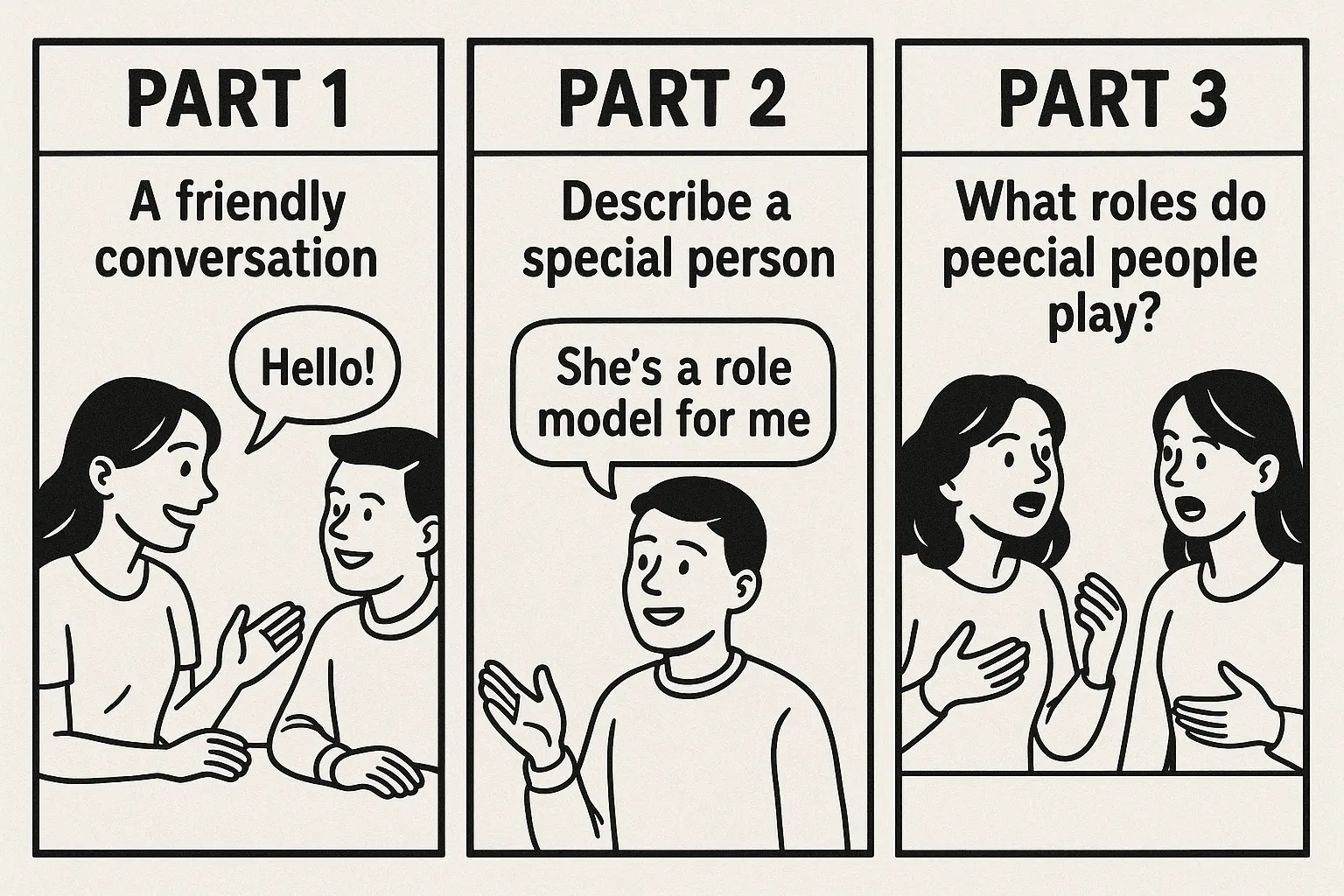
In the IELTS Speaking test, the topic Describe a special person in your life appears quite frequently. It is a fantastic opportunity to showcase your storytelling skills, express personal emotions, and utilize a wide range of vocabulary and grammatical structures. This article has been professionally reviewed by Ms. Luong Thao Nhi, an 8.0 IELTS instructor at ECE Language Center. Ms. Thao Nhi has put together a comprehensive guide for this topic, including essential vocabulary, useful structures, and sample responses for all three parts of the IELTS Speaking test for you to practice.
1. Useful Vocabulary & Structures for “A special person in your life”
A. Key Vocabulary:
| Vocabulary | Meaning |
| role model | a person looked to by others as an example to be imitated |
| inspirational | providing or showing creative or spiritual inspiration |
| empathetic | showing an ability to understand and share the feelings of another |
| reliable | consistently good in quality or performance; able to be trusted |
| go the extra mile | to make an extra effort to achieve something |
| down-to-earth | practical, reasonable, and friendly |
| mentor | an experienced and trusted adviser |
| have a heart of gold | to be very kind, generous, and sincere |
| look up to someone | to admire and respect someone |
| make a lasting impression | to create an effect that stays with someone for a long time |
B. Useful Sentence Structures:
- “The person who has had the most impact on me is…”
- “One of the qualities I admire most about them is…”
- “Whenever I face a difficult situation, I always remember what they taught me…”
- “They are not just a family member, but also a friend and mentor.”
- “What sets them apart is their ability to…”
2. IELTS Speaking Part 1 Sample: Special Person in Your Life
Q: Who is a special person in your life?
A:
A special person in my life is definitely my older sister. She’s someone I look up to not just because she’s family, but also because of her strong will and empathetic nature. She’s always been by my side, especially during tough times. I’d say she’s not just my sister, but also my mentor and best friend.
Vocabulary used:
- look up to: to admire and respect someone
- strong will: the determination to do something despite difficulties
- empathetic nature: a personality characterized by deep understanding of others’ feelings
- mentor: an experienced and trusted adviser
Question 2: How often do you see this person?
A:
We live in the same city, so I see her almost every weekend. We usually grab coffee and talk about everything – from work to personal stuff. Spending time with her always lifts my mood and helps me recharge after a stressful week.
Vocabulary used:
- grab coffee: to meet someone for a casual coffee
- lifts my mood: to make someone feel happier
- recharge: to regain energy
Question 3: What kind of person is he/she?
A:
She’s a really down-to-earth person—humble, friendly, and always willing to listen. One thing I really admire is her ability to stay calm under pressure. No matter how chaotic things get, she stays composed and finds a solution.
Vocabulary used:
- down-to-earth: practical, reasonable, and friendly
- stay calm under pressure: to remain composed in difficult situations
- composed: having one’s feelings and expression under control; calm
3. IELTS Speaking Part 2 Sample: Describe a special person in your life
Describe a special person in your life. You should say:
- Who the person is
- How you met this person
- What kind of person he/she is
- And explain why he/she is special to you
A:
The special person I’d like to talk about is my grandfather. He passed away a few years ago, but his memory and his values still guide me every day. I spent most of my childhood with him since my parents were often busy working.
My grandfather was a retired teacher. He was extremely knowledgeable, patient, and had a great sense of humor. I still remember how he used to tell me stories every night—both educational and funny. He was the one who taught me how to be kind, how to stay humble, and how to go the extra mile when things get tough.
What makes him truly special is the lasting impact he had on my personality. Thanks to him, I learned the importance of empathy and discipline. Even though he’s no longer with me, I still feel his presence in everything I do. He truly had a heart of gold.
Vocabulary used & definitions:
- knowledgeable: intelligent and well-informed
- go the extra mile: to make an extra effort
- lasting impact: an effect that continues for a long time
- heart of gold: a very kind and generous nature
4. IELTS Speaking Part 3 Sample: Discussion – Special people and relationships
Q: Why do people admire special individuals in their lives?
A:
I believe people admire special individuals because they provide emotional support and often serve as role models. These people help shape our values and guide us in times of uncertainty. Their actions and advice often leave a lasting impression, especially when we’re going through challenges.
Q: Do you think the role of special people has changed over time?
A:
Yes, to some extent. In the past, special people were often family members or teachers. Nowadays, with social media, many people also consider public figures or influencers as inspirational. However, I think true special people are those who make a direct impact on our lives, not just from afar.
Q: Can special relationships affect a person’s career or life decisions?
A:
Definitely. For example, my sister’s passion for teaching inspired me to become a trainer. When someone you admire believes in you, it boosts your confidence and can completely change the way you see your potential.
Vocabulary used:
- role model: a person looked to by others as an example to be imitated
- leave a lasting impression: to create an effect that stays with someone for a long time
- inspirational: providing or showing creative or spiritual inspiration
- boost confidence: to increase self-assurance
Conclusion
The topic “Describe a special person in your life” may be familiar, but it is a great opportunity to demonstrate your ability to use English in an emotional, coherent, and diverse way. Prepare your vocabulary thoroughly, practice telling your story naturally, and don’t be afraid to express sincere emotions during your test! ECE wishes you the best of luck in your Speaking exam!
Check out more academic articles professionally reviewed by Ms. Thao Nhi:
- IELTS Writing task 2 topic international travel
- IELTS Writing task 2 topic globalization
- IELTS Writing task 2 topic work and career




 Khai giảng Khóa học Hè cực HOT.
No comments yet!