


Tóm Tắt Nội Dung Bài Viết
Pauline Cullen’s “Cambridge Vocabulary for IELTS Advanced” is a highly regarded resource for IELTS preparation, specifically designed to help test-takers aiming for a band score of 6.5+ (targeting Advanced levels C1 and C2) improve their vocabulary effectively. The book provides thematic vocabulary, accompanied by practice exercises, expert tips, and test-taking strategies to help candidates approach the IELTS exam with confidence.
If you are looking to master advanced vocabulary for your IELTS exam, this is a must-have book!
1. Introduction to Cambridge Vocabulary for IELTS Advanced
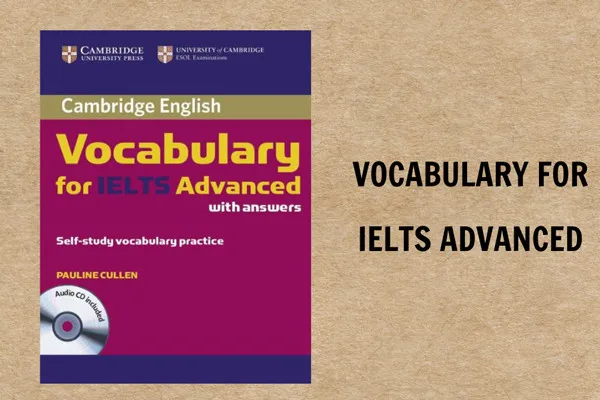
- Full Title: Cambridge Vocabulary for IELTS Advanced with answers. Self-Study Vocabulary Reference and Practice.
- Author: Pauline Cullen
- Publisher: Cambridge University Press
- Publication Year: The book is updated regularly; we recommend choosing the latest edition.
- Target Audience: Candidates aiming for an IELTS band score of 6.5 or higher (Advanced level – C1, C2).
- Focus: Developing academic vocabulary, collocations, and idioms frequently encountered in the IELTS exam.
1.1. Who is this book for?
- Intermediate (B1) learners and above: A solid foundation in English is necessary to fully grasp and apply the concepts in the book.
- Candidates targeting an IELTS 6.5+: The book is specifically tailored to help students reach higher band scores, particularly in Writing and Speaking.
- Learners looking to expand their academic vocabulary: It offers a wealth of academic terms, which are highly beneficial for those using English in academic and research environments.
- Candidates wanting to improve their use of collocations: The book places a strong emphasis on teaching and practicing collocations, helping you sound more natural and precise.
- Self-motivated learners: While the book includes detailed answer keys and explanations, it is best suited for those who are proactive and disciplined in their self-study.
Check out this related topic: IELTS vocabulary books
2. Content Analysis
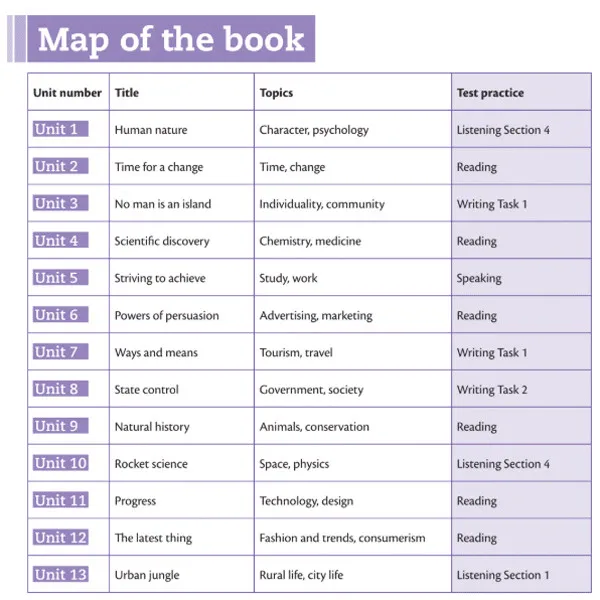
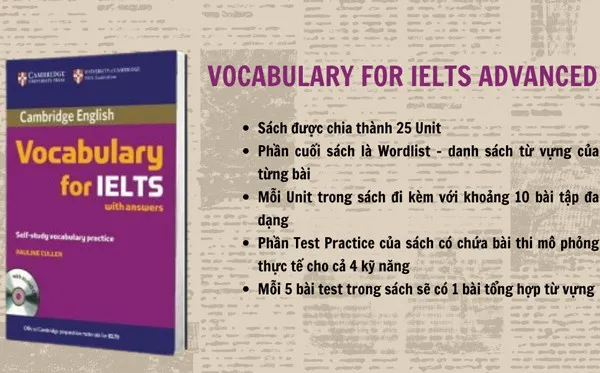
Structure: 25 Units, consisting of 20 core lessons and 5 alternating Review Units. Each lesson focuses on a specific topic commonly found in the IELTS exam.
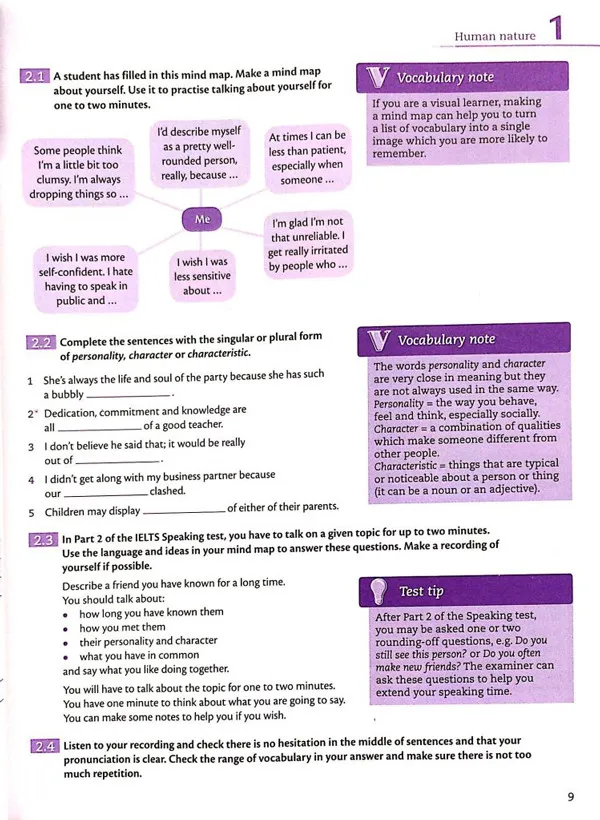
Each unit includes the following key sections:
- Introduction: Introduces the lesson topic, often with a short text or exercise to activate your background knowledge.
- Vocabulary Input: The core of each lesson, providing a list of vocabulary, collocations, and idioms related to the topic.
– Vocabulary presentation: Clear and accessible, with English definitions, IPA transcriptions, and illustrative examples.
– Collocations: Highlighted to help learners understand natural and accurate word combinations.
– Idioms: Some lessons introduce relevant idioms, though these are not the primary focus.
- Practice Exercises: A wide variety of exercises designed to help learners:
– Memorize vocabulary: Matching, gap-filling, and sentence completion.
– Use vocabulary accurately: Choosing the correct word, identifying collocations, and correcting mistakes.
– Develop writing skills: Writing sentences or paragraphs using the newly learned vocabulary.
- Tips: Provides study hacks, IELTS test-taking strategies, and important notes to help candidates avoid common traps and boost their scores.
- Error Warning Boxes: A major highlight of the book. These boxes point out common mistakes students make, helping you avoid repeating them in the exam.
- Over to you (Speaking/Writing Practice): Some lessons include practice sections that encourage you to apply the new vocabulary immediately to Speaking or Writing tasks.
- Extension: Offers additional related vocabulary, such as synonyms, antonyms, or more advanced terms to broaden your range.
- Answer Key: Provides detailed answers for all exercises, allowing for effective self-study and progress tracking.
- Recordings (Audio): Includes audio files for vocabulary pronunciation and listening exercises to help improve your listening and speaking skills.
- Index: A comprehensive index for easy lookup and review.
Related article: Commonly used idioms by topic and how to use them in IELTS Speaking
3. Key Strengths
High Academic Standard:
- The vocabulary is carefully curated, focusing on academic terms frequently found in IELTS Reading, Listening, and Writing sections.
- The book also emphasizes phrasal verbs and idioms at an academic level, helping your writing and speaking sound more natural and sophisticated.
Contextual Learning Approach:
- Instead of just providing lists, the book introduces vocabulary in specific contexts through examples, exercises, and sample passages.
- This approach helps learners grasp the meaning, nuance, and usage of words in real-world situations, leading to better retention.
Emphasis on Collocations:
- The book places special focus on teaching and practicing collocations—a crucial factor for achieving high scores in IELTS Writing and Speaking.
- Mastering collocations helps you sound like a native speaker and prevents common word-combination errors.
Extensive Practice Exercises:
- The book offers a wealth of exercises ranging from basic (matching, gap-filling) to advanced (sentence and paragraph writing).
- This variety helps reinforce knowledge and familiarizes you with different question types in the IELTS exam.
Integrated Listening Skills: The included audio not only helps with pronunciation but also improves listening comprehension by hearing vocabulary in context.
Focus on Common Errors: The “Error Warning Boxes” are a standout feature, helping candidates identify and avoid common pitfalls to improve accuracy.
Official Cambridge Material: Compiled and published by Cambridge University Press—the organization behind the IELTS exam—ensuring the content is accurate, up-to-date, and aligned with exam requirements.
4. Potential Drawbacks
Entirely in English:
- While this is an academic strength, it can be a barrier for students without a strong English foundation.
- The lack of Vietnamese translations or explanations may make it difficult for some learners to fully understand word usage.
Higher Price Point: Compared to other IELTS prep books available in Vietnam, “Cambridge Vocabulary for IELTS Advanced” is relatively expensive, which may be a consideration for some students.
Not Comprehensive:
- While it provides a significant amount of vocabulary, it cannot cover every single topic that might appear in the IELTS exam. Some niche or less common topics may not be fully addressed.
- The focus is primarily on vocabulary, with less emphasis on other skills like grammar or pronunciation.
Limited Speaking/Writing Practice: The Speaking and Writing practice sections are not exhaustive and are not included in every lesson. Learners should supplement this with other materials for a more well-rounded approach.
5. How to Study Effectively with This Book
- Set Clear Goals:
Before you start, define your target IELTS band score.
Create a specific study plan, breaking your goals down by week and month.
- Follow a Systematic Order:
Work through the lessons in order to ensure a logical progression.
You can group lessons with related topics to study together, creating connections between concepts.
- Read Theory and Examples Carefully:
Read the introductions, definitions, and examples thoroughly to understand the meaning and usage of each word.
Pay close attention to collocations and idioms that are bolded or highlighted.
- Take Exercises Seriously:
Complete all exercises in each unit.
Do not check the answer key until you have finished the work.
After finishing, check your answers and analyze any mistakes.
- Keep Organized Vocabulary Notes:
Use a notebook or a note-taking app to record new words.
Include all relevant information: word, pronunciation, part of speech, definition, example, collocations, synonyms, and antonyms.
Organize vocabulary by topic or alphabetically for easy reference.
Consider using mind maps to visualize connections.
- Make the Most of the Audio:
Listen to the audio multiple times to get used to standard pronunciation.
Repeat after the audio to practice your own pronunciation.
Use the audio to complete any associated listening exercises.
- Use Flashcards:
Create your own flashcards or use apps like Anki or Quizlet.
Put the word on one side and the definition, example, or image on the other.
Review flashcards regularly using spaced repetition to ensure long-term retention.
- Write Sentences and Paragraphs:
After finishing a lesson, try to write your own sentences using the new vocabulary.
Write short paragraphs related to the lesson topic, incorporating as many new words as possible.
- Practice Speaking Regularly:
Find a study partner to practice speaking, using the vocabulary from the book.
Record yourself speaking and listen back to identify areas for improvement.
Join English clubs or IELTS forums to practice speaking with others if possible.
- Review Periodically:
Schedule regular reviews (weekly or monthly) of the vocabulary you have learned.
Use the Review Units in the book to test your knowledge.
Focus extra attention on words that are difficult to remember or easy to confuse.
- Supplement with Other Materials:
Use reputable English-English dictionaries like Oxford, Cambridge, or Longman for further research.
Refer to additional books on collocations, idioms, and phrasal verbs.
Read English books, newspapers, and magazines related to IELTS topics.
Watch movies, listen to music, and tune into English podcasts to encounter vocabulary in natural contexts.
“Cambridge Vocabulary for IELTS Advanced” is a valuable and reliable resource for anyone preparing for the IELTS exam and aiming for a band score of 6.5 or higher. The book not only provides a rich, accurate vocabulary bank but also guides you on how to learn and use words effectively through a diverse system of exercises and helpful tips.
However, to achieve the best results, learners should combine this book with consistent practice, real-world application, and additional study materials. Remember, success doesn’t come from owning the “best” book, but from your own persistence, effort, and effective study habits.
Check out: IELTS preparation courses with guaranteed outcomes at ECE Language Center.




 Khai giảng Khóa học Hè cực HOT.
No comments yet!