


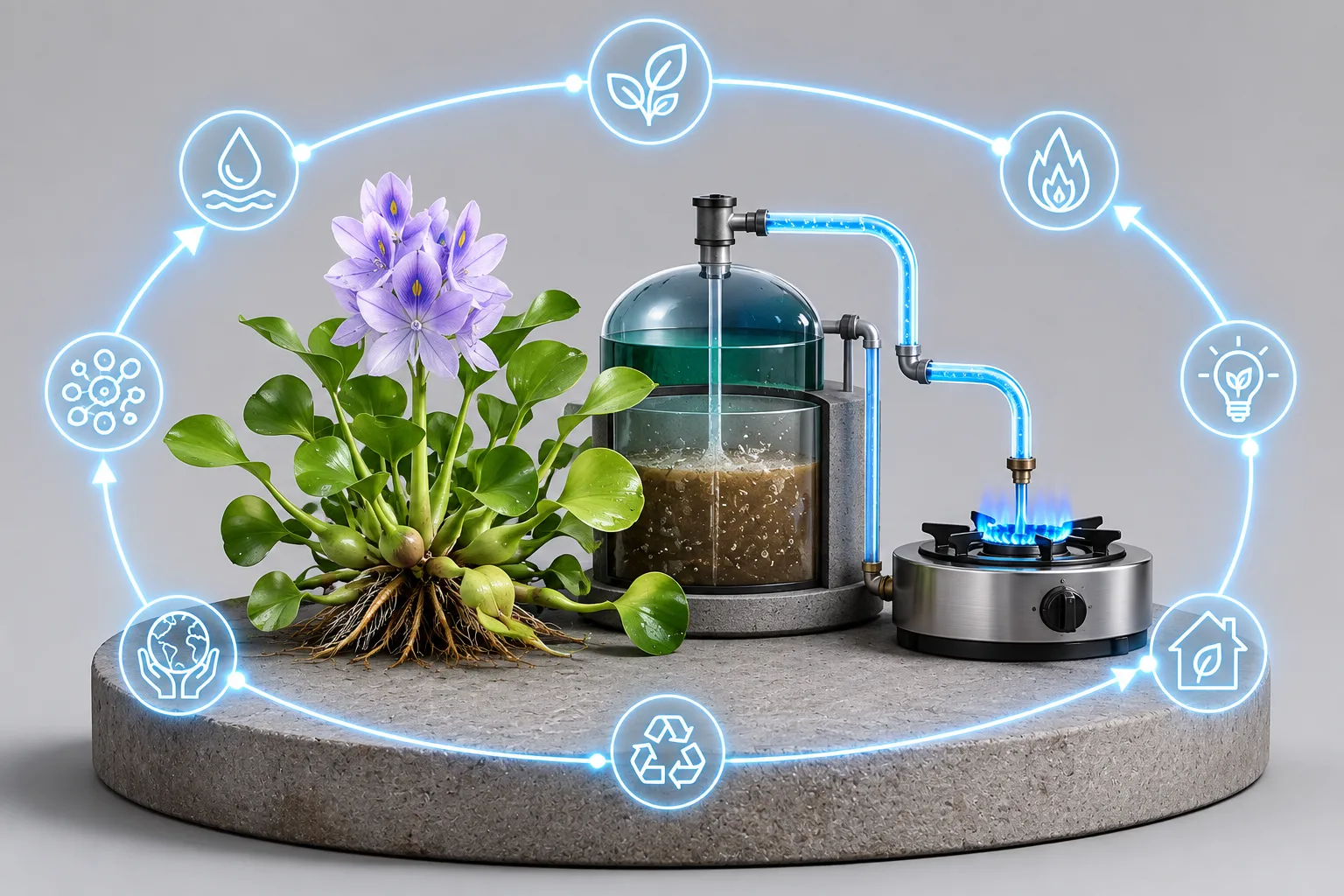
Water hyacinth (Eichhornia crassipes) — an aquatic plant native to South America — was once considered the “world’s worst aquatic weed” when it aggressively invaded Lake Victoria (Kenya), obstructing fishing channels and creating breeding grounds for disease-carrying mosquitoes. However, behind those decaying, waxy green leaves lies a potential “gold mine” of renewable energy. By combining water hyacinth with livestock waste in biogas digesters, local residents have transformed an ecological disaster into a source of clean cooking gas, offering a dual solution to Africa’s firewood crisis and indoor air pollution. The reading passage The problems and benefits created by the spread of the water hyacinth in Kenya (Cambridge IELTS 21 – Test 4, Passage 1) provides a practical perspective, balancing environmental challenges with community livelihoods.
Covering the themes of Ecology, Renewable Energy & Sustainable Development, Passage 1, which opens Test 4, features a clear line of argumentation, from the problem and technical mechanisms to social benefits. The test assesses candidates through three familiar question types: True/False/Not Given, Flow Chart Completion, and


 Khai giảng Khóa học Hè cực HOT.
No comments yet!