


Tóm Tắt Nội Dung Bài Viết
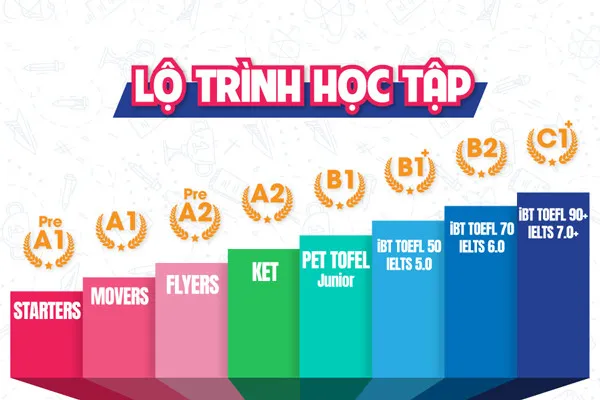
Below is a detailed roadmap for each skill (Listening, Speaking, Reading, Writing) designed to help learners reach the B2 level, with a focus on developing complex sentence structures, analytical skills, and academic thinking. The roadmap emphasizes long-form reading and listening exercises, academic essays, and presentations/debate topics. Let’s dive in!
B2 English Learning Roadmap for All 4 Skills (For learners with an A2 – B1 foundation)
1. Listening
Goal: Develop advanced listening comprehension skills with longer, more complex audio. Focus on analytical listening to grasp underlying meanings and capture detailed information.
Listening Roadmap:
- Weeks 1 – 2: Engage with longer conversations (6 – 10 minutes) featuring in-depth content and advanced vocabulary.
Exercises: Listen to academic podcasts or excerpts from news programs.
Techniques: Practice listening from general to specific; hone skills in identifying main ideas and note-taking.
- Weeks 3 – 4: Practice analytical listening through long-form academic content, focusing on topics like the environment, culture, and education.
Exercises: Listen to interviews or presentations (e.g., BBC World Service, NPR) and record key ideas and supporting details.
Techniques: Analyze sentence structure, intonation, and expression styles; distinguish between main points and supporting details.
- Weeks 5 – 6: Increase complexity with longer audio tracks.
Exercises: Complete in-depth analytical listening exercises, including explaining or summarizing the content.
Techniques: Listen and summarize independently, focusing on developing analytical abilities and understanding implied meanings.
2. Speaking
Goal: Build the ability to present ideas and participate in debates on complex topics, increasing the use of complex sentence structures and advanced vocabulary.
Speaking Roadmap:
- Weeks 1 – 2: Develop challenging, argumentative, and highly academic topics. Students are required to present these topics in class.
Exercises: Practice short presentations on topics such as culture, social sciences, and economics.
Techniques: Focus on pronunciation, intonation, and the use of cohesive devices while speaking.
- Weeks 3 – 4: Integrate topics from reading/listening into speaking tasks to bridge skills and practice debating.
Exercises: Organize debates on challenging topics such as environmental protection and the impact of technology.
Techniques: Learn how to construct arguments and present ideas persuasively using a rich range of vocabulary and sentence structures.
- Weeks 5 – 6: Enhance independent speaking ability with longer presentations.
Exercises: Deliver more detailed presentations on academic topics and begin introductory debate practice.
Techniques: Use complex sentence structures and academic vocabulary to express opinions clearly and logically.
3. Reading
Goal: Read and comprehend long, complex texts, grasping deep information and analyzing meaning.
Reading Roadmap:
- Weeks 1 – 2: Approach longer texts with increased vocabulary, focusing on academic content such as scientific articles and socio-cultural pieces.
Exercises: Read articles from The Economist or National Geographic featuring rich, academic vocabulary.
Techniques: Practice skimming and scanning while focusing on keyword note-taking.
- Weeks 3 – 4: Practice analytical reading with longer passages and more new vocabulary, focusing on deep comprehension of meaning and context.
Exercises: Read long passages and perform sentence analysis to improve vocabulary usage.
Techniques: Practice distinguishing between main information and supporting details; learn to identify arguments and perspectives.
- Weeks 5 – 6: Read more challenging texts and practice analytical reading to solidify academic knowledge.
Exercises: Read and summarize content, focusing on underlying meanings and contextual elements.
Techniques: Read deeply for comprehensive understanding while analyzing the use of sentence structure and vocabulary within the text.
4. Writing
Goal: Develop academic and analytical writing skills, including structured, logical essays and chart descriptions.
Writing Roadmap:
- Weeks 1 – 2: Get acquainted with essay components and complex sentence structures while practicing short paragraph writing.
Exercises: Write paragraphs describing basic topics and practice complex sentence structures to build a foundation.
Techniques: Practice outlining, using complex sentence structures, and organizing ideas logically.
- Weeks 3 – 4: Increase practice with academic essays, focusing on brainstorming and debating to expand ideas.
Exercises: Write essays with clear structures and academic vocabulary.
Techniques: Create detailed outlines, brainstorm and analyze arguments, and learn to link ideas coherently.
- Weeks 5 – 6: Enhance writing skills with chart description tasks and advanced sentence structures.
Exercises: Write chart descriptions and advanced essays, focusing on the use of complex sentence structures.
Techniques: Use conjunctions and cohesive devices to improve flow; practice writing under timed conditions.
Who is this B2 roadmap for?
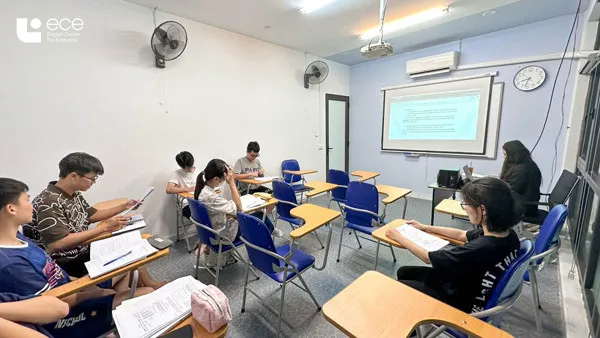
The B2 English learning roadmap is suitable for those with a basic foundation in English, specifically:
- Learners at the A2 – B1 level: Those who have completed A2 or B1 courses, understand basic grammatical structures, possess a foundational vocabulary, and can communicate in familiar situations. They are accustomed to learning English and need to advance their skills to a higher level.
- Those needing English for academic or professional purposes: Individuals who need to use English in academic or work environments that require fluency and the ability to understand complex topics, such as university students, those preparing to study abroad, or professionals working in international environments.
- Learners aiming for certifications: Those who want to achieve international English certifications such as IELTS 5.5 – 6.5 or TOEIC 700+, as these scores generally correspond to the B2 level.
- Learners needing to improve communication skills: Those who can communicate at a basic level but want to increase their confidence when presenting, writing essays, or communicating in meetings and situations that require more flexible language use.
- Those meeting graduation or job requirements: Individuals who need to reach B2 to meet the graduation requirements of certain university programs or the recruitment criteria of foreign organizations and companies.
Tools and Resources for B2 English Learning
1. Listening
- BBC Learning English: This site offers many listening programs suitable for the B2 level, such as “6 Minute English,” “The English We Speak,” and short news segments. Lessons feature natural speaking speeds with vocabulary and grammar appropriate for B2 learners, often accompanied by subtitles and short exercises.
- VOA Learning English: Similar to the BBC, VOA provides news and listening topics with American accents, suitable for those who want to get used to slower speaking speeds and longer listening passages.
- Cambridge English B2 First Listening Practice: This site provides sample tests and practice listening exercises based on the B2 exam standard, helping learners get familiar with actual test formats.
2. Speaking
- Elsa Speak: An app that helps learners practice American-standard English pronunciation. Elsa uses AI to identify specific pronunciation errors and provides detailed correction guides.
- Italki: A language learning platform that connects learners with native teachers and tutors. You can choose teachers who specialize in B2 levels to practice speaking, especially through discussions on complex and argumentative topics.
- English Central: An app providing topic-based speaking lessons where learners can mimic the audio and receive automated pronunciation scoring.
3. Reading
- Breaking News English: This site provides short articles on real-world events at various levels, from A1 to C2. Each article includes translations, vocabulary exercises, and comprehension questions.
- ReadTheory: A platform that provides reading passages tailored to each learner’s level. ReadTheory focuses on text analysis, helping to improve reading comprehension for B2 learners.
- The Guardian and The New York Times: Reading articles on academic, economic, social, and cultural topics will help B2 learners get accustomed to more complex vocabulary and grammar.
4. Writing
- Grammarly: This tool helps check grammar, sentence structure, and improves writing style. Grammarly is especially useful for learners looking to improve their essay writing and chart description skills.
- Write & Improve by Cambridge English: A free tool provided by Cambridge that allows learners to write essays and receive detailed feedback on vocabulary, structure, and grammar. B2-standard exercises focus on developing essay writing and chart descriptions.
- Purdue Online Writing Lab (OWL): Provides detailed guides on how to write various types of essays, descriptions, and analyses. OWL is very useful for B2 learners starting with academic writing formats.
This has been the guide from ECE Language Center regarding the B2 English learning roadmap, along with some useful tools and resources to make your learning journey easier. Stay steady and confident on the path you have chosen—we wish you every success!
 Khai giảng Khóa học Hè cực HOT.
No comments yet!